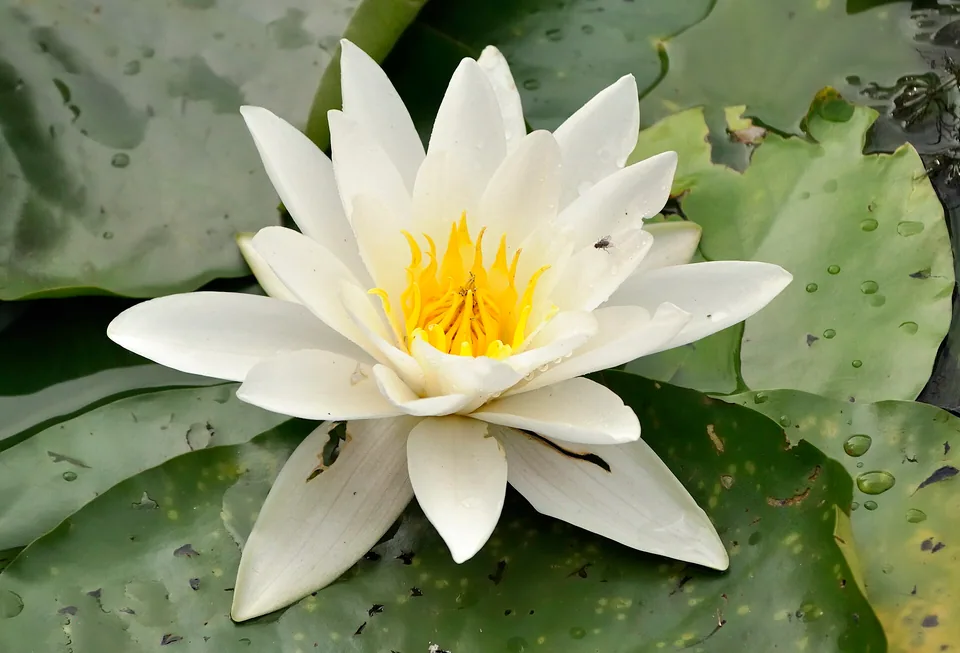
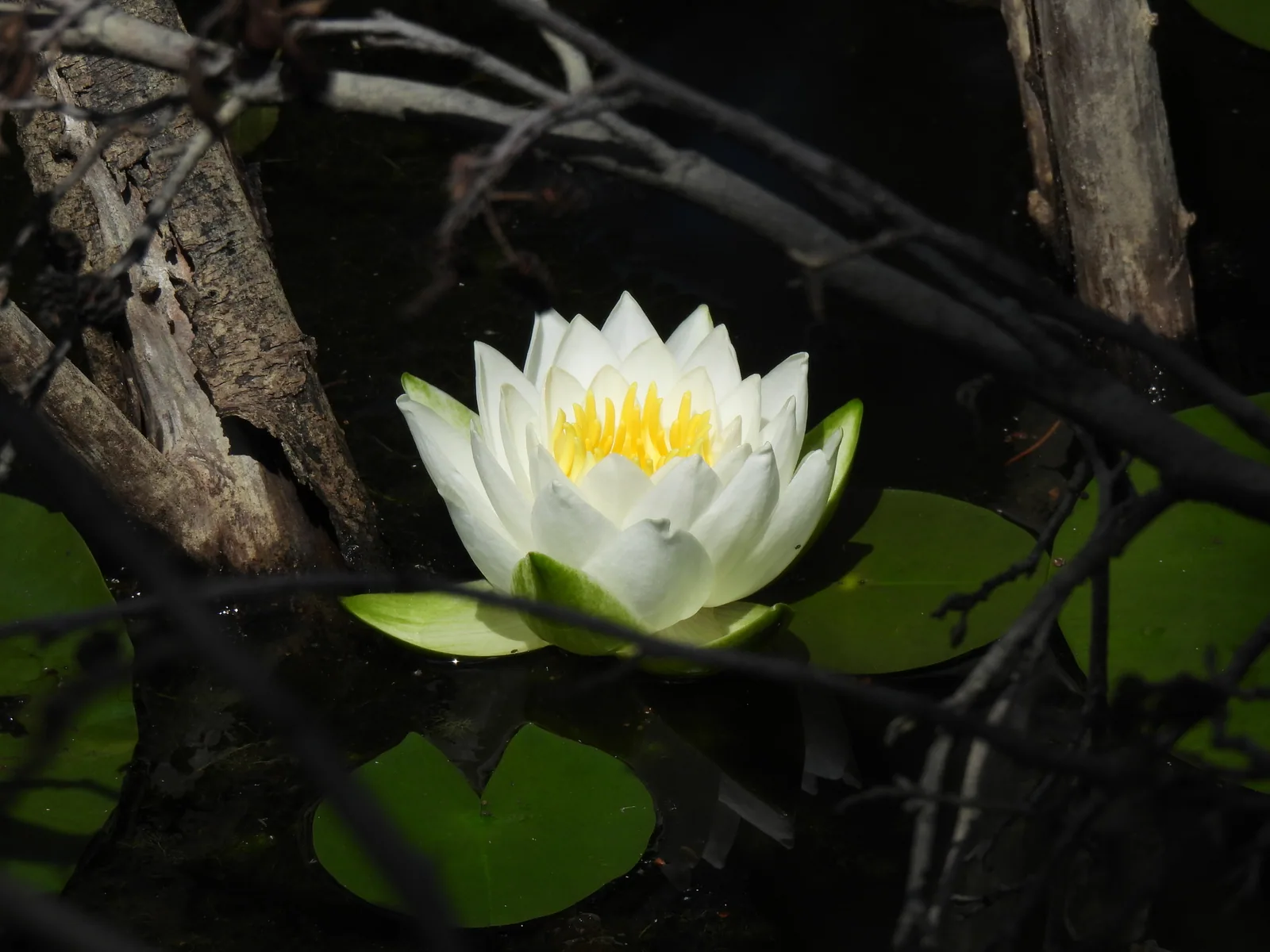

How to Grow and Care for European white waterlily
Nymphaea alba
Written by Emilio Marruso · last checked
Toxic to: People · Why
At a glance
The white water lily turns a pond of still or slow-moving water into a calm, sunny corner. Give it full sun and 7–8 ft of water, and it can even cope with short dry spells when the water level drops to zero. Grow it from seed sown as soon as it ripens, or simply divide the rhizomes in spring.
- Sun
Full sun
- Water
Lives in still or slow water, best 7–8 ft deep; copes with short dry spells
What the sources say (3)
Watering: Aquatic plant grown in still or slowly moving water
A water plant requiring a rich soil and a sunny position in still or slowly moving water
— Nymphaea alba - Useful Temperate Plants [1] Watering notes: Best grown in 2-2.5 metres [6.6–8.2 ft] of water; can bear short dry periods with the water level reduced to zero
Best grown in 2 - 2.5 metres of water
— Nymphaea alba - Useful Temperate Plants [1] but can bear short dry periods, with the water level reduced to zero
— Nymphaea alba - Monaco Nature Encyclopedia [4] - Soil
Slightly acidic to neutral, pH 6–7
- Planting
Plant out in late spring, after at least two years growing under cover
What the sources say (1)
Planting: Late spring (seedlings grown on under cover for at least two years)
grow them on in water in a greenhouse for at least two years before planting them out in late spring
— Nymphaea alba - Useful Temperate Plants [1] - Harvest
Rhizomes are edible only peeled and cooked long, changing the water; roasted seeds replace coffee
- Propagation
By seed, or by dividing the rhizomes in May or spring
- Sowing
Sow as soon as the seed is ripe
What the sources say (1)
Sowing: As soon as the seed is ripe
Seed - sow as soon as it is ripe in a greenhouse in pots submerged under 25mm of water.
— Nymphaea alba - Useful Temperate Plants [1] - Safety
Highly toxic: it affects the nervous system and can be fatal
Overview
White water lily is a floating-leaved aquatic perennial grown in still or slowly moving water in a sunny position. [1][4] It is propagated by seed or division of the rhizomes, and it contains toxic alkaloids. [4][1]
This record is incomplete: the sources we read do not cover every field yet.
Not yet covered by our sources: Hardiness, coldest zone, Hardiness, warmest zone, Pruning
European white waterlily care
Measurements in square brackets are our conversion into the other unit system; the quoted text is unchanged.
How to water European white waterlily
Watering
Aquatic plant grown in still or slowly moving water
What the sources say (1)
A water plant requiring a rich soil and a sunny position in still or slowly moving waterWatering notes
Best grown in 2-2.5 metres [6.6–8.2 ft] of water; can bear short dry periods with the water level reduced to zero
How much light European white waterlily needs
How much cold European white waterlily can take
Hardiness, coldest zone
Not stated in the sources we read.
Hardiness, warmest zone
Not stated in the sources we read.
Best soil for European white waterlily
Soil pH, minimum
6
What the sources say (1)
Prefers a pH between 6 and 7Soil pH, maximum
7
What the sources say (1)
Prefers a pH between 6 and 7How to propagate European white waterlily
Remedies
Each remedy shows what official sources say about it; traditional remedies without an official source are marked as such. Harmful ones are listed so you know to avoid them.
Getting rid of it
overgrown pond
lifting, thinning and dividing Official source, not independently tested
Nymphaea alba (white waterlily) is a vigorous perennial, so may need controlling in smaller ponds
— rhs.org.uk [6] No, there are no weedkillers approved for use by home gardeners for the control of aquatic weeds.
— rhs.org.uk [6] How: Lift, thin and divide plants every few years to control their spread, replanting the divisions into planting baskets.
Lift, thin and divide plants every few years to control their spread. Replant the divisions, ideally into planting baskets to make the job easier.
— rhs.org.uk [6] cutting back leaves Official source, not independently tested
Nymphaea alba (white waterlily) is a vigorous perennial, so may need controlling in smaller ponds
— rhs.org.uk [6] How: Cut and clear floating-leaved plants; cutting only gives short-term control because new leaves regrow from the rhizomes.
With waterlilies , bear in mind that cutting only gives short-term control because new leaves will regrow from the rhizomes
— rhs.org.uk [6]
invasive spread
digging out Not verified
Traditional remedy, not verified by an official source.
Follow up treated areas 3 times per year.
— tiakitamakimakaurau.nz [7] How: Dig out the plant, disposing of all parts to greenwaste or landfill if practical, and follow up treated areas 3 times per year.
Is European white waterlily poisonous?
Reported by the source, quoted verbatim. This is not medical or veterinary advice: if a person or an animal may have eaten this plant, contact a poison control centre or a veterinarian.
Calendar
Sowing
As soon as the seed is ripe
What the sources say (1)
Seed - sow as soon as it is ripe in a greenhouse in pots submerged under 25mm of water.Planting
Late spring (seedlings grown on under cover for at least two years)
What the sources say (1)
grow them on in water in a greenhouse for at least two years before planting them out in late springPruning
Not stated in the sources we read.
Months as given by the sources, which are mostly from the United States (northern hemisphere). In the southern hemisphere they shift by about six months.
Edibility
Reported by the source, quoted verbatim. Do not eat a plant on the basis of this page alone: identification mistakes can be dangerous.
Similar plants
- Egyptian lotus Nymphaea caerulea
- Abies grandis Abies grandis
- Abraham Trachystemon orientalis
- Abyssinian banana Ensete ventricosum
- Acacia longifolia Acacia longifolia
- Acanthus hungaricus Acanthus hungaricus
- Aconite Aconitum napellus
- Adam's Needle Yucca flaccida
Sources
Every value above is quoted from these documents. Links lead to the original publisher.
- Nymphaea alba - Useful Temperate Plants · temperate.theferns.info, consulted
- Nymphaea alba • New Zealand Plant Conservation Network · nzpcn.org.nz, consulted
- Flora of New Zealand | Taxon Profile | Nymphaea alba · nzflora.info, consulted
- Nymphaea alba - Monaco Nature Encyclopedia · monaconatureencyclopedia.com, consulted
- How to Plant & Grow Water Lilies (Nymphaea spp.) - Pond Informer · pondinformer.com, consulted
- rhs.org.uk · rhs.org.uk
- tiakitamakimakaurau.nz · tiakitamakimakaurau.nz
Written by Emilio Marruso · last checked