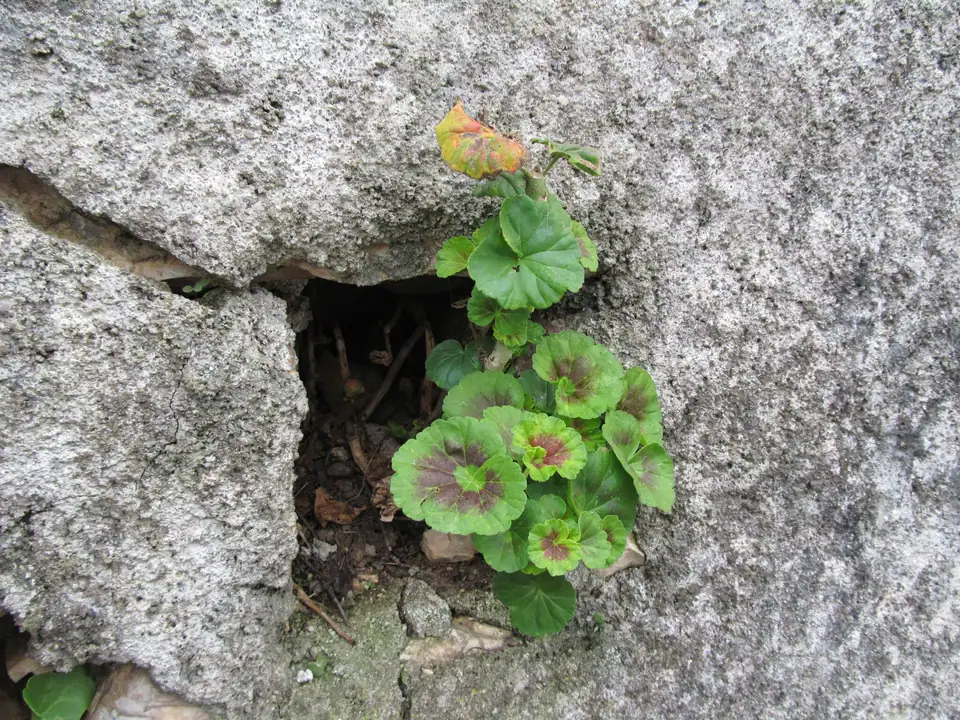
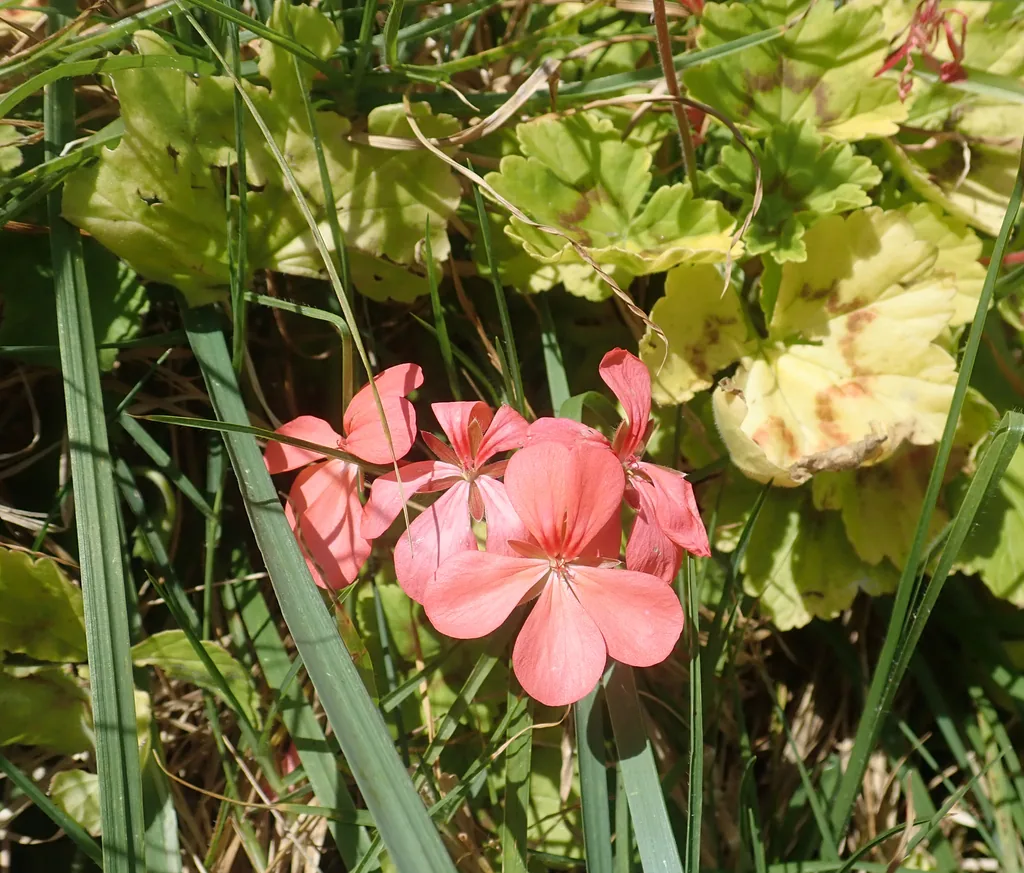
Cómo cultivar y cuidar Zonal geranium
Pelargonium hortorum
Escrito por Emilio Marruso · última revisión
Tóxica para: Gatos, Perros, Caballos, Personas · Por qué
De un vistazo
El geranio es de lo más agradecido: una vez arraigado aguanta la sequía, y con un riego moderado te premia con más hojas y más flores. Siembra en interior en enero o febrero y las semillas brotan en una a tres semanas, o prueba con esquejes de tallo. Se da bien en maceta e incluso dentro de casa, así que puedes llenar de flores cualquier rincón.
- Riego
Aguanta la sequía una vez arraigado; con riego moderado crece y florece más
Qué dicen las fuentes (1)
Riego: Tolerante a la sequía una vez establecida; crecimiento y floración más exuberantes con humedad moderada; las plantas en maceta pueden dejarse secar entre riegos.
Once established, plants are drought-tolerant, but they grow and flower more luxuriantly with moderate moisture. Plants in containers may be allowed to dry out between waterings.
— Pelargonium x hybridum (Bedding Pelargonium, Geranium, Pelargonium, Zonal Pelargonium) | North Carolina Extension Gardener Plant Toolbox [1] - Distancia
30–60 cm entre plantas
Qué dicen las fuentes (1)
Distancia de plantación: 30.5-61.0 cm (12-24 pulgadas)
Geraniums used as bedding plants can be spaced 12 to 24 inches apart to form a solid, colorful ground cover.
— FPS458 [2] - Plantación
Planta en el exterior después de la última helada
Qué dicen las fuentes (3)
Plantación: Después de la última helada
sur y centro de Florida: Planting in a full to partial sun location in the landscape can be done from October to about March in south and central Florida.
— FPS458 [2] norte y oeste de Florida: Plant in the spring after danger of frost in the north and western part of Florida.
— FPS458 [2] Seeds should be started indoors in January or February on top of a heat mat set to 70 to 75 degrees. Plant outside after the last frost.
— Pelargonium x hybridum (Bedding Pelargonium, Geranium, Pelargonium, Zonal Pelargonium) | North Carolina Extension Gardener Plant Toolbox [1] - Abonado
Abona cada 4–6 semanas mientras crece; riega después y no lo eches sobre las hojas
Qué dicen las fuentes (8)
Frecuencia: Cada 4 a 6 semanas durante la temporada de crecimiento
en contenedores, fertilizante líquido: Apply the solution around the plants when watering. Apply a liquid fertilizer at least once every three weeks.
— GERANIUMS [8] en contenedores, fertilizante seco: Dry garden-type fertilizers can also be used. Apply these once every three to four weeks at ½ level teaspoonful per 6-inch pot.
— GERANIUMS [8] en contenedores: Soluble or slow-release fertilizers are best for container-grown plants. Fertilize semi-monthly from March through October.
— Growing Geraniums Indoors | Home & Garden Information Center [7] Geraniums usually require additional fertilizer during the growing season every four to six weeks.
— Annual Geranium (Pelargonium) | Home & Garden Information Center [6] Avoid putting fertilizer on the leaves or the stems of geraniums. Geraniums require fertilization every 4 to 6 weeks.
— GERANIUMS [8] Evitar: Fertilizante sobre hojas o tallos; fertilizante no regado (daño por sales solubles); alimentar suelo seco; dosis completas en poca luz o en invierno
Apply fertilizer evenly around the plants and water into the soil to reduce the danger of soluble salt injury.
— GERANIUMS [8] Avoid putting fertilizer on the leaves or the stems of geraniums. Geraniums require fertilization every 4 to 6 weeks.
— GERANIUMS [8] If plants are being grown where light intensity is low or indoors during the winter months, reduce the amount of fertilizer accordingly. Apply fertilizer according to directions on the label, and make sure that the soil is moist before applying.
— Growing Geraniums Indoors | Home & Garden Information Center [7] - Poda
Pódalo a principios de otoño
Qué dicen las fuentes (2)
- Plagas
Pulgón y mosca blanca; mancha bacteriana y moho gris
Qué dicen las fuentes (2)
Plagas: áfidos, chinche de cuatro líneas, mosca blanca del invernadero, mosca blanca de la batata
Aphids suck plant juices and heavy infestations cause distorted growth. Four-lined plant bug causes small, round, sunken, brown spots to form on the leaves.
— FPS458 [2] Enfermedades: mancha bacteriana de la hoja, tizón de la flor (moho gris), pudrición del tallo (pierna negra), fascación bacteriana
Bacterial leaf spot causes spots on the leaves of garden plants, particularly if they are overcrowded.
— FPS458 [2] - Tamaño
30–60 cm de ancho
Qué dicen las fuentes (1)
Anchura adulta: 30-61 cm (1-2 pies)
Description Height: 1 to 2 feet Spread: 1 to 2 feet Plant habit: round; upright Plant density: moderate
— FPS458 [2] - Multiplicación
Se multiplica por semilla o por esquejes de tallo
Qué dicen las fuentes (2)
Propagación: Semilla; esquejes de tallo
Geraniums are propagated by seed or cuttings. Cuttings need at least three nodes and are usually taken in late summer.
— FPS458 [2] Stem cuttings may be taken from July to August and grown under glass or in a sunny window until the danger of frost has passed.
— Pelargonium x hybridum (Bedding Pelargonium, Geranium, Pelargonium, Zonal Pelargonium) | North Carolina Extension Gardener Plant Toolbox [1] - Siembra
Siembra en interior en enero–febrero, a 3 mm de profundidad; brota en 1–3 semanas
Qué dicen las fuentes (3)
Siembra: Enero-febrero (en interiores)
Seeds should be started indoors in January or February on top of a heat mat set to 70 to 75 degrees. Plant outside after the last frost.
— Pelargonium x hybridum (Bedding Pelargonium, Geranium, Pelargonium, Zonal Pelargonium) | North Carolina Extension Gardener Plant Toolbox [1] Profundidad de siembra: 0.3 cm [0,1 in] (un octavo de pulgada)
Cover the seed with about an eighth-inch of soil.
— FPS458 [2] Días de germinación: 7-21 (una a tres semanas)
The seed germinates in one to three weeks at temperatures between 70˚F–75˚F.
— FPS458 [2] - Maceta
Crece en maceta y en interior; deja secar la tierra de la maceta entre riegos
Qué dicen las fuentes (3)
En maceta: Sí
Pelargonium is a popular plant for hanging baskets, containers and garden beds.
— Pelargonium x hybridum (Bedding Pelargonium, Geranium, Pelargonium, Zonal Pelargonium) | North Carolina Extension Gardener Plant Toolbox [1] En interior: Sí
It can be overwintered indoors as a houseplant in a bright location.
— Pelargonium x hybridum (Bedding Pelargonium, Geranium, Pelargonium, Zonal Pelargonium) | North Carolina Extension Gardener Plant Toolbox [1] Riego: Tolerante a la sequía una vez establecida; crecimiento y floración más exuberantes con humedad moderada; las plantas en maceta pueden dejarse secar entre riegos.
Once established, plants are drought-tolerant, but they grow and flower more luxuriantly with moderate moisture. Plants in containers may be allowed to dry out between waterings.
— Pelargonium x hybridum (Bedding Pelargonium, Geranium, Pelargonium, Zonal Pelargonium) | North Carolina Extension Gardener Plant Toolbox [1] - Seguridad
Levemente tóxico para las personas; perjudicial para gatos, perros y caballos
Resumen
El pelargonio zonal es una perenne tierna de bajo mantenimiento que se cultiva como anual o como planta de interior. [1] NC State Extension lo lista como una planta venenosa de baja severidad que puede causar dermatitis por contacto. [1]
Citado en inglés, como en la fuente.
Esta ficha está incompleta: las fuentes consultadas aún no cubren todos los campos.
Aún no cubierto por nuestras fuentes: Rusticidad, zona más fría, Rusticidad, zona más cálida
Cuidados
Riego
Riego
Tolerante a la sequía una vez establecida; crecimiento y floración más exuberantes con humedad moderada; las plantas en maceta pueden dejarse secar entre riegos.
Qué dicen las fuentes (1)
Once established, plants are drought-tolerant, but they grow and flower more luxuriantly with moderate moisture. Plants in containers may be allowed to dry out between waterings.Notas sobre el riego
Plantas que pasan el invierno en estado latente: riega con moderación, solo cuando las plantas muestren signos de marchitamiento.
Qué dicen las fuentes (1)
Otherwise, they should be kept very dry and allowed to go dormant. Water the plants sparingly, only when the plants show signs of wilting.Luz
Las fuentes no coinciden:
Qué dicen las fuentes (2)
Zonal pelargonium requires full sun and soils that are well-drained.Geraniums grow best in full to partial sun in loamy, well-drained soil.Clima y frío
Rusticidad, zona más fría
No figura en las fuentes consultadas.
Rusticidad, zona más cálida
No figura en las fuentes consultadas.
Dónde cultivarla
En interior
Sí
Qué dicen las fuentes (1)
It can be overwintered indoors as a houseplant in a bright location.En maceta
Sí
Qué dicen las fuentes (1)
Pelargonium is a popular plant for hanging baskets, containers and garden beds.Distancia de plantación
30.5-61.0 cm (12-24 pulgadas)
Qué dicen las fuentes (1)
Geraniums used as bedding plants can be spaced 12 to 24 inches apart to form a solid, colorful ground cover.Propagación
Semilla; esquejes de tallo
Qué dicen las fuentes (2)
Geraniums are propagated by seed or cuttings. Cuttings need at least three nodes and are usually taken in late summer.Stem cuttings may be taken from July to August and grown under glass or in a sunny window until the danger of frost has passed.Cultivo
La planta
Ciclo de vida
Familia
Geraniaceae
Qué dicen las fuentes (1)
Common name(s): geranium Family: Geraniaceae Plant type: annual USDA hardiness zones: all zonesAltura adulta
Anchura adulta
30-61 cm (1-2 pies)
Qué dicen las fuentes (1)
Description Height: 1 to 2 feet Spread: 1 to 2 feet Plant habit: round; upright Plant density: moderateSiembra y crecimiento
Días de germinación
7-21 (una a tres semanas)
Qué dicen las fuentes (1)
The seed germinates in one to three weeks at temperatures between 70˚F–75˚F.Profundidad de siembra
0.3 cm [0,1 in] (un octavo de pulgada)
Qué dicen las fuentes (1)
Cover the seed with about an eighth-inch of soil.Plagas y enfermedades
Plagas
áfidos, chinche de cuatro líneas, mosca blanca del invernadero, mosca blanca de la batata
Qué dicen las fuentes (1)
Aphids suck plant juices and heavy infestations cause distorted growth. Four-lined plant bug causes small, round, sunken, brown spots to form on the leaves.Enfermedades
mancha bacteriana de la hoja, tizón de la flor (moho gris), pudrición del tallo (pierna negra), fascación bacteriana
Qué dicen las fuentes (1)
Bacterial leaf spot causes spots on the leaves of garden plants, particularly if they are overcrowded.Abonado
Cuándo
Al plantar, incorporado al suelo, y luego durante toda la temporada de crecimiento
Lo que dice cada fuente
en contenedores: De marzo a octubre
norte de Florida: A principios de otoño, después de podar las plantas
Qué dicen las fuentes (4)
en contenedores: Soluble or slow-release fertilizers are best for container-grown plants. Fertilize semi-monthly from March through October.norte de Florida: Flowering fades by mid to late summer. Cut plants back in north Florida in early fall and fertilize to stimulate new growth and improve appearance.Fertilize new flowerbeds with one pound of a 10-20-10 (or equivalent) fertilizer per 100 square feet.Geraniums usually require additional fertilizer during the growing season every four to six weeks.Frecuencia
Cada 4 a 6 semanas durante la temporada de crecimiento
Lo que dice cada fuente
en contenedores, fertilizante líquido: Al menos cada 3 semanas
en contenedores, fertilizante seco: Cada 3 a 4 semanas
en contenedores: Dos veces al mes de marzo a octubre
Qué dicen las fuentes (5)
en contenedores, fertilizante líquido: Apply the solution around the plants when watering. Apply a liquid fertilizer at least once every three weeks.en contenedores, fertilizante seco: Dry garden-type fertilizers can also be used. Apply these once every three to four weeks at ½ level teaspoonful per 6-inch pot.en contenedores: Soluble or slow-release fertilizers are best for container-grown plants. Fertilize semi-monthly from March through October.Geraniums usually require additional fertilizer during the growing season every four to six weeks.Avoid putting fertilizer on the leaves or the stems of geraniums. Geraniums require fertilization every 4 to 6 weeks.Abonos naturales
Compost, mantillo de hojas, corteza molida o estiércol bien descompuesto incorporado al suelo antes de plantar
Qué dicen las fuentes (1)
Compost, leaf mold, ground bark, well-rotted manure and peat moss are ideal sources of organic matter.Abonos minerales
10-10-10 u 8-8-8 a 97,6 g/m² durante la temporada; fórmulas solubles en agua para alimentación de seguimiento
Lo que dice cada fuente
camas nuevas: 10-20-10 a 48,8 g/m², mezclado bien en el suelo
camas nuevas: 5-10-15 o 6-12-12 a 97,6–146 g/m²
en contenedores: Fertilizante soluble o de liberación lenta
en contenedores: Fertilizante de jardín seco a 2,45 mL por maceta de 15,2 cm [6 in]
Qué dicen las fuentes (6)
camas nuevas: Fertilize new flowerbeds with one pound of a 10-20-10 (or equivalent) fertilizer per 100 square feet.camas nuevas: A garden fertilizer such as 5-10-15 or 6-12-12 analysis applied at a rate of 2 to 3 pounds per 100 square feet (1 heaping teaspoonful per square foot) is recommended.en contenedores: Soluble or slow-release fertilizers are best for container-grown plants. Fertilize semi-monthly from March through October.en contenedores: Dry garden-type fertilizers can also be used. Apply these once every three to four weeks at ½ level teaspoonful per 6-inch pot.An analysis such as 10-10-10 or 8-8-8 can be used at the rate of 2 pounds per 100 square feet (1 tea-spoonful per square foot).A water-soluble formula works well for follow-up fertilizations.Microelementos
Calcio y magnesio de cal dolomítica, 122 g/m² cuando no hay análisis de suelo disponible
Qué dicen las fuentes (1)
In the absence of a soil test, add 2½ pounds of dolomitic lime per 100 square feet (1 teaspoonful per square foot) to supply calcium and magnesium.Evitar
Fertilizante sobre hojas o tallos; fertilizante no regado (daño por sales solubles); alimentar suelo seco; dosis completas en poca luz o en invierno
Qué dicen las fuentes (3)
Apply fertilizer evenly around the plants and water into the soil to reduce the danger of soluble salt injury.Avoid putting fertilizer on the leaves or the stems of geraniums. Geraniums require fertilization every 4 to 6 weeks.If plants are being grown where light intensity is low or indoors during the winter months, reduce the amount of fertilizer accordingly. Apply fertilizer according to directions on the label, and make sure that the soil is moist before applying.Signos de carencia
Crecimiento atrofiado y hojas amarillas (muy poco nitrógeno)
Qué dicen las fuentes (2)
Geraniums respond well to fertilizer and are stunted and yellowed if not provided enough nitrogen.Geraniums grow best when fertilized at regular intervals. Yellow leaves could be a sign you waited too long to fertilize.Signos de exceso
Acumulación de sales solubles que daña las raíces pequeñas de alimentación
Qué dicen las fuentes (1)
Some water should drain out of the pot after watering to leach away excess fertilizer (called “soluble salts”) and prevent any accumulation that can cause injury to small feeder roots.Problemas
Pulgones
Síntoma: Las infestaciones graves causan crecimiento deformado.
Qué dicen las fuentes (1)
Aphids suck plant juices and heavy infestations cause distorted growth.
— FPS458 [2] Moscas blancas
Síntoma: La mosca blanca de invernadero y la mosca blanca del boniato pueden acumularse rápidamente en los geranios.
Qué hacer: La detección temprana y el control son necesarios.
Qué dicen las fuentes (1)
Greenhouse whitefly and sweet potato whitefly can rapidly build up on geraniums. Early detection and control is necessary.
— FPS458 [2] Mancha bacteriana en las hojas
Síntoma: Manchas pequeñas, circulares o irregulares, marrones y hundidas en las hojas, peores en las hojas inferiores.
Qué hacer: Usa el espaciado adecuado y arranca y destruye las hojas infectadas.
Moho gris (tizón de la flor)
Síntoma: Decoloración de los pétalos y caída de las flores; puede verse moho gris en las hojas.
Qué dicen las fuentes (1)
Blossom blight or gray mold causes flower petal discol-oration and flower drop.
— FPS458 [2]
Remedios
Cada remedio indica qué dicen las fuentes oficiales; los remedios tradicionales sin fuente oficial aparecen marcados. Los perjudiciales están para que sepas evitarlos.
Cuidar la planta
pulgones
spray de jabón insecticida Funciona
Cómo: Una pulverización de jabón insecticida o aceite hortícola ultrafino controlará los áfidos.
A spray of insecticidal soap, ultrafine horticultural oil or malathion, which are among the compounds registered for use against this pest in Connecticut, will control aphids.
— portal.ct.gov [9] Qué dicen las pruebas A spray of insecticidal soap, ultrafine horticultural oil or malathion, which are among the compounds registered for use against this pest in Connecticut, will control aphids.
— portal.ct.gov [9]
moscas blancas
spray de jabón insecticida Funciona en parte
Cómo: Se pulveriza en el envés de las hojas; a una concentración baja, de medio por ciento, el jabón es selectivamente tóxico para las moscas blancas, no para las avispas parasitoides.
Insecticidal soap or ultrafine horticultural oil, which are among the compounds registered for control of this pest in Connecticut, sprayed on the undersides of leaves, can be used against whiteflies in the greenhouse or landscape.
— portal.ct.gov [9] Qué dicen las pruebas Insecticidal soap or ultrafine horticultural oil, which are among the compounds registered for control of this pest in Connecticut, sprayed on the undersides of leaves, can be used against whiteflies in the greenhouse or landscape.
— portal.ct.gov [9] spray de neem Fuente oficial, sin prueba independiente
Cómo: La azadiractina (neem), dirigida al envés de las hojas, actúa como regulador del crecimiento de los insectos; probablemente se necesitarán aplicaciones repetidas.
Azadiractin (neem) or fenoxycarb, also directed to the undersides of the leaves, act as insect growth regulators. Repeat applications will probably be needed because some stages in the life cycle are unaffected by insecticides.
— portal.ct.gov [9]
babosas
banda de tierra de diatomeas Funciona
Cómo: Una banda de tierra de diatomeas colocada alrededor de los geranios recién plantados.
A band of diatomaceous earth put around newly planted geraniums will control slugs by rupturing their epidermis.
— portal.ct.gov [9] Qué dicen las pruebas A band of diatomaceous earth put around newly planted geraniums will control slugs by rupturing their epidermis.
— portal.ct.gov [9] trampa de cerveza Funciona
Cómo: Un recipiente con cerveza hundido en el suelo, con un techo para protegerlo del sol y evitar que los animales grandes entren, atrae a las babosas y se ahogan.
A bowl of beer, sunk into the ground, with a roof to protect from sun and keep large animals out, will act as a bait and the slugs will drown.
— portal.ct.gov [9] Qué dicen las pruebas A bowl of beer, sunk into the ground, with a roof to protect from sun and keep large animals out, will act as a bait and the slugs will drown.
— portal.ct.gov [9] trampa de tabla y eliminación manual Fuente oficial, sin prueba independiente
Cómo: Una tabla pequeña en el macizo de flores les da a las babosas un lugar para esconderse durante el día, así se pueden destruir muchas a la vez.
Placing a small board in the flowerbed for the slugs to hide under during the day makes it easy to destroy many at one time.
— portal.ct.gov [9]
tizón de botrytis
eliminación de flores marchitas Funciona en parte
Cómo: Arregla las plantas y retira las flores marchitas o senescentes; evita mojar las flores al regar y evita el apiñamiento de las plantas.
Good sanitation practices including grooming the plants and removing spent or senescing flowers can minimize the potential for infection.
— portal.ct.gov [9] Qué dicen las pruebas Good sanitation practices including grooming the plants and removing spent or senescing flowers can minimize the potential for infection.
— portal.ct.gov [9]
Tizón bacteriano
Eliminación de plantas enfermas y evitar el riego por aspersión Fuente oficial, sin prueba independiente
Cómo: Elimina las plantas enfermas y evita el riego por aspersión, ya que las bacterias se propagan fácilmente en el agua salpicada.
However, removing and roguing of diseased plants is critical. It is also important to avoid overhead irrigation since these bacteria are easily spread in splashing water.
— portal.ct.gov [9]
Gusano del tabaco
recogida manual de orugas Fuente oficial, sin prueba independiente
Cómo: Inspecciona al anochecer, cuando las larvas están más activas, y recoge y destruye las larvas y los brotes infestados.
Monitor plants closely for damage. Handpick and destroy larvae and infested buds on roses, petunias, and geraniums.
— hortsense.cahnrs.wsu.edu [10] bacillus thuringiensis (bt) Funciona en parte
Cómo: Se aplica cuando se notan los primeros huevos o daños; solo funciona donde las larvas jóvenes se alimentan en la superficie de la planta.
Bacillus thuringiensis (Bt) is somewhat effective if applied when eggs or damage are first noticed.
— hortsense.cahnrs.wsu.edu [10] Qué dicen las pruebas Bacillus thuringiensis (Bt) is somewhat effective if applied when eggs or damage are first noticed.
— hortsense.cahnrs.wsu.edu [10]
Venenosa para los animales
Según la fuente, citada textualmente. No es un consejo médico ni veterinario: si una persona o un animal pudo haber ingerido esta planta, contacta con un centro de toxicología o con un veterinario.
Animales
Poisonous to Humans Problem for Cats Problem for Dogs Problem for Horses
[1]La fuente señala el riesgo para este animal pero no explica por qué.
Personas
Calendario
Enero-febrero (en interiores)
Qué dicen las fuentes (1)
Seeds should be started indoors in January or February on top of a heat mat set to 70 to 75 degrees. Plant outside after the last frost.Después de la última helada
Lo que dice cada fuente
sur y centro de Florida: De octubre hasta aproximadamente marzo
norte y oeste de Florida: Primavera, después del peligro de heladas
Qué dicen las fuentes (3)
sur y centro de Florida: Planting in a full to partial sun location in the landscape can be done from October to about March in south and central Florida.norte y oeste de Florida: Plant in the spring after danger of frost in the north and western part of Florida.Seeds should be started indoors in January or February on top of a heat mat set to 70 to 75 degrees. Plant outside after the last frost.Principios de otoño
Lo que dice cada fuente
norte de Florida: Principios de otoño
Meses tal como los dan las fuentes, en su mayoría de Estados Unidos (hemisferio norte). En el hemisferio sur se desplazan unos seis meses.
Valores orientativos
Valores de una fuente secundaria, no comprobados palabra por palabra como el resto de esta página. Úselos como punto de partida.
- pH del suelo
- 6-6.5Valor orientativo, adáptalo a tu clima · Fuente secundaria
- Zonas de rusticidad USDA
- 10-11 [mínima invernal de −1,1 a 10 °C (de 30 a 50 °F)]Valor orientativo, adáptalo a tu clima · Fuente secundaria
- Nivel de cuidado
- MedioValor orientativo, adáptalo a tu clima · Fuente secundaria
- Crecimiento
- AltaValor orientativo, adáptalo a tu clima · Fuente secundaria
Plantas similares
- Ivy Geranium Pelargonium peltatum
- Geranio Pelargonium graveolens
- Bloody Cranesbill Geranium Geranium sanguineum
- Meadow Crane's-bill Geranium pratense
- Wild Geranium Geranium maculatum
- Wood Crane's-bill Geranium sylvaticum
- Hipérico rastrero Hypericum calycinum
- Abeto de Vancuver Abies grandis
Fuentes
Cada valor anterior se cita de estos documentos. Los enlaces llevan al editor original.
- Pelargonium x hybridum (Bedding Pelargonium, Geranium, Pelargonium, Zonal Pelargonium) | North Carolina Extension Gardener Plant Toolbox · plants.ces.ncsu.edu, consultado
- FPS458 · edis.ifas.ufl.edu, consultado
- Zonal Geranium · uaex.uada.edu, consultado
- Zonal Pelargonium - Pelargonium x hybridum | North Carolina Extension Gardener Plant Toolbox · plants.ces.ncsu.edu, consultado
- How to Grow and Care for Garden Geraniums | Gardener’s Path · gardenerspath.com, consultado
- Annual Geranium (Pelargonium) | Home & Garden Information Center · hgic.clemson.edu, consultado
- Growing Geraniums Indoors | Home & Garden Information Center · hgic.clemson.edu, consultado
- GERANIUMS · openscholar.uga.edu, consultado
- portal.ct.gov · portal.ct.gov
- hortsense.cahnrs.wsu.edu · hortsense.cahnrs.wsu.edu
Escrito por Emilio Marruso · última revisión