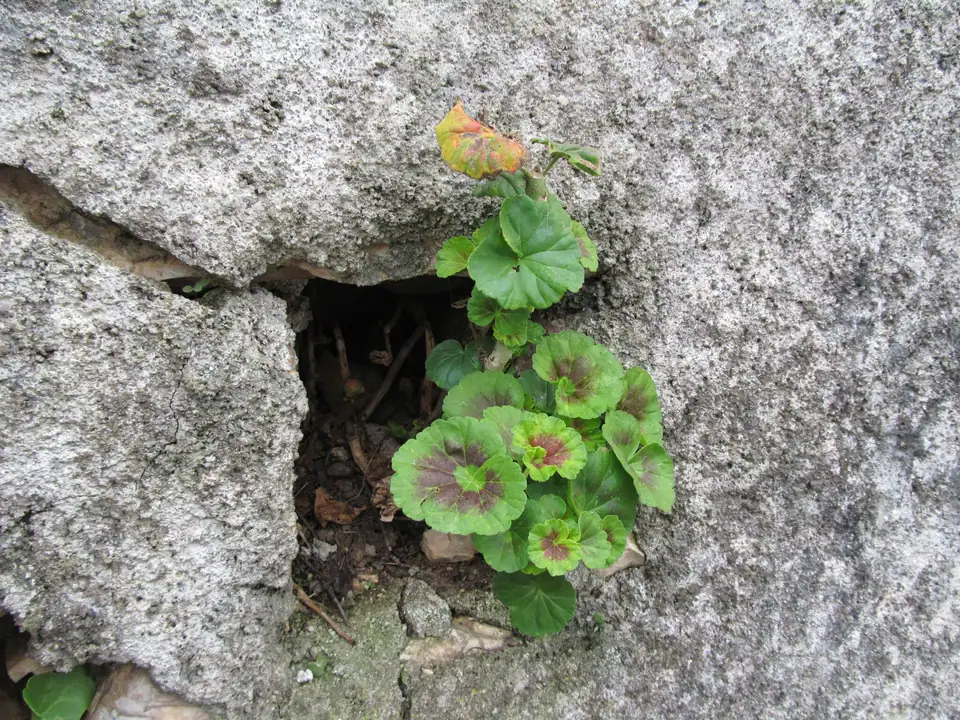
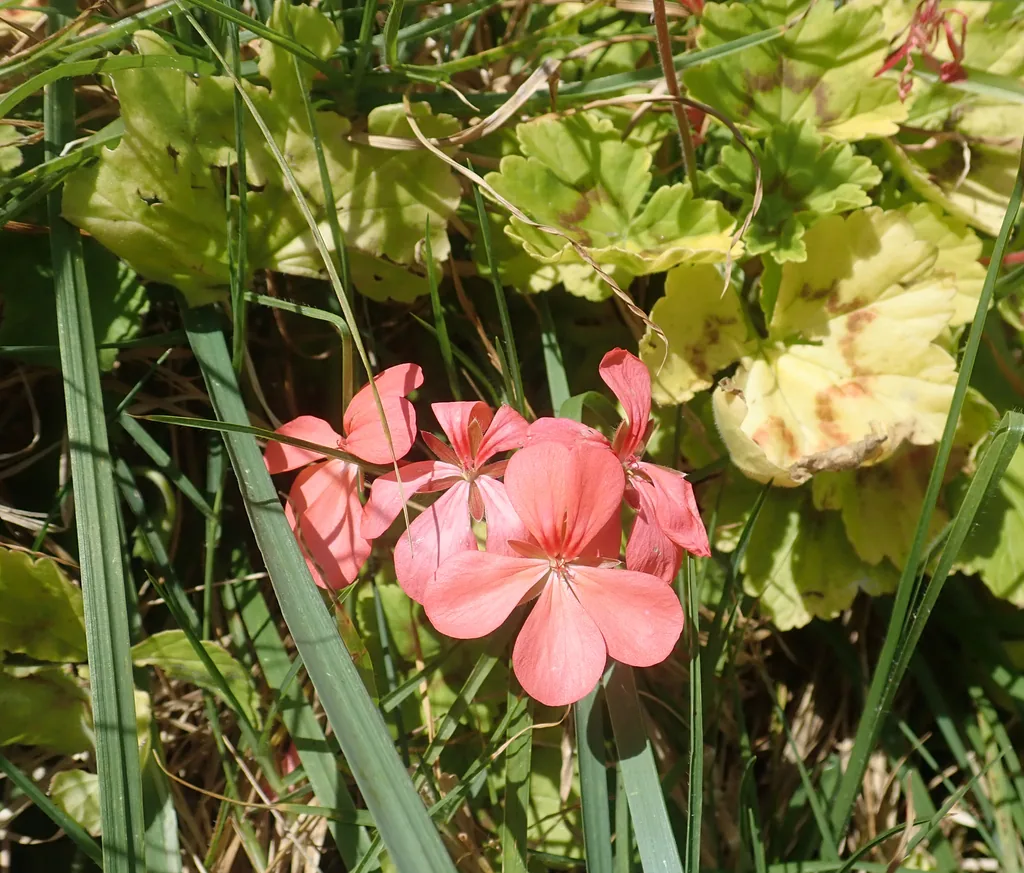
How to Grow and Care for Zonal geranium
Pelargonium hortorum
Written by Emilio Marruso · last checked
Toxic to: Cats, Dogs, Horses, People · Why
At a glance
Geraniums are easygoing: once settled they shrug off dry spells, yet a little moderate watering rewards you with lusher growth and more flowers. Sow the seeds indoors in January or February and they sprout in one to three weeks, or simply root stem cuttings. They thrive in pots and indoors too, so a cheerful splash of blooms can live almost anywhere.
- Water
Handles drought once settled; moderate watering gives more growth and flowers
What the sources say (1)
Watering: Drought-tolerant once established; more luxuriant growth and flowering with moderate moisture; container plants may be allowed to dry out between waterings
Once established, plants are drought-tolerant, but they grow and flower more luxuriantly with moderate moisture. Plants in containers may be allowed to dry out between waterings.
— Pelargonium x hybridum (Bedding Pelargonium, Geranium, Pelargonium, Zonal Pelargonium) | North Carolina Extension Gardener Plant Toolbox [1] - Spacing
12–24 in between plants
What the sources say (1)
Spacing: 30.5-61.0 cm (12-24 in)
Geraniums used as bedding plants can be spaced 12 to 24 inches apart to form a solid, colorful ground cover.
— FPS458 [2] - Planting
Plant outdoors after the last frost
What the sources say (3)
Planting: After the last frost
south and central Florida: Planting in a full to partial sun location in the landscape can be done from October to about March in south and central Florida.
— FPS458 [2] north and western Florida: Plant in the spring after danger of frost in the north and western part of Florida.
— FPS458 [2] Seeds should be started indoors in January or February on top of a heat mat set to 70 to 75 degrees. Plant outside after the last frost.
— Pelargonium x hybridum (Bedding Pelargonium, Geranium, Pelargonium, Zonal Pelargonium) | North Carolina Extension Gardener Plant Toolbox [1] - Feeding
Feed every 4–6 weeks while growing; water it in and keep it off the leaves
What the sources say (8)
How often: Every 4 to 6 weeks during the growing season
in containers, liquid fertilizer: Apply the solution around the plants when watering. Apply a liquid fertilizer at least once every three weeks.
— GERANIUMS [8] in containers, dry fertilizer: Dry garden-type fertilizers can also be used. Apply these once every three to four weeks at ½ level teaspoonful per 6-inch pot.
— GERANIUMS [8] in containers: Soluble or slow-release fertilizers are best for container-grown plants. Fertilize semi-monthly from March through October.
— Growing Geraniums Indoors | Home & Garden Information Center [7] Geraniums usually require additional fertilizer during the growing season every four to six weeks.
— Annual Geranium (Pelargonium) | Home & Garden Information Center [6] Avoid putting fertilizer on the leaves or the stems of geraniums. Geraniums require fertilization every 4 to 6 weeks.
— GERANIUMS [8] Avoid: Fertilizer on leaves or stems; fertilizer not watered in (soluble salt injury); feeding dry soil; full rates in low light or indoors in winter
Apply fertilizer evenly around the plants and water into the soil to reduce the danger of soluble salt injury.
— GERANIUMS [8] Avoid putting fertilizer on the leaves or the stems of geraniums. Geraniums require fertilization every 4 to 6 weeks.
— GERANIUMS [8] If plants are being grown where light intensity is low or indoors during the winter months, reduce the amount of fertilizer accordingly. Apply fertilizer according to directions on the label, and make sure that the soil is moist before applying.
— Growing Geraniums Indoors | Home & Garden Information Center [7] - Pruning
Cut back in early fall
- Pests
Aphids and whiteflies; bacterial leaf spot and gray mold
What the sources say (2)
Pests: aphids, four-lined plant bug, greenhouse whitefly, sweet potato whitefly
Aphids suck plant juices and heavy infestations cause distorted growth. Four-lined plant bug causes small, round, sunken, brown spots to form on the leaves.
— FPS458 [2] Diseases: bacterial leaf spot, blossom blight (gray mold), stem rot (blackleg), bacterial fasciation
Bacterial leaf spot causes spots on the leaves of garden plants, particularly if they are overcrowded.
— FPS458 [2] - Size
1–2 ft wide
What the sources say (1)
Mature width: 30-61 cm (1-2 feet)
Description Height: 1 to 2 feet Spread: 1 to 2 feet Plant habit: round; upright Plant density: moderate
— FPS458 [2] - Propagation
Grow new plants from seed or stem cuttings
What the sources say (2)
Propagation: Seed; stem cuttings
Geraniums are propagated by seed or cuttings. Cuttings need at least three nodes and are usually taken in late summer.
— FPS458 [2] Stem cuttings may be taken from July to August and grown under glass or in a sunny window until the danger of frost has passed.
— Pelargonium x hybridum (Bedding Pelargonium, Geranium, Pelargonium, Zonal Pelargonium) | North Carolina Extension Gardener Plant Toolbox [1] - Sowing
Sow indoors in January–February, 1/8 in deep; sprouts in 1–3 weeks
What the sources say (3)
Sowing: January-February (indoors)
Seeds should be started indoors in January or February on top of a heat mat set to 70 to 75 degrees. Plant outside after the last frost.
— Pelargonium x hybridum (Bedding Pelargonium, Geranium, Pelargonium, Zonal Pelargonium) | North Carolina Extension Gardener Plant Toolbox [1] Sowing depth: 0.3 cm [0.1 in] (an eighth-inch)
Cover the seed with about an eighth-inch of soil.
— FPS458 [2] Days to germination: 7-21 (one to three weeks)
The seed germinates in one to three weeks at temperatures between 70˚F–75˚F.
— FPS458 [2] - Containers
Grows in pots and indoors; let pots dry out between waterings
What the sources say (3)
In containers: Yes
Pelargonium is a popular plant for hanging baskets, containers and garden beds.
— Pelargonium x hybridum (Bedding Pelargonium, Geranium, Pelargonium, Zonal Pelargonium) | North Carolina Extension Gardener Plant Toolbox [1] Indoors: Yes
It can be overwintered indoors as a houseplant in a bright location.
— Pelargonium x hybridum (Bedding Pelargonium, Geranium, Pelargonium, Zonal Pelargonium) | North Carolina Extension Gardener Plant Toolbox [1] Watering: Drought-tolerant once established; more luxuriant growth and flowering with moderate moisture; container plants may be allowed to dry out between waterings
Once established, plants are drought-tolerant, but they grow and flower more luxuriantly with moderate moisture. Plants in containers may be allowed to dry out between waterings.
— Pelargonium x hybridum (Bedding Pelargonium, Geranium, Pelargonium, Zonal Pelargonium) | North Carolina Extension Gardener Plant Toolbox [1] - Safety
Mildly poisonous to people; harmful to cats, dogs and horses
Overview
Zonal pelargonium is a low-maintenance, tender perennial grown as an annual or a houseplant. [1] NC State Extension lists it as a low-severity poisonous plant that can cause contact dermatitis. [1]
This record is incomplete: the sources we read do not cover every field yet.
Not yet covered by our sources: Hardiness, coldest zone, Hardiness, warmest zone
Zonal geranium care
How to water Zonal geranium
Watering
Drought-tolerant once established; more luxuriant growth and flowering with moderate moisture; container plants may be allowed to dry out between waterings
What the sources say (1)
Once established, plants are drought-tolerant, but they grow and flower more luxuriantly with moderate moisture. Plants in containers may be allowed to dry out between waterings.Watering notes
Overwintered plants kept dormant: water sparingly, only when the plants show signs of wilting
What the sources say (1)
Otherwise, they should be kept very dry and allowed to go dormant. Water the plants sparingly, only when the plants show signs of wilting.How much light Zonal geranium needs
The sources disagree:
What the sources say (2)
Zonal pelargonium requires full sun and soils that are well-drained.Geraniums grow best in full to partial sun in loamy, well-drained soil.How much cold Zonal geranium can take
Hardiness, coldest zone
Not stated in the sources we read.
Hardiness, warmest zone
Not stated in the sources we read.
Where to grow Zonal geranium
Indoors
Yes
What the sources say (1)
It can be overwintered indoors as a houseplant in a bright location.In containers
Yes
What the sources say (1)
Pelargonium is a popular plant for hanging baskets, containers and garden beds.Spacing
30.5-61.0 cm (12-24 in)
What the sources say (1)
Geraniums used as bedding plants can be spaced 12 to 24 inches apart to form a solid, colorful ground cover.How to propagate Zonal geranium
Seed; stem cuttings
What the sources say (2)
Geraniums are propagated by seed or cuttings. Cuttings need at least three nodes and are usually taken in late summer.Stem cuttings may be taken from July to August and grown under glass or in a sunny window until the danger of frost has passed.How to grow Zonal geranium
The plant
Life cycle
Family
Geraniaceae
What the sources say (1)
Common name(s): geranium Family: Geraniaceae Plant type: annual USDA hardiness zones: all zonesMature height
Mature width
30-61 cm (1-2 feet)
What the sources say (1)
Description Height: 1 to 2 feet Spread: 1 to 2 feet Plant habit: round; upright Plant density: moderateSowing and growth
Days to germination
7-21 (one to three weeks)
What the sources say (1)
The seed germinates in one to three weeks at temperatures between 70˚F–75˚F.Sowing depth
0.3 cm [0.1 in] (an eighth-inch)
What the sources say (1)
Cover the seed with about an eighth-inch of soil.Pests and diseases
Pests
aphids, four-lined plant bug, greenhouse whitefly, sweet potato whitefly
What the sources say (1)
Aphids suck plant juices and heavy infestations cause distorted growth. Four-lined plant bug causes small, round, sunken, brown spots to form on the leaves.Diseases
bacterial leaf spot, blossom blight (gray mold), stem rot (blackleg), bacterial fasciation
What the sources say (1)
Bacterial leaf spot causes spots on the leaves of garden plants, particularly if they are overcrowded.Fertilizing
When
At planting, worked into the bed, then throughout the growing season
What each source says
in containers: March through October
north Florida: Early fall, after cutting the plants back
What the sources say (4)
in containers: Soluble or slow-release fertilizers are best for container-grown plants. Fertilize semi-monthly from March through October.north Florida: Flowering fades by mid to late summer. Cut plants back in north Florida in early fall and fertilize to stimulate new growth and improve appearance.Fertilize new flowerbeds with one pound of a 10-20-10 (or equivalent) fertilizer per 100 square feet.Geraniums usually require additional fertilizer during the growing season every four to six weeks.How often
Every 4 to 6 weeks during the growing season
What each source says
in containers, liquid fertilizer: At least every 3 weeks
in containers, dry fertilizer: Every 3 to 4 weeks
in containers: Twice a month from March through October
What the sources say (5)
in containers, liquid fertilizer: Apply the solution around the plants when watering. Apply a liquid fertilizer at least once every three weeks.in containers, dry fertilizer: Dry garden-type fertilizers can also be used. Apply these once every three to four weeks at ½ level teaspoonful per 6-inch pot.in containers: Soluble or slow-release fertilizers are best for container-grown plants. Fertilize semi-monthly from March through October.Geraniums usually require additional fertilizer during the growing season every four to six weeks.Avoid putting fertilizer on the leaves or the stems of geraniums. Geraniums require fertilization every 4 to 6 weeks.Natural fertilizers
Compost, leaf mold, ground bark or well-rotted manure worked into the bed before planting
What the sources say (1)
Compost, leaf mold, ground bark, well-rotted manure and peat moss are ideal sources of organic matter.Mineral fertilizers
10-10-10 or 8-8-8 at 97.6 g/m² during the season; water-soluble formulas for follow-up feeding
What each source says
new beds: 10-20-10 at 48.8 g/m², mixed well into the soil
new beds: 5-10-15 or 6-12-12 at 97.6–146 g/m²
in containers: Soluble or slow-release fertilizer
in containers: Dry garden fertilizer at 2.45 mL per 15.2 cm [6 in] pot
What the sources say (6)
new beds: Fertilize new flowerbeds with one pound of a 10-20-10 (or equivalent) fertilizer per 100 square feet.new beds: A garden fertilizer such as 5-10-15 or 6-12-12 analysis applied at a rate of 2 to 3 pounds per 100 square feet (1 heaping teaspoonful per square foot) is recommended.in containers: Soluble or slow-release fertilizers are best for container-grown plants. Fertilize semi-monthly from March through October.in containers: Dry garden-type fertilizers can also be used. Apply these once every three to four weeks at ½ level teaspoonful per 6-inch pot.An analysis such as 10-10-10 or 8-8-8 can be used at the rate of 2 pounds per 100 square feet (1 tea-spoonful per square foot).A water-soluble formula works well for follow-up fertilizations.Micronutrients
Calcium and magnesium from dolomitic lime, 122 g/m² when no soil test is available
What the sources say (1)
In the absence of a soil test, add 2½ pounds of dolomitic lime per 100 square feet (1 teaspoonful per square foot) to supply calcium and magnesium.Avoid
Fertilizer on leaves or stems; fertilizer not watered in (soluble salt injury); feeding dry soil; full rates in low light or indoors in winter
What the sources say (3)
Apply fertilizer evenly around the plants and water into the soil to reduce the danger of soluble salt injury.Avoid putting fertilizer on the leaves or the stems of geraniums. Geraniums require fertilization every 4 to 6 weeks.If plants are being grown where light intensity is low or indoors during the winter months, reduce the amount of fertilizer accordingly. Apply fertilizer according to directions on the label, and make sure that the soil is moist before applying.Signs of deficiency
Stunted growth and yellow leaves (too little nitrogen)
What the sources say (2)
Geraniums respond well to fertilizer and are stunted and yellowed if not provided enough nitrogen.Geraniums grow best when fertilized at regular intervals. Yellow leaves could be a sign you waited too long to fertilize.Signs of excess
Soluble salt build-up that injures the small feeder roots
What the sources say (1)
Some water should drain out of the pot after watering to leach away excess fertilizer (called “soluble salts”) and prevent any accumulation that can cause injury to small feeder roots.Zonal geranium pests and problems
Aphids
Symptom: Heavy infestations cause distorted growth.
What the sources say (1)
Aphids suck plant juices and heavy infestations cause distorted growth.
— FPS458 [2] Whiteflies
Symptom: Greenhouse whitefly and sweet potato whitefly can rapidly build up on geraniums.
What to do: Early detection and control is necessary.
What the sources say (1)
Greenhouse whitefly and sweet potato whitefly can rapidly build up on geraniums. Early detection and control is necessary.
— FPS458 [2] Bacterial leaf spot
Symptom: Small, circular or irregular, brown and sunken spots on the leaves, worse on the lower leaves.
What to do: Use proper spacing and pick off and destroy infected leaves.
Gray mold (blossom blight)
Symptom: Flower petal discoloration and flower drop; gray mold may be seen on the leaves.
What the sources say (1)
Blossom blight or gray mold causes flower petal discol-oration and flower drop.
— FPS458 [2]
Remedies
Each remedy shows what official sources say about it; traditional remedies without an official source are marked as such. Harmful ones are listed so you know to avoid them.
Treating the plant
aphids
insecticidal soap spray Works
How: A spray of insecticidal soap or ultrafine horticultural oil will control aphids.
A spray of insecticidal soap, ultrafine horticultural oil or malathion, which are among the compounds registered for use against this pest in Connecticut, will control aphids.
— portal.ct.gov [9] What the evidence says A spray of insecticidal soap, ultrafine horticultural oil or malathion, which are among the compounds registered for use against this pest in Connecticut, will control aphids.
— portal.ct.gov [9]
whiteflies
insecticidal soap spray Partly works
How: Sprayed on the undersides of leaves; at a low, half-percent concentration, soap is selectively toxic to whiteflies rather than parasitic wasps.
Insecticidal soap or ultrafine horticultural oil, which are among the compounds registered for control of this pest in Connecticut, sprayed on the undersides of leaves, can be used against whiteflies in the greenhouse or landscape.
— portal.ct.gov [9] What the evidence says Insecticidal soap or ultrafine horticultural oil, which are among the compounds registered for control of this pest in Connecticut, sprayed on the undersides of leaves, can be used against whiteflies in the greenhouse or landscape.
— portal.ct.gov [9] neem spray Official source, not independently tested
How: Azadirachtin (neem), directed to the undersides of the leaves, acts as an insect growth regulator; repeat applications will probably be needed.
Azadiractin (neem) or fenoxycarb, also directed to the undersides of the leaves, act as insect growth regulators. Repeat applications will probably be needed because some stages in the life cycle are unaffected by insecticides.
— portal.ct.gov [9]
slugs
diatomaceous earth band Works
How: A band of diatomaceous earth put around newly planted geraniums.
A band of diatomaceous earth put around newly planted geraniums will control slugs by rupturing their epidermis.
— portal.ct.gov [9] What the evidence says A band of diatomaceous earth put around newly planted geraniums will control slugs by rupturing their epidermis.
— portal.ct.gov [9] beer trap Works
How: A bowl of beer sunk into the ground, with a roof to protect it from sun and keep large animals out, baits the slugs and they drown.
A bowl of beer, sunk into the ground, with a roof to protect from sun and keep large animals out, will act as a bait and the slugs will drown.
— portal.ct.gov [9] What the evidence says A bowl of beer, sunk into the ground, with a roof to protect from sun and keep large animals out, will act as a bait and the slugs will drown.
— portal.ct.gov [9] board trap and hand removal Official source, not independently tested
How: A small board in the flowerbed gives the slugs a place to hide during the day, so many can be destroyed at one time.
Placing a small board in the flowerbed for the slugs to hide under during the day makes it easy to destroy many at one time.
— portal.ct.gov [9]
botrytis-blight
removing spent flowers Partly works
How: Groom the plants and remove spent or senescing flowers; avoid wetting the flowers when watering and crowding plants.
Good sanitation practices including grooming the plants and removing spent or senescing flowers can minimize the potential for infection.
— portal.ct.gov [9] What the evidence says Good sanitation practices including grooming the plants and removing spent or senescing flowers can minimize the potential for infection.
— portal.ct.gov [9]
bacterial-blight
roguing diseased plants and avoiding overhead watering Official source, not independently tested
How: Remove diseased plants and avoid overhead irrigation, since the bacteria are easily spread in splashing water.
However, removing and roguing of diseased plants is critical. It is also important to avoid overhead irrigation since these bacteria are easily spread in splashing water.
— portal.ct.gov [9]
tobacco-budworm
hand picking caterpillars Official source, not independently tested
How: Scout at dusk, when larvae are most active, and handpick and destroy larvae and infested buds.
Monitor plants closely for damage. Handpick and destroy larvae and infested buds on roses, petunias, and geraniums.
— hortsense.cahnrs.wsu.edu [10] bacillus thuringiensis (bt) Partly works
How: Applied when eggs or damage are first noticed; only works where young larvae feed on the surface of the plant.
Bacillus thuringiensis (Bt) is somewhat effective if applied when eggs or damage are first noticed.
— hortsense.cahnrs.wsu.edu [10] What the evidence says Bacillus thuringiensis (Bt) is somewhat effective if applied when eggs or damage are first noticed.
— hortsense.cahnrs.wsu.edu [10]
Is Zonal geranium toxic to pets?
Reported by the source, quoted verbatim. This is not medical or veterinary advice: if a person or an animal may have eaten this plant, contact a poison control centre or a veterinarian.
Animals
Poisonous to Humans Problem for Cats Problem for Dogs Problem for Horses
[1]The source flags the risk for this animal but does not explain why.
People
Calendar
January-February (indoors)
What the sources say (1)
Seeds should be started indoors in January or February on top of a heat mat set to 70 to 75 degrees. Plant outside after the last frost.After the last frost
What each source says
south and central Florida: October to about March
north and western Florida: Spring, after danger of frost
What the sources say (3)
south and central Florida: Planting in a full to partial sun location in the landscape can be done from October to about March in south and central Florida.north and western Florida: Plant in the spring after danger of frost in the north and western part of Florida.Seeds should be started indoors in January or February on top of a heat mat set to 70 to 75 degrees. Plant outside after the last frost.Early fall
What each source says
north Florida: Early fall
Months as given by the sources, which are mostly from the United States (northern hemisphere). In the southern hemisphere they shift by about six months.
Indicative values
Values from a secondary source, not checked word for word like the rest of this page. Use them as a starting point.
- Soil pH
- 6-6.5Indicative value, adapt it to your climate · Secondary source
- USDA hardiness zones
- 10-11 [winter low −1.1 to 10 °C (30 to 50 °F)]Indicative value, adapt it to your climate · Secondary source
- Care level
- MediumIndicative value, adapt it to your climate · Secondary source
- Growth rate
- HighIndicative value, adapt it to your climate · Secondary source
Similar plants
- Ivy Geranium Pelargonium peltatum
- Sweet scented geranium Pelargonium graveolens
- Bloody Cranesbill Geranium Geranium sanguineum
- Meadow Crane's-bill Geranium pratense
- Wild Geranium Geranium maculatum
- Wood Crane's-bill Geranium sylvaticum
- Aaron's Beard Hypericum calycinum
- Abies grandis Abies grandis
Sources
Every value above is quoted from these documents. Links lead to the original publisher.
- Pelargonium x hybridum (Bedding Pelargonium, Geranium, Pelargonium, Zonal Pelargonium) | North Carolina Extension Gardener Plant Toolbox · plants.ces.ncsu.edu, consulted
- FPS458 · edis.ifas.ufl.edu, consulted
- Zonal Geranium · uaex.uada.edu, consulted
- Zonal Pelargonium - Pelargonium x hybridum | North Carolina Extension Gardener Plant Toolbox · plants.ces.ncsu.edu, consulted
- How to Grow and Care for Garden Geraniums | Gardener’s Path · gardenerspath.com, consulted
- Annual Geranium (Pelargonium) | Home & Garden Information Center · hgic.clemson.edu, consulted
- Growing Geraniums Indoors | Home & Garden Information Center · hgic.clemson.edu, consulted
- GERANIUMS · openscholar.uga.edu, consulted
- portal.ct.gov · portal.ct.gov
- hortsense.cahnrs.wsu.edu · hortsense.cahnrs.wsu.edu
Written by Emilio Marruso · last checked