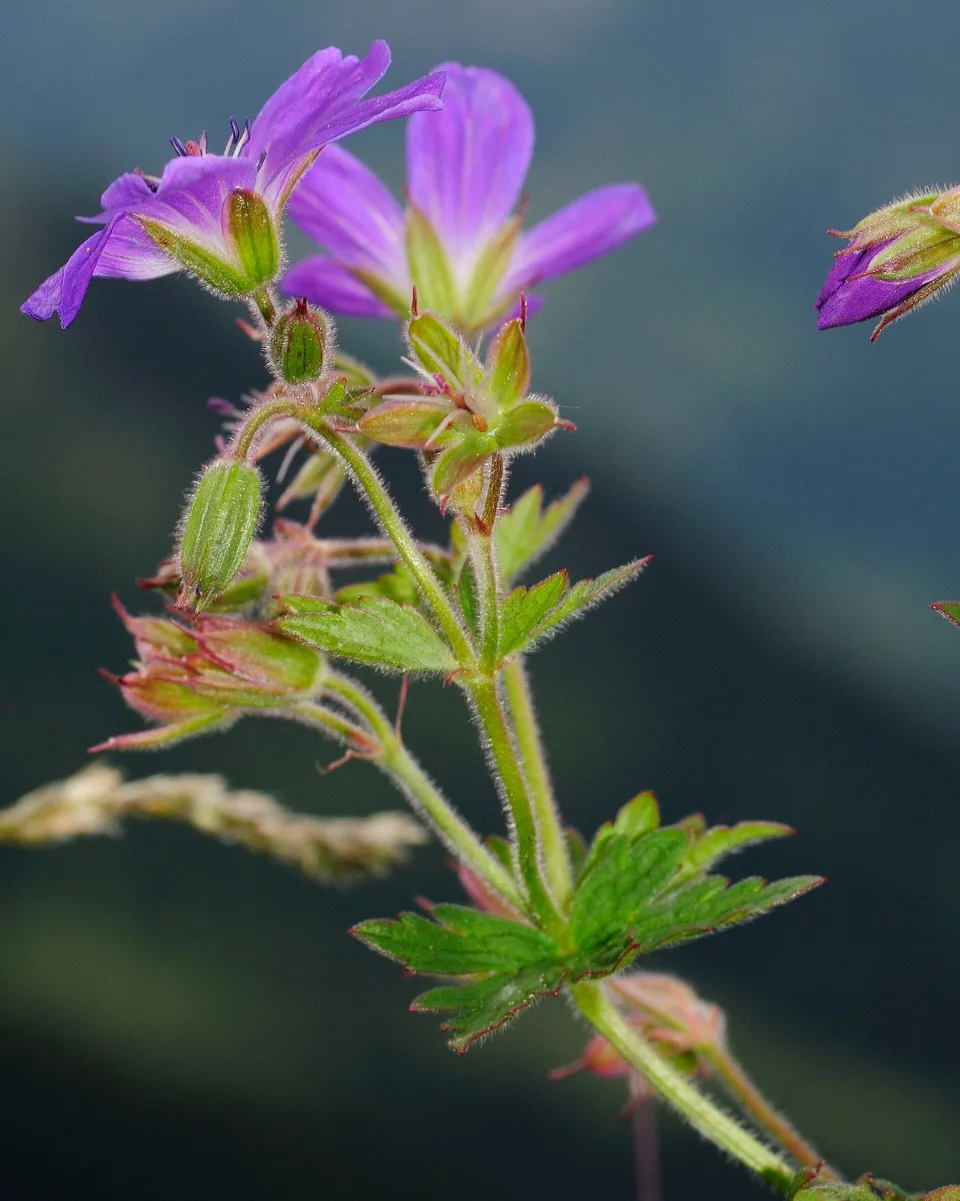
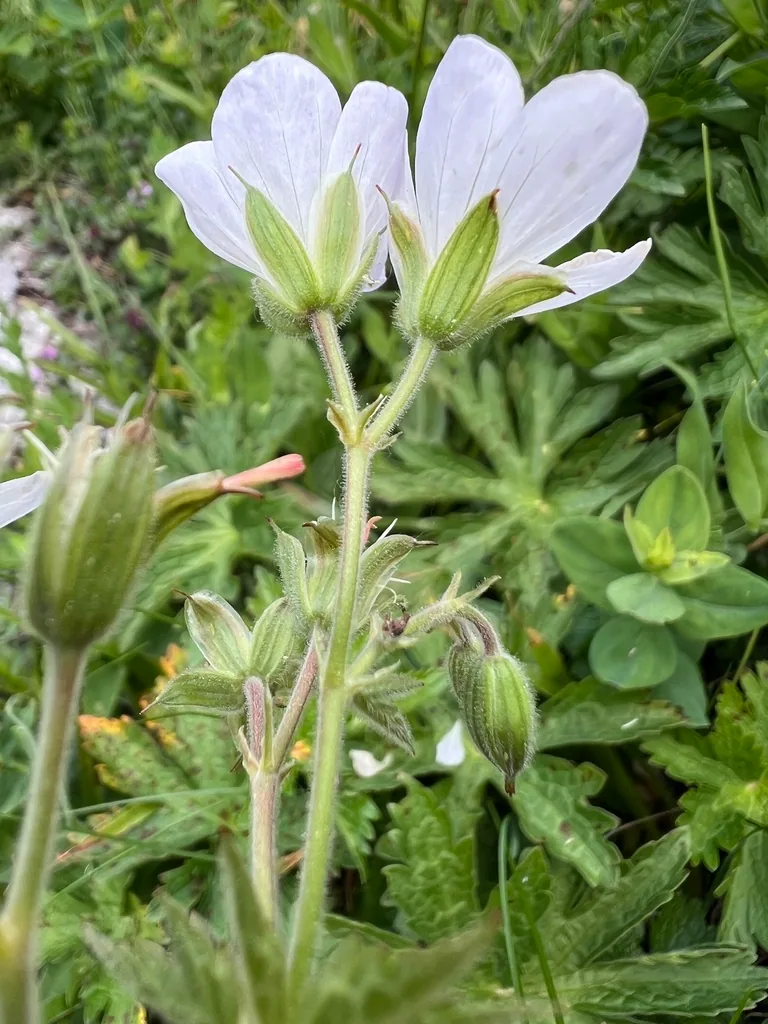

How to Grow and Care for Wood Crane's-bill
Geranium sylvaticum
Written by Emilio Marruso · last checked
At a glance
This easygoing perennial geranium grows happily in sun or shade and accepts a wide range of soils, from very acidic to slightly alkaline (pH 3.8–7.5). Sow it in spring in a cold frame, or divide a clump in spring or fall to get more plants for free. Its flowers are even counted among the wild edible flowers.
- Sun
Sun or shade
What the sources say (1)
Light: Sun or shade
Succeeds in any moderately fertile retentive soil in sun or shade
— Geranium sylvaticum - Useful Temperate Plants [1] - Cold
Survives winters down to −30 °F (−34.4 °C)
Very hardy · USDA 4 · RHS H7 · Z4
What the sources say (2)
Hardiness, coldest zone: 4 [winter low −34.4 to −28.9 °C (−30 to −20 °F)]
lists G. sylvaticum as hardy in USDA hardiness zones 4–8
— Received: 8 June 2025 | Accepted: 1 December 2025 [2] Hardiness, warmest zone: 8 [winter low −12.2 to −6.7 °C (10 to 20 °F)]
lists G. sylvaticum as hardy in USDA hardiness zones 4–8
— Received: 8 June 2025 | Accepted: 1 December 2025 [2] - Soil
From very acidic to slightly alkaline soil, pH 3.8–7.5
What the sources say (2)
Soil pH, minimum: 3.8
a wider range of pH values of 3.8–7.5 has been observed at sites supporting populations of G. sylvaticum
— Received: 8 June 2025 | Accepted: 1 December 2025 [2] Soil pH, maximum: 7.5
a wider range of pH values of 3.8–7.5 has been observed at sites supporting populations of G. sylvaticum
— Received: 8 June 2025 | Accepted: 1 December 2025 [2] - Spacing
2 ft apart each way
What the sources say (1)
Spacing: 60 cm (60cm apart each way)
Plants should be spaced about 60cm apart each way
— Geranium sylvaticum - Useful Temperate Plants [1] - Planting
Plant divisions in spring and seedlings in summer
- Harvest
The flowers are counted among wild edible flowers
- Pests
Sawflies, beetles, aphids and mites; mildew and rust
What the sources say (2)
Pests: sawflies, beetles, aphids, mites
Various phytophagous arthropod species have been recorded as feeding on G. sylvaticum in Britain and Ireland (Table 6), includ-ing three sawflies, two beetles, two aphids and one mite.
— Received: 8 June 2025 | Accepted: 1 December 2025 [2] Diseases: mildews, rusts
Eight species of parasitic fungi and oomycetes—including three types of mildew and two rusts—have been recorded from G. sylvaticum.
— Received: 8 June 2025 | Accepted: 1 December 2025 [2] - Size
6 in to 3 ft tall
What the sources say (1)
Mature height: 15-95 cm [6–37 in]
the height of G. sylvaticum individuals is variable, ranging from 15 to 95 cm
— Received: 8 June 2025 | Accepted: 1 December 2025 [2] - Propagation
From seed, or divide the clump in spring or fall
- Sowing
Sow in spring in a cold frame
What the sources say (1)
Sowing: Spring, in a cold frame
Seed - sow spring in a cold frame.
— Geranium sylvaticum - Useful Temperate Plants [1]
Overview
A perennial of meadows and damp woods that succeeds in any moderately fertile, retentive soil in sun or shade. [1] It is very cold-tolerant and can be grown from seed or by division. [1]
This record is incomplete: the sources we read do not cover every field yet.
Not yet covered by our sources: Watering, Pruning
Wood Crane's-bill care
How to water Wood Crane's-bill
Not stated in the sources we read.
How much light Wood Crane's-bill needs
Sun or shade
What the sources say (1)
Succeeds in any moderately fertile retentive soil in sun or shadeHow much cold Wood Crane's-bill can take
Hardiness, coldest zone
4 [winter low −34.4 to −28.9 °C (−30 to −20 °F)]
What the sources say (1)
lists G. sylvaticum as hardy in USDA hardiness zones 4–8Hardiness, warmest zone
8 [winter low −12.2 to −6.7 °C (10 to 20 °F)]
What the sources say (1)
lists G. sylvaticum as hardy in USDA hardiness zones 4–8Best soil for Wood Crane's-bill
Soil pH, minimum
3.8
What the sources say (1)
a wider range of pH values of 3.8–7.5 has been observed at sites supporting populations of G. sylvaticumSoil pH, maximum
7.5
What the sources say (1)
a wider range of pH values of 3.8–7.5 has been observed at sites supporting populations of G. sylvaticumWhere to grow Wood Crane's-bill
60 cm (60cm apart each way)
What the sources say (1)
Plants should be spaced about 60cm apart each wayHow to propagate Wood Crane's-bill
How to grow Wood Crane's-bill
The plant
Life cycle
perennial
What the sources say (1)
Wood Cranesbill. Geraniaceae. Geranium sylvaticum L. is a leafy, branched, perennial gynodioecious herb with compact rootstock.Family
Geraniaceae
What the sources say (1)
Wood Cranesbill. Geraniaceae. Geranium sylvaticum L. is a leafy, branched, perennial gynodioecious herb with compact rootstock.Mature height
15-95 cm [6–37 in]
What the sources say (1)
the height of G. sylvaticum individuals is variable, ranging from 15 to 95 cmPests and diseases
Pests
sawflies, beetles, aphids, mites
What the sources say (1)
Various phytophagous arthropod species have been recorded as feeding on G. sylvaticum in Britain and Ireland (Table 6), includ-ing three sawflies, two beetles, two aphids and one mite.Diseases
mildews, rusts
What the sources say (1)
Eight species of parasitic fungi and oomycetes—including three types of mildew and two rusts—have been recorded from G. sylvaticum.Remedies
Each remedy shows what official sources say about it; traditional remedies without an official source are marked as such. Harmful ones are listed so you know to avoid them.
Treating the plant
gray mold
removing dead flowers Works
How: Remove dead flowers before gray mold develops.
Sanitation is the most important means of control. Remove dead flowers before gray mold develops.
— portal.ct.gov [3] What the evidence says Sanitation is the most important means of control. Remove dead flowers before gray mold develops.
— portal.ct.gov [3]
bacterial leaf spot
removing diseased plants and debris, avoiding overhead irrigation Works
How: Remove diseased plants and debris as noticed. Avoid overhead irrigation, especially in the evening, and increase air flow through the plants.
Remove diseased plants and debris as noticed. Avoid overhead irrigation, especially in the evening and increase air flow through the plants to speed drying of the foliage.
— portal.ct.gov [3] What the evidence says Remove diseased plants and debris as noticed. Avoid overhead irrigation, especially in the evening and increase air flow through the plants to speed drying of the foliage.
— portal.ct.gov [3]
powdery mildew
ultra fine oil spray Official source, not independently tested
How: Applied as soon as symptoms are visible.
Control may also be achieved with the use of fungicides applied as soon as symptoms are visible. Among the compounds registered for use in Connecticut are potassium bicarbonate, ultra fine oil,
— portal.ct.gov [3]
Calendar
Sowing
Spring, in a cold frame
What the sources say (1)
Seed - sow spring in a cold frame.Pruning
Not stated in the sources we read.
Months as given by the sources, which are mostly from the United States (northern hemisphere). In the southern hemisphere they shift by about six months.
Edibility
Reported by the source, quoted verbatim. Do not eat a plant on the basis of this page alone: identification mistakes can be dangerous.
analysed the phytochemical composition of 22 wild edible flowers including G. sylvaticum
[2]
Similar plants
- Bloody Cranesbill Geranium Geranium sanguineum
- Meadow Crane's-bill Geranium pratense
- Wild Geranium Geranium maculatum
- Armenian crane's-bill Geranium psilostemon
- Black widow Geranium phaeum
- Endres's cranesbill Geranium endressii
- Geranium macrorrhizum Geranium macrorrhizum
- Geranium renardii Geranium renardii
Sources
Every value above is quoted from these documents. Links lead to the original publisher.
- Geranium sylvaticum - Useful Temperate Plants · temperate.theferns.info, consulted
- Received: 8 June 2025 | Accepted: 1 December 2025 · nora.nerc.ac.uk, consulted
- portal.ct.gov · portal.ct.gov
Written by Emilio Marruso · last checked