
How to Grow and Care for Geranium renardii
Geranium renardii
Written by Emilio Marruso · last checked
At a glance
Give this geranium a sunny spot and free-draining soil, with a little fine gravel in the planting hole, and it will settle in happily. Water it well until it is established; after that it copes with some dry spells on its own. It grows in containers too, and it even sows itself, so new plants can appear without any effort from you.
- Sun
Give it a sunny spot
What the sources say (1)
Light: Sunny spot
I will put the cranesbills in a sunny spot and water well until they are established. Thereafter they will be somewhat drought tolerant, according to various sources.
— Renard’s Cranesbill – The Gardener's Apprentice [4] - Water
Water well until it settles in; after that it handles some dry spells
What the sources say (3)
Watering: Somewhat drought tolerant once established
I will put the cranesbills in a sunny spot and water well until they are established. Thereafter they will be somewhat drought tolerant, according to various sources.
— Renard’s Cranesbill – The Gardener's Apprentice [4] Watering notes: Water well until established; free-draining soil, with fine gravel added to the planting holes
I will put the cranesbills in a sunny spot and water well until they are established. Thereafter they will be somewhat drought tolerant, according to various sources.
— Renard’s Cranesbill – The Gardener's Apprentice [4] I will try to emulate the free-draining conditions they might enjoy in their native Caucasus Mountains, adding fine gravel to the soil in the planting holes.
— Renard’s Cranesbill – The Gardener's Apprentice [4] - Soil
Free-draining soil; add fine gravel to the planting hole
What the sources say (2)
Watering notes: Water well until established; free-draining soil, with fine gravel added to the planting holes
I will put the cranesbills in a sunny spot and water well until they are established. Thereafter they will be somewhat drought tolerant, according to various sources.
— Renard’s Cranesbill – The Gardener's Apprentice [4] I will try to emulate the free-draining conditions they might enjoy in their native Caucasus Mountains, adding fine gravel to the soil in the planting holes.
— Renard’s Cranesbill – The Gardener's Apprentice [4] - Propagation
It sows itself, so new plants appear on their own
What the sources say (1)
Propagation: Self-seeds
The plants are small and top out at only six to twelve inches, forming mounds as they mature. If you are lucky, they will self-seed, although they are never rude about it.
— Renard’s Cranesbill – The Gardener's Apprentice [4] - Containers
Grows in containers too
What the sources say (1)
In containers: Yes
If you are looking for a gorgeous plant that will ennoble your beds, borders or even containers, try Geranium renardii.
— Renard’s Cranesbill – The Gardener's Apprentice [4]
Overview
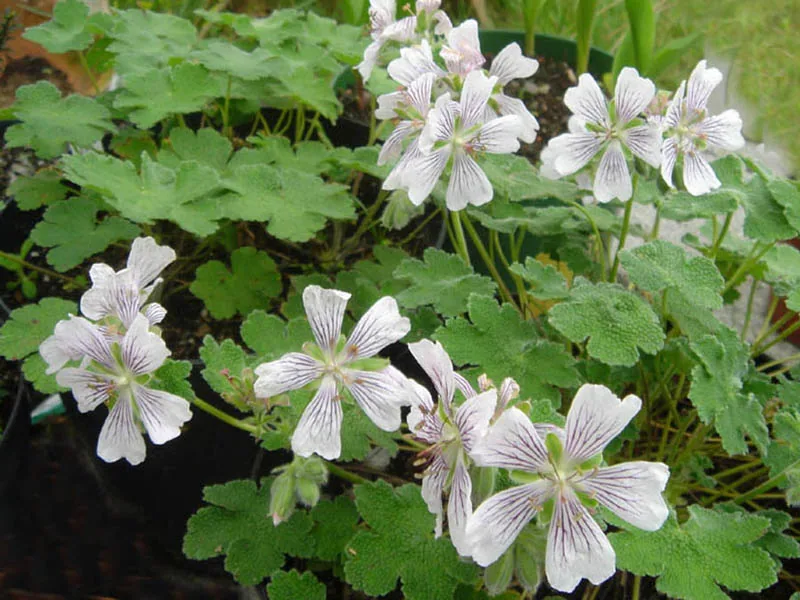
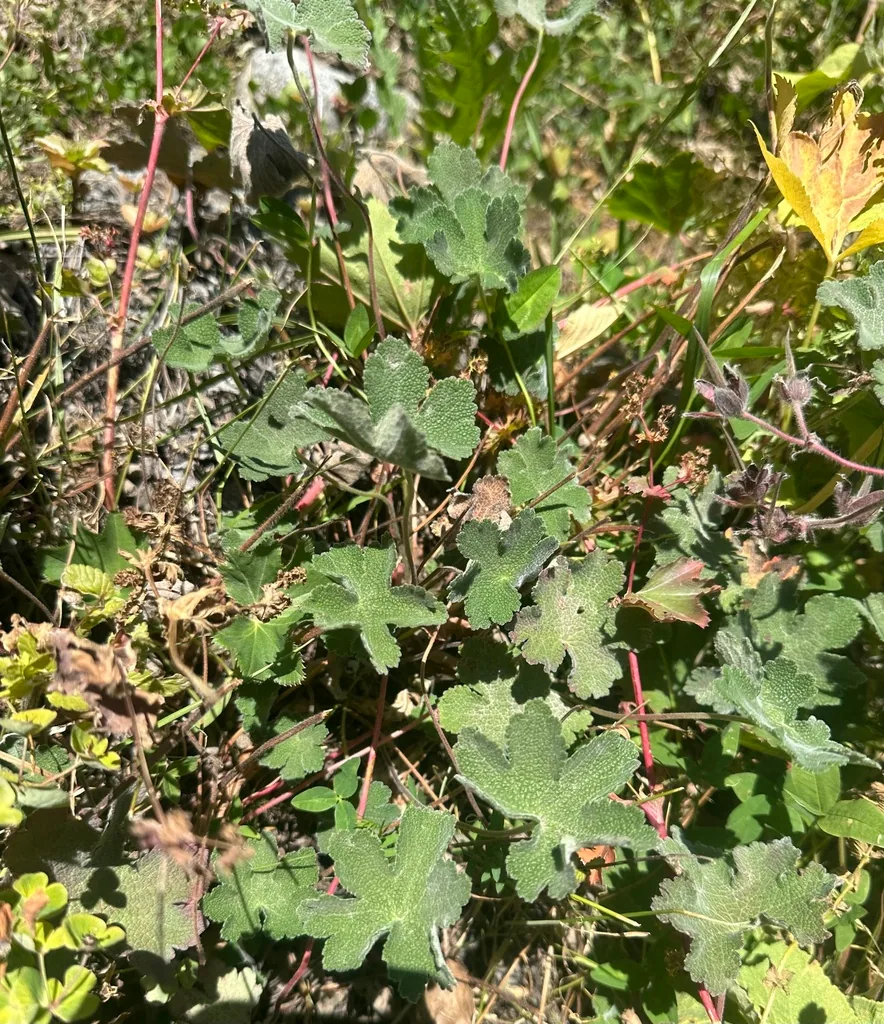
Renard's cranesbill is a low perennial herb native to the Caucasus, with palmately lobed leaves and white to pale lavender, violet-veined petals in summer. [1] It is grown in botanical garden plantings, where it has a creeping rather than mounding habit. [3] It needs free-draining soil and a sunny spot, and becomes somewhat drought tolerant once established. [4]
This record is incomplete: the sources we read do not cover every field yet.
Not yet covered by our sources: Hardiness, coldest zone, Hardiness, warmest zone, Pruning
Geranium renardii care
How to water Geranium renardii
Watering
Somewhat drought tolerant once established
What the sources say (1)
I will put the cranesbills in a sunny spot and water well until they are established. Thereafter they will be somewhat drought tolerant, according to various sources.Watering notes
Water well until established; free-draining soil, with fine gravel added to the planting holes
What the sources say (2)
I will put the cranesbills in a sunny spot and water well until they are established. Thereafter they will be somewhat drought tolerant, according to various sources.I will try to emulate the free-draining conditions they might enjoy in their native Caucasus Mountains, adding fine gravel to the soil in the planting holes.How much light Geranium renardii needs
Sunny spot
What the sources say (1)
I will put the cranesbills in a sunny spot and water well until they are established. Thereafter they will be somewhat drought tolerant, according to various sources.How much cold Geranium renardii can take
Hardiness, coldest zone
Not stated in the sources we read.
Hardiness, warmest zone
Not stated in the sources we read.
Where to grow Geranium renardii
Yes
What the sources say (1)
If you are looking for a gorgeous plant that will ennoble your beds, borders or even containers, try Geranium renardii.How to propagate Geranium renardii
Self-seeds
What the sources say (1)
The plants are small and top out at only six to twelve inches, forming mounds as they mature. If you are lucky, they will self-seed, although they are never rude about it.Remedies
The sources we checked give no remedies for this plant.
Calendar
Pruning
Not stated in the sources we read.
Months as given by the sources, which are mostly from the United States (northern hemisphere). In the southern hemisphere they shift by about six months.
Indicative values
Values from a secondary source, not checked word for word like the rest of this page. Use them as a starting point.
- Life cycle
- Herbaceous PerennialIndicative value, adapt it to your climate · Secondary source
- Mature height
- 15.2-30.5 cm (0.5-1 ft)Indicative value, adapt it to your climate · Secondary source
- Drought tolerant
- yesIndicative value, adapt it to your climate · Secondary source
- Soil pH
- 6-7Indicative value, adapt it to your climate · Secondary source
- USDA hardiness zones
- 6-8 [winter low −23.3 to −6.7 °C (−10 to 20 °F)]Indicative value, adapt it to your climate · Secondary source
- Care level
- MediumIndicative value, adapt it to your climate · Secondary source
- Growth rate
- LowIndicative value, adapt it to your climate · Secondary source
- Pruning
- February, March, April, August, February, March, April, December, January, February, AugustIndicative value, adapt it to your climate · Secondary source
Similar plants
- Armenian crane's-bill Geranium psilostemon
- Black widow Geranium phaeum
- Bloody Cranesbill Geranium Geranium sanguineum
- Endres's cranesbill Geranium endressii
- Geranium macrorrhizum Geranium macrorrhizum
- Meadow Crane's-bill Geranium pratense
- Wild Geranium Geranium maculatum
- Wood Crane's-bill Geranium sylvaticum
Sources
Every value above is quoted from these documents. Links lead to the original publisher.
- HortFlora · hortflora.rbg.vic.gov.au, consulted
- Plant Finder | Geranium renardii 'Tschelda' - Renard's Cranesbill · plants.bbg.org, consulted
- June in the Garden 2023 - UBC Botanical Garden · botanicalgarden.ubc.ca, consulted
- Renard’s Cranesbill – The Gardener's Apprentice · gardenersapprentice.com, consulted
Written by Emilio Marruso · last checked