
How to Grow and Care for Armenian crane's-bill
Geranium psilostemon
Written by Emilio Marruso · last checked
Toxic to: Cats, Dogs, Horses, Birds, Livestock, People · Why
At a glance
This tall geranium can reach 5 feet, giving your garden real presence. Plant it anytime from May to September in well-drained soil, prune it between September and November, and make new plants to share with friends by dividing the clumps. Best of all, no toxic effects have been reported for people, cats, dogs or horses.
- Soil
Needs soil that drains well
What the sources say (2)
Watering notes: Needs well-drained soil
Soil or Media: | Well-drained
— Geranium psilostemon - Kwantlen Polytechnic University, School of Horticulture - Plant Database [2] Grow Geranium psilostemon in fertile, well-drained soil in full sun. Remove faded flowers to rejuvenate plants, and divide congested clumps in spring.
— Geranium psilostemon | BBC Gardeners World Magazine [1] - Planting
Plant from May to September
What the sources say (1)
Planting: May to September
| | Jan | Feb | Mar | Apr | May | Jun | Jul | Aug | Sep | Oct | Nov | Dec | Plant | | | | | yes | yes | yes | yes | yes | | |
— Geranium psilostemon | BBC Gardeners World Magazine [1] - Pruning
Prune from September to November
What the sources say (1)
Pruning: September to November
| Divide | | | yes | yes | yes | | | | yes | yes | yes | | Prune | | | | | | | | | yes | yes | yes |
— Geranium psilostemon | BBC Gardeners World Magazine [1] - Size
Grows up to 5 ft (160 cm) tall
What the sources say (1)
Mature height: 160 cm (1.6 m)
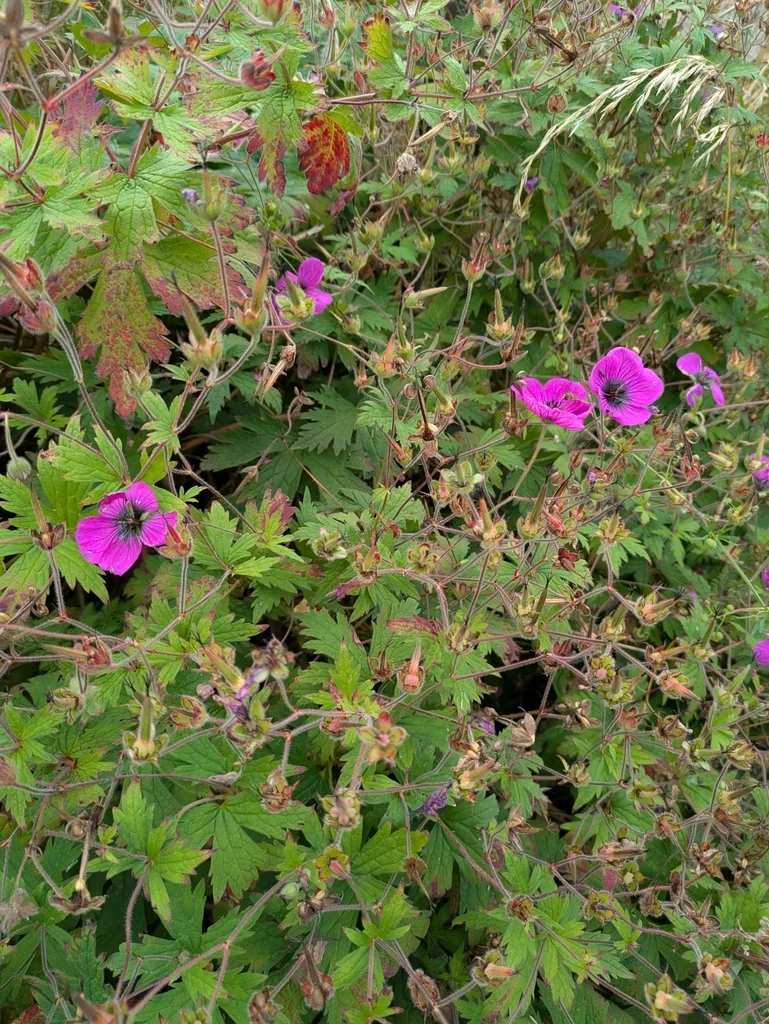
This herbaceous geranium is a vigorous clump former, reaching 1.6m and still able to withstand a battering from wind and rain without additional support.
— Eyelashes to die for – Botanics Stories [3] - Propagation
Make new plants by dividing the clump
What the sources say (1)
Propagation: Division
Grow Geranium psilostemon in fertile, well-drained soil in full sun. Remove faded flowers to rejuvenate plants, and divide congested clumps in spring.
— Geranium psilostemon | BBC Gardeners World Magazine [1] - Safety
No toxic effects reported for people, cats, dogs or horses
Overview
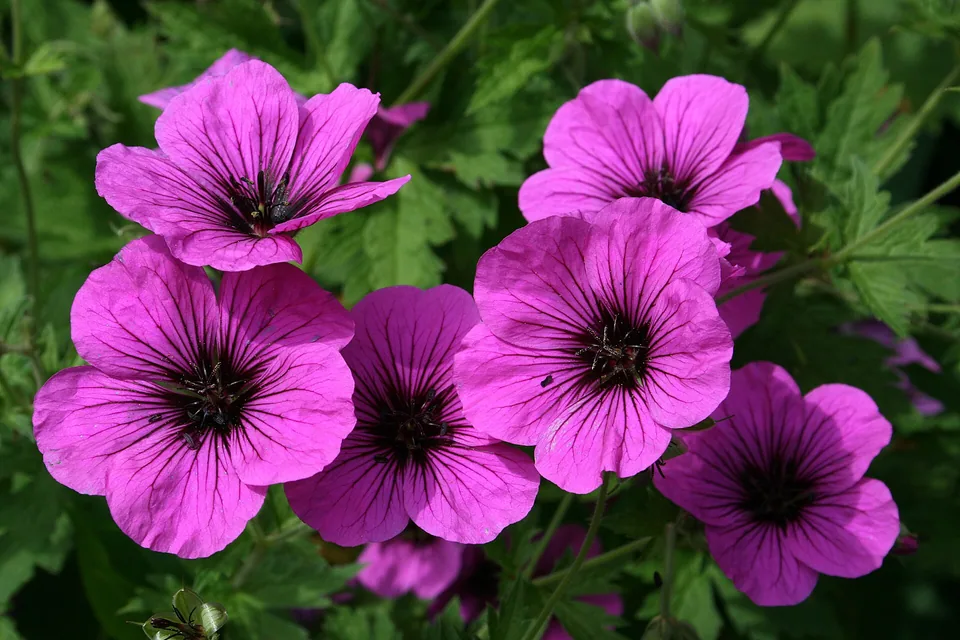
Armenian cranesbill is a herbaceous perennial from central and west Asia with magenta, black-eyed flowers in midsummer. [2][1] It is grown in fertile, well-drained soil; deadheading rejuvenates plants and congested clumps are divided in spring. [1] It is a vigorous clump former whose leaves turn red in autumn. [3][1]
This record is incomplete: the sources we read do not cover every field yet.
Not yet covered by our sources: Watering, Hardiness, coldest zone, Hardiness, warmest zone
Armenian crane's-bill care
How to water Armenian crane's-bill
Watering
Not stated in the sources we read.
Watering notes
Needs well-drained soil
What the sources say (2)
Soil or Media:
| Well-drainedGrow Geranium psilostemon in fertile, well-drained soil in full sun. Remove faded flowers to rejuvenate plants, and divide congested clumps in spring.How much light Armenian crane's-bill needs
The sources give different values depending on region, zone or growing conditions.
What each source says
According to Kwantlen Polytechnic University: Full sun, part sun/part shade
According to Gardeners' World: Dappled shade, full shade, full sun, partial shade
What the sources say (4)
According to Kwantlen Polytechnic University: Exposure:
| Full sun, Part sun/part shadeAccording to Gardeners' World: Sun Exposure:
Dappled shade, full shade, full sun, partial shadeExposure:
| Full sun, Part sun/part shadeGrow Geranium psilostemon in fertile, well-drained soil in full sun. Remove faded flowers to rejuvenate plants, and divide congested clumps in spring.How much cold Armenian crane's-bill can take
Hardiness, coldest zone
Not stated in the sources we read.
Hardiness, warmest zone
Not stated in the sources we read.
How to propagate Armenian crane's-bill
Division
What the sources say (1)
Grow Geranium psilostemon in fertile, well-drained soil in full sun. Remove faded flowers to rejuvenate plants, and divide congested clumps in spring.How to grow Armenian crane's-bill
The plant
Mature height
160 cm (1.6 m)
What the sources say (1)
This herbaceous geranium is a vigorous clump former, reaching 1.6m and still able to withstand a battering from wind and rain without additional support.Remedies
The sources we checked give no remedies for this plant.
Is Armenian crane's-bill toxic to pets?
Reported by the source, quoted verbatim. This is not medical or veterinary advice: if a person or an animal may have eaten this plant, contact a poison control centre or a veterinarian.
Animals
No reported toxicity to: Is not known to attract Birds Birds Is not known to attract Cats Cats
[1]The source flags the risk for this animal but does not explain why.
No reported toxicity to: Is not known to attract Birds Birds Is not known to attract Cats Cats Is not known to attract Dogs Dogs
[1]The source flags the risk for this animal but does not explain why.
No reported toxicity to: Is not known to attract Birds Birds Is not known to attract Cats Cats Is not known to attract Dogs Dogs Is not known to attract Horses Horses
[1]The source flags the risk for this animal but does not explain why.
No reported toxicity to: Is not known to attract Birds Birds Is not known to attract Cats Cats Is not known to attract Dogs Dogs Is not known to attract Horses Horses Is not known to attract Livestock Livestock
[1]The source flags the risk for this animal but does not explain why.
No reported toxicity to: Is not known to attract Birds Birds
[1]The source flags the risk for this animal but does not explain why.
People
Is Geranium ‘Psilostemon’ poisonous? Geranium ‘Psilostemon’ has no toxic effects reported.
[1]
Calendar
May to September
What the sources say (1)
| | Jan | Feb | Mar | Apr | May | Jun | Jul | Aug | Sep | Oct | Nov | Dec
| Plant | | | | | yes | yes | yes | yes | yes | | | September to November
What the sources say (1)
| Divide | | | yes | yes | yes | | | | yes | yes | yes |
| Prune | | | | | | | | | yes | yes | yes | Months as given by the sources, which are mostly from the United States (northern hemisphere). In the southern hemisphere they shift by about six months.
Indicative values
Values from a secondary source, not checked word for word like the rest of this page. Use them as a starting point.
- Life cycle
- Herbaceous PerennialIndicative value, adapt it to your climate · Secondary source
- Hours of sun
- 6-8 hoursIndicative value, adapt it to your climate · Secondary source
- Watering
- AverageIndicative value, adapt it to your climate · Secondary source
- Drought tolerant
- yesIndicative value, adapt it to your climate · Secondary source
- Soil pH
- 6-7Indicative value, adapt it to your climate · Secondary source
- USDA hardiness zones
- 5-7 [winter low −28.9 to −12.2 °C (−20 to 10 °F)]Indicative value, adapt it to your climate · Secondary source
- Growth rate
- HighIndicative value, adapt it to your climate · Secondary source
- Pests
- Pest resistant, Disease resistant, Deer resistant, Rabbit resistant, Drought resistantIndicative value, adapt it to your climate · Secondary source
Similar plants
- Black widow Geranium phaeum
- Bloody Cranesbill Geranium Geranium sanguineum
- Endres's cranesbill Geranium endressii
- Geranium macrorrhizum Geranium macrorrhizum
- Geranium renardii Geranium renardii
- Meadow Crane's-bill Geranium pratense
- Wild Geranium Geranium maculatum
- Wood Crane's-bill Geranium sylvaticum
Sources
Every value above is quoted from these documents. Links lead to the original publisher.
- Geranium psilostemon | BBC Gardeners World Magazine · gardenersworld.com, consulted
- Geranium psilostemon - Kwantlen Polytechnic University, School of Horticulture - Plant Database · plantdatabase.kpu.ca, consulted
- Eyelashes to die for – Botanics Stories · stories.rbge.org.uk, consulted
Written by Emilio Marruso · last checked