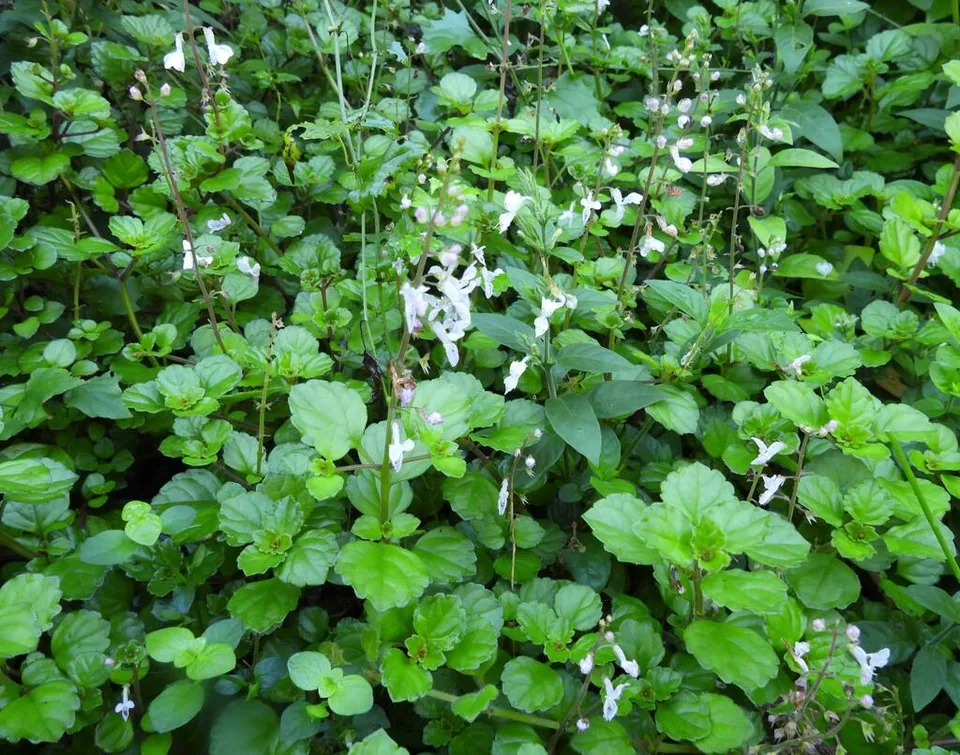
Cómo cultivar y cuidar Coloquialmente llamada planta del dinero
Plectranthus verticillatus
Escrito por Emilio Marruso · última revisión
De un vistazo
La hiedra sueca es una planta no tóxica y segura para las mascotas, que crece a gusto en interior o en maceta, con semisombra o luz indirecta brillante. Alcanza 60–90 cm de alto y de ancho y, si pasa el verano fuera, te regala en otoño espigas de 20 cm con delicadas flores de color morado pálido. Riega con moderación: el exceso de agua es la principal causa de pérdida.
- Sol
Semisombra o luz indirecta brillante
Qué dicen las fuentes (3)
Luz: Semisombra a luz indirecta brillante.
Size Light Conditions shade; semi-shade; Frost tender; low
— Plectranthus verticillatus [1] This houseplant grows best with bright, indirect sunlight for four to six hours every day, although it can tolerate lower light conditions .
— How to Grow and Care for a Swedish Ivy Houseplant [2] Plectranthus verticillatus needs semi-shady exposure and warm weather.
— Plectranthus verticillatus and Swedish Ivy | Care and Growing [3] - Riego
En otoño e invierno, riega cada 2–3 semanas; el exceso de agua es la principal causa de pérdida
Qué dicen las fuentes (2)
Notas sobre el riego: El riego excesivo es la principal causa de pérdida; riega cada dos o tres semanas en otoño e invierno.
In the fall and winter, you’ll only need to water your plant about once every two to three weeks.
— How to Grow and Care for a Swedish Ivy Houseplant [2] Overwatering is the number one cause of death for P. verticillatus , according to Dr. Perry as referenced above
— How to Grow and Care for a Swedish Ivy Houseplant [2] - Frío
Aguanta inviernos de hasta −1,1 °C (30 °F)
Semirrústica: inviernos suaves o invernadero sin calefacción · USDA 10 · RHS H3 · Z10
Qué dicen las fuentes (2)
Rusticidad, zona más fría: 10 [mínima invernal de −1,1 a 4,4 °C (de 30 a 40 °F)]
Tolerance: | Low light | Hardiness (USDA Zone): | 10-11 (outdoors) | Maintenance: | Low
— How to Grow and Care for a Swedish Ivy Houseplant [2] Rusticidad, zona más cálida: 11 [mínima invernal de 4,4 a 10 °C (de 40 a 50 °F)]
Tolerance: | Low light | Hardiness (USDA Zone): | 10-11 (outdoors) | Maintenance: | Low
— How to Grow and Care for a Swedish Ivy Houseplant [2] - Suelo
Suelo ácido, pH 5,5–6,5
Qué dicen las fuentes (2)
pH del suelo, mínimo: 5.5
Swedish ivy prefers a soil pH between 5.5 and 6.5, which most potting mixes easily provide.
— How to Grow and Care for a Swedish Ivy Houseplant [2] pH del suelo, máximo: 6.5
Swedish ivy prefers a soil pH between 5.5 and 6.5, which most potting mixes easily provide.
— How to Grow and Care for a Swedish Ivy Houseplant [2] - Tamaño
60–90 cm de alto y de ancho
- Multiplicación
Esquejes de tallo todo el año, mejor en primavera o verano; división en primavera; o semilla
Qué dicen las fuentes (2)
Propagación: Esquejes de tallo (en cualquier época del año, mejor en primavera o verano); división en primavera; semilla.
The best way to do so is by taking stem cuttings, but Swedish ivy can also be grown from seed.
— How to Grow and Care for a Swedish Ivy Houseplant [2] Gossip spurflower is easily propagated by cuttings from late spring to late summer and by division in spring.
— Plectranthus verticillatus and Swedish Ivy | Care and Growing [3] - Maceta
Crece en interior y en maceta
Qué dicen las fuentes (2)
En interior: Sí
Though it’s most often grown as a houseplant in the United States, it can stay outside year-round in USDA Hardiness Zones 10 and 11
— How to Grow and Care for a Swedish Ivy Houseplant [2] En maceta: Sí
Garden Situation shade; semi-shade; container; rockery; small gardens; slope bank; green roof; green wall; walls; narrow spaces
— Plectranthus verticillatus [1] - Seguridad
No es tóxica y es segura para las mascotas
Resumen
Plectranthus verticillatus (hiedra sueca, planta del dinero) es una perenne de hoja perenne que se cultiva como planta de interior, cesta colgante o cubresuelo. [2][1] Prefiere semisombra o luz indirecta brillante y se propaga fácilmente por esquejes. [3][2]
Citado en inglés, como en la fuente.
Cuidados
Riego
Riego
Las fuentes dan valores distintos según la región, la zona o las condiciones de cultivo.
Lo que dice cada fuente
Según consultaplantas: Riega con frecuencia en primavera y verano para que el sustrato esté siempre ligeramente húmedo.
Según Gardener's Path: Aproximadamente una vez por semana en primavera y verano, dejando que la capa superior de un par de pulgadas de tierra se seque antes de volver a regar.
Qué dicen las fuentes (2)
Según consultaplantas: Water frequently in spring and summer so that the substrate is always slightly damp.Según Gardener's Path: Water about once a week during the spring and summer, allowing the top couple of inches of soil to dry out before irrigating again.Notas sobre el riego
El riego excesivo es la principal causa de pérdida; riega cada dos o tres semanas en otoño e invierno.
Qué dicen las fuentes (2)
In the fall and winter, you’ll only need to water your plant about once every two to three weeks.Overwatering is the number one cause of death for P. verticillatus , according to Dr. Perry as referenced aboveLuz
Semisombra a luz indirecta brillante.
Qué dicen las fuentes (3)
Size
Light Conditions
shade; semi-shade;
Frost
tender; lowThis houseplant grows best with bright, indirect sunlight for four to six hours every day, although it can tolerate lower light conditions .Plectranthus verticillatus needs semi-shady exposure and warm weather.Clima y frío
Rusticidad, zona más fría
10 [mínima invernal de −1,1 a 4,4 °C (de 30 a 40 °F)]
Qué dicen las fuentes (1)
Tolerance: | Low light | Hardiness (USDA Zone): | 10-11 (outdoors) | Maintenance: | LowRusticidad, zona más cálida
11 [mínima invernal de 4,4 a 10 °C (de 40 a 50 °F)]
Qué dicen las fuentes (1)
Tolerance: | Low light | Hardiness (USDA Zone): | 10-11 (outdoors) | Maintenance: | LowSuelo
pH del suelo, mínimo
5.5
Qué dicen las fuentes (1)
Swedish ivy prefers a soil pH between 5.5 and 6.5, which most potting mixes easily provide.pH del suelo, máximo
6.5
Qué dicen las fuentes (1)
Swedish ivy prefers a soil pH between 5.5 and 6.5, which most potting mixes easily provide.Dónde cultivarla
En interior
Sí
Qué dicen las fuentes (1)
Though it’s most often grown as a houseplant in the United States, it can stay outside year-round in USDA Hardiness Zones 10 and 11En maceta
Sí
Qué dicen las fuentes (1)
Garden Situation
shade; semi-shade; container; rockery; small gardens; slope bank; green roof; green wall; walls; narrow spacesPropagación
Esquejes de tallo (en cualquier época del año, mejor en primavera o verano); división en primavera; semilla.
Qué dicen las fuentes (2)
The best way to do so is by taking stem cuttings, but Swedish ivy can also be grown from seed.Gossip spurflower is easily propagated by cuttings from late spring to late summer and by division in spring.Remedios
Las fuentes consultadas no dan remedios para esta planta.
Toxicidad
Según la fuente, citada textualmente. No es un consejo médico ni veterinario: si una persona o un animal pudo haber ingerido esta planta, contacta con un centro de toxicología o con un veterinario.
A pet-safe, nontoxic plant, Swedish ivy grows two to three feet tall and wide and produces eight-inch spikes of delicate, pale purple flowers in the fall if moved outdoors for the summer.
[2]La fuente señala el riesgo para este animal pero no explica por qué.
Valores orientativos
Valores de una fuente secundaria, no comprobados palabra por palabra como el resto de esta página. Úselos como punto de partida.
- Ciclo de vida
- PerenneValor orientativo, adáptalo a tu clima · Fuente secundaria
- Resiste la sequía
- SíValor orientativo, adáptalo a tu clima · Fuente secundaria
- Suelo
- Bien drenadoValor orientativo, adáptalo a tu clima · Fuente secundaria
- Nivel de cuidado
- ModeradoValor orientativo, adáptalo a tu clima · Fuente secundaria
- Crecimiento
- AltaValor orientativo, adáptalo a tu clima · Fuente secundaria
- Poda
- Marzo, abril, junio, julio, marzo, agostoValor orientativo, adáptalo a tu clima · Fuente secundaria
- Plagas
- Mancha foliar fúngica, Ácaros, Podredumbre de raíces, Resistente a plagas, Resistente a enfermedadesValor orientativo, adáptalo a tu clima · Fuente secundaria
Plantas similares
- Brazilian Coleus Plectranthus oertendahlii
- Orégano cubano Plectranthus amboinicus
- Little Spurflower Plectranthus parviflorus
- Hipérico rastrero Hypericum calycinum
- Abeto de Vancuver Abies grandis
- Abraham Trachystemon orientalis
- Bananero de Etiopía Ensete ventricosum
- Acacia longifolia Acacia longifolia
Fuentes
Cada valor anterior se cita de estos documentos. Los enlaces llevan al editor original.
- Plectranthus verticillatus · theplantlibrary.co.za, consultado
- How to Grow and Care for a Swedish Ivy Houseplant · gardenerspath.com, consultado
- Plectranthus verticillatus and Swedish Ivy | Care and Growing · consultaplantas.com, consultado
- Plectranthus verticillatus (L.f.) Druce | Plants of the World Online | Kew Science · powo.science.kew.org, consultado
Escrito por Emilio Marruso · última revisión