
Cómo cultivar y cuidar Alhelí blanco
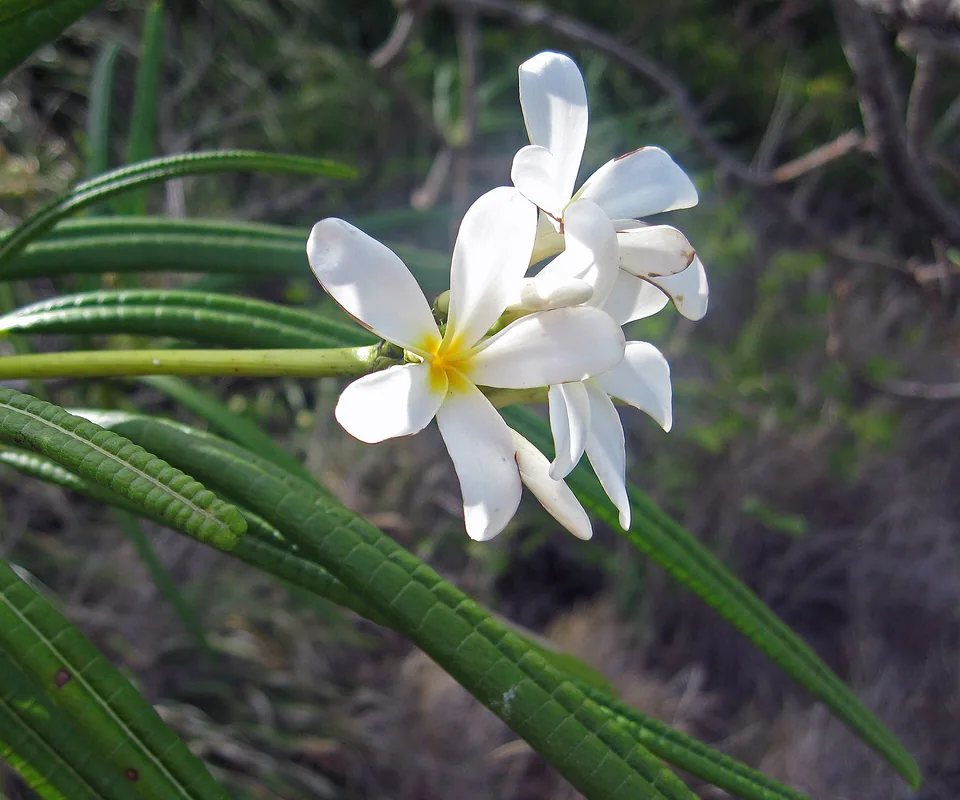
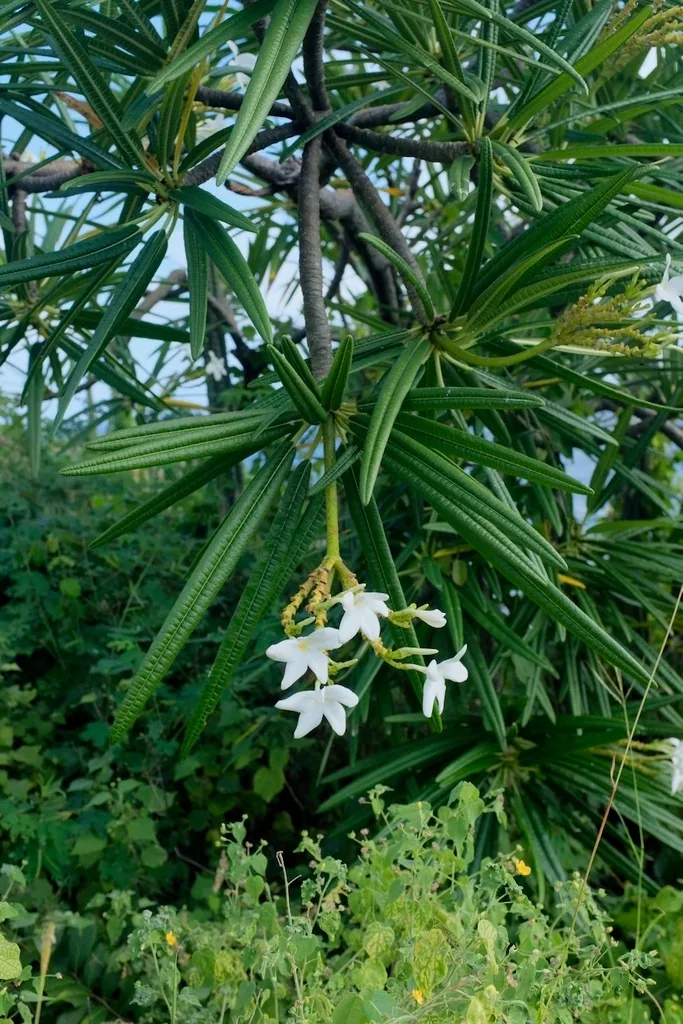
Plumeria alba
Escrito por Emilio Marruso · última revisión
Tóxica para: Personas · Por qué
De un vistazo
La plumeria alba adora el sol pleno, acepta la semisombra y crece feliz también en maceta. Dale un suelo con buen drenaje y abónala a menudo durante la temporada de crecimiento con un abono rico en fósforo para animar la floración. Puede llegar a 12,2 m de alto, y puedes obtener nuevas plantas tú mismo a partir de esquejes de tallo.
- Sol
Sol pleno o semisombra
- Suelo
Suelo con buen drenaje: en tierra encharcada las raíces se pudren
Qué dicen las fuentes (2)
Notas sobre el riego: Suelos bien drenados; la pudrición de raíces puede infectar las plantas en suelos con mal drenaje.
Root rot can infect plants planted in poorly-drained soils.
— NParks | Plumeria alba [2] Succeeds in a range of soils so long as they are well-drained
— Plumeria alba - Useful Tropical Plants [3] - Abonado
Abona a menudo en la temporada de crecimiento con abono rico en fósforo; nunca fuera de ella
Qué dicen las fuentes (4)
Cuándo: Solo durante la temporada de crecimiento
Fertilize frequently during the growing season with a high phosphorus (blossom-booster) fertilizer to encourage flowering, and do not fertilize at other times of the year.
— Plumeria – Wisconsin Horticulture [6] Frecuencia: Con frecuencia durante la temporada de crecimiento
Fertilize frequently during the growing season with a high phosphorus (blossom-booster) fertilizer to encourage flowering, and do not fertilize at other times of the year.
— Plumeria – Wisconsin Horticulture [6] Abonos minerales: Fertilizante alto en fósforo (impulsor de floración), para estimular la floración
Fertilize frequently during the growing season with a high phosphorus (blossom-booster) fertilizer to encourage flowering, and do not fertilize at other times of the year.
— Plumeria – Wisconsin Horticulture [6] Evitar: Fertilizar fuera de la temporada de crecimiento
Fertilize frequently during the growing season with a high phosphorus (blossom-booster) fertilizer to encourage flowering, and do not fertilize at other times of the year.
— Plumeria – Wisconsin Horticulture [6] - Plagas
Moscas blancas, cochinillas algodonosas y araña roja; también pudrición de raíz, negrilla y roya
Qué dicen las fuentes (1)
Plagas: moscas blancas, cochinillas, arañas rojas
Plumeria have few problems, but can be infested with common greenhouse pests such as white flies and mealybugs, and are very susceptible to spider mites. Insecticidal soap can be used to control these pests.
— Plumeria – Wisconsin Horticulture [6] - Tamaño
Hasta 12,2 m de alto
Qué dicen las fuentes (1)
Altura adulta: hasta 1219.2 cm (40 pies)
In its native Puerto Rico this plant can grow up to 40 feet tall.
— Plumeria – Wisconsin Horticulture [6] - Multiplicación
Por esquejes de tallo, injerto o acodo aéreo
Qué dicen las fuentes (1)
Propagación: Esqueje de tallo, injerto, acodo aéreo.
Propagation Method | Stem Cutting, Grafting, Marcotting
— NParks | Plumeria alba [2] - Maceta
Crece también en maceta
Qué dicen las fuentes (1)
En maceta: Sí
Parks & Gardens, Small Gardens, Container Planting, General
— NParks | Plumeria alba [2] - Seguridad
Su savia es irritante para las personas: manéjala con cuidado
Resumen
La Plumeria alba es un árbol pequeño originario de Puerto Rico y las Islas de Barlovento, ampliamente cultivado por sus flores ornamentales y fragantes. [2] Es susceptible a las heladas y prefiere pleno sol y suelo bien drenado. [1][2]
Citado en inglés, como en la fuente.
Esta ficha está incompleta: las fuentes consultadas aún no cubren todos los campos.
Aún no cubierto por nuestras fuentes: Rusticidad, zona más fría, Rusticidad, zona más cálida, Poda
Cuidados
Riego
Riego
Las fuentes dan valores distintos según la región, la zona o las condiciones de cultivo.
Lo que dice cada fuente
Según NParks: Riego moderado
Según Useful Tropical Plants: Las plantas establecidas toleran muy bien la sequía
Notas sobre el riego
Suelos bien drenados; la pudrición de raíces puede infectar las plantas en suelos con mal drenaje.
Luz
Clima y frío
Rusticidad, zona más fría
No figura en las fuentes consultadas.
Rusticidad, zona más cálida
No figura en las fuentes consultadas.
Dónde cultivarla
Sí
Qué dicen las fuentes (1)
Parks & Gardens, Small Gardens, Container Planting, GeneralPropagación
Esqueje de tallo, injerto, acodo aéreo.
Qué dicen las fuentes (1)
Propagation Method
| Stem Cutting, Grafting, MarcottingCultivo
La planta
Familia
Apocynaceae
Qué dicen las fuentes (1)
Plumeria is a genus of eleven species of shrubs and small trees in the dogbane family (Apocynaceae) native to tropical America from Brazil to Mexico and the Caribbean.Altura adulta
hasta 1219.2 cm (40 pies)
Qué dicen las fuentes (1)
In its native Puerto Rico this plant can grow up to 40 feet tall.Plagas y enfermedades
Plagas
moscas blancas, cochinillas, arañas rojas
Qué dicen las fuentes (1)
Plumeria have few problems, but can be infested with common greenhouse pests such as white flies and mealybugs, and are very susceptible to spider mites. Insecticidal soap can be used to control these pests.Abonado
Cuándo
Solo durante la temporada de crecimiento
Qué dicen las fuentes (1)
Fertilize frequently during the growing season with a high phosphorus (blossom-booster) fertilizer to encourage flowering, and do not fertilize at other times of the year.Frecuencia
Con frecuencia durante la temporada de crecimiento
Qué dicen las fuentes (1)
Fertilize frequently during the growing season with a high phosphorus (blossom-booster) fertilizer to encourage flowering, and do not fertilize at other times of the year.Abonos minerales
Fertilizante alto en fósforo (impulsor de floración), para estimular la floración
Qué dicen las fuentes (1)
Fertilize frequently during the growing season with a high phosphorus (blossom-booster) fertilizer to encourage flowering, and do not fertilize at other times of the year.Evitar
Fertilizar fuera de la temporada de crecimiento
Qué dicen las fuentes (1)
Fertilize frequently during the growing season with a high phosphorus (blossom-booster) fertilizer to encourage flowering, and do not fertilize at other times of the year.Problemas
Pudrición de raíces, cochinillas, moho fuliginoso y roya.
Síntoma: Pudrición de raíces en suelos con mal drenaje; infestaciones de cochinillas seguidas de moho fuliginoso negro; hongos de roya en las hojas.
Qué dicen las fuentes (1)
Root rot can infect plants planted in poorly-drained soils. It is susceptible to mealy bug infestations and secondary infection of black sooty mold.
— NParks | Plumeria alba [2]
Remedios
Cada remedio indica qué dicen las fuentes oficiales; los remedios tradicionales sin fuente oficial aparecen marcados. Los perjudiciales están para que sepas evitarlos.
Primeros auxilios
Primeros auxilios: no sustituyen al médico
contacto de la piel con la savia irritante
Lava con agua corriente y jabón. Fuente oficial, sin prueba independiente
Swallowed a possibly poisonous plant? Use the web POISON CONTROL online tool to get help, or call your poison center at 1-800-222-1222
— poison.org [7] Cómo: Lava bien la zona con abundante agua corriente y jabón.
- Wash the area thoroughly with plenty of running water and soap.
— poison.org [7]
Cuidar la planta
ácaros araña
rocío de aceite hortícola ligero Funciona
When using soaps or oils, plants should be well-watered to avoid stress, and caution must be taken not to expose the plants to excessive heat and/or direct sunlight prior to or after treatment.
— ipm.ucanr.edu [8] Cómo: Una pulverización ligera de aceite hortícola (solución al 1%), cubriendo todas las superficies de la planta.
A light horticultural oil spray (1% solution) can effectively control mites if care is taken to cover all plant surfaces.
— ipm.ucanr.edu [8] Qué dicen las pruebas A light horticultural oil spray (1% solution) can effectively control mites if care is taken to cover all plant surfaces.
— ipm.ucanr.edu [8] jabón insecticida Funciona en parte
When using soaps or oils, plants should be well-watered to avoid stress, and caution must be taken not to expose the plants to excessive heat and/or direct sunlight prior to or after treatment.
— ipm.ucanr.edu [8] Cómo: Los jabones insecticidas pueden utilizarse como alternativa al aceite.
Insecticidal soaps can be utilized as an alternative to oil but it’s more likely that repeat applications may be necessary.
— ipm.ucanr.edu [8] Qué dicen las pruebas Insecticidal soaps can be utilized as an alternative to oil but it’s more likely that repeat applications may be necessary.
— ipm.ucanr.edu [8] cinta adhesiva en el tallo Funciona en parte
Cómo: Cinta adhesiva de doble cara enrollada alrededor del tallo de la planta.
Double-sided sticky tape wrapped around the plant stem may help prevent overwintering mites from crawling up the stem.
— ipm.ucanr.edu [8] Qué dicen las pruebas Double-sided sticky tape wrapped around the plant stem may help prevent overwintering mites from crawling up the stem.
— ipm.ucanr.edu [8]
moscas blancas y cochinillas harinosas
jabón insecticida Funciona
Cómo: El jabón insecticida se puede usar para controlar estas plagas.
Plumeria have few problems, but can be infested with common greenhouse pests such as white flies and mealybugs, and are very susceptible to spider mites. Insecticidal soap can be used to control these pests.
— Plumeria – Wisconsin Horticulture [6] Qué dicen las pruebas Plumeria have few problems, but can be infested with common greenhouse pests such as white flies and mealybugs, and are very susceptible to spider mites. Insecticidal soap can be used to control these pests.
— Plumeria – Wisconsin Horticulture [6]
Toxicidad
Según la fuente, citada textualmente. No es un consejo médico ni veterinario: si una persona o un animal pudo haber ingerido esta planta, contacta con un centro de toxicología o con un veterinario.
Calendario
Poda
No figura en las fuentes consultadas.
Meses tal como los dan las fuentes, en su mayoría de Estados Unidos (hemisferio norte). En el hemisferio sur se desplazan unos seis meses.
Valores orientativos
Valores de una fuente secundaria, no comprobados palabra por palabra como el resto de esta página. Úselos como punto de partida.
- Ciclo de vida
- PerenneValor orientativo, adáptalo a tu clima · Fuente secundaria
- Horas de sol
- 4-6 horasValor orientativo, adáptalo a tu clima · Fuente secundaria
- Resiste la sequía
- SíValor orientativo, adáptalo a tu clima · Fuente secundaria
- pH del suelo
- 6-7Valor orientativo, adáptalo a tu clima · Fuente secundaria
- Zonas de rusticidad USDA
- 10-12 [mínima invernal de −1,1 a 15,6 °C (de 30 a 60 °F)]Valor orientativo, adáptalo a tu clima · Fuente secundaria
- Crecimiento
- AltaValor orientativo, adáptalo a tu clima · Fuente secundaria
- Poda
- Diciembre, enero, febrero, mayoValor orientativo, adáptalo a tu clima · Fuente secundaria
Plantas similares
- Cacaloxóchitl Plumeria rubra
- Frangipani blanco Plumeria obtusa
- Jazmín de Cuba Allamanda cathartica
- Jazmín asiático Trachelospermum asiaticum
- Jazmín de Tucumán Araujia sericifera
- Blue Star Amsonia ciliata
- Blue Star Amsonia hubrichtii
- Bush allamanda Allamanda schottii
Fuentes
Cada valor anterior se cita de estos documentos. Los enlaces llevan al editor original.
- Plumeria alba - Plant Detail - Tropical Plants Database - NTBG Database · ntbg.org, consultado
- NParks | Plumeria alba · nparks.gov.sg, consultado
- Plumeria alba - Useful Tropical Plants · tropical.theferns.info, consultado
- Acokanthera, Adenium, Allamanda, Alstonia, Ambelania, Araujia, Asclepias, Aspidosperma, Calotropis, Cameraria, Carissa, Catharanthus, Cerbera, Chloropetalum, Cosmostigma, Cryptolepis, Cryptostegia, Dischidia, Dyera, Ervatamia, Fischeria, Geissospermum, Gonioma, Hancornia, Heinsia, Hemidesmus, Holarrhena, Hoya, Lacmellea, Macoubea, Malouetia, Mandevilla, Marsdenia, Metaplexis, Nerium, Oxystelma, Pachypodium, Parameria, Pergularia, Periploca, Plumeria, Rauvolfia, Rejoua, Rhabdadenia, Sarcostemma, Tabernaemontana, Tanghinia, Thevetia, Tylophora, Vinca, Vincetoxicum, Wrightia | APOCYNACEAE: BoDD · botanical-dermatology-database.info, consultado
- Plumeria (Frangipani) | San Diego Zoo Animals & Plants · animals.sandiegozoo.org, consultado
- Plumeria – Wisconsin Horticulture · hort.extension.wisc.edu, consultado
- poison.org · poison.org
- ipm.ucanr.edu · ipm.ucanr.edu
Escrito por Emilio Marruso · última revisión