
Cómo cultivar y cuidar Zulu giant
Stapelia gigantea
Escrito por Emilio Marruso · última revisión
De un vistazo
La estapelia gigante es una perenne agradecida y compacta, de solo 20–25 cm de alto, que vive feliz en maceta, incluso dentro de casa. Su secreto es sencillo: riego moderado en verano, tierra seca en invierno y dejar que se seque entre riegos. Compártela con tus amigos dividiendo matas, enraizando esquejes de tallo o sembrando semillas.
- Riego
Riego moderado en verano y seco en invierno; deja secar los 5 cm de arriba antes de volver a regar
Qué dicen las fuentes (2)
Riego: Riego moderado en verano y seco en invierno; deja que la tierra se seque entre riegos.
Plants should remain dry during the winter and have only moderate water during the summer. Let the soil dry out in between waterings
— Carrion Flower – Gardening Solutions [2] Water plant only when soil is thoroughly dry.
— NParks | Stapelia gigantea [4] - Plagas
Cochinillas, cochinilla algodonosa y ácaros; la tierra encharcada pudre raíces y tallos
Qué dicen las fuentes (5)
Plagas: cochinillas, cochinillas harinosas, ácaros
Scale, mealy bugs and mites may cause problems.
— Carrion Flower – Gardening Solutions [2] Enfermedades: pudrición de la raíz
as with most succulent, soggy soil will cause problems like root rot.
— Carrion Flower – Gardening Solutions [2] Notas sobre el riego: Las condiciones de suelo empapado o anegado causan pudrición de raíces y tallos.
soggy soil will cause problems like root rot
— Carrion Flower – Gardening Solutions [2] Use care not to overwater Stapelia as it can cause root rot.
— 1 [1] Stems tend to rot in waterlogged and moist conditions
— NParks | Stapelia gigantea [4] - Tamaño
20–25 cm de alto
Qué dicen las fuentes (1)
Altura adulta: 20.32-25.4 cm (8-10 pulgadas)
The Stapelia gigantea species only grows about 8 to 10 inches tall and has smooth, erect, light green stems.
— 1 [1] - Multiplicación
Divide las matas, enraíza esquejes de tallo o siembra semillas
Qué dicen las fuentes (2)
Propagación: División de matas, esquejes de tallo y semillas.
You can propagate carrion flower by dividing the clumps or with stem cuttings.
— Carrion Flower – Gardening Solutions [2] Propagate by seeds or stem cuttings (let callus form before planting in well-drained media).
— NParks | Stapelia gigantea [4] - Maceta
Crece en maceta y en interior; asegúrate de que la maceta nunca retenga agua
Qué dicen las fuentes (2)
En maceta: Sí
or in a container that can be moved to a protected location when cold weather strikes.
— Carrion Flower – Gardening Solutions [2] En interior: Sí
best to grow this tender plant as a houseplant or in a container that can be moved to a protected location when cold weather strikes.
— Carrion Flower – Gardening Solutions [2]
Resumen
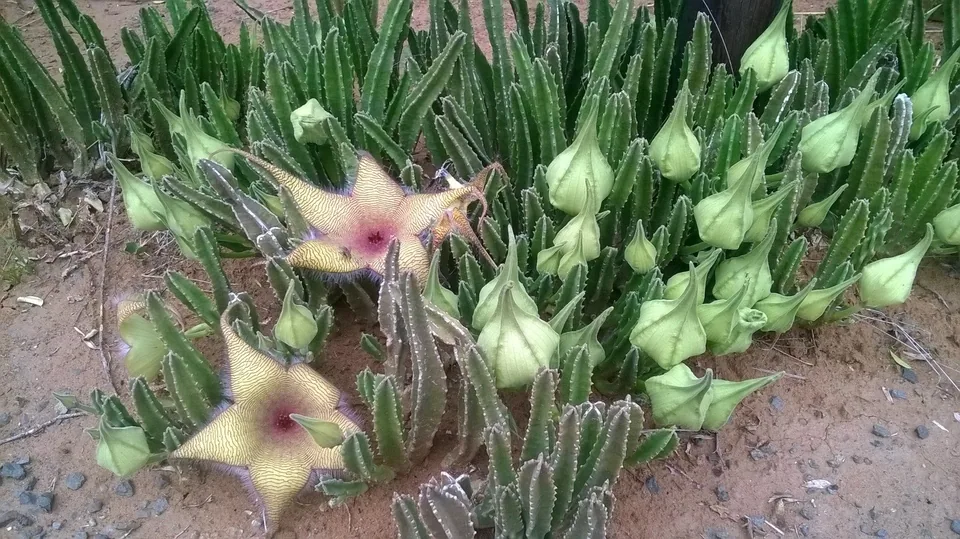
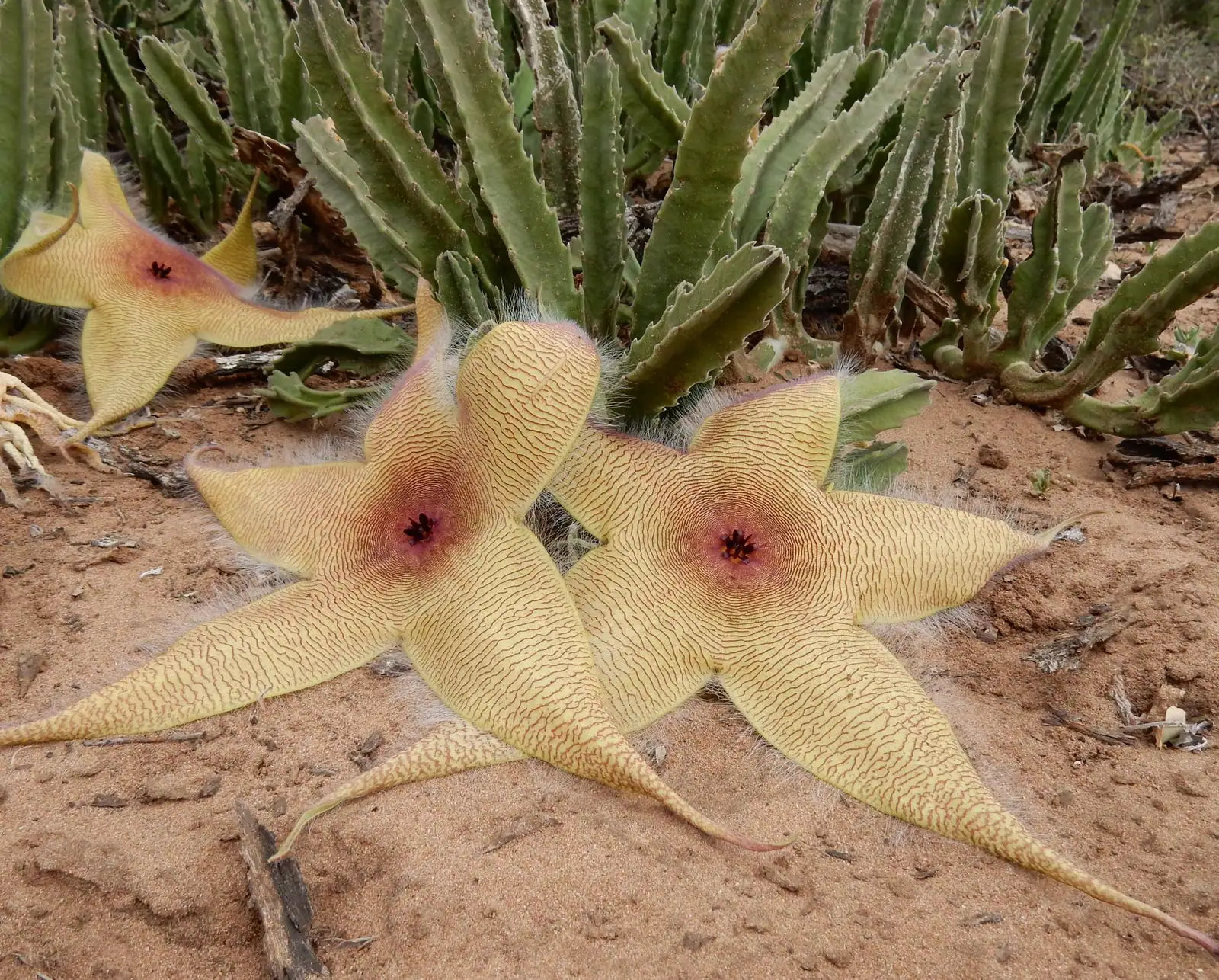
Stapelia gigantea es una suculenta baja que forma matas, con flores muy grandes en forma de estrella que huelen a carne podrida. [1][4] Es mejor cultivarla como planta de interior o en un contenedor con una mezcla gruesa y bien drenada, con solo riego moderado en verano. [2] El exceso de agua causa pudrición, pero una mezcla que se seca por completo deja las puntas de las ramas secas o flácidas. [3]
Citado en inglés, como en la fuente.
Esta ficha está incompleta: las fuentes consultadas aún no cubren todos los campos.
Aún no cubierto por nuestras fuentes: Poda
Cuidados
Riego
Riego
Riego moderado en verano y seco en invierno; deja que la tierra se seque entre riegos.
Notas sobre el riego
Las condiciones de suelo empapado o anegado causan pudrición de raíces y tallos.
Luz
Las fuentes no coinciden:
Clima y frío
Rusticidad, zona más fría
Las fuentes dan valores distintos según la región, la zona o las condiciones de cultivo.
Lo que dice cada fuente
Según UF/IFAS Gardening Solutions: 10 [mínima invernal de −1,1 a 4,4 °C (de 30 a 40 °F)]
Según World of Succulents: 9a [mínima invernal de −6,7 a −3,9 °C (de 20 a 25 °F)]
Qué dicen las fuentes (2)
Según UF/IFAS Gardening Solutions: Hardy only in zones 10-11, carrion flower should only be planted outside in frost-free areas.Según World of Succulents: Hardiness: USDA hardiness zones 9a to 11b: from 20°F (-6.7°C) to 50°F (10°C).Rusticidad, zona más cálida
11 [mínima invernal de 4,4 a 10 °C (de 40 a 50 °F)]
Dónde cultivarla
En interior
Sí
Qué dicen las fuentes (1)
best to grow this tender plant as a houseplant or in a container that can be moved to a protected location when cold weather strikes.En maceta
Sí
Qué dicen las fuentes (1)
or in a container that can be moved to a protected location when cold weather strikes.Propagación
División de matas, esquejes de tallo y semillas.
Cultivo
La planta
Ciclo de vida
perenne
Qué dicen las fuentes (1)
Stapelia is a genus of perennial succulent plants from South Africa.Familia
Apocynaceae
Qué dicen las fuentes (1)
It is in the Dogbane Family (Apocynaceae) which is the same plant family as milkweeds.Altura adulta
20.32-25.4 cm (8-10 pulgadas)
Qué dicen las fuentes (1)
The Stapelia gigantea species only grows about 8 to 10 inches tall and has smooth, erect, light green stems.Plagas y enfermedades
Plagas
cochinillas, cochinillas harinosas, ácaros
Qué dicen las fuentes (1)
Scale, mealy bugs and mites may cause problems.Enfermedades
pudrición de la raíz
Qué dicen las fuentes (1)
as with most succulent, soggy soil will cause problems like root rot.Problemas
Podredumbre de la raíz
Síntoma: El suelo empapado causa pudrición de raíces; los tallos se pudren en condiciones anegadas y húmedas.
Qué hacer: Deja que la tierra se seque entre riegos y asegúrate de que los contenedores no retengan agua; corta las partes podridas y deja que las secciones sanas formen callo durante 2-3 semanas antes de plantar.
Qué dicen las fuentes (2)
soggy soil will cause problems like root rot
— Carrion Flower – Gardening Solutions [2] Stems tend to rot in waterlogged and moist conditions, can be saved if rotten parts are cut off, and healthy sections allowed to callus for 2-3 weeks before planting.
— NParks | Stapelia gigantea [4] Cochinillas, cochinillas harinosas y ácaros.
Síntoma: Las cochinillas, las cochinillas harinosas y los ácaros pueden causar problemas.
Qué dicen las fuentes (1)
Scale, mealy bugs and mites may cause problems.
— Carrion Flower – Gardening Solutions [2] Puntas de ramas secas o flácidas.
Síntoma: Las puntas de las ramas se secan o se vuelven flácidas si se deja que la mezcla para macetas se seque demasiado.
Qué hacer: Mantén el equilibrio: deja que los 2 pulgadas superiores de la tierra se sequen antes de volver a regar.
Qué dicen las fuentes (2)
The tips of the branches grow dry or limp if the potting mix is allowed to become too dry, but rot is a problem if kept too moist.
— How should I care for Stapelia gigantea, Zulu giant starfish plant? - NYBG Mertz Library Reference [3] Then let the top 2 inches of soil entirely dry out before you water again.
— How should I care for Stapelia gigantea, Zulu giant starfish plant? - NYBG Mertz Library Reference [3]
Remedios
Cada remedio indica qué dicen las fuentes oficiales; los remedios tradicionales sin fuente oficial aparecen marcados. Los perjudiciales están para que sepas evitarlos.
Cuidar la planta
pudrición del tallo
Corta las partes podridas y deja que las secciones sanas formen callo. Fuente oficial, sin prueba independiente
Cómo: Se cortan las partes podridas y se deja que las secciones sanas formen callo durante 2-3 semanas antes de plantar.
Stems tend to rot in waterlogged and moist conditions, can be saved if rotten parts are cut off, and healthy sections allowed to callus for 2-3 weeks before planting.
— NParks | Stapelia gigantea [4]
Calendario
Poda
No figura en las fuentes consultadas.
Meses tal como los dan las fuentes, en su mayoría de Estados Unidos (hemisferio norte). En el hemisferio sur se desplazan unos seis meses.
Valores orientativos
Valores de una fuente secundaria, no comprobados palabra por palabra como el resto de esta página. Úselos como punto de partida.
- Horas de sol
- 4-6 horasValor orientativo, adáptalo a tu clima · Fuente secundaria
- pH del suelo
- 6-7.5Valor orientativo, adáptalo a tu clima · Fuente secundaria
- Nivel de cuidado
- MedioValor orientativo, adáptalo a tu clima · Fuente secundaria
- Crecimiento
- BajoValor orientativo, adáptalo a tu clima · Fuente secundaria
- Poda
- mayo, junio, julio, mayoValor orientativo, adáptalo a tu clima · Fuente secundaria
Plantas similares
- Jazmín de Cuba Allamanda cathartica
- Jazmín asiático Trachelospermum asiaticum
- Jazmín de Tucumán Araujia sericifera
- Blue Star Amsonia ciliata
- Blue Star Amsonia hubrichtii
- Bush allamanda Allamanda schottii
- Butterfly Weed Asclepias tuberosa
- Carolina Spinypod Matelea carolinensis
Fuentes
Cada valor anterior se cita de estos documentos. Los enlaces llevan al editor original.
- 1 · extension.arizona.edu, consultado
- Carrion Flower – Gardening Solutions · gardeningsolutions.ifas.ufl.edu, consultado
- How should I care for Stapelia gigantea, Zulu giant starfish plant? - NYBG Mertz Library Reference · libanswers.nybg.org, consultado
- NParks | Stapelia gigantea · nparks.gov.sg, consultado
- Stapelia gigantea (Zulu Giant) - World of Succulents · worldofsucculents.com, consultado
- Stapelia gigantea · llifle.eu, consultado
- Starfish Plant (Stapelia gigantea) in the Stapelias Database (National Gardening Association) · garden.org, consultado
Escrito por Emilio Marruso · última revisión