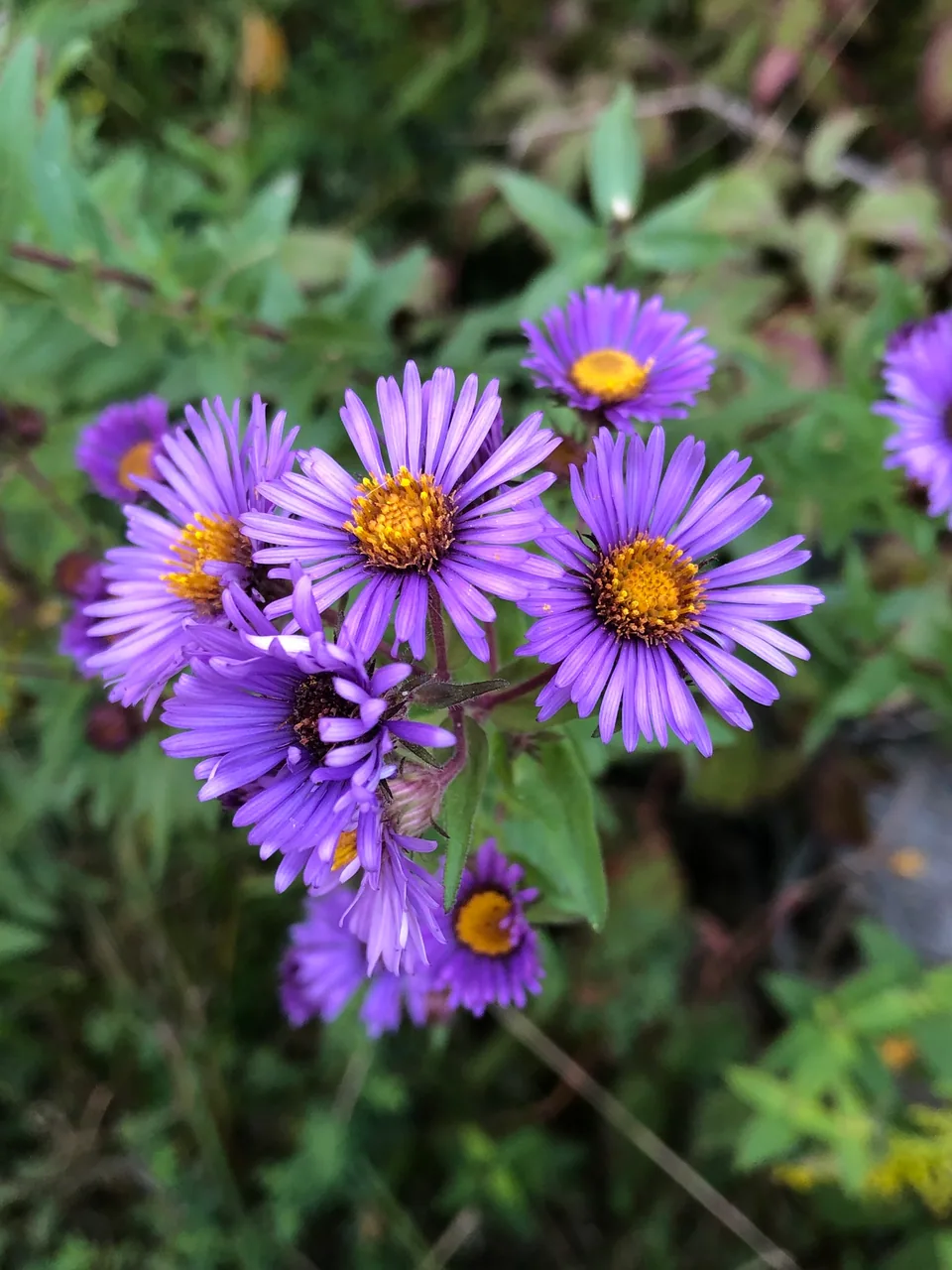
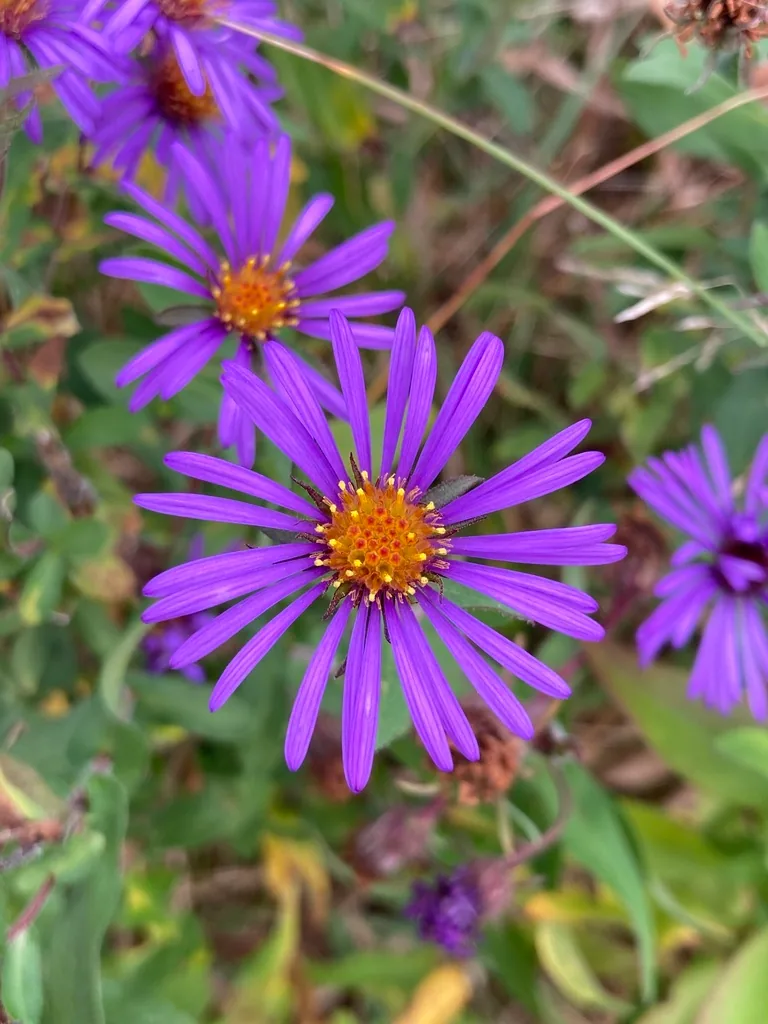

Cómo cultivar y cuidar Áster de Nueva Inglaterra
Symphyotrichum novae-angliae
Escrito por Emilio Marruso · última revisión
De un vistazo
El áster de Nueva Inglaterra es una vivaz resistente que alcanza 0,9–1,8 m de alto y pide muy poco. Riégala con regularidad hasta que arraigue; después aguanta la sequía y solo necesita agua cuando llueve poco. Una capa de compost al año es todo el abono que quiere, y puedes multiplicarla por semilla, división o esquejes.
- Riego
Riega con regularidad hasta que arraigue; después solo cuando llueva poco, aguanta la sequía
Qué dicen las fuentes (6)
Riego: Una vez establecida, riega durante los períodos de poca lluvia; tolerante a la sequía una vez establecida.
Water regularly until plants are established. Once established, water during periods of low rainfall.
— New England Asters (Symphyotrichum Novae-Angliae) How To Grow And Care For New England Asters | Home & Garden Information Center [2] Once established, these natives are drought-tolerant and disease-resistant, thereby reducing the need for water and pesticides.
— Late Blooming Beauty: The New England Aster [4] Notas sobre el riego: Riega regularmente hasta que se establezca; apta para sitios húmedos con tolerancia limitada al encharcamiento.
be sure to place them in moist, well-drained soil and follow with regular waterings until the roots are established.
— Late Blooming Beauty: The New England Aster [4] Hydrologic zones: Moist; limited inudation tolerance
— Rain Garden Plants: New England Aster [3] Sequía: Tolerante a la sequía una vez establecida; riega durante los períodos de poca lluvia.
Once established, these natives are drought-tolerant and disease-resistant, thereby reducing the need for water and pesticides.
— Late Blooming Beauty: The New England Aster [4] Once established, water during periods of low rainfall.
— New England Asters (Symphyotrichum Novae-Angliae) How To Grow And Care For New England Asters | Home & Garden Information Center [2] - Suelo
Suelo con pH de hasta 6,8
Qué dicen las fuentes (1)
pH del suelo, máximo: 6.8
Soil: Acidic (pH less than 6.8); well-drained; tolerates dry and clay soils
— Rain Garden Plants: New England Aster [3] - Abonado
Una capa de 5 cm de compost cada año; normalmente no necesita abono regular
Qué dicen las fuentes (4)
Frecuencia: Una vez al año (compost cada año); no suelen ser necesarias aplicaciones regulares de fertilizante
Apply a 2-inch layer of compost annually. - If needed, fertilize with an all-purpose, slow-release fertilizer in late spring.
— New England Asters (Symphyotrichum Novae-Angliae) How To Grow And Care For New England Asters | Home & Garden Information Center [2] Asters generally do not need regular applications of fertiliser in most garden soils. Mulching plants in borders with well-rotted manure or garden compost each spring should be sufficient.
— [8] Abonos naturales: Compost, una capa de 5.08 cm [2 in] cada año; estiércol bien descompuesto o compost de jardín como mantillo de primavera
Apply a 2-inch layer of compost annually. - If needed, fertilize with an all-purpose, slow-release fertilizer in late spring.
— New England Asters (Symphyotrichum Novae-Angliae) How To Grow And Care For New England Asters | Home & Garden Information Center [2] Asters generally do not need regular applications of fertiliser in most garden soils. Mulching plants in borders with well-rotted manure or garden compost each spring should be sufficient.
— [8] - Poda
Despunta los brotes en primavera; deja de despuntar en julio
Qué dicen las fuentes (2)
Poda: Pellizca las puntas de crecimiento en primavera; deja de pellizcar en julio
As the plants begin growing in spring, pinch the growing tips to make the plants bushier. Stop pinching back in July for fall blooms.
— New England Asters (Symphyotrichum Novae-Angliae) How To Grow And Care For New England Asters | Home & Garden Information Center [2] Pinching the stems in spring will delay blooming and create a bushier plant.
— Symphyotrichum novae-angliae (New England Aster) | North Carolina Extension Gardener Plant Toolbox [1] - Plagas
Oídio, pulgón y araña roja; deja que circule bien el aire contra el oídio
Qué dicen las fuentes (3)
Plagas: arañitas rojas, pulgones, minadores de hojas
Insects can include spider mites, aphids and leaf miners. Taller plants may need to be staked.
— Symphyotrichum novae-angliae (New England Aster) | North Carolina Extension Gardener Plant Toolbox [1] Aphids, spider mites, and leaf miners are sometimes pests.
— New England Asters (Symphyotrichum Novae-Angliae) How To Grow And Care For New England Asters | Home & Garden Information Center [2] Enfermedades: mildiu polvoriento, marchitez del aster, pudrición del tallo
Insects, Diseases, and Other Plant Problems: Some susceptibility to powdery mildew. Watch for aster wilt and stem rot.
— Symphyotrichum novae-angliae (New England Aster) | North Carolina Extension Gardener Plant Toolbox [1] - Atención
Puede resembrarse sola; quita las flores marchitas para evitarlo
- Tamaño
0,9–1,8 m de alto y 30–90 cm de ancho
Qué dicen las fuentes (4)
Altura adulta: 91–183 cm (3–6 pies)
The large bushy clumps can grow 3 to 6 feet tall and 1 to 3 feet wide.
— Symphyotrichum novae-angliae (New England Aster) | North Carolina Extension Gardener Plant Toolbox [1] Plants can grow from 3 to 6 feet tall and up to 3 feet wide.
— New England Asters (Symphyotrichum Novae-Angliae) How To Grow And Care For New England Asters | Home & Garden Information Center [2] Anchura adulta: 30–91 cm (1–3 pies)
The large bushy clumps can grow 3 to 6 feet tall and 1 to 3 feet wide.
— Symphyotrichum novae-angliae (New England Aster) | North Carolina Extension Gardener Plant Toolbox [1] Plants can grow from 3 to 6 feet tall and up to 3 feet wide.
— New England Asters (Symphyotrichum Novae-Angliae) How To Grow And Care For New England Asters | Home & Garden Information Center [2] - Multiplicación
Por semilla, dividiendo la mata o con esquejes tiernos
Qué dicen las fuentes (3)
Propagación: Semilla, división, esquejes de madera blanda
New England aster can also be propagated by "softwood" cuttings taken in late spring. Mature plants can be divided in the spring by sectioning off individual stems with their associated roots.
— Lady Bird Johnson Wildflower Center - The University of Texas at Austin [6] Mature plants can be divided every three or more years.
— New England Asters (Symphyotrichum Novae-Angliae) How To Grow And Care For New England Asters | Home & Garden Information Center [2] They also can be propagated by seeds, bare roots or transplants.
— Late Blooming Beauty: The New England Aster [4] - Siembra
Siembra fuera en otoño, con las primeras heladas; aprieta las semillas sobre la tierra, sin enterrarlas
Qué dicen las fuentes (4)
Guardar semillas: Las semillas se pueden guardar y sembrar al aire libre en otoño.
Seeds can be saved and sown outdoors in the fall.
— New England Asters (Symphyotrichum Novae-Angliae) How To Grow And Care For New England Asters | Home & Garden Information Center [2] Estratificación de semillas: Las semillas necesitan temperaturas frías de invierno para germinar en primavera: siembra a las primeras señales de helada.
Plant the seeds at the first signs of frost as they need the cold winter temperatures to germinate in the spring.
— Late Blooming Beauty: The New England Aster [4] Germinación: Presiona suavemente las semillas diminutas sobre el suelo, solo lo suficiente para que hagan contacto.
Gently press the tiny seeds, just enough to make contact with the soil, to ensure proper germination.
— Late Blooming Beauty: The New England Aster [4] Profundidad de siembra: 0 cm [0 in] (siembra superficial: las semillas se presionan contra el suelo, no se entierran profundamente)
Gently press the tiny seeds, just enough to make contact with the soil, to ensure proper germination. They should not be buried deeply.
— Late Blooming Beauty: The New England Aster [4]
Resumen
El aster de Nueva Inglaterra es una herbácea perenne nativa del este de Norteamérica que florece desde fines del verano hasta el otoño. [1][2] Las plantas altas pueden necesitar tutores y una buena circulación de aire ayuda a prevenir enfermedades foliares. [1][2]
Citado en inglés, como en la fuente.
Cuidados
Riego
Riego
Una vez establecida, riega durante los períodos de poca lluvia; tolerante a la sequía una vez establecida.
Qué dicen las fuentes (2)
Water regularly until plants are established. Once established, water during periods of low rainfall.Once established, these natives are drought-tolerant and disease-resistant, thereby reducing the need for water and pesticides.Notas sobre el riego
Riega regularmente hasta que se establezca; apta para sitios húmedos con tolerancia limitada al encharcamiento.
Luz
Las fuentes no coinciden:
Light Requirement: Part Shade Soil Moisture: Moist
[6]
Qué dicen las fuentes (4)
Full sun (6 or more hours of direct sunlight a day)
Partial Shade (Direct sunlight only part of the day, 2-6 hours)Plant in sun to part shade.Site Conditions
- Sun: Sun/partial shade
- Soil: Acidic (pH less than 6.8)They grow in full sun to part shade in U.S. Department of Agriculture Plant Hardiness Zones 3 to 8Clima y frío
Rusticidad, zona más fría
Las fuentes dan valores distintos según la región, la zona o las condiciones de cultivo.
Lo que dice cada fuente
Según NC State Extension: 4a-8b [mínima invernal de −34,4 a −6,7 °C (de −30 a 20 °F)]
Según Clemson Extension (HGIC): 4-8b [mínima invernal de −34,4 a −6,7 °C (de −30 a 20 °F)]
Según Penn State Extension: 3-9 [mínima invernal de −40 a −1,1 °C (de −40 a 30 °F)]
Según University of Vermont Extension: 3-8 [mínima invernal de −40 a −6,7 °C (de −40 a 20 °F)]
Qué dicen las fuentes (4)
Según NC State Extension: USDA Plant Hardiness Zone:
4a, 4b, 5a, 5b, 6a, 6b, 7a, 7b, 8a, 8bSegún Clemson Extension (HGIC): New England asters can be planted in USDA planting zones 4 through 8b. This includes all of South Carolina.Según Penn State Extension: Bloom time: August to October
- Hardiness zone: 3 to 9Según University of Vermont Extension: They grow in full sun to part shade in U.S. Department of Agriculture Plant Hardiness Zones 3 to 8Rusticidad, zona más cálida
Las fuentes dan valores distintos según la región, la zona o las condiciones de cultivo.
Lo que dice cada fuente
Según NC State Extension: 4a-8b [mínima invernal de −34,4 a −6,7 °C (de −30 a 20 °F)]
Según Clemson Extension (HGIC): 4-8b [mínima invernal de −34,4 a −6,7 °C (de −30 a 20 °F)]
Según Penn State Extension: 3-9 [mínima invernal de −40 a −1,1 °C (de −40 a 30 °F)]
Según University of Vermont Extension: 3-8 [mínima invernal de −40 a −6,7 °C (de −40 a 20 °F)]
Qué dicen las fuentes (4)
Según NC State Extension: USDA Plant Hardiness Zone:
4a, 4b, 5a, 5b, 6a, 6b, 7a, 7b, 8a, 8bSegún Clemson Extension (HGIC): New England asters can be planted in USDA planting zones 4 through 8b. This includes all of South Carolina.Según Penn State Extension: Bloom time: August to October
- Hardiness zone: 3 to 9Según University of Vermont Extension: They grow in full sun to part shade in U.S. Department of Agriculture Plant Hardiness Zones 3 to 8Suelo
6.8
Qué dicen las fuentes (1)
Soil: Acidic (pH less than 6.8); well-drained; tolerates dry and clay soilsPropagación
Semilla, división, esquejes de madera blanda
Qué dicen las fuentes (3)
New England aster can also be propagated by "softwood" cuttings taken in late spring. Mature plants can be divided in the spring by sectioning off individual stems with their associated roots.Mature plants can be divided every three or more years.They also can be propagated by seeds, bare roots or transplants.Cultivo
La planta
Ciclo de vida
perenne
Qué dicen las fuentes (2)
New England Aster is a herbaceous perennial in the daisy family (Asteraceae) native to eastern North AmericaNew England asters ( Symphyotrichum novae-angliae) are late-summer-to-fall-blooming perennials with daisy-like flowers.Familia
Asteraceae
Qué dicen las fuentes (2)
New England Aster is a herbaceous perennial in the daisy family (Asteraceae) native to eastern North AmericaAsters are members of the daisy family, Asteraceae.Altura adulta
91–183 cm (3–6 pies)
Qué dicen las fuentes (2)
The large bushy clumps can grow 3 to 6 feet tall and 1 to 3 feet wide.Plants can grow from 3 to 6 feet tall and up to 3 feet wide.Anchura adulta
30–91 cm (1–3 pies)
Qué dicen las fuentes (2)
The large bushy clumps can grow 3 to 6 feet tall and 1 to 3 feet wide.Plants can grow from 3 to 6 feet tall and up to 3 feet wide.Siembra y crecimiento
Profundidad de siembra
0 cm [0 in] (siembra superficial: las semillas se presionan contra el suelo, no se entierran profundamente)
Qué dicen las fuentes (1)
Gently press the tiny seeds, just enough to make contact with the soil, to ensure proper germination. They should not be buried deeply.Cosecha y conservación
Guardar semillas
Las semillas se pueden guardar y sembrar al aire libre en otoño.
Qué dicen las fuentes (1)
Seeds can be saved and sown outdoors in the fall.Plagas y enfermedades
Plagas
arañitas rojas, pulgones, minadores de hojas
Qué dicen las fuentes (2)
Insects can include spider mites, aphids and leaf miners. Taller plants may need to be staked.Aphids, spider mites, and leaf miners are sometimes pests.Enfermedades
mildiu polvoriento, marchitez del aster, pudrición del tallo
Qué dicen las fuentes (1)
Insects, Diseases, and Other Plant Problems: Some susceptibility to powdery mildew. Watch for aster wilt and stem rot.Abonado
Cuándo
Finales de primavera, solo si es necesario
Lo que dice cada fuente
suelos arenosos ligeros: En primavera, cuando comienza el crecimiento
Qué dicen las fuentes (2)
suelos arenosos ligeros: If your garden soil is light and sandy your asters can benefit from a feed in spring when they start to come into growth.Apply a 2-inch layer of compost annually.
- If needed, fertilize with an all-purpose, slow-release fertilizer in late spring.Frecuencia
Una vez al año (compost cada año); no suelen ser necesarias aplicaciones regulares de fertilizante
Qué dicen las fuentes (2)
Apply a 2-inch layer of compost annually.
- If needed, fertilize with an all-purpose, slow-release fertilizer in late spring.Asters generally do not need regular applications of fertiliser in most garden soils. Mulching plants in borders with well-rotted manure or garden compost each spring should be sufficient.Abonos naturales
Compost, una capa de 5.08 cm [2 in] cada año; estiércol bien descompuesto o compost de jardín como mantillo de primavera
Qué dicen las fuentes (2)
Apply a 2-inch layer of compost annually.
- If needed, fertilize with an all-purpose, slow-release fertilizer in late spring.Asters generally do not need regular applications of fertiliser in most garden soils. Mulching plants in borders with well-rotted manure or garden compost each spring should be sufficient.Abonos minerales
Fertilizante de liberación lenta para uso general, solo si es necesario
Qué dicen las fuentes (1)
Apply a 2-inch layer of compost annually.
- If needed, fertilize with an all-purpose, slow-release fertilizer in late spring.Propagación
Germinación
Presiona suavemente las semillas diminutas sobre el suelo, solo lo suficiente para que hagan contacto.
Qué dicen las fuentes (1)
Gently press the tiny seeds, just enough to make contact with the soil, to ensure proper germination.Estratificación de semillas
Las semillas necesitan temperaturas frías de invierno para germinar en primavera: siembra a las primeras señales de helada.
Qué dicen las fuentes (1)
Plant the seeds at the first signs of frost as they need the cold winter temperatures to germinate in the spring.Calor y sequía
Sequía
Tolerante a la sequía una vez establecida; riega durante los períodos de poca lluvia.
Qué dicen las fuentes (2)
Once established, these natives are drought-tolerant and disease-resistant, thereby reducing the need for water and pesticides.Once established, water during periods of low rainfall.Problemas
Mildiu polvoriento
Qué hacer: Asegura una buena circulación de aire
Qué dicen las fuentes (2)
Insects, Diseases, and Other Plant Problems: Some susceptibility to powdery mildew. Watch for aster wilt and stem rot.
— Symphyotrichum novae-angliae (New England Aster) | North Carolina Extension Gardener Plant Toolbox [1] New England Asters can be susceptible to powdery mildew.
— New England Asters (Symphyotrichum Novae-Angliae) How To Grow And Care For New England Asters | Home & Garden Information Center [2] Marchitez del aster y pudrición del tallo
Qué dicen las fuentes (1)
Insects, Diseases, and Other Plant Problems: Some susceptibility to powdery mildew. Watch for aster wilt and stem rot.
— Symphyotrichum novae-angliae (New England Aster) | North Carolina Extension Gardener Plant Toolbox [1] Áfidos, arañas rojas, minadores de hoja
Qué dicen las fuentes (1)
Aphids, spider mites, and leaf miners are sometimes pests.
— New England Asters (Symphyotrichum Novae-Angliae) How To Grow And Care For New England Asters | Home & Garden Information Center [2] Siembra espontánea no deseada
Qué hacer: Retira las cabezas florales
Qué dicen las fuentes (1)
Plants can self-seed in the garden. Remove flowerheads to prevent unwanted seedlings.
— New England Asters (Symphyotrichum Novae-Angliae) How To Grow And Care For New England Asters | Home & Garden Information Center [2]
Remedios
Cada remedio indica qué dicen las fuentes oficiales; los remedios tradicionales sin fuente oficial aparecen marcados. Los perjudiciales están para que sepas evitarlos.
Cuidar la planta
tíngidos
recogida manual No verificado
Remedio tradicional, no verificado por una fuente oficial.
Cómo: Recoge los insectos a mano (chinches del crisantemo, escarabajos del pepino, minadores de hoja, arañas rojas).
chorro firme de manguera No verificado
Remedio tradicional, no verificado por una fuente oficial.
Cómo: Rocía los insectos firmemente con una boquilla de manguera.
jabón insecticida Funciona
Insecticidal soaps are made from potassium salts of fatty acids (don’t make a homemade soap solution as this can burn and damage plants).
— extension.umn.edu [11] Cómo: Aplica un jabón insecticida a los insectos.
Treatments include hand picking the insects, spraying them firmly with a hose nozzle, or applying an insecticidal soap.
— gardenerspath.com [9] Qué dicen las pruebas For example, insecticidal soap is a safe, effective organic insecticide with minimal environmental impact.
— extension.psu.edu [10] tierra de diatomeas No verificado
Remedio tradicional, no verificado por una fuente oficial.
Cómo: Aplica tierra de diatomeas al suelo alrededor de las plantas; puede inhibir la infestación en el año actual y el siguiente.
ácaros araña
chorro de agua fuerte Funciona
Cómo: Un fuerte chorro de agua con la manguera debería remediar la situación.
A strong hose spray or insecticidal soap should remedy the situation.
— gardenerspath.com [9] Qué dicen las pruebas Use a high-pressure water spray to dislodge twospotted spider mites. This can also wash away their protective webbing.
— extension.umn.edu [11] jabón insecticida Funciona en parte
Insecticidal soaps are made from potassium salts of fatty acids (don’t make a homemade soap solution as this can burn and damage plants).
— extension.umn.edu [11] Cómo: Rocía jabón insecticida sobre los ácaros.
A strong hose spray or insecticidal soap should remedy the situation.
— gardenerspath.com [9] Qué dicen las pruebas Soaps and horticultural oils are reasonably effective against mites and have little impact on people, animals and nontarget insects.
— extension.umn.edu [11]
enfermedades fúngicas
aclareo de tallos para mejorar la circulación del aire Funciona
Cómo: Corta al azar algunos tallos de cada grupo hasta el suelo y retíralos, para mantener la circulación del aire e inhibir el crecimiento de hongos.
In addition, you can thin plants to maintain airflow and inhibit fungal growth. Do this by randomly cutting a few stems in each clump all the way to the ground and removing them.
— gardenerspath.com [9] Qué dicen las pruebas Pinching the stems in spring will delay blooming and create a bushier plant. Provide good airflow to help prevent leaf diseases.
— Symphyotrichum novae-angliae (New England Aster) | North Carolina Extension Gardener Plant Toolbox [1] eliminación del material vegetal afectado No verificado
Remedio tradicional, no verificado por una fuente oficial.
Cómo: Retira el material vegetal afectado (fusarium del aster, mildiu polvoriento, roya).
Cómo eliminarla
auto-siembra no deseada
corte de los tallos florales antes de la formación de semillas Funciona
Cómo: Para limitar la siembra espontánea, corta los tallos de las flores antes de que produzcan semillas en el otoño.
To limit self-sowing, cut the flower stems before they go to seed in the fall, and use them in vase arrangements or bouquets to enjoy yourself, and share with others.
— gardenerspath.com [9] Qué dicen las pruebas Plants can self-seed in the garden. Remove flowerheads to prevent unwanted seedlings.
— New England Asters (Symphyotrichum Novae-Angliae) How To Grow And Care For New England Asters | Home & Garden Information Center [2]
Calendario
Siembra
Las fuentes dan valores distintos según la región, la zona o las condiciones de cultivo.
Lo que dice cada fuente
Según Clemson Extension (HGIC): Otoño, al aire libre
Según University of Vermont Extension: Ante los primeros signos de helada
producción de plántulas en invernadero (Native Plant Network, USDA FS): Todo el año
Qué dicen las fuentes (6)
Según Clemson Extension (HGIC): Seeds can be saved and sown outdoors in the fall.Según University of Vermont Extension: Plant the seeds at the first signs of frost as they need the cold winter temperatures to germinate in the spring.producción de plántulas en invernadero (Native Plant Network, USDA FS): Cover the seeds with a thin layer of soil or gently press the seeds into the dirt. Sow year-round due to unpredictable germination.Seeds can be saved and sown outdoors in the fall.Sow seeds, 5/8" deep, outside in fall or provide cold stratification.Plant the seeds at the first signs of frost as they need the cold winter temperatures to germinate in the spring.Plantación
Las fuentes dan valores distintos según la región, la zona o las condiciones de cultivo.
Lo que dice cada fuente
Según University of Vermont Extension: Finales de otoño, después de la dormancia
Península Superior: Finales de mayo hasta principios de octubre
Qué dicen las fuentes (3)
Según University of Vermont Extension: As another option, transplanting can be done in late fall after the plants go dormant.Península Superior: In the Upper Peninsula, flats are planted from late May to early October.As another option, transplanting can be done in late fall after the plants go dormant.Poda
Pellizca las puntas de crecimiento en primavera; deja de pellizcar en julio
Qué dicen las fuentes (2)
As the plants begin growing in spring, pinch the growing tips to make the plants bushier. Stop pinching back in July for fall blooms.Pinching the stems in spring will delay blooming and create a bushier plant.Meses tal como los dan las fuentes, en su mayoría de Estados Unidos (hemisferio norte). En el hemisferio sur se desplazan unos seis meses.
Respecto a las heladas
Estimación menos precisa: no hay ninguna estación meteorológica a menos de 300 km.
Busca las fechas de heladas por código postal o ciudad
Siembra al aire libre: hacia la primera helada
Plant the seeds at the first signs of frost as they need the cold winter temperatures to germinate in the spring.
— Late Blooming Beauty: The New England Aster [4]
Cuenta desde las fechas medias de las heladas de tu zona.
Plantas similares
- Aromatic Aster Symphyotrichum oblongifolium
- Aster Symphyotrichum lateriflorum
- Barrens Silky Aster Symphyotrichum pratense
- Blue Wood Aster Symphyotrichum cordifolium
- Bushy Aster Symphyotrichum dumosum
- Crooked-stemmed Aster Symphyotrichum prenanthoides
- Eastern Silvery Aster Symphyotrichum concolor
- Frost Aster Symphyotrichum pilosum
Fuentes
Cada valor anterior se cita de estos documentos. Los enlaces llevan al editor original.
- Symphyotrichum novae-angliae (New England Aster) | North Carolina Extension Gardener Plant Toolbox · plants.ces.ncsu.edu, consultado
- New England Asters (Symphyotrichum Novae-Angliae) How To Grow And Care For New England Asters | Home & Garden Information Center · hgic.clemson.edu, consultado
- Rain Garden Plants: New England Aster · extension.psu.edu, consultado
- Late Blooming Beauty: The New England Aster · uvm.edu, consultado
- New England Aster · fs.usda.gov, consultado
- Lady Bird Johnson Wildflower Center - The University of Texas at Austin · wildflower.org, consultado
- Compositae (Symphyotrichum) — Reforestation, Nurseries and Genetics Resources · rngr.net, consultado
- rhs.org.uk · rhs.org.uk
- gardenerspath.com · gardenerspath.com
- extension.psu.edu · extension.psu.edu
- extension.umn.edu · extension.umn.edu
Escrito por Emilio Marruso · última revisión