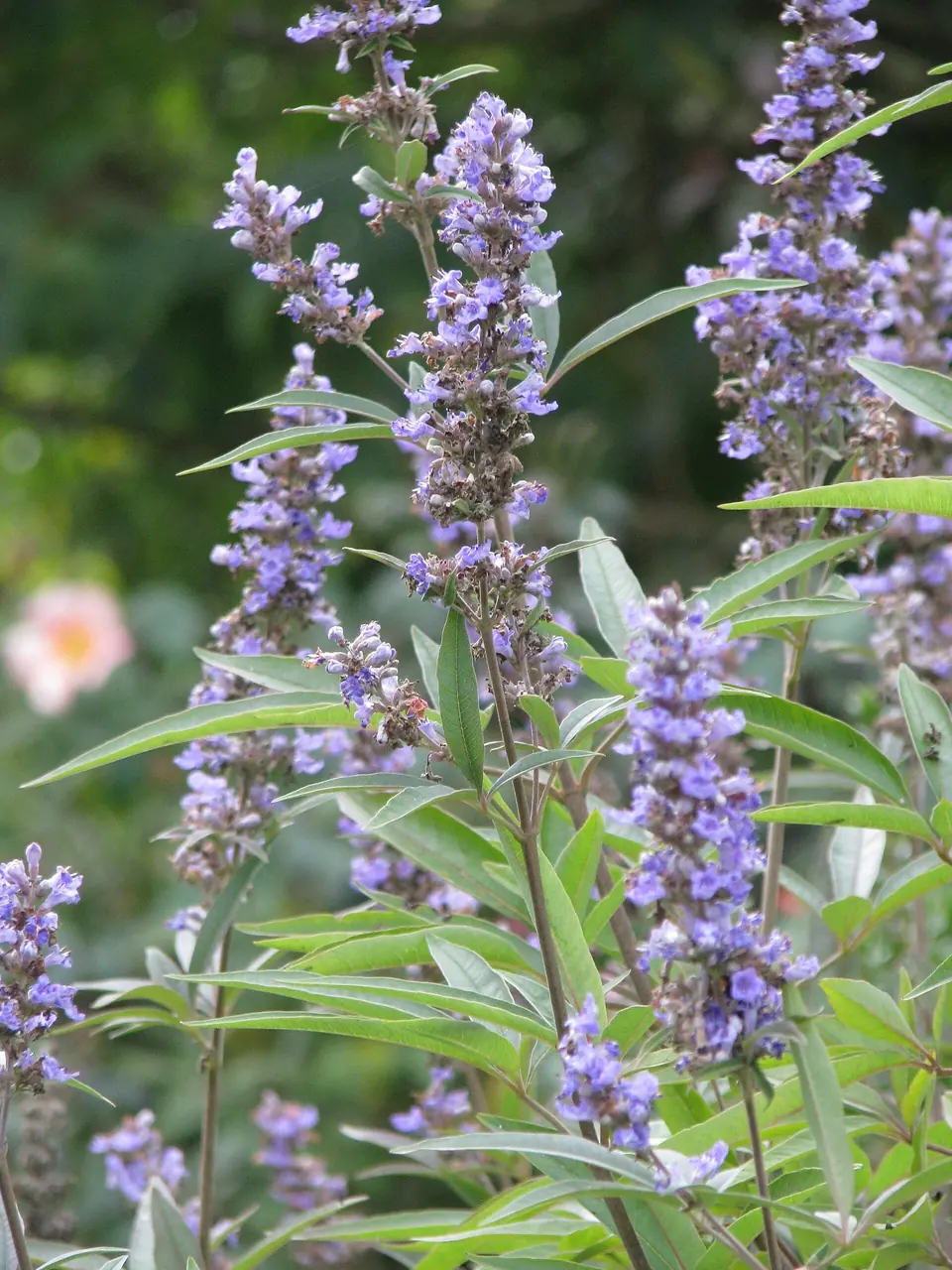
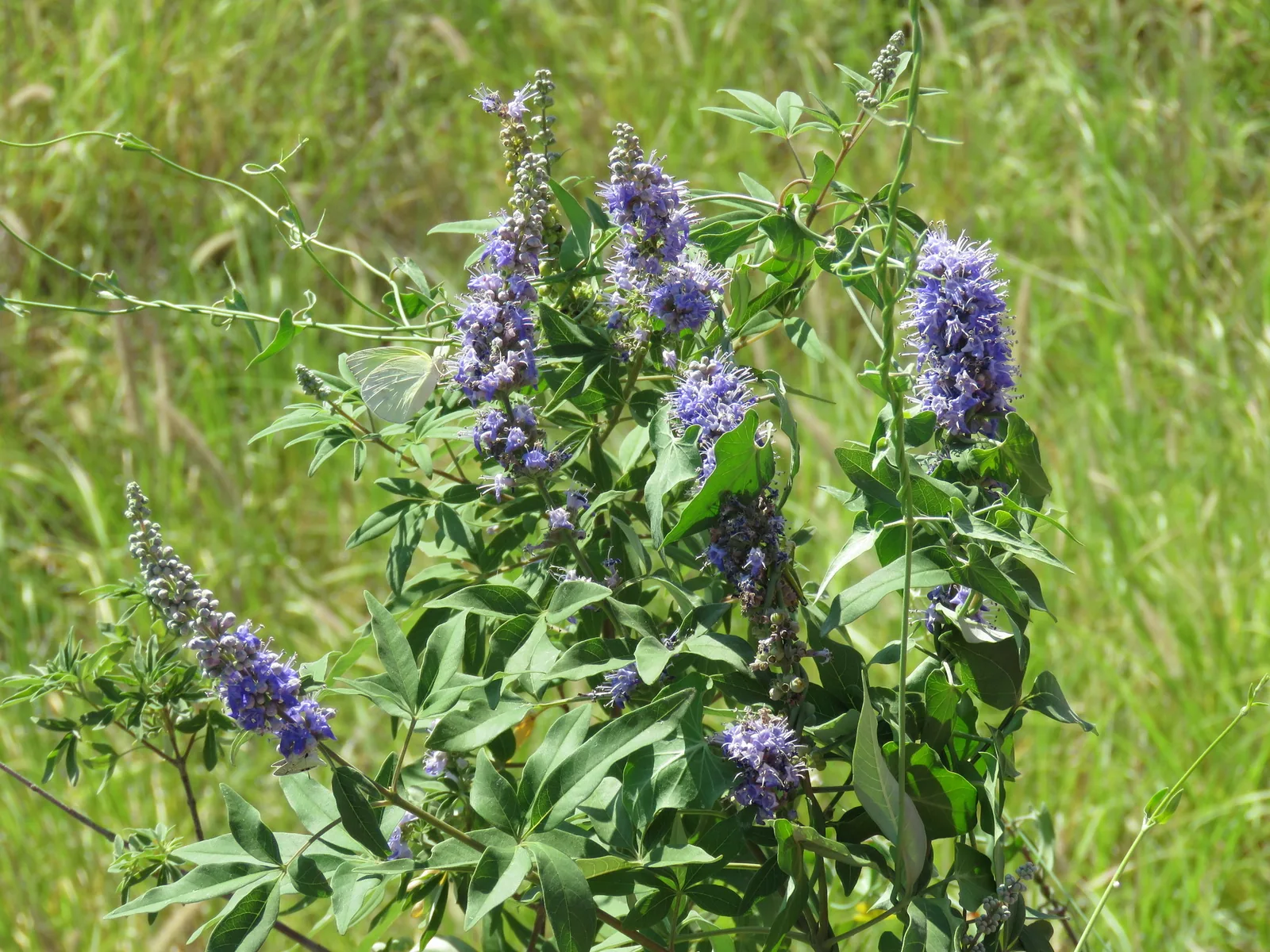

Cómo cultivar y cuidar Saucegatillo
Vitex agnus-castus
Escrito por Emilio Marruso · última revisión
De un vistazo
El sauzgatillo es un arbusto agradecido que alcanza 3–4,6 m de alto, o hasta 6 m si lo formas como árbol. Una vez establecido, aguanta bien la sequía y solo te pide un suelo que drene y nunca se quede encharcado. Pódalo y abónalo a finales de invierno, y en otoño disfruta de sus frutos.
- Riego
Aguanta la sequía una vez establecido; mantén la tierra húmeda, pero nunca encharcada
Qué dicen las fuentes (4)
Riego: Tolerante a la sequía una vez establecido; humedad del suelo adecuada pero no mojada
This tree is resistant to damage by deer and is moderately salt-tolerant. It has good drought tolerance once established.
— Vitex agnus-castus (Chasteberry, Chastetree, Chaste Tree, Lilac Chastetree, Monk's Pepper, Texas Lilac) | North Carolina Extension Gardener Plant Toolbox [1] After becoming established, it does well in a hot, dry setting (e.g. xeric or water-wise garden) and tolerates drought conditions.
— Chastetree | Home & Garden Information Center [3] Notas sobre el riego: Evita suelos que no drenen bien o que permanezcan húmedos; la pudrición de raíces puede ocurrir en suelos demasiado húmedos
If planted in soil that is not well-drained or remains wet, it can succumb to root rot and dieback.
— Chastetree | Home & Garden Information Center [3] Thrips can cause damage. Root rot can occur in too moist soils.
— Vitex agnus-castus (Chasteberry, Chastetree, Chaste Tree, Lilac Chastetree, Monk's Pepper, Texas Lilac) | North Carolina Extension Gardener Plant Toolbox [1] - Suelo
Suelo con buen drenaje: en tierra encharcada se pudren las raíces
Qué dicen las fuentes (2)
Notas sobre el riego: Evita suelos que no drenen bien o que permanezcan húmedos; la pudrición de raíces puede ocurrir en suelos demasiado húmedos
If planted in soil that is not well-drained or remains wet, it can succumb to root rot and dieback.
— Chastetree | Home & Garden Information Center [3] Thrips can cause damage. Root rot can occur in too moist soils.
— Vitex agnus-castus (Chasteberry, Chastetree, Chaste Tree, Lilac Chastetree, Monk's Pepper, Texas Lilac) | North Carolina Extension Gardener Plant Toolbox [1] - Abonado
Abona a finales de invierno, para que las heladas no dañen los brotes nuevos
Qué dicen las fuentes (1)
Cuándo: Finales de invierno, para evitar daños por heladas al nuevo crecimiento
Fertilize in the late winter to avoid freeze risk to new growth.
— Louisiana Super Plants: Shoal Creek Chaste Tree [5] - Poda
Poda de finales de invierno a principios de primavera
Qué dicen las fuentes (2)
Poda: De finales de invierno a principios de primavera
Pruning can be done in early spring as flowering occurs on new wood.
— Vitex agnus-castus (Chasteberry, Chastetree, Chaste Tree, Lilac Chastetree, Monk's Pepper, Texas Lilac) | North Carolina Extension Gardener Plant Toolbox [1] Their size can be controlled easily by late winter pruning to keep the plant
— Chaste Tree [4] - Cosecha
Sus frutos aparecen en otoño
Qué dicen las fuentes (1)
Cosecha: Otoño (exhibición de frutos/tiempo de cosecha).
Fruit Color: Purple/Lavender Display/Harvest Time: Fall Fruit Type:
— Vitex agnus-castus (Chasteberry, Chastetree, Chaste Tree, Lilac Chastetree, Monk's Pepper, Texas Lilac) | North Carolina Extension Gardener Plant Toolbox [1] - Plagas
Trips; manchas en las hojas y podredumbre de raíz en suelo húmedo; riega la tierra, no las hojas
Qué dicen las fuentes (2)
Plagas: trips
Insects, Diseases, and Other Plant Problems : Thrips can cause damage. Root rot can occur in too moist soils.
— Vitex agnus-castus (Chasteberry, Chastetree, Chaste Tree, Lilac Chastetree, Monk's Pepper, Texas Lilac) | North Carolina Extension Gardener Plant Toolbox [1] Enfermedades: pudrición de raíz, mancha foliar, muerte regresiva
If planted in soil that is not well-drained or remains wet, it can succumb to root rot and dieback. Leaf spots can be a problem, especially if overhead irrigation is used.
— Chastetree | Home & Garden Information Center [3] - Tamaño
3–4,6 m de alto como arbusto, hasta 6 m como árbol; tan ancho como alto
Qué dicen las fuentes (4)
Altura adulta: 304.8-457.2 cm (10-15 ft) como arbusto; hasta 609.6 (20 ft) como árbol
Although typically grown as a 10- to 15-foot shrub, in tree form it can reach heights and widths of up to 20 feet.
— Vitex agnus-castus (Chasteberry, Chastetree, Chaste Tree, Lilac Chastetree, Monk's Pepper, Texas Lilac) | North Carolina Extension Gardener Plant Toolbox [1] Form: A large shrub to 15 feet (occasionally a small tree to 20 feet) and of equal spread.
— Virginia Tech Dendrology Fact Sheet [6] Anchura adulta: hasta 609.6 cm (20 pies) en forma de árbol; igual a la altura
Although typically grown as a 10- to 15-foot shrub, in tree form it can reach heights and widths of up to 20 feet.
— Vitex agnus-castus (Chasteberry, Chastetree, Chaste Tree, Lilac Chastetree, Monk's Pepper, Texas Lilac) | North Carolina Extension Gardener Plant Toolbox [1] Form: A large shrub to 15 feet (occasionally a small tree to 20 feet) and of equal spread.
— Virginia Tech Dendrology Fact Sheet [6] - Multiplicación
Se multiplica por semilla
Qué dicen las fuentes (1)
Propagación: Semilla
Life Cycle: Woody Recommended Propagation Strategy: Seed Country Or Region Of Origin:
— Vitex agnus-castus (Chasteberry, Chastetree, Chaste Tree, Lilac Chastetree, Monk's Pepper, Texas Lilac) | North Carolina Extension Gardener Plant Toolbox [1]
Resumen
El árbol casto es un arbusto caducifolio o árbol pequeño que se cultiva como planta de jardín. [3] Es tolerante a la sequía una vez establecido y prospera mejor en suelo bien drenado. [1][3] Puede resembrar y volverse invasivo en algunas áreas. [3]
Citado en inglés, como en la fuente.
Cuidados
Riego
Riego
Tolerante a la sequía una vez establecido; humedad del suelo adecuada pero no mojada
Qué dicen las fuentes (2)
This tree is resistant to damage by deer and is moderately salt-tolerant. It has good drought tolerance once established.After becoming established, it does well in a hot, dry setting (e.g. xeric or water-wise garden) and tolerates drought conditions.Notas sobre el riego
Evita suelos que no drenen bien o que permanezcan húmedos; la pudrición de raíces puede ocurrir en suelos demasiado húmedos
Qué dicen las fuentes (2)
If planted in soil that is not well-drained or remains wet, it can succumb to root rot and dieback.Thrips can cause damage. Root rot can occur in too moist soils.Luz
Las fuentes no coinciden:
Light: full sun to part shade Water: average water requirements, tolerates drought
[7]
Qué dicen las fuentes (3)
Light:
Full sun (6 or more hours of direct sunlight a day)It prefers full sun and loose, well-drained soil with adequate but not wet soil moisture.It needs
full sun to flower but is not particular about soil type.Clima y frío
Rusticidad, zona más fría
Las fuentes dan valores distintos según la región, la zona o las condiciones de cultivo.
Lo que dice cada fuente
Según NC State Extension: 7a [mínima invernal de −17,8 a −15 °C (de 0 a 5 °F)]
Según Clemson Extension: 7 [mínima invernal de −17,8 a −12,2 °C (de 0 a 10 °F)]
Según University of Arkansas Extension: 6 [mínima invernal de −23,3 a −17,8 °C (de −10 a 0 °F)]
Qué dicen las fuentes (3)
Según NC State Extension: USDA Plant Hardiness Zone:
7a, 7b, 8a, 8bSegún Clemson Extension: It is an excellent selection for southern landscapes in USDA zones 7 to 9Según University of Arkansas Extension: Chaste tree is a tough, drought-resistant plant hardy from zones 6 to 9.Rusticidad, zona más cálida
Las fuentes dan valores distintos según la región, la zona o las condiciones de cultivo.
Lo que dice cada fuente
Según NC State Extension: 8b [mínima invernal de −9,4 a −6,7 °C (de 15 a 20 °F)]
Según Clemson Extension: 9 [mínima invernal de −6,7 a −1,1 °C (de 20 a 30 °F)]
Según University of Arkansas Extension: 9 [mínima invernal de −6,7 a −1,1 °C (de 20 a 30 °F)]
Qué dicen las fuentes (3)
Según NC State Extension: USDA Plant Hardiness Zone:
7a, 7b, 8a, 8bSegún Clemson Extension: It is an excellent selection for southern landscapes in USDA zones 7 to 9Según University of Arkansas Extension: Chaste tree is a tough, drought-resistant plant hardy from zones 6 to 9.Propagación
Semilla
Qué dicen las fuentes (1)
Life Cycle:
Woody
Recommended Propagation Strategy:
Seed
Country Or Region Of Origin:Cultivo
La planta
Familia
Altura adulta
304.8-457.2 cm (10-15 ft) como arbusto; hasta 609.6 (20 ft) como árbol
Qué dicen las fuentes (2)
Although typically grown as a 10- to 15-foot shrub, in tree form it can reach heights and widths of up to 20 feet.Form: A large shrub to 15 feet (occasionally a small tree to 20 feet) and of equal spread.Anchura adulta
hasta 609.6 cm (20 pies) en forma de árbol; igual a la altura
Qué dicen las fuentes (2)
Although typically grown as a 10- to 15-foot shrub, in tree form it can reach heights and widths of up to 20 feet.Form: A large shrub to 15 feet (occasionally a small tree to 20 feet) and of equal spread.Plagas y enfermedades
Plagas
trips
Qué dicen las fuentes (1)
Insects, Diseases, and Other Plant Problems : Thrips can cause damage. Root rot can occur in too moist soils.Enfermedades
pudrición de raíz, mancha foliar, muerte regresiva
Qué dicen las fuentes (1)
If planted in soil that is not well-drained or remains wet, it can succumb to root rot and dieback. Leaf spots can be a problem, especially if overhead irrigation is used.Abonado
Cuándo
Finales de invierno, para evitar daños por heladas al nuevo crecimiento
Qué dicen las fuentes (1)
Fertilize in the late winter to avoid freeze risk to new growth.Problemas
Podredumbre de la raíz
Síntoma: Pudrición de raíces y muerte regresiva en suelos que no drenan bien o permanecen húmedos
Qué hacer: Planta en suelo bien drenado
Qué dicen las fuentes (1)
If planted in soil that is not well-drained or remains wet, it can succumb to root rot and dieback.
— Chastetree | Home & Garden Information Center [3] Trips
Síntoma: Los trips pueden causar daños
Qué dicen las fuentes (1)
Thrips can cause damage. Root rot can occur in too moist soils.
— Vitex agnus-castus (Chasteberry, Chastetree, Chaste Tree, Lilac Chastetree, Monk's Pepper, Texas Lilac) | North Carolina Extension Gardener Plant Toolbox [1] Manchas foliares.
Síntoma: Manchas foliares, especialmente si se usa riego por aspersión
Qué hacer: Varios cultivares tienen resistencia a las enfermedades de manchas foliares
Qué dicen las fuentes (1)
Leaf spots can be a problem, especially if overhead irrigation is used. Several cultivars are available that have resistance to leaf spot diseases.
— Chastetree | Home & Garden Information Center [3]
Remedios
Las fuentes consultadas no dan remedios para esta planta.
Calendario
Cosecha
Otoño (exhibición de frutos/tiempo de cosecha).
Qué dicen las fuentes (1)
Fruit Color:
Purple/Lavender
Display/Harvest Time:
Fall
Fruit Type:Poda
De finales de invierno a principios de primavera
Qué dicen las fuentes (2)
Pruning can be done in early spring as flowering occurs on new wood.Their size can be controlled easily by late
winter pruning to keep the plantMeses tal como los dan las fuentes, en su mayoría de Estados Unidos (hemisferio norte). En el hemisferio sur se desplazan unos seis meses.
Plantas similares
- Beach Vitex Vitex rotundifolia
- Chastetree Vitex negundo
- Hipérico rastrero Hypericum calycinum
- Abeto de Vancuver Abies grandis
- Abraham Trachystemon orientalis
- Bananero de Etiopía Ensete ventricosum
- Acacia longifolia Acacia longifolia
- Acacia plateada Acacia retinodes
Fuentes
Cada valor anterior se cita de estos documentos. Los enlaces llevan al editor original.
- Vitex agnus-castus (Chasteberry, Chastetree, Chaste Tree, Lilac Chastetree, Monk's Pepper, Texas Lilac) | North Carolina Extension Gardener Plant Toolbox · plants.ces.ncsu.edu, consultado
- European Medicines Agency · ema.europa.eu, consultado
- Chastetree | Home & Garden Information Center · hgic.clemson.edu, consultado
- Chaste Tree · uaex.uada.edu, consultado
- Louisiana Super Plants: Shoal Creek Chaste Tree · lsuagcenter.com, consultado
- Virginia Tech Dendrology Fact Sheet · dendro.cnre.vt.edu, consultado
- UNF: Vitex agnus-castus · unf.edu, consultado
Escrito por Emilio Marruso · última revisión