
Cómo cultivar y cuidar ZZ Plant
Zamioculcas zamiifolia
Escrito por Emilio Marruso · última revisión
Tóxica para: Gatos, Perros, Animales, Personas · Por qué
De un vistazo
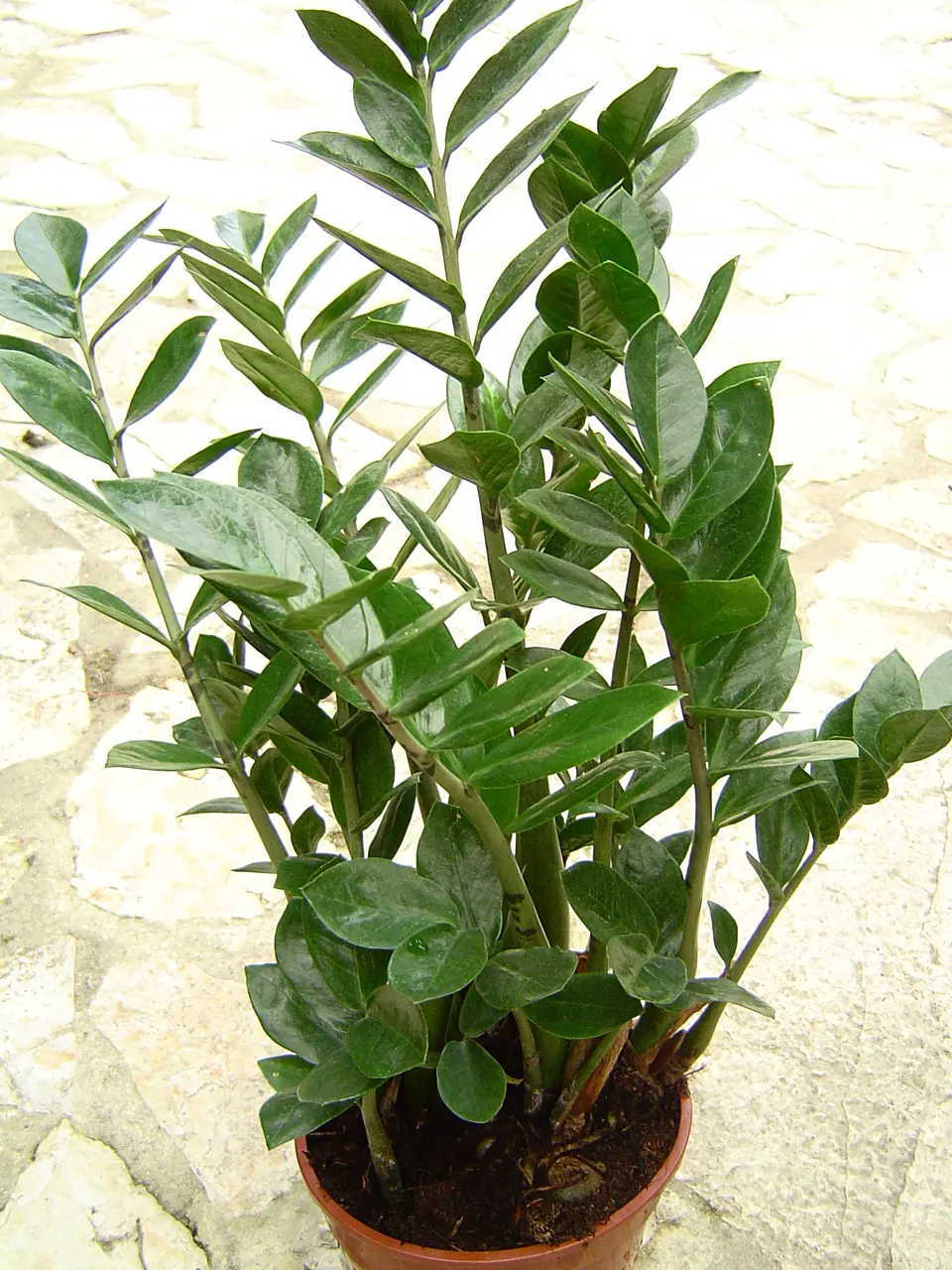
La zamioculca es la planta de interior que todo principiante merece. Sus gruesos tallos subterráneos guardan agua, así que solo necesita riego una o dos veces al mes, cuando la tierra está totalmente seca. Crece feliz con luz indirecta brillante e incluso con muy poca luz, y llega a medir de 60 cm a 1,2 m de alto y de ancho sin darte trabajo.
- Sol
Luz indirecta brillante o incluso poca luz; evita el sol directo, que quema las hojas
Qué dicen las fuentes (6)
Luz: Luz indirecta brillante a poca luz; evita la luz solar directa (semisombra a sombra profunda al aire libre)
en interiores (NC State Extension): While they will grow in very low levels of light, even in areas with only fluorescent light, they do best with bright indirect sunlight.
— Zamioculcas zamiifolia (Aroid Palm, Emerald Palm, Eternity Plant, Zanzibar Gem, Zuzu Plant, ZZ Plant) | North Carolina Extension Gardener Plant Toolbox [1] paisaje (Extensión NC State): In the landscape, ZZ plant needs to be planted in partial to deep shade and highly organic or sandy soil with good drainage.
— Zamioculcas zamiifolia (Aroid Palm, Emerald Palm, Eternity Plant, Zanzibar Gem, Zuzu Plant, ZZ Plant) | North Carolina Extension Gardener Plant Toolbox [1] Según Clemson HGIC: They can survive in low-light conditions, but bright, indirect light will help speed up their very slow growth rate. Locate ZZ plants anywhere except in full sunlight.
— ZZ Plant (Zamioculcas zamiifolia): Indoor Care, Growing Tips & Plant Guide | Home & Garden Information Center [4] While they will grow in very low levels of light, even in areas with only fluorescent light, they do best with bright indirect sunlight.
— Zamioculcas zamiifolia (Aroid Palm, Emerald Palm, Eternity Plant, Zanzibar Gem, Zuzu Plant, ZZ Plant) | North Carolina Extension Gardener Plant Toolbox [1] Locate ZZ plants anywhere except in full sunlight.
— ZZ Plant (Zamioculcas zamiifolia): Indoor Care, Growing Tips & Plant Guide | Home & Garden Information Center [4] ZZ plant needs to be planted in partial to deep shade and highly organic or sandy soil with good drainage.
— Zamioculcas zamiifolia (Aroid Palm, Emerald Palm, Eternity Plant, Zanzibar Gem, Zuzu Plant, ZZ Plant) | North Carolina Extension Gardener Plant Toolbox [1] - Riego
Riega 1–2 veces al mes, solo con la tierra totalmente seca; nunca la dejes encharcada
Qué dicen las fuentes (8)
Riego: Como planta de interior, riega 1-2 veces al mes, solo después de que el sustrato se haya secado por completo; dos veces al mes en verano solo si el suelo se ha secado por completo, una vez al mes en invierno
planta de interior, verano (Extensión de NC State): Water twice monthly in the summer, but only if the soil has dried out completely.
— Zamioculcas zamiifolia (Aroid Palm, Emerald Palm, Eternity Plant, Zanzibar Gem, Zuzu Plant, ZZ Plant) | North Carolina Extension Gardener Plant Toolbox [1] planta de interior, invierno (Extensión NC State): Water it only once a month in winter months when it is not actively growing.
— Zamioculcas zamiifolia (Aroid Palm, Emerald Palm, Eternity Plant, Zanzibar Gem, Zuzu Plant, ZZ Plant) | North Carolina Extension Gardener Plant Toolbox [1] en interiores (Clemson HGIC): Watering: Water 1-2 times a month, only after the potting medium has completely dried.
— ZZ Plant (Zamioculcas zamiifolia): Indoor Care, Growing Tips & Plant Guide | Home & Garden Information Center [4] Watering: Water 1-2 times a month, only after the potting medium has completely dried.
— ZZ Plant (Zamioculcas zamiifolia): Indoor Care, Growing Tips & Plant Guide | Home & Garden Information Center [4] Water it only once a month in winter months when it is not actively growing. Water twice monthly in the summer, but only if the soil has dried out completely.
— Zamioculcas zamiifolia (Aroid Palm, Emerald Palm, Eternity Plant, Zanzibar Gem, Zuzu Plant, ZZ Plant) | North Carolina Extension Gardener Plant Toolbox [1] Notas sobre el riego: No riegues en exceso ni dejes que la planta repose en agua; no tolera los pies mojados y el exceso de riego puede provocar pudrición de raíces; asegúrate de que el contenedor esté bien drenado
Do not overwater. Do not allow the plant to sit in water. Make sure the container is fully drained before setting it in a decorative pot or on a saucer.
— ZZ Plant (Zamioculcas zamiifolia): Indoor Care, Growing Tips & Plant Guide | Home & Garden Information Center [4] Black spots on the stems are normal. Overwatering can lead to root rot.
— ZZ Plant (Zamioculcas zamiifolia): Indoor Care, Growing Tips & Plant Guide | Home & Garden Information Center [4] watered routinely but allowed to dry out between waterings, as wet feet are not tolerated.
— Zamioculcas zamiifolia (Aroid Palm, Emerald Palm, Eternity Plant, Zanzibar Gem, Zuzu Plant, ZZ Plant) | North Carolina Extension Gardener Plant Toolbox [1] - Frío
Aguanta inviernos de hasta −6,7 °C (20 °F)
Rústica en inviernos normales · USDA 9a · RHS H4 · Z9
Qué dicen las fuentes (2)
Rusticidad, zona más fría: 9a [mínima invernal de −6,7 a −3,9 °C (de 20 a 25 °F)]
USDA Plant Hardiness Zone: 9a, 9b, 10a, 10b
— Zamioculcas zamiifolia (Aroid Palm, Emerald Palm, Eternity Plant, Zanzibar Gem, Zuzu Plant, ZZ Plant) | North Carolina Extension Gardener Plant Toolbox [1] Rusticidad, zona más cálida: 10b [mínima invernal de 1,7 a 4,4 °C (de 35 a 40 °F)]
USDA Plant Hardiness Zone: 9a, 9b, 10a, 10b
— Zamioculcas zamiifolia (Aroid Palm, Emerald Palm, Eternity Plant, Zanzibar Gem, Zuzu Plant, ZZ Plant) | North Carolina Extension Gardener Plant Toolbox [1] - Abonado
Abono líquido equilibrado para plantas de interior, una o dos veces al año, en la época de crecimiento
Qué dicen las fuentes (4)
Frecuencia: Una o dos veces al año, durante la temporada de crecimiento
Use a balanced liquid houseplant fertilizer once or twice a year.
— Zamioculcas zamiifolia (Aroid Palm, Emerald Palm, Eternity Plant, Zanzibar Gem, Zuzu Plant, ZZ Plant) | North Carolina Extension Gardener Plant Toolbox [1] ZZ plants are slow-growing and should be fertilized only once or twice during the growing season with a balanced fertilizer.
— ZZ Plant (Zamioculcas zamiifolia): Indoor Care, Growing Tips & Plant Guide | Home & Garden Information Center [4] Abonos minerales: Fertilizante equilibrado, como un fertilizante líquido para plantas de interior
Use a balanced liquid houseplant fertilizer once or twice a year.
— Zamioculcas zamiifolia (Aroid Palm, Emerald Palm, Eternity Plant, Zanzibar Gem, Zuzu Plant, ZZ Plant) | North Carolina Extension Gardener Plant Toolbox [1] ZZ plants are slow-growing and should be fertilized only once or twice during the growing season with a balanced fertilizer.
— ZZ Plant (Zamioculcas zamiifolia): Indoor Care, Growing Tips & Plant Guide | Home & Garden Information Center [4] - Plagas
Vigila las cochinillas; el exceso de riego pudre las raíces
Qué dicen las fuentes (2)
Plagas: cochinillas
Insects, Diseases, and Other Plant Problems: No significant problems, but watch for scale insects.
— Zamioculcas zamiifolia (Aroid Palm, Emerald Palm, Eternity Plant, Zanzibar Gem, Zuzu Plant, ZZ Plant) | North Carolina Extension Gardener Plant Toolbox [1] Enfermedades: pudrición de la raíz
No serious insect or disease problems. Black spots on the stems are normal. Overwatering can lead to root rot.
— ZZ Plant (Zamioculcas zamiifolia): Indoor Care, Growing Tips & Plant Guide | Home & Garden Information Center [4] - Tamaño
De 60 cm a 1,2 m de alto y de ancho
Qué dicen las fuentes (4)
Altura adulta: 61-122 cm (2 a 4 pies)
This plant has a slow growth rate, reaching 2 to 4 feet in height and width.
— Zamioculcas zamiifolia (Aroid Palm, Emerald Palm, Eternity Plant, Zanzibar Gem, Zuzu Plant, ZZ Plant) | North Carolina Extension Gardener Plant Toolbox [1] 2 to 4 feet tall and 2 to 4 feet wide
— ZZ Plant (Zamioculcas zamiifolia): Indoor Care, Growing Tips & Plant Guide | Home & Garden Information Center [4] Anchura adulta: 61-122 cm (2 a 4 pies)
This plant has a slow growth rate, reaching 2 to 4 feet in height and width.
— Zamioculcas zamiifolia (Aroid Palm, Emerald Palm, Eternity Plant, Zanzibar Gem, Zuzu Plant, ZZ Plant) | North Carolina Extension Gardener Plant Toolbox [1] 2 to 4 feet tall and 2 to 4 feet wide
— ZZ Plant (Zamioculcas zamiifolia): Indoor Care, Growing Tips & Plant Guide | Home & Garden Information Center [4] - Multiplicación
Por división o por esquejes de hoja
Qué dicen las fuentes (2)
Propagación: División; esqueje de hoja
Propagate by division or leaf cutting. This plant has a medium toxicity to cats and dogs.
— Zamioculcas zamiifolia (Aroid Palm, Emerald Palm, Eternity Plant, Zanzibar Gem, Zuzu Plant, ZZ Plant) | North Carolina Extension Gardener Plant Toolbox [1] Esquejes: Esquejes de hoja; también división.
Scalding and browning of leaves can occur if the plant is placed in direct sunlight. Propagate by division or leaf cutting.
— Zamioculcas zamiifolia (Aroid Palm, Emerald Palm, Eternity Plant, Zanzibar Gem, Zuzu Plant, ZZ Plant) | North Carolina Extension Gardener Plant Toolbox [1] - Maceta
Ideal en maceta y en interior; usa una maceta que drene bien
Qué dicen las fuentes (6)
En maceta: Sí
In some areas, it may be possible to grow this plant in a container outdoors if it is brought in once the temperature falls below 60 degrees F.
— Zamioculcas zamiifolia (Aroid Palm, Emerald Palm, Eternity Plant, Zanzibar Gem, Zuzu Plant, ZZ Plant) | North Carolina Extension Gardener Plant Toolbox [1] En interior: Sí
ZZ plant is one of the easiest to grow, low-maintenance houseplants and is seen frequently in commercial interiorscapes.
— Zamioculcas zamiifolia (Aroid Palm, Emerald Palm, Eternity Plant, Zanzibar Gem, Zuzu Plant, ZZ Plant) | North Carolina Extension Gardener Plant Toolbox [1] The Zanzibar gem, or ZZ plant, provides a dramatic, evergreen, tropical aesthetic and is a great choice for those new to growing houseplants.
— ZZ Plant (Zamioculcas zamiifolia): Indoor Care, Growing Tips & Plant Guide | Home & Garden Information Center [4] Notas sobre el riego: No riegues en exceso ni dejes que la planta repose en agua; no tolera los pies mojados y el exceso de riego puede provocar pudrición de raíces; asegúrate de que el contenedor esté bien drenado
Do not overwater. Do not allow the plant to sit in water. Make sure the container is fully drained before setting it in a decorative pot or on a saucer.
— ZZ Plant (Zamioculcas zamiifolia): Indoor Care, Growing Tips & Plant Guide | Home & Garden Information Center [4] Black spots on the stems are normal. Overwatering can lead to root rot.
— ZZ Plant (Zamioculcas zamiifolia): Indoor Care, Growing Tips & Plant Guide | Home & Garden Information Center [4] watered routinely but allowed to dry out between waterings, as wet feet are not tolerated.
— Zamioculcas zamiifolia (Aroid Palm, Emerald Palm, Eternity Plant, Zanzibar Gem, Zuzu Plant, ZZ Plant) | North Carolina Extension Gardener Plant Toolbox [1] - Seguridad
No es segura para mascotas: tóxica para perros y gatos; comer muchas hojas causa vómitos y diarrea
Resumen
La planta ZZ es una perenne siempreverde rizomatosa de crecimiento lento de la familia de las aráceas, cultivada como planta de interior de bajo mantenimiento. [1] Sus rizomas almacenan agua y la hacen resistente a la sequía, y tolera poca luz. [4] Se informa que es tóxica para gatos y perros. [1]
Citado en inglés, como en la fuente.
Cuidados
Riego
Riego
Como planta de interior, riega 1-2 veces al mes, solo después de que el sustrato se haya secado por completo; dos veces al mes en verano solo si el suelo se ha secado por completo, una vez al mes en invierno
Lo que dice cada fuente
planta de interior, verano (Extensión de NC State): Dos veces al mes, solo si el suelo se ha secado por completo
planta de interior, invierno (Extensión NC State): Una vez al mes
en interiores (Clemson HGIC): 1-2 veces al mes, solo después de que el sustrato se haya secado por completo
Qué dicen las fuentes (5)
planta de interior, verano (Extensión de NC State): Water twice monthly in the summer, but only if the soil has dried out completely.planta de interior, invierno (Extensión NC State): Water it only once a month in winter months when it is not actively growing.en interiores (Clemson HGIC): Watering: Water 1-2 times a month, only after the potting medium has completely dried.Watering: Water 1-2 times a month, only after the potting medium has completely dried.Water it only once a month in winter months when it is not actively growing. Water twice monthly in the summer, but only if the soil has dried out completely.Notas sobre el riego
No riegues en exceso ni dejes que la planta repose en agua; no tolera los pies mojados y el exceso de riego puede provocar pudrición de raíces; asegúrate de que el contenedor esté bien drenado
Qué dicen las fuentes (3)
Do not overwater. Do not allow the plant to sit in water. Make sure the container is fully drained before setting it in a decorative pot or on a saucer.Black spots on the stems are normal.
Overwatering can lead to root rot.watered routinely but allowed to dry out between waterings, as wet feet are not tolerated.Luz
Luz indirecta brillante a poca luz; evita la luz solar directa (semisombra a sombra profunda al aire libre)
Lo que dice cada fuente
en interiores (NC State Extension): Se prefiere luz indirecta brillante; crece con muy poca luz
paisaje (Extensión NC State): Semisombra a sombra profunda
Según Clemson HGIC: En cualquier lugar excepto pleno sol; luz indirecta brillante a poca luz
Qué dicen las fuentes (6)
en interiores (NC State Extension): While they will grow in very low levels of light, even in areas with only fluorescent light, they do best with bright indirect sunlight.paisaje (Extensión NC State): In the landscape, ZZ plant needs to be planted in partial to deep shade and highly organic or sandy soil with good drainage.Según Clemson HGIC: They can survive in low-light conditions, but bright, indirect light will help speed up their very slow growth rate. Locate ZZ plants anywhere except in full sunlight.While they will grow in very low levels of light, even in areas with only fluorescent light, they do best with bright indirect sunlight.Locate ZZ plants anywhere except in full sunlight.ZZ plant needs to be planted in partial to deep shade and highly organic or sandy soil with good drainage.Clima y frío
Rusticidad, zona más fría
9a [mínima invernal de −6,7 a −3,9 °C (de 20 a 25 °F)]
Qué dicen las fuentes (1)
USDA Plant Hardiness Zone:
9a, 9b, 10a, 10bRusticidad, zona más cálida
10b [mínima invernal de 1,7 a 4,4 °C (de 35 a 40 °F)]
Qué dicen las fuentes (1)
USDA Plant Hardiness Zone:
9a, 9b, 10a, 10bDónde cultivarla
En interior
Sí
Qué dicen las fuentes (2)
ZZ plant is one of the easiest to grow, low-maintenance houseplants and is seen frequently in commercial interiorscapes.The Zanzibar gem, or ZZ plant, provides a dramatic, evergreen, tropical aesthetic and is a great choice for those new to growing houseplants.En maceta
Sí
Qué dicen las fuentes (1)
In some areas, it may be possible to grow this plant in a container outdoors if it is brought in once the temperature falls below 60 degrees F.Propagación
División; esqueje de hoja
Qué dicen las fuentes (1)
Propagate by division or leaf cutting. This plant has a medium toxicity to cats and dogs.Cultivo
La planta
Ciclo de vida
perenne
Qué dicen las fuentes (1)
ZZ plant is a rhizomatous, evergreen herbaceous perennial in the aroid family (Araceae) native to tropical Africa.Familia
Araceae
Qué dicen las fuentes (2)
ZZ plant is a rhizomatous, evergreen herbaceous perennial in the aroid family (Araceae) native to tropical Africa.However, ZZ plants are members of the Araceae family and related to peace lilies and Chinese evergreen.Altura adulta
61-122 cm (2 a 4 pies)
Qué dicen las fuentes (2)
This plant has a slow growth rate, reaching 2 to 4 feet in height and width.2 to 4 feet tall and 2 to 4 feet wideAnchura adulta
61-122 cm (2 a 4 pies)
Qué dicen las fuentes (2)
This plant has a slow growth rate, reaching 2 to 4 feet in height and width.2 to 4 feet tall and 2 to 4 feet widePlagas y enfermedades
Plagas
cochinillas
Qué dicen las fuentes (1)
Insects, Diseases, and Other Plant Problems: No significant problems, but watch for scale insects.Enfermedades
pudrición de la raíz
Qué dicen las fuentes (1)
No serious insect or disease problems.
Black spots on the stems are normal.
Overwatering can lead to root rot.Abonado
Cuándo
Durante la temporada de crecimiento
Qué dicen las fuentes (1)
ZZ plants are slow-growing and should be fertilized only once or twice during the growing season with a balanced fertilizer.Frecuencia
Una o dos veces al año, durante la temporada de crecimiento
Qué dicen las fuentes (2)
Use a balanced liquid houseplant fertilizer once or twice a year.ZZ plants are slow-growing and should be fertilized only once or twice during the growing season with a balanced fertilizer.Abonos minerales
Fertilizante equilibrado, como un fertilizante líquido para plantas de interior
Qué dicen las fuentes (2)
Use a balanced liquid houseplant fertilizer once or twice a year.ZZ plants are slow-growing and should be fertilized only once or twice during the growing season with a balanced fertilizer.Raíces
Sistema radicular
Rizomas subterráneos gruesos, bulbosos y carnosos de los que emergen las hojas; almacenan agua.
Qué dicen las fuentes (2)
The pinnate leaves are erect, emerging from a thick, underground rhizome.It has bulbous fleshy rhizomes that give rise to glossy leaves that store water and make it highly drought tolerant.Propagación
Esquejes
Esquejes de hoja; también división.
Qué dicen las fuentes (1)
Scalding and browning of leaves can occur if the plant is placed in direct sunlight. Propagate by division or leaf cutting.Calor y sequía
Sequía
Muy tolerante a la sequía: los rizomas bulbosos almacenan agua; deja que la tierra de la maceta se seque entre riegos, ya que el suelo húmedo no se tolera.
Qué dicen las fuentes (3)
It has bulbous fleshy rhizomes that give rise to glossy leaves that store water and make it highly drought tolerant.ZZ plants have bulbous rhizomes that store water and are drought resistant.pot it in well-drained potting soil that is watered routinely but allowed to dry out between waterings, as wet feet are not tolerated.Problemas
Riego excesivo y podredumbre de raíces
Síntoma: No tolera los pies mojados; el riego excesivo puede causar pudrición de raíces
Qué hacer: Riega solo después de que el medio de cultivo se haya secado por completo; asegúrate de que el contenedor esté bien drenado
Qué dicen las fuentes (2)
Black spots on the stems are normal. Overwatering can lead to root rot.
— ZZ Plant (Zamioculcas zamiifolia): Indoor Care, Growing Tips & Plant Guide | Home & Garden Information Center [4] Watering: Water 1-2 times a month, only after the potting medium has completely dried.
— ZZ Plant (Zamioculcas zamiifolia): Indoor Care, Growing Tips & Plant Guide | Home & Garden Information Center [4] Insectos escama
Síntoma: Los insectos escama son la única plaga a la que hay que prestar atención
Qué hacer: Vigílalos
Qué dicen las fuentes (1)
Insects, Diseases, and Other Plant Problems: No significant problems, but watch for scale insects.
— Zamioculcas zamiifolia (Aroid Palm, Emerald Palm, Eternity Plant, Zanzibar Gem, Zuzu Plant, ZZ Plant) | North Carolina Extension Gardener Plant Toolbox [1] Quemadura de las hojas
Síntoma: Quemadura y oscurecimiento de las hojas por luz solar directa
Qué hacer: No coloques la planta bajo luz solar directa
Qué dicen las fuentes (1)
Scalding and browning of leaves can occur if the plant is placed in direct sunlight.
— Zamioculcas zamiifolia (Aroid Palm, Emerald Palm, Eternity Plant, Zanzibar Gem, Zuzu Plant, ZZ Plant) | North Carolina Extension Gardener Plant Toolbox [1]
Remedios
Cada remedio indica qué dicen las fuentes oficiales; los remedios tradicionales sin fuente oficial aparecen marcados. Los perjudiciales están para que sepas evitarlos.
Cuidar la planta
mosquitos de los hongos
capa superior de arena gruesa No verificado
Remedio tradicional, no verificado por una fuente oficial.
Cómo: Cubre el suelo con 1/2-1 pulgada de arena gruesa o grava fina.
Rocía con vinagre No verificado
Remedio tradicional, no verificado por una fuente oficial.
Cómo: No recomendado: el vinagre rociado sobre el follaje corre el riesgo de quemarlo y no llega a las larvas en el suelo.
pulgones
spray de aceite vegetal y jabón para platos No verificado
Remedio tradicional, no verificado por una fuente oficial.
spraying home remedies that contain dish detergent on plants on a sunny day can injure the plant, essentially burning it.
— extension.psu.edu [5] Cómo: Mezcla 1 taza de aceite vegetal con 1 cucharada de jabón líquido para lavar platos; mezcla 1 cucharada de este concentrado con 1 taza de agua y rocía.
posos de café No verificado
Remedio tradicional, no verificado por una fuente oficial.
Cómo: No es eficaz: los posos de café no hacen nada contra los pulgones y añaden materia orgánica húmeda de la que se alimentan las larvas de los mosquitos del sustrato.
ácaros araña
spray de suero de leche y harina No verificado
Remedio tradicional, no verificado por una fuente oficial.
Cómo: Mezcla 1/2 taza de suero de leche con 4 tazas de harina de trigo y 5 galones de agua, cuela con una gasa y rocía sobre las plantas.
rociado con jabón líquido para lavar platos No verificado
Remedio tradicional, no verificado por una fuente oficial.
spraying home remedies that contain dish detergent on plants on a sunny day can injure the plant, essentially burning it.
— extension.psu.edu [5] Cómo: Mezcla 1 cucharada de jabón para lavar platos con 1 galón de agua.
Venenosa para los animales
Según la fuente, citada textualmente. No es un consejo médico ni veterinario: si una persona o un animal pudo haber ingerido esta planta, contacta con un centro de toxicología o con un veterinario.
Animales
Propagate by division or leaf cutting. This plant has a medium toxicity to cats and dogs.
[1]La fuente señala el riesgo para este animal pero no explica por qué.
Care Tips: Do not overwater. Do not allow the plant to sit in water. Make sure the container is fully drained before setting it in a decorative pot or on a saucer. Note: NOT Pet Safe
[4]La fuente señala el riesgo para este animal pero no explica por qué.
Personas
Poison Severity: Medium Poison Symptoms: diarrhea, vomiting if leaves are consumed in quantity.
[1]
Valores orientativos
Valores de una fuente secundaria, no comprobados palabra por palabra como el resto de esta página. Úselos como punto de partida.
- Horas de sol
- 6-8 horasValor orientativo, adáptalo a tu clima · Fuente secundaria
- Resiste la sequía
- SíValor orientativo, adáptalo a tu clima · Fuente secundaria
- pH del suelo
- 6-7Valor orientativo, adáptalo a tu clima · Fuente secundaria
- Nivel de cuidado
- BajoValor orientativo, adáptalo a tu clima · Fuente secundaria
- Crecimiento
- BajoValor orientativo, adáptalo a tu clima · Fuente secundaria
- Poda
- Marzo, abril, mayo, junio, julio, agosto, septiembre, marzo, abril, mayo, junio, julio, agostoValor orientativo, adáptalo a tu clima · Fuente secundaria
Plantas similares
- Cobra Lily Arisaema ringens
- Green Dragon Arisaema dracontium
- Green Dragon Pinellia tripartita
- Jack-in-the-pulpit Arisaema triphyllum
- Japanese Jack-in-the-pulpit Arisaema sikokianum
- Tiny Duckweed Lemna perpusilla
- Anthurium Anthurium andraeanum
- Arrowhead Plant Syngonium podophyllum
Fuentes
Cada valor anterior se cita de estos documentos. Los enlaces llevan al editor original.
- Zamioculcas zamiifolia (Aroid Palm, Emerald Palm, Eternity Plant, Zanzibar Gem, Zuzu Plant, ZZ Plant) | North Carolina Extension Gardener Plant Toolbox · plants.ces.ncsu.edu, consultado
- Eternity Plant - Zamioculcas zamiifolia | North Carolina Extension Gardener Plant Toolbox · plants.ces.ncsu.edu, consultado
- Zuzu Plant - Zamioculcas zamiifolia | North Carolina Extension Gardener Plant Toolbox · plants.ces.ncsu.edu, consultado
- ZZ Plant (Zamioculcas zamiifolia): Indoor Care, Growing Tips & Plant Guide | Home & Garden Information Center · hgic.clemson.edu, consultado
- extension.psu.edu · extension.psu.edu
Escrito por Emilio Marruso · última revisión