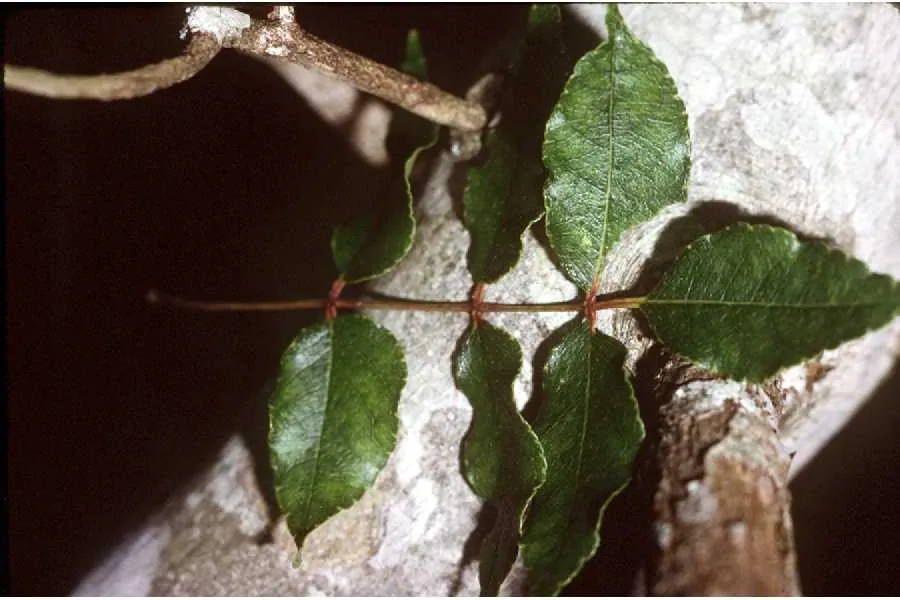
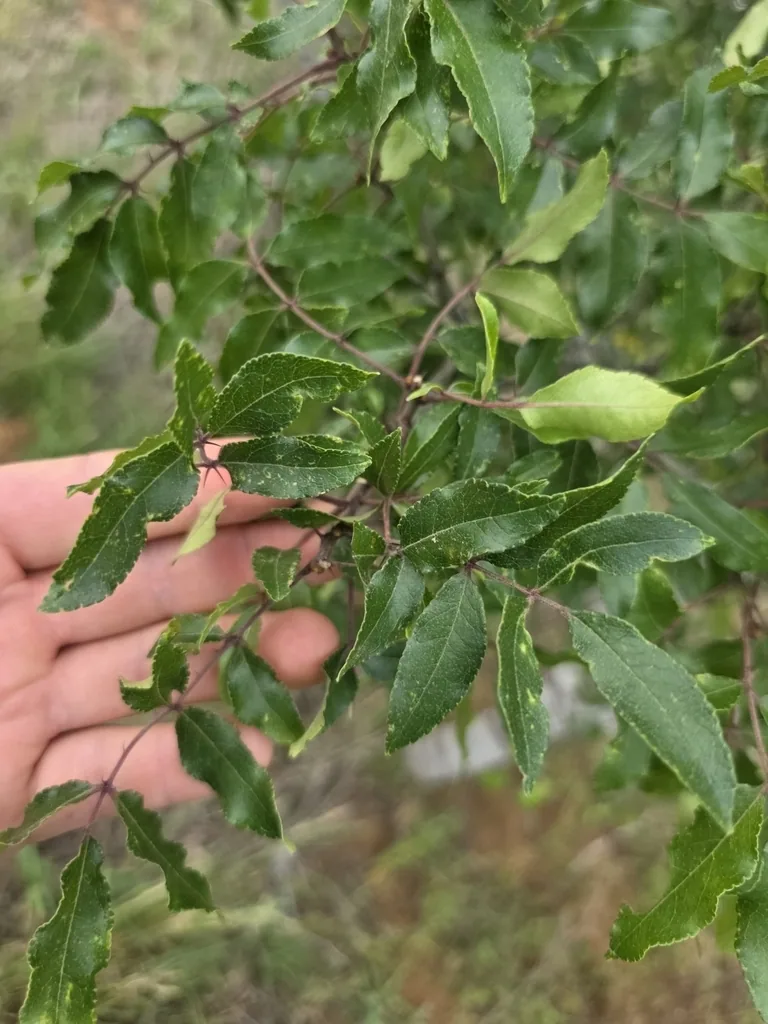

Cómo cultivar y cuidar Hercules Club
Zanthoxylum clava-herculis
Escrito por Emilio Marruso · última revisión
Tóxica para: Personas · Por qué
De un vistazo
Esta planta está a gusto a pleno sol o en semisombra y, una vez establecida, aguanta bien la sequía. Crece mejor en un suelo fértil y moderadamente húmedo, y puedes multiplicarla tú mismo con semillas sembradas en otoño en bancales acolchados o con esquejes de raíz. No se conocen riesgos para las personas, así que es una elección tranquila para tu jardín.
- Sol
Sol pleno o semisombra
Qué dicen las fuentes (2)
Luz: Pleno sol a semisombra
Full sun (6 or more hours of direct sunlight a day)
— Zanthoxylum clava-herculis (Hercules Club, Pepperbark, Prickly Ash, Southern Prickly-ash, Southern Toothache Tree, Tickle Tongue, Toothache Tree) | North Carolina Extension Gardener Plant Toolbox [1] Partial Shade (Direct sunlight only part of the day, 2-6 hours)
— Zanthoxylum clava-herculis (Hercules Club, Pepperbark, Prickly Ash, Southern Prickly-ash, Southern Toothache Tree, Tickle Tongue, Toothache Tree) | North Carolina Extension Gardener Plant Toolbox [1] - Riego
Aguanta la sequía una vez establecida
Qué dicen las fuentes (1)
Riego: Tolerante a la sequía una vez establecido
Drought tolerant once established.
— Zanthoxylum clava-herculis - Native Plant Society of Texas [6] - Frío
Aguanta inviernos de hasta −23,3 °C (−10 °F)
Muy rústica · USDA 6 · RHS H7 · Z6
Qué dicen las fuentes (1)
Rusticidad, zona más fría: 6 [mínima invernal de −23,3 a −17,8 °C (de −10 a 0 °F)]
Hercules club is hardy only to zone 6.
— Hercules Clubs [2] - Suelo
Crece mejor en suelo fértil y moderadamente húmedo
Qué dicen las fuentes (1)
Notas sobre el riego: Crece mejor en un sitio moderadamente húmedo y fértil
They grow best in a moderately moist and fertile site receiving full sunlight.
— Hercules Clubs [2] - Plantación
Deja las plántulas en cajonera fría el primer invierno y plántalas a principios de verano
Qué dicen las fuentes (1)
Plantación: Principios del verano (plántulas cultivadas en un marco frío durante su primer invierno)
Plant them out in early summer.
— Zanthoxylum clava-herculis - Native Plant Society of Texas [6] - Multiplicación
Por semillas o esquejes de raíz
Qué dicen las fuentes (2)
Propagación: Semilla; esquejes de raíz
Recommended Propagation Strategy: Seed
— Zanthoxylum clava-herculis (Hercules Club, Pepperbark, Prickly Ash, Southern Prickly-ash, Southern Toothache Tree, Tickle Tongue, Toothache Tree) | North Carolina Extension Gardener Plant Toolbox [1] Prickly ash can also be propagated by root cuttings taken in the late winter.
— Zanthoxylum clava-herculis - Native Plant Society of Texas [6] - Siembra
Siembra en otoño en bancales acolchados
Qué dicen las fuentes (1)
Siembra: Otoño (siembra en camas cubiertas con mantillo)
fall sowing in mulched beds is prefered to artificial stratification
— Zanthoxylum clava-herculis - Native Plant Society of Texas [6] - Seguridad
No se conocen riesgos para las personas
Resumen
La clava de Hércules es un árbol aromático y espinoso nativo de la llanura costera del sureste de los Estados Unidos. [1] Masticar la corteza o las hojas adormece la boca, lo que le da al árbol el nombre de árbol del dolor de muelas. [1]
Citado en inglés, como en la fuente.
Esta ficha está incompleta: las fuentes consultadas aún no cubren todos los campos.
Aún no cubierto por nuestras fuentes: Rusticidad, zona más cálida, Poda
Cuidados
Riego
Riego
Tolerante a la sequía una vez establecido
Qué dicen las fuentes (1)
Drought tolerant once established.Notas sobre el riego
Crece mejor en un sitio moderadamente húmedo y fértil
Qué dicen las fuentes (1)
They grow best in a moderately
moist and fertile site receiving full sunlight.Luz
Pleno sol a semisombra
Qué dicen las fuentes (2)
Full sun (6 or more hours of direct sunlight a day)Partial Shade (Direct sunlight only part of the day, 2-6 hours)Clima y frío
Rusticidad, zona más fría
6 [mínima invernal de −23,3 a −17,8 °C (de −10 a 0 °F)]
Qué dicen las fuentes (1)
Hercules club is hardy only to
zone 6.Rusticidad, zona más cálida
No figura en las fuentes consultadas.
Propagación
Semilla; esquejes de raíz
Qué dicen las fuentes (2)
Recommended Propagation Strategy:
SeedPrickly ash can also be propagated by root cuttings taken in the late winter.Cultivo
La planta
Familia
Rutáceas
Qué dicen las fuentes (1)
pricklyash Rutaceae Zanthoxylum clava-herculis L. symbol: ZACL Leaf: Alternate, very tardily deciduous or evergreen, pinnately compoundRemedios
Las fuentes consultadas no dan remedios para esta planta.
Toxicidad
Según la fuente, citada textualmente. No es un consejo médico ni veterinario: si una persona o un animal pudo haber ingerido esta planta, contacta con un centro de toxicología o con un veterinario.
Known Hazards None known
[5]
Calendario
Siembra
Otoño (siembra en camas cubiertas con mantillo)
Qué dicen las fuentes (1)
fall sowing in mulched beds is prefered to artificial stratificationPlantación
Principios del verano (plántulas cultivadas en un marco frío durante su primer invierno)
Qué dicen las fuentes (1)
Plant them out in early summer.Poda
No figura en las fuentes consultadas.
Meses tal como los dan las fuentes, en su mayoría de Estados Unidos (hemisferio norte). En el hemisferio sur se desplazan unos seis meses.
Valores orientativos
Valores de una fuente secundaria, no comprobados palabra por palabra como el resto de esta página. Úselos como punto de partida.
- Ciclo de vida
- PerenneValor orientativo, adáptalo a tu clima · Fuente secundaria
- Altura adulta
- 457.2-914.4 cm (15-30 pies)Valor orientativo, adáptalo a tu clima · Fuente secundaria
- Horas de sol
- 4-6 horasValor orientativo, adáptalo a tu clima · Fuente secundaria
- Resiste la sequía
- SíValor orientativo, adáptalo a tu clima · Fuente secundaria
- pH del suelo
- 6-7.5Valor orientativo, adáptalo a tu clima · Fuente secundaria
- Nivel de cuidado
- MedioValor orientativo, adáptalo a tu clima · Fuente secundaria
- Crecimiento
- BajoValor orientativo, adáptalo a tu clima · Fuente secundaria
- Poda
- junio, julio, agostoValor orientativo, adáptalo a tu clima · Fuente secundaria
Plantas similares
- Prickly-ash Zanthoxylum americanum
- Szechuan Pepper Zanthoxylum simulans
- Pimienta de Sichuan Zanthoxylum piperitum
- Árbol de Amur Phellodendron amurense
- Bee-Bee Tree Tetradium daniellii
- Naranjo agrio Citrus × aurantium
- Gitam Dictamnus albus
- Hoptree Ptelea trifoliata
Fuentes
Cada valor anterior se cita de estos documentos. Los enlaces llevan al editor original.
- Zanthoxylum clava-herculis (Hercules Club, Pepperbark, Prickly Ash, Southern Prickly-ash, Southern Toothache Tree, Tickle Tongue, Toothache Tree) | North Carolina Extension Gardener Plant Toolbox · plants.ces.ncsu.edu, consultado
- Hercules Clubs · uaex.uada.edu, consultado
- Lady Bird Johnson Wildflower Center - The University of Texas at Austin · wildflower.org, consultado
- Virginia Tech Dendrology Fact Sheet · dendro.cnre.vt.edu, consultado
- Zanthoxylum clava-herculis - Useful Temperate Plants · temperate.theferns.info, consultado
- Zanthoxylum clava-herculis - Native Plant Society of Texas · npsot.org, consultado
Escrito por Emilio Marruso · última revisión