Insect
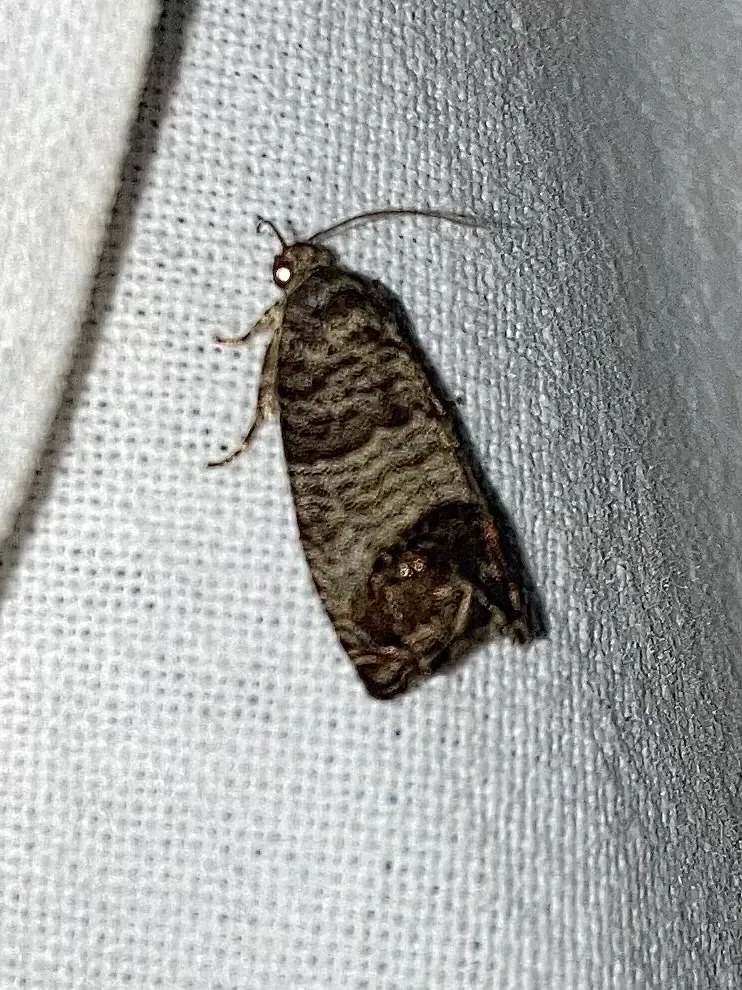
Codling moth
Cydia pomonella
Written by Emilio Marruso
Classification: Arthropoda › Hexapoda › Insecta › Lepidoptera › Tortricidae › Cydia
Plants it attacks
Plants in our guide where this problem is reported. Open a plant to see the sources.
Plants it attacks: Apricot, Asian Pear, English Walnut, Japanese Plum, Paradise apple, Peach, Pear, Plum, Quince, Sweet almond, Sweet Cherry
Remedies
What our plant sheets report, with the outcome checked against official sources. Traditional remedies without an official source are flagged.
Treat
bagging fruit Partly works
How: Cultural practices include fruit thinning, removing infested fruits and bagging fruit, combined with accurately timed sprays.
Reported for 1 plant: Asian Pear
corrugated cardboard strips Partly works
How: wrapping the trunk of the tree with 2-inch-wide strips of corrugated cardboard set 12 to 18 in. above the ground. If this practice is done by mid-May, the larvae will pupate into cocoons in the cardboard strips.
Reported for 1 plant: Plum
removing infested fruit and bagging fruit Official source, not independently tested
How: Cultural practices include fruit thinning, removing infested fruits, and bagging fruit.
Reported for 1 plant: Paradise apple
removing damaged fruit and bagging healthy fruit Not verified
How: Remove damaged fruits and bag undamaged fruits to protect them.
Reported for 1 plant: Quince
trunk banding with corrugated cardboard Not verified
How: Wrap corrugated cardboard around the trunk as a band.
Reported for 1 plant: English Walnut
Where it is found
Present in 71 countries.
Regulated as a quarantine pest in: Bahrain, Canada, China, Egypt, South Korea.