

How to Grow and Care for Peach
Prunus persica
Written by Emilio Marruso · last checked
Toxic to: People · Why
At a glance
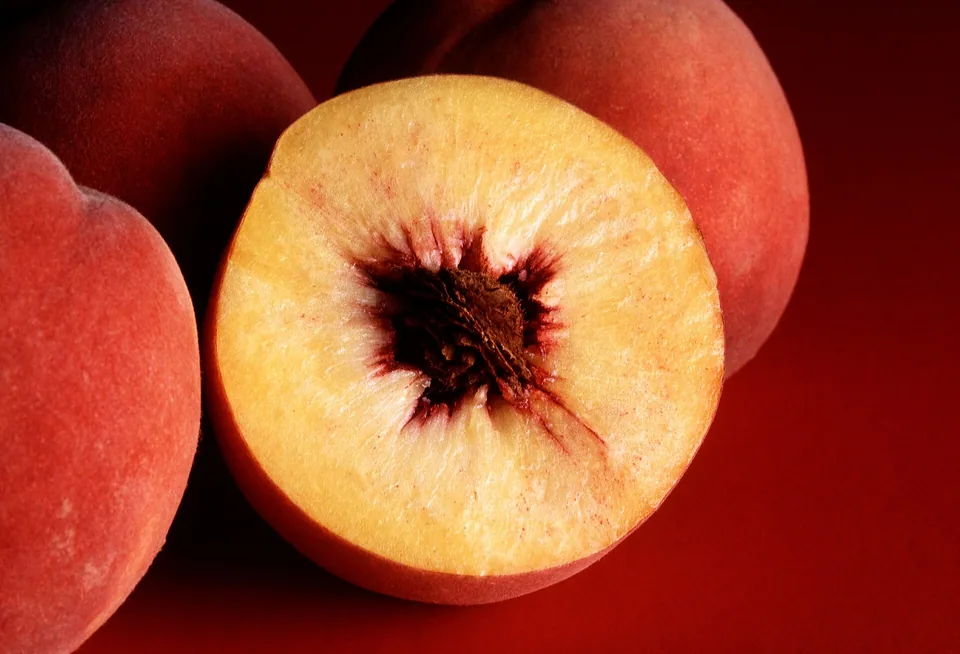
A single peach tree is enough to get fruit, because it sets fruit with its own pollen. From summer to fall, depending on the variety, you can pick peaches left on the tree until ripe for the best flavor: delicious fresh, in desserts or canned. Give it a deep soak every 7–14 days and a little feeding each spring.
- Water
Deep soak every 7–14 days, wetting the soil 18–24 in down; water the ground, not the leaves
What the sources say (4)
Watering: Every 7 to 14 days depending on soil type and heat index, with water penetrating to a depth of 18 to 24 in [46–61 cm]
When watering established trees, irrigation water should be applied every 7 to 14 days (depending on soil type and the heat index) and penetrate to a depth of 18 to 24 inches.
— How to Grow Peaches in Your Garden | USU [3] Watering notes: About 30 inches [76 cm] of water over the growing season; irrigate less frequently with a deep soak; keep new trees well irrigated during establishment; avoid sprinklers to keep the canopy dry
Peach trees require a total of about 30 inches of water over the growing season.
— How to Grow Peaches in Your Garden | USU [3] Keeping new peach trees well-irrigated during establishment is critical.
— How to Grow Peaches in Your Garden | USU [3] Avoid using sprinklers to keep the tree canopy dry, prevent foliar diseases, and minimize fruit exposure to untreated irrigation water.
— How to Grow Peaches in Your Garden | USU [3] - Cold
Survives winters down to −20 °F (−28.9 °C)
Very hardy · USDA 5a · RHS H7 · Z5
What the sources say (4)
Hardiness, coldest zone: 5a [winter low −28.9 to −26.1 °C (−20 to −15 °F)]
5a, 5b, 6a, 6b, 7a, 7b, 8a, 8b, 9a, 9b
— Prunus persica (Clingstone peach, Common Peach, Freestone peach, Nectarine, Peach, White peach) | North Carolina Extension Gardener Plant Toolbox [1] Hardiness, warmest zone:
According to NC State Extension: USDA Plant Hardiness Zone: 5a, 5b, 6a, 6b, 7a, 7b, 8a, 8b, 9a, 9b
— Prunus persica (Clingstone peach, Common Peach, Freestone peach, Nectarine, Peach, White peach) | North Carolina Extension Gardener Plant Toolbox [1] According to University of Illinois Extension: USDA Hardiness Zone 5 - 8 Soil Conditions Moist, Well-Drained
— Peach (Prunus persica)-Hort Answers - University of Illinois Extension [2] 5a, 5b, 6a, 6b, 7a, 7b, 8a, 8b, 9a, 9b
— Prunus persica (Clingstone peach, Common Peach, Freestone peach, Nectarine, Peach, White peach) | North Carolina Extension Gardener Plant Toolbox [1] - Soil
Soil pH up to 8.0; in high-pH soil the leaves can turn yellow between the veins
What the sources say (3)
Soil pH, maximum: 8.0
For best success, soil pH should be below 8.0 and the soil should be low in salt.
— How to Grow Peaches in Your Garden | USU [3] Signs of deficiency: Iron: yellowing between the veins (interveinal chlorosis); in severe cases leaves turn almost white and drop. Frequent on high-pH and heavy clay soils.
Interveinal chlorosis (yellowing between veins) is the first sign of iron deficiency and is very common in Utah peach trees. In severe cases, leaves can turn almost white and will drop from the tree.
— How to Grow Peaches in Your Garden | USU [3] Peaches prefer welldrained soil, and can be prone to iron chlorosis on heavy clay soils.
— How to Grow Peaches in Your Garden | USU [3] - Spacing
12–16 ft between trees, 20 ft between rows
What the sources say (3)
Between plants: 3.66-4.88 m [12–16 ft] between trees, depending on rootstock and training system.
orchard, standard spacing (Georgia, USA): For standard spacing, plant trees at these intersections that are spaced at 20 ft between rows and 20 ft within the row.
— Peach Orchard Establishment and Young Tree Care | CAES Field Report [6] Depending on rootstock and training system, trees should be placed 12 to 16 feet apart.
— How to Grow Peaches in Your Garden | USU [3] Row spacing: 610 cm (20 ft)
For standard spacing, plant trees at these intersections that are spaced at 20 ft between rows and 20 ft within the row.
— Peach Orchard Establishment and Young Tree Care | CAES Field Report [6] - Planting
Don't plant in hot, dry weather, and keep new trees well watered while they settle in
What the sources say (5)
Drought: Established trees need deep irrigation every 7-14 days, depending on soil type and heat, wetting the soil to 46-61 cm [18–24 in].
at planting: Planting in hot, dry conditions should be avoided.
— [7] When watering established trees, irrigation water should be applied every 7 to 14 days (depending on soil type and the heat index) and penetrate to a depth of 18 to 24 inches.
— How to Grow Peaches in Your Garden | USU [3] Watering notes: About 30 inches [76 cm] of water over the growing season; irrigate less frequently with a deep soak; keep new trees well irrigated during establishment; avoid sprinklers to keep the canopy dry
Peach trees require a total of about 30 inches of water over the growing season.
— How to Grow Peaches in Your Garden | USU [3] Keeping new peach trees well-irrigated during establishment is critical.
— How to Grow Peaches in Your Garden | USU [3] Avoid using sprinklers to keep the tree canopy dry, prevent foliar diseases, and minimize fruit exposure to untreated irrigation water.
— How to Grow Peaches in Your Garden | USU [3] - Feeding
Feed once a year in spring, before the buds swell; never after mid-July
What the sources say (7)
When: Every spring before bud swell, before the tree forms leaves; no fertilizer after mid-July.
young trees, first and second year: Second year trees should be similarly fertilized: 2 cups 10-10-10 in March, ¾ cup ammonium nitrate or 1½ cups calcium nitrate in May and again in July.
— Peach Orchard Establishment and Young Tree Care | CAES Field Report [6] Prune the trees every year, and apple compound fertilizer such as 10-10-10 in the root zone of the tree every spring before bud swell
— Peach (Prunus persica)-Hort Answers - University of Illinois Extension [2] For underperforming trees 3 years old or less, apply ½ cup of 20-0-0, in a circle around the root-zone in early spring, before the tree forms leaves, and then water the fertilizer into the soil.
— How to Grow Peaches in Your Garden | USU [3] A second application may be needed in mid-May. Do not fertilize after mid-July.
— How to Grow Peaches in Your Garden | USU [3] How often: Once a year in spring; a further application in summer only on the basis of leaf nutrient analysis.
young trees, first and second year: Follow this application in May and again in July with ½ cup ammonium nitrate or 1 cup calcium nitrate.
— Peach Orchard Establishment and Young Tree Care | CAES Field Report [6] underperforming trees 3 years old or less: A second application may be needed in mid-May. Do not fertilize after mid-July.
— How to Grow Peaches in Your Garden | USU [3] apple compound fertilizer such as 10-10-10 in the root zone of the tree every spring before bud swell, and additional fertilizer applied in summer based onleaf nutrient analysis results.
— Peach (Prunus persica)-Hort Answers - University of Illinois Extension [2] - Pruning
It flowers on last year's wood; pruning young trees too hard means less fruit
What the sources say (4)
Flowering wood: Flowers on old wood (last year's growth)
Remember that flowers and fruit are borne on wood produced the previous year.
— Peach Tree Pruning - Managing Light and Crop Load [5] The fruits are produced almost entirely on shoots made the previous year, so pruning aims to replace old fruited wood with new, young wood.
— [7] Hard pruning: Heavy pruning stimulates new wood for the two following seasons; excessive pruning of young trees reduces yield.
Heavy pruning encourages growth of new wood during the two seasons following treatment.
— Peach Tree Pruning - Managing Light and Crop Load [5] Such trees will also have numerous flower buds, and, if pruned moderately, may produce 20 to 40 pounds of fruit during the third summer. Excessive pruning will reduce yield the third summer.
— Peach Tree Pruning - Managing Light and Crop Load [5] - Harvest
Summer to fall; pick when the color changes and the fruit softens, in two to four pickings
What the sources say (9)
Harvest: Summer to fall depending on the variety; in Utah early cultivars from mid-July, continuing into September
According to University of Illinois Extension: Harvest Time Harvest in summer to fall depending on the variety
— Peach (Prunus persica)-Hort Answers - University of Illinois Extension [2] Utah (USU Extension): In Utah, early cultivars can be harvested as early as mid-July and harvest continues into September.
— How to Grow Peaches in Your Garden | USU [3] Pennsylvania (Penn State Extension): Peaches may be harvested from mid-July through early September depending on the cultivars selected.
— Peach Production [4] Harvest in summer to fall depending on the variety
— Peach (Prunus persica)-Hort Answers - University of Illinois Extension [2] In Utah, early cultivars can be harvested as early as mid-July and harvest continues into September.
— How to Grow Peaches in Your Garden | USU [3] How to harvest: Watch for a change in fruit color (yellow/orange or red depending on cultivar) and softening; leave fruit on the tree until ripe for best flavor; handle gently to avoid bruising; fruit does not all ripen at once, so a tree needs two to four pickings.
Watch for a change in color of the fruit as the first indicator of ripeness. Depending on cultivar, ripe fruit will be yellow/orange or red. Fruits soften as they ripen
— How to Grow Peaches in Your Garden | USU [3] Allow the fruit to stay on the tree until ripe to achieve the best flavor.
— How to Grow Peaches in Your Garden | USU [3] Peaches do not mature all at once, and normally it will be necessary to harvest a tree two to four times.
— Peach Production [4] Extreme care must be taken not to bruise or damage peaches and nectarines during the harvesting process.
— Peach Production [4] - Pollination
One tree is enough; it blooms early, when few bees are out, so hand-pollinating helps
What the sources say (6)
Fruit set: Self-fertile: sets fruit with its own pollen
cultivar 'J.H. Hale': The majority of peach cultivars are self-fruitful. However, there are a few cultivars, such as J.H. Hale, that require crosspollination.
— How to Grow Peaches in Your Garden | USU [3] Peaches and nectarines are self-fruitful, so there is no need for trees or cultivars used specifically as pollenizers
— Peach Production [4] The majority of peach cultivars are self-fruitful. However, there are a few cultivars, such as J.H. Hale, that require crosspollination.
— How to Grow Peaches in Your Garden | USU [3] What it needs: One tree is enough; peaches flower early in spring when few pollinating insects are active, so hand-pollination helps, and trees in a greenhouse should always be hand-pollinated.
cultivar 'J.H. Hale': In this case, a peach tree of a different cultivar needs to be within a few hundred yards of the tree to facilitate cross pollination and fruit set.
— How to Grow Peaches in Your Garden | USU [3] Peaches are self-fertile but they flower early in spring when few pollinating insects are around, so it's a good idea to hand-pollinate them to ensure a good crop.
— [7] Trees grown in a greenhouse should always be hand- pollinated
— [7] - Pests
Oriental fruit moth, aphids and peachtree borers; leaf curl and brown rot
What the sources say (5)
Pests: oriental fruit moth, green peach aphid, peachtree borer, lesser peachtree borer, peach bark beetle, shothole borer, American plum borer, cherry fruitworm
Oriental Fruit Moth ( Grapholitha molesta ) - Green Peach Aphid ( Myzus persicae ) - Plum Curculio Plant Bugs Peachtree Borer ( Synanthedon exitiosa ) - Lesser Peachtree Borer ( Synanthedon pictipes )
— Peach (Prunus persica)-Hort Answers - University of Illinois Extension [2] Peach Bark Beetle ( Phloeotribus liminaris ) - Shothole Borer ( Scolytus rugulosus ) - American Plum Borer ( Euzophera semifuneralis ) - Cherry Fruitworm ( Grapholitha packardi )
— Peach (Prunus persica)-Hort Answers - University of Illinois Extension [2] Diseases: black knot, peach leaf curl, anthracnose, armillaria root rot, bacterial spot, bacterial canker, brown rot, gummosis, perennial canker (cytospora), powdery mildew, rusty spot, scab, phytophthora root rot
Black Knot ( Apiosporina morbosa [syn. Dibotryon morbosum] ) - Peach Leaf Curl and Plum Pocket ( Taphrina spp. ) - Wood Rots and Decays ( Many genus and species involved )
— Peach (Prunus persica)-Hort Answers - University of Illinois Extension [2] Anthracnose ( Glomerella cingulata ) - Armillaria Root Rot - Bacterial Spot ( Xanthomonas subsp. pruni ) - Bacterial Canker ( Pseudomonas syringae pv. syringae ) - Brown Rot ( Monilinia fructicola )
— Peach (Prunus persica)-Hort Answers - University of Illinois Extension [2] Gummosis ( Botryosphaeria spp .) - Perennial Canker ( Cytospora cincta ) - Powdery Mildew ( Podosphaera oxyacanthae ) - Rusty Spot ( Sphaerotheca pannosa ) - Scab ( Cladosporium carpophilum ) - Phytophthora root rot
— Peach (Prunus persica)-Hort Answers - University of Illinois Extension [2] - Watch out
Shoots can sprout from the rootstock and roots, steal water and take over the grafted tree
What the sources say (2)
Suckers: Root suckers can grow from the rootstock trunk, the crown or along the roots; they compete with the tree for sugar and water and can eventually overtake the grafted variety.
It may be necessary during the first several growing seasons to spend a bit of time removing root suckers, vigorous shoots that initiate from the rootstock trunk, at the crown, or along the root.
— Peach Orchard Establishment and Young Tree Care | CAES Field Report [6] Root suckers compete with the rest of the tree, especially the scion, for the sugar and water resources of the tree and can eventually overtake the scion to the extent that the variety of choice is lost.
— Peach Orchard Establishment and Young Tree Care | CAES Field Report [6] - Size
15–25 ft wide
What the sources say (1)
Mature width: 457-762 cm (15-25 ft)
Width: 15 ft. 0 in. - 25 ft. 0 in.
— Prunus persica (Clingstone peach, Common Peach, Freestone peach, Nectarine, Peach, White peach) | North Carolina Extension Gardener Plant Toolbox [1] - Propagation
Grown by grafting onto a rootstock
What the sources say (2)
Propagation: Grafting onto a rootstock
Peaches and nectarines are almost always grafted onto a rootstock, which influences tree size, productivity, growth rate, cold hardiness,
— How to Grow Peaches in Your Garden | USU [3] It is recommended to purchase one-year-old seedlings grafted onto a standardrootstock mainly for colder climates.
— Peach (Prunus persica)-Hort Answers - University of Illinois Extension [2] - Safety
Eat the fruit, throw away the pit: pits and wilted leaves are poisonous
Overview
Peach is a deciduous fruit tree native to Asia that grows quickly to a rounded crown and needs pruning to keep a strong structure. [1] Late spring frosts and many insect pests and diseases are the main hazards for fruit production. [1]
Peach care
Measurements in square brackets are our conversion into the other unit system; the quoted text is unchanged.
How to water Peach
Watering
Every 7 to 14 days depending on soil type and heat index, with water penetrating to a depth of 18 to 24 in [46–61 cm]
What the sources say (1)
When watering established trees, irrigation water should be applied every 7 to 14 days (depending on soil type and the heat index) and penetrate to a depth of 18 to 24 inches.Watering notes
About 30 inches [76 cm] of water over the growing season; irrigate less frequently with a deep soak; keep new trees well irrigated during establishment; avoid sprinklers to keep the canopy dry
What the sources say (3)
Peach trees require a total of about 30 inches of water over the growing season.Keeping new peach trees well-irrigated during establishment is critical.Avoid using sprinklers to keep the tree canopy dry, prevent foliar diseases, and minimize fruit exposure to untreated irrigation water.How much light Peach needs
The sources give different values depending on region, zone or growing conditions.
What each source says
According to NC State Extension: Full sun (6 or more hours of direct sunlight a day)
According to USU Extension: At least 8 hours of full sun
According to UGA Extension: Full sunlight at least 80 percent of the day
What the sources say (6)
According to NC State Extension: Light: Full sun (6 or more hours of direct sunlight a day)According to USU Extension: Choose a site that receives at least 8 hours of full sun.According to UGA Extension: To produce a high quality peach crop, trees need full sunlight at least 80 percent of the day.Full sun (6 or more hours of direct sunlight a day)Choose a site that receives at least 8 hours of full sun.trees need full sunlight at least 80 percent of the day.How much cold Peach can take
Hardiness, coldest zone
5a [winter low −28.9 to −26.1 °C (−20 to −15 °F)]
What the sources say (1)
5a, 5b, 6a, 6b, 7a, 7b, 8a, 8b, 9a, 9bHardiness, warmest zone
The sources give different values depending on region, zone or growing conditions.
What each source says
According to NC State Extension: 9b [winter low −3.9 to −1.1 °C (25 to 30 °F)]
According to University of Illinois Extension: 8 [winter low −12.2 to −6.7 °C (10 to 20 °F)]
What the sources say (3)
According to NC State Extension: USDA Plant Hardiness Zone: 5a, 5b, 6a, 6b, 7a, 7b, 8a, 8b, 9a, 9bAccording to University of Illinois Extension: USDA Hardiness Zone 5 - 8 Soil Conditions Moist, Well-Drained5a, 5b, 6a, 6b, 7a, 7b, 8a, 8b, 9a, 9bBest soil for Peach
8.0
What the sources say (1)
For best success, soil pH should be below 8.0 and the soil should be low in salt.Where to grow Peach
The sources give different values depending on region, zone or growing conditions.
What each source says
home garden, Utah (USU Extension): 365.8-487.7 cm (12 to 16 ft)
commercial orchard, Pennsylvania (Penn State Extension): 426.7 x 670.6 cm (14 ft by 22 ft)
orchard standard spacing (UGA Extension): 609.6 cm between rows and 609.6 cm within the row (20 ft by 20 ft)
What the sources say (4)
home garden, Utah (USU Extension): Depending on rootstock and training system, trees should be placed 12 to 16 feet apart.commercial orchard, Pennsylvania (Penn State Extension): One of the most common tree spacings in peach orchards is 14 feet by 22 feet, or approximately 141 trees per acre.orchard standard spacing (UGA Extension): For standard spacing, plant trees at these intersections that are spaced at 20 ft between rows and 20 ft within the row.Depending on rootstock and training system, trees should be placed 12 to 16 feet apart.How to propagate Peach
Grafting onto a rootstock
What the sources say (2)
Peaches and nectarines are almost always grafted onto a rootstock, which influences tree size, productivity, growth rate, cold hardiness,It is recommended to purchase one-year-old seedlings grafted onto a standardrootstock mainly for colder climates.How to grow Peach
The plant
Family
Rosaceae
What the sources say (1)
The common peach is a deciduous fruit tree in the rose family that is native to Asia and has many cultivarsMature height
Mature width
457-762 cm (15-25 ft)
What the sources say (1)
Width: 15 ft. 0 in. - 25 ft. 0 in.Sowing and growth
Row spacing
610 cm (20 ft)
What the sources say (1)
For standard spacing, plant trees at these intersections that are spaced at 20 ft between rows and 20 ft within the row.Harvest and storage
How to harvest
Watch for a change in fruit color (yellow/orange or red depending on cultivar) and softening; leave fruit on the tree until ripe for best flavor; handle gently to avoid bruising; fruit does not all ripen at once, so a tree needs two to four pickings.
What the sources say (4)
Watch for a change in color of the fruit as the first indicator of ripeness. Depending on cultivar, ripe fruit will be yellow/orange or red. Fruits soften as they ripenAllow the fruit to stay on the tree until ripe to achieve the best flavor.Peaches do not mature all at once, and normally it will be necessary to harvest a tree two to four times.Extreme care must be taken not to bruise or damage peaches and nectarines during the harvesting process.Storage
Keep harvested fruit in a cool area for up to 2 weeks; at -0.6 to 0 °C (31-32 °F) and 90-95% humidity, up to two to four weeks.
Pests and diseases
Pests
oriental fruit moth, green peach aphid, peachtree borer, lesser peachtree borer, peach bark beetle, shothole borer, American plum borer, cherry fruitworm
What the sources say (2)
Oriental Fruit Moth ( Grapholitha molesta )
- Green Peach Aphid ( Myzus persicae )
- Plum Curculio Plant Bugs Peachtree Borer ( Synanthedon exitiosa )
- Lesser Peachtree Borer ( Synanthedon pictipes )Peach Bark Beetle ( Phloeotribus liminaris )
- Shothole Borer ( Scolytus rugulosus )
- American Plum Borer ( Euzophera semifuneralis )
- Cherry Fruitworm ( Grapholitha packardi )Diseases
black knot, peach leaf curl, anthracnose, armillaria root rot, bacterial spot, bacterial canker, brown rot, gummosis, perennial canker (cytospora), powdery mildew, rusty spot, scab, phytophthora root rot
What the sources say (3)
Black Knot ( Apiosporina morbosa [syn. Dibotryon morbosum] )
- Peach Leaf Curl and Plum Pocket ( Taphrina spp. )
- Wood Rots and Decays ( Many genus and species involved )Anthracnose ( Glomerella cingulata )
- Armillaria Root Rot
- Bacterial Spot ( Xanthomonas subsp. pruni )
- Bacterial Canker ( Pseudomonas syringae pv. syringae )
- Brown Rot ( Monilinia fructicola )Gummosis ( Botryosphaeria spp .)
- Perennial Canker ( Cytospora cincta )
- Powdery Mildew ( Podosphaera oxyacanthae )
- Rusty Spot ( Sphaerotheca pannosa )
- Scab ( Cladosporium carpophilum )
- Phytophthora root rotFertilizing
When
Every spring before bud swell, before the tree forms leaves; no fertilizer after mid-July.
What each source says
young trees, first and second year: March, then May and July.
What the sources say (4)
young trees, first and second year: Second year trees should be similarly fertilized: 2 cups 10-10-10 in March, ¾ cup ammonium nitrate or 1½ cups calcium nitrate in May and again in July.Prune the trees every year, and apple compound fertilizer such as 10-10-10 in the root zone of the tree every spring before bud swellFor underperforming trees 3 years old or less, apply ½ cup of 20-0-0, in a circle around the root-zone in early spring, before the tree forms leaves, and then water the fertilizer into the soil.A second application may be needed in mid-May. Do not fertilize after mid-July.How often
Once a year in spring; a further application in summer only on the basis of leaf nutrient analysis.
What each source says
young trees, first and second year: Three times a year: March, May and July.
underperforming trees 3 years old or less: Early spring, with a second application in mid-May if needed.
What the sources say (3)
young trees, first and second year: Follow this application in May and again in July with ½ cup ammonium nitrate or 1 cup calcium nitrate.underperforming trees 3 years old or less: A second application may be needed in mid-May. Do not fertilize after mid-July.apple compound fertilizer such as 10-10-10 in the root zone of the tree every spring before bud swell, and additional fertilizer applied in summer based onleaf nutrient analysis results.Mineral fertilizers
A compound fertilizer such as 10-10-10 in the root zone each spring; nitrogen fertilizer (20-0-0) for trees with weak shoot growth; a balanced 16-16-16 where phosphorus or potassium are deficient.
What each source says
underperforming trees 3 years old or less: 118.5 mL of 20-0-0 spread in a circle over the root zone, then watered in.
trees older than 4 years with weak growth: 237-474 mL of 20-0-0 in early spring; the same quantity of 16-16-16 if phosphorus or potassium are deficient.
first-year trees: 237 mL of 10-10-10 spread at the drip line in March, kept off the trunk.
first-year trees: 118.5 mL of ammonium nitrate or 237 mL of calcium nitrate in May and again in July.
second-year trees: 474 mL of 10-10-10 in March; 177.8 mL of ammonium nitrate or 355.5 mL of calcium nitrate in May and again in July.
old trees after renewal pruning: Nitrogen fertilizer increased by 10 to 20%.
trees older than 4 years growing less than 30.5 cm a year: 237-474 mL of 20-0-0 in early spring.
What the sources say (9)
underperforming trees 3 years old or less: For underperforming trees 3 years old or less, apply ½ cup of 20-0-0, in a circle around the root-zone in early spring, before the tree forms leaves, and then water the fertilizer into the soil.trees older than 4 years with weak growth: For trees not growing at this rate, apply 1 to 2 cups of 20-0-0 in early spring. If phosphorus and/or potassium are deficient, apply a similar quantity of 16-16-16, or an equivalent balanced fertilizerfirst-year trees: In March, after planting, distribute 1 cup of 10-10-10 fertilizer around the drip line of the growing tree, taking care not to place fertilizer against the trunk.first-year trees: Follow this application in May and again in July with ½ cup ammonium nitrate or 1 cup calcium nitrate.second-year trees: Second year trees should be similarly fertilized: 2 cups 10-10-10 in March, ¾ cup ammonium nitrate or 1½ cups calcium nitrate in May and again in July.old trees after renewal pruning: Increasing the nitrogen fertilizer by 10 to 20% may also help encourage new growth.trees older than 4 years growing less than 30.5 cm a year: Trees older than 4 years should grow approximately 1 foot per year (excluding the water sprouts). For trees not growing at this rate, apply 1 to 2 cups of 20-0-0 in early spring.Prune the trees every year, and apple compound fertilizer such as 10-10-10 in the root zone of the tree every spring before bud swellFor trees not growing at this rate, apply 1 to 2 cups of 20-0-0 in early spring. If phosphorus and/or potassium are deficient, apply a similar quantity of 16-16-16, or an equivalent balanced fertilizerMicronutrients
Calcium, boron, copper and zinc in adequate levels; on high-pH soils, chelated iron (FeEDDHA) on the soil or foliage as a temporary remedy for iron chlorosis.
What the sources say (2)
In addition to nitrogen, phosphorus, and potassium, peach trees need adequate levels of calcium, boron, copper, and zinc to maintain the health of the tree and produce quality fruit.Chelated iron (FeEDDHA) applied to the soil or foliage will temporarily alleviate the problem since chelated iron is not affected by soil pH and the plants can absorb the nutrient.Avoid
Nitrogen fertilizer in the planting hole or on loose soil right after planting (it burns bare-root trees); fertilizer against the trunk; nitrogen on young trees already making more than 61 cm [24 in] of new shoots a year; fertilizing after mid-July; planting in lawns, whose water and nutrient needs differ.
What the sources say (5)
To avoid burning the bareroot fruit trees, never mix nitrogen fertilizer in the planting hole or put it on the loose soil immediately after planting.In March, after planting, distribute 1 cup of 10-10-10 fertilizer around the drip line of the growing tree, taking care not to place fertilizer against the trunk.Trees less than 3 years old should average about 18 to 24 inches of new shoot growth per year. If shoot growth is more than 24 inches, do not apply nitrogen to trees.A second application may be needed in mid-May. Do not fertilize after mid-July.Avoid planting trees in lawns as water and nutrient requirements differ significantly between the two.Signs of deficiency
Iron: yellowing between the veins (interveinal chlorosis); in severe cases leaves turn almost white and drop. Frequent on high-pH and heavy clay soils.
What the sources say (2)
Interveinal chlorosis (yellowing between veins) is the first sign of iron deficiency and is very common in Utah peach trees. In severe cases, leaves can turn almost white and will drop from the tree.Peaches prefer welldrained soil, and can be prone to iron chlorosis on heavy clay soils.Spacing
Between plants
3.66-4.88 m [12–16 ft] between trees, depending on rootstock and training system.
What each source says
orchard, standard spacing (Georgia, USA): 6.1 m [20 ft] within the row
What the sources say (2)
orchard, standard spacing (Georgia, USA): For standard spacing, plant trees at these intersections that are spaced at 20 ft between rows and 20 ft within the row.Depending on rootstock and training system, trees should be placed 12 to 16 feet apart.Between rows
The sources give different values depending on region, zone or growing conditions.
What each source says
orchard, standard spacing (Georgia, USA): 6.1 m [20 ft] between rows
What the sources say (1)
orchard, standard spacing (Georgia, USA): For standard spacing, plant trees at these intersections that are spaced at 20 ft between rows and 20 ft within the row.Roots
Suckers
Root suckers can grow from the rootstock trunk, the crown or along the roots; they compete with the tree for sugar and water and can eventually overtake the grafted variety.
What the sources say (2)
It may be necessary during the first several growing seasons to spend a bit of time removing root suckers, vigorous shoots that initiate from the rootstock trunk, at the crown, or along the root.Root suckers compete with the rest of the tree, especially the scion, for the sugar and water resources of the tree and can eventually overtake the scion to the extent that the variety of choice is lost.After harvest
Storage
-0.6 to 0 °C [33–32 °F] with 90-95% relative humidity: up to 2-4 weeks.
What the sources say (1)
At a temperature of 31 to 32°F and humidity of 90 to 95 percent, peaches may be stored for up to two to four weeks.Heat and drought
Drought
Established trees need deep irrigation every 7-14 days, depending on soil type and heat, wetting the soil to 46-61 cm [18–24 in].
What each source says
at planting: Avoid planting in hot, dry conditions
What the sources say (2)
at planting: Planting in hot, dry conditions should be avoided.When watering established trees, irrigation water should be applied every 7 to 14 days (depending on soil type and the heat index) and penetrate to a depth of 18 to 24 inches.Pollination
Fruit set
Self-fertile: sets fruit with its own pollen
What each source says
cultivar 'J.H. Hale': Self-unfruitful: needs pollen from another variety
What the sources say (3)
cultivar 'J.H. Hale': The majority of peach cultivars are self-fruitful. However, there are a few cultivars, such as J.H. Hale, that require crosspollination.Peaches and nectarines are self-fruitful, so there is no need for trees or cultivars used specifically as pollenizersThe majority of peach cultivars are self-fruitful. However, there are a few cultivars, such as J.H. Hale, that require crosspollination.What it needs
One tree is enough; peaches flower early in spring when few pollinating insects are active, so hand-pollination helps, and trees in a greenhouse should always be hand-pollinated.
What each source says
cultivar 'J.H. Hale': Needs a peach tree of a different cultivar nearby for cross-pollination.
What the sources say (3)
cultivar 'J.H. Hale': In this case, a peach tree of a different cultivar needs to be within a few hundred yards of the tree to facilitate cross pollination and fruit set.Peaches are self-fertile but they flower early in spring when few pollinating insects are around, so it's a good idea to hand-pollinate them to ensure a good crop.Trees grown in a greenhouse should always be hand- pollinatedCarried by
Insects
What the sources say (1)
Honey bee hives are usually brought into the orchard to ensure good pollination.Pollinators
honey bee
What the sources say (1)
Honey bee hives are usually brought into the orchard to ensure good pollination.Pruning
Flowering wood
Flowers on old wood (last year's growth)
What the sources say (2)
Remember that flowers and fruit are borne on wood produced the previous year.The fruits are produced almost entirely on shoots made the previous year, so pruning aims to replace old fruited wood with new, young wood.When to prune
The sources give different values depending on region, zone or growing conditions.
What each source says
Stati Uniti (Utah): During the dormant season, February or March.
Stati Uniti (Pennsylvania): From late March to early May.
Regno Unito: Only in spring or summer.
What the sources say (3)
Stati Uniti (Utah): Prune peach trees during the dormant season, usually in February or March.Stati Uniti (Pennsylvania): The best time to prune peaches in Pennsylvania is from late March to early May.Regno Unito: Timing is important – as with other stone fruits, peach trees should only be pruned in spring or summer, to minimise the risk of infection from silver leaf disease and bacterial canker .Hard pruning
Heavy pruning stimulates new wood for the two following seasons; excessive pruning of young trees reduces yield.
What the sources say (2)
Heavy pruning encourages growth of new wood during the two seasons following treatment.Such trees will also have numerous flower buds, and, if pruned moderately, may produce 20 to 40 pounds of fruit during the third summer. Excessive pruning will reduce yield the third summer.Winter chill
Chill hours
100–1200 hours between 0 and 7.2 °C [32–45 °F]
What each source says
specie «Peach»: 100–1200 hours
specie «Peach»: 200–800 hours
specie «Peach»: 375–1200 hours
specie «Peaches»: 600–900 hours
cultivar 'Redhaven': 950 hours
cultivar 'Redhaven': 75 hours
cultivar 'Flordaprince': 8 hours
What the sources say (15)
specie «Peach»: Peach Chill hours: 100 to 1,200 Peaches and nectarines are self-fruitfulspecie «Peach»: Citrus 0–100 Fig 100–200 Grape 100–600 Peach 200–800 Pear 400–900specie «Peach»: Chill Hours Required to Break Dormancy Using the 45oF Model Apple 800 to 1750 Pear and sour cherry 600 to 1500 Plum (Japanese) 600 to 1600 Cherry (sweet) 500 to 1450 Peach 375 to 1200 Apricot 300 to 1000specie «Peaches»: Peaches and nectarines are best adapted to areas with 600 chilling hours for low-chill varieties to 900 for higher chilling varieties.cultivar 'Redhaven': | Redhaven | 950 | Freestone | Early-mid | Some fruit occasionally clingstone. May be suited to areas slightly colder than the Wasatch Front.cultivar 'Redhaven': Peach Flordaprince 2 8 † - - Earligrande 2 12 † - - Maravilha 2 12 † - - Redhaven 2 75 † - -cultivar 'Flordaprince': Peach Flordaprince 2 8 † - - Earligrande 2 12 † - - Maravilha 2 12 † - - Redhaven 2 75 † - -Peach Chill hours: 100 to 1,200 Peaches and nectarines are self-fruitfulCitrus 0–100 Fig 100–200 Grape 100–600 Peach 200–800 Pear 400–900Chill Hours Required to Break Dormancy Using the 45oF Model Apple 800 to 1750 Pear and sour cherry 600 to 1500 Plum (Japanese) 600 to 1600 Cherry (sweet) 500 to 1450 Peach 375 to 1200 Apricot 300 to 1000Peaches and nectarines are best adapted to areas with 600 chilling hours for low-chill varieties to 900 for higher chilling varieties.Chill hours are accumulated from November through February when temperatures are between 32° and 45°F.Different models exist to estimate chilling. One model defines a chill hour as each hour below 45°F starting on October 1.Chill Hours Required to Break Dormancy Using the 45oF Model Apple 800 to 1750Chilling hours are defined as the number of hours that the temperature is below 45° F.Peach pests and problems
Late frost and winter cold damage
Symptom: Buds and flowers are damaged by very cold winters and late spring frosts, causing crop loss.
What to do: Choose a site with good cold-air drainage and consider chill-hour requirements and hardiness when selecting a cultivar.
What the sources say (2)
Very cold winter temperatures and late spring frosts often cause significant damage to the buds/flowers of peaches.
— Prunus persica (Clingstone peach, Common Peach, Freestone peach, Nectarine, Peach, White peach) | North Carolina Extension Gardener Plant Toolbox [1] Peaches are particularly prone to crop loss due to late spring freezes.
— How to Grow Peaches in Your Garden | USU [3] Insect pests
Symptom: Peach tree borer, plum curculio, oriental fruit moth, root nematodes, mites and aphids affect the tree.
What to do: Follow a spraying regimen when growing for fruit.
What the sources say (2)
Subject to many pests such as peach tree borer, plum curculio, oriental fruit moth, root nematodes, mites, and aphids.
— Prunus persica (Clingstone peach, Common Peach, Freestone peach, Nectarine, Peach, White peach) | North Carolina Extension Gardener Plant Toolbox [1] If growing this three for the fruit, be prepared to follow a spraying regimen as they are susceptible to many insects.
— Prunus persica (Clingstone peach, Common Peach, Freestone peach, Nectarine, Peach, White peach) | North Carolina Extension Gardener Plant Toolbox [1] Iron chlorosis
Symptom: Yellowing between the veins; in severe cases leaves turn almost white and drop.
What to do: Chelated iron applied to soil or foliage temporarily alleviates the problem.
What the sources say (2)
Interveinal chlorosis (yellowing between veins) is the first sign of iron deficiency and is very common in Utah peach trees.
— How to Grow Peaches in Your Garden | USU [3] Chelated iron (FeEDDHA) applied to the soil or foliage will temporarily alleviate the problem since chelated iron is not affected by soil pH and the plants can absorb the nutrient.
— How to Grow Peaches in Your Garden | USU [3] Crown and root rots
Symptom: Yellowing leaves, general decline, lack of vigor and branch dieback, common in newly planted trees.
What to do: Manage irrigation by soil type and ensure good drainage.
What the sources say (2)
Yellowing leaves, general decline and lack of vigor. Branch dieback. Common with newly planted trees due to overwatering and poorly drained soils.
— How to Grow Peaches in Your Garden | USU [3] Manage irrigation carefully based on soil type (most critical on heavy soils). Ensure good drainage, avoid planting in turf.
— How to Grow Peaches in Your Garden | USU [3]
Remedies
Each remedy shows what official sources say about it; traditional remedies without an official source are marked as such. Harmful ones are listed so you know to avoid them.
First aid
First aid: not a substitute for a doctor
swallowed peach pit
call poison control Official source, not independently tested
Peach pits can be poisonous if too many are eaten or if they are prepared improperly.
— poison.org [13] How: If someone consumes a peach pit or a seed of another stone fruit, use the online poison control tool or call the poison center.
If someone consumes a peach pit or a seed of another stone fruit, use the web POISON CONTROL online tool to get help, or call your poison center at 1-800-222-1222 .
— poison.org [13]
Treating the plant
aphids
insecticidal soap spray Works
Avoid spraying soaps or oils at temperatures over 80°F, as some leaf burn may result.
— extension.usu.edu [15] How: For minor or moderate infestations, treat with an insecticidal soap or 1% horticultural oil, and encourage beneficial insects like lady beetles, lacewings and syrphid flies.
For minor/moderate infestations treat with an insecticidal soap or 1% horticultural oil.
— How to Grow Peaches in Your Garden | USU [3] What the evidence says For example, insecticidal soap is a safe, effective organic insecticide with minimal environmental impact.
— extension.psu.edu [14]
european paper wasps
fruit juice bottle trap Works
How: Cut the top third off a soda bottle and invert it into the bottom portion. Punch holes along the top edges and insert wires for hanging. Fill with 1 part fruit juice, 10 parts water, and 1 tsp detergent. Hang the trap in peach trees just before fruit starts to ripen.
To trap European paper wasps, cut the top third of a soda bottle off and invert it into the bottom portion.
— extension.usu.edu [15] What the evidence says Remove rotting fruit from the ground and regularly pick ripe fruit. Traps can be successful.
— How to Grow Peaches in Your Garden | USU [3]
earwigs
rolled cardboard strips Official source, not independently tested
How: Tuck rolled cardboard strips into limb crotches to trap earwigs, then remove and replace the cardboard rolls.
Rolled cardboard strips tucked into limb crotches can be used to trap and remove earwigs from trees (remove and replace cardboard rolls).
— extension.usu.edu [15]
brown rot
removing mummified fruit and infected twigs Partly works
How: Remove old mummified fruit, peduncles and infected twigs and branch parts from the tree and ground before spring; place removed parts in a closed plastic bag and destroy it.
Remove old, mummified fruit, peduncles, and infected twigs/branch parts from the tree and ground before spring.
— extension.msstate.edu [16] What the evidence says Remove old, mummified fruit, peduncles, and infected twigs/branch parts from the tree and ground before spring. If harvest weather favors the disease, regular and thorough sprays will be necessary
— extension.msstate.edu [16]
fruit pests and diseases
fruit bags Works
How: Bag the developing fruit to protect it from pests and diseases; Clemson tested specialty bags for the home orchard.
Instead, hobbyist gardeners may use bags to protect fruit from pests and diseases.
— hgic.clemson.edu [17] What the evidence says Clemson University has tested and is promoting the use of specialty bags that, if used properly, allow for production of high quality fruit with very little pesticide input.
— hgic.clemson.edu [17]
peach leaf curl
eggshell bags hung in the tree Not verified
Traditional remedy, not verified by an official source.
How: Fill a netting bag with raw egg shells and hang 2 or 3 bags in the tree; renew once or twice a year, in spring before the new shoots. Cooked shells do not work.
Is Peach poisonous?
Reported by the source, quoted verbatim. This is not medical or veterinary advice: if a person or an animal may have eaten this plant, contact a poison control centre or a veterinarian.
While the fruit is edible the seeds and wilted leaves are poisonous especially if eaten in quantity.
[1]- Poisonous parts
Causes Contact Dermatitis: No Poison Part: Seeds
[1]- Toxic principle
Poison Toxic Principle: Cyanogenic glycoside, amygdalin Causes Contact Dermatitis: No
[1]- Symptoms
Symptoms include Gasping, weakness, excitement, pupil dilation, spasms, convulsions, coma, respiratory failure.
[1]- Severity
Poison Severity: Medium Poison Symptoms: The pits contain cyanide compounds, which are poisonous.
[1]
The pits contain cyanide compounds, which are poisonous. If a couple of pits are accidentally swallowed, it will not cause poisoning.
[1]- Poisonous parts
Causes Contact Dermatitis: No Poison Part: Seeds
[1]- Toxic principle
Poison Toxic Principle: Cyanogenic glycoside, amygdalin Causes Contact Dermatitis: No
[1]- Symptoms
Symptoms include Gasping, weakness, excitement, pupil dilation, spasms, convulsions, coma, respiratory failure.
[1]- Severity
Poison Severity: Medium Poison Symptoms: The pits contain cyanide compounds, which are poisonous.
[1]
Calendar
Planting
The sources give different values depending on region, zone or growing conditions.
What each source says
Utah (USU Extension): Early spring or fall
bareroot dormant trees (UGA Extension): Late winter or early spring
According to University of Illinois Extension: Early spring, as soon as the ground can be worked
What the sources say (5)
Utah (USU Extension): Plant trees in the early spring or fall.bareroot dormant trees (UGA Extension): Peach trees are usually purchased and planted as bareroot trees during late winter or early spring, while they are still dormant.According to University of Illinois Extension: Select a site with good soil and air drainage, and plant in early spring as soon as the ground can be worked.Plant trees in the early spring or fall.Peach trees are usually purchased and planted as bareroot trees during late winter or early spring, while they are still dormant.Harvest
Summer to fall depending on the variety; in Utah early cultivars from mid-July, continuing into September
What each source says
According to University of Illinois Extension: Summer to fall depending on the variety
Utah (USU Extension): Early cultivars from mid-July, continuing into September
Pennsylvania (Penn State Extension): Mid-July through early September depending on the cultivar
What the sources say (5)
According to University of Illinois Extension: Harvest Time Harvest in summer to fall depending on the varietyUtah (USU Extension): In Utah, early cultivars can be harvested as early as mid-July and harvest continues into September.Pennsylvania (Penn State Extension): Peaches may be harvested from mid-July through early September depending on the cultivars selected.Harvest in summer to fall depending on the varietyIn Utah, early cultivars can be harvested as early as mid-July and harvest continues into September.Pruning
The sources give different values depending on region, zone or growing conditions.
What each source says
Utah (USU Extension): Dormant season, usually February or March
Pennsylvania (Penn State Extension): Late March to early May
summer pruning of young trees (Penn State Extension): July
dormant pruning limit (Penn State Extension): Not before late February and not before predicted low temperatures
What the sources say (7)
Utah (USU Extension): Prune peach trees during the dormant season, usually in February or March.Pennsylvania (Penn State Extension): The best time to prune peaches in Pennsylvania is from late March to early May.summer pruning of young trees (Penn State Extension): Summer pruning is performed in July, when sylleptic shoots are visible, to select scaffold branches on young trees and to redirect the growth of young scaffold branches.dormant pruning limit (Penn State Extension): Therefore, avoid pruning before late February and before predicted low temperatures.Prune peach trees during the dormant season, usually in February or March.The best time to prune peaches in Pennsylvania is from late March to early May.Peach trees can be pruned in the summer or during the dormant season, but the objectives of pruning vary with time of pruning.Months as given by the sources, which are mostly from the United States (northern hemisphere). In the southern hemisphere they shift by about six months.
Edibility
Reported by the source, quoted verbatim. Do not eat a plant on the basis of this page alone: identification mistakes can be dangerous.
Indicative values
Values from a secondary source, not checked word for word like the rest of this page. Use them as a starting point.
- Life cycle
- PerennialIndicative value, adapt it to your climate · Secondary source · Data for the variety Prunus persica 'Belle of Georgia'
- Hours of sun
- 6-8 hoursIndicative value, adapt it to your climate · Secondary source · Data for the variety Prunus persica 'Belle of Georgia'
- Drought tolerant
- yesIndicative value, adapt it to your climate · Secondary source · Data for the variety Prunus persica 'Belle of Georgia'
- Growth rate
- LowIndicative value, adapt it to your climate · Secondary source · Data for the variety Prunus persica 'Belle of Georgia'
Similar plants
- Afghan Cherry Prunus jacquemontii
- American Plum Prunus americana
- Apricot Prunus armeniaca
- Bird cherry Prunus padus
- Black Cherry Prunus serotina
- Canadian plum Prunus nigra
- Carolina Cherry Laurel Prunus caroliniana
- Cherry Laurel Prunus laurocerasus
Sources
Every value above is quoted from these documents. Links lead to the original publisher.
- Prunus persica (Clingstone peach, Common Peach, Freestone peach, Nectarine, Peach, White peach) | North Carolina Extension Gardener Plant Toolbox · plants.ces.ncsu.edu, consulted
- Peach (Prunus persica)-Hort Answers - University of Illinois Extension · web.extension.illinois.edu, consulted
- How to Grow Peaches in Your Garden | USU · extension.usu.edu, consulted
- Peach Production · extension.psu.edu, consulted
- Peach Tree Pruning - Managing Light and Crop Load · extension.psu.edu, consulted
- Peach Orchard Establishment and Young Tree Care | CAES Field Report · extension.uga.edu, consulted
- rhs.org.uk · rhs.org.uk
- escholarship.org · escholarship.org
- extension.msstate.edu · extension.msstate.edu
- extension.illinois.edu · extension.illinois.edu
- ipm.ucanr.edu · ipm.ucanr.edu
- treephenology.ucdavis.edu · treephenology.ucdavis.edu
- poison.org · poison.org
- extension.psu.edu · extension.psu.edu
- extension.usu.edu · extension.usu.edu
- extension.msstate.edu · extension.msstate.edu
- hgic.clemson.edu · hgic.clemson.edu
Written by Emilio Marruso · last checked