
How to Grow and Care for Bird cherry
Prunus padus
Written by Emilio Marruso · last checked
Toxic to: Livestock, People · Why
At a glance
Bird cherry is easy to grow in most soils, as long as the ground stays moist but never waterlogged. Its fruit is too bitter to eat fresh, yet it makes jams and flavors brandy and wine, and birds relish every one. Plant it between November and March, prune only in summer, and enjoy a tree that brings birds to your garden.
- Water
Moderate water; it does not like drought
What the sources say (1)
Watering: Moderate water; drought intolerant
Water moderate Hardiness Zone 3+ Soil textures sandy, loamy, clay Soil pH acid, neutral, alkaline Drainage well drained Tolerates Nutritionally Poor Soil No Drought intolerant
— Bird Cherry (Prunus padus) — Practical Plants [6] - Cold
Survives winters down to −40 °F (−40 °C)
Very hardy · USDA 3 · RHS H7 · Z3
What the sources say (1)
Hardiness, coldest zone: 3 [winter low −40 to −34.4 °C (−40 to −30 °F)]
Hardiness Zone 3+
— Bird Cherry (Prunus padus) — Practical Plants [6] - Soil
Moist, well-drained soil; avoid waterlogged ground and too much lime
What the sources say (3)
Watering notes: Succeeds in moist, well-drained soil; easy to grow in most soils except waterlogged ground
Soil Conditions Moist, Well-Drained
— European Birdcherry | Drush Site-Install [1] Prunus padus is tough, hardy, and easy to grow in most soils except waterlogged ground.
— Prunus padus (Bird Cherry) | BBC Gardeners World Magazine [7] Succeeds in any soil, preferring a well-drained moisture-retentive loamy soil
— Prunus padus - Useful Temperate Plants [5] - Planting
Plant from November to March
What the sources say (2)
Planting: November to March
According to practicalplants (seedlings): Grow them on in a greenhouse or cold frame for their first winter and plant them out in late spring or early summer of the following year.
— Bird Cherry (Prunus padus) — Practical Plants [6] | | Jan | Feb | Mar | Apr | May | Jun | Jul | Aug | Sep | Oct | Nov | Dec | Plant | yes | yes | yes | | | | | | | | yes | yes
— Prunus padus (Bird Cherry) | BBC Gardeners World Magazine [7] - Pruning
Prune only in summer, when cuts heal fast; cuts at other times let in silver leaf disease
What the sources say (2)
Pruning: Summer, when cuts heal quickly (pruning at the wrong time risks silver leaf disease)
any essential pruning should be carried out in summer when cuts heal quickly.
— Prunus padus (Bird Cherry) | BBC Gardeners World Magazine [7] Pruning at the wrong time of year can put trees at risk from silver leaf disease, which can also eventually kill the tree
— Bird Cherry (Prunus padus) - British Trees - Woodland Trust [8] - Harvest
Fruit is too bitter raw but good for jams; young leaves can be eaten cooked
- Pests
Aphids, moth caterpillars and black knot; also prone to honey fungus
What the sources say (3)
Pests: bird cherry-oat aphid, bird cherry ermine moth, gypsy moth
It is the primary host of the bird cherry-oat aphid (Rhopalosiphum padi) and the bird cherry ermine moth (Yponomeuta evonymella), both of which can cause widespread damage to the tree
— Prunus padus [4] In common with most species of the genus Prunus, bird cherry is vulnerable to the gypsy moth (Lymantria dispar)
— Prunus padus [4] Diseases: black knot
<EM>Prunus padus</EM> is very prone to black knot fungus, but tends to be longer lived (maybe 30 years).
— European Birdcherry | Drush Site-Install [1] - Propagation
From seed, cuttings, suckers or layering
What the sources say (3)
Propagation: Seed (cold stratification); half-ripe, softwood and mature wood cuttings; suckers; layering
Seed - requires 2 - 3 months cold stratification
— Prunus padus - Useful Temperate Plants [5] Cuttings of half-ripe wood with a heel, July/August in a frame.
— Bird Cherry (Prunus padus) — Practical Plants [6] Suckers removed in late winter. Layering in spring.
— Bird Cherry (Prunus padus) — Practical Plants [6] - Sowing
Sow seeds as soon as ripe in a cold frame; they need 2–3 months of cold
What the sources say (2)
Sowing: As soon as ripe in a cold frame (seed needs 2-3 months cold stratification); stored seed as early in the year as possible
Seed - requires 2 - 3 months cold stratification and is best sown in a cold frame as soon as it is ripe
— Prunus padus - Useful Temperate Plants [5] Sow stored seed in a cold frame as early in the year as possible
— Prunus padus - Useful Temperate Plants [5] - Safety
Seeds, bark and young shoots are toxic; also toxic to livestock, especially goats
Overview
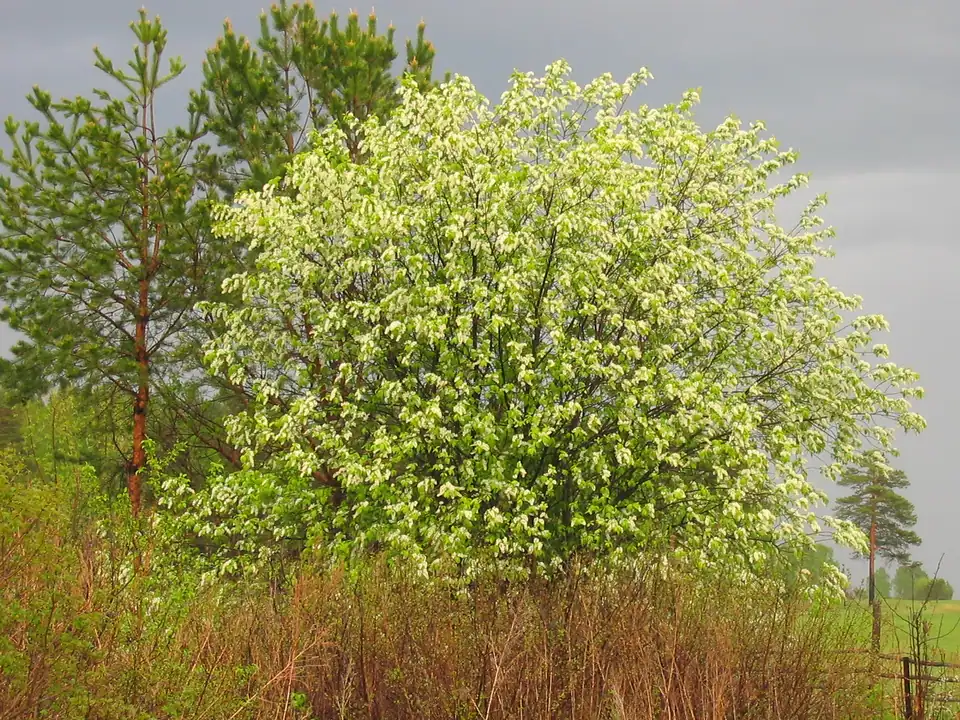
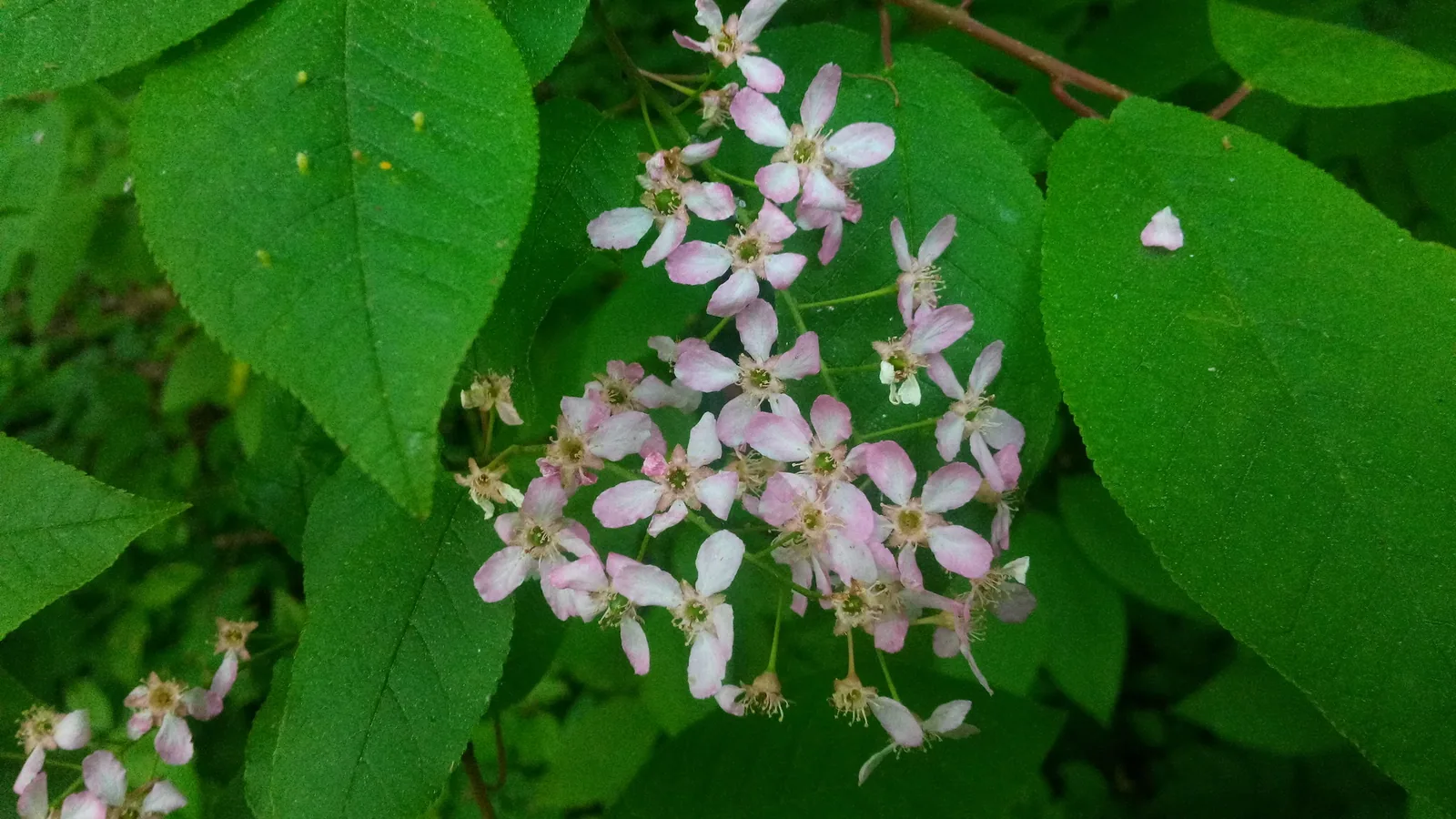
Bird cherry is a small, short-lived deciduous tree valued for its fragrant white spring flowers. [3] Several parts of the plant, particularly the bark and seeds, are toxic. [4]
This record is incomplete: the sources we read do not cover every field yet.
Not yet covered by our sources: Hardiness, warmest zone
Bird cherry care
How to water Bird cherry
Watering
Moderate water; drought intolerant
What the sources say (1)
Water
moderate
Hardiness
Zone 3+
Soil textures
sandy, loamy, clay
Soil pH
acid, neutral, alkaline
Drainage
well drained
Tolerates Nutritionally Poor Soil
No
Drought
intolerantWatering notes
Succeeds in moist, well-drained soil; easy to grow in most soils except waterlogged ground
What the sources say (3)
Soil Conditions
Moist, Well-DrainedPrunus padus is tough, hardy, and easy to grow in most soils except waterlogged ground.Succeeds in any soil, preferring a well-drained moisture-retentive loamy soilHow much light Bird cherry needs
The sources disagree:
Sun Exposure: Full shade, partial shade
[7]
What the sources say (3)
Full sun; needs well-drained soil.Succeeds in sun or partial shade though it fruits better in a sunny positionLight
full sun
Shade tolerance
light shadeHow much cold Bird cherry can take
Hardiness, coldest zone
3 [winter low −40 to −34.4 °C (−40 to −30 °F)]
What the sources say (1)
Hardiness
Zone 3+Hardiness, warmest zone
Not stated in the sources we read.
How to propagate Bird cherry
Seed (cold stratification); half-ripe, softwood and mature wood cuttings; suckers; layering
What the sources say (3)
Seed - requires 2 - 3 months cold stratificationCuttings of half-ripe wood with a heel, July/August in a frame.Suckers removed in late winter.
Layering in spring.How to grow Bird cherry
The plant
Family
Rosaceae
What the sources say (1)
Checklist: 1036620 - Rosaceae - Prunus - Prunus padus L.Pests and diseases
Pests
bird cherry-oat aphid, bird cherry ermine moth, gypsy moth
What the sources say (2)
It is the primary host of the bird cherry-oat aphid (Rhopalosiphum padi) and the bird cherry ermine moth (Yponomeuta evonymella), both of which can cause widespread damage to the treeIn common with most species of the genus Prunus, bird cherry is vulnerable to the gypsy moth (Lymantria dispar)Diseases
black knot
What the sources say (1)
<EM>Prunus padus</EM> is very prone to black knot fungus, but tends to be longer lived (maybe 30 years).Bird cherry pests and problems
Black knot
Symptom: Very prone to black knot fungus
What the sources say (1)
<EM>Prunus padus</EM> is very prone to black knot fungus,
— European Birdcherry | Drush Site-Install [1] Silver leaf disease
Symptom: Enters through wounds or pruning cuts and can eventually kill the tree
What to do: Carry out any essential pruning in summer when cuts heal quickly
What the sources say (2)
Prunus species are susceptible to silver leaf disease , which enters the plant through wounds or pruning cuts.
— Prunus padus (Bird Cherry) | BBC Gardeners World Magazine [7] any essential pruning should be carried out in summer when cuts heal quickly.
— Prunus padus (Bird Cherry) | BBC Gardeners World Magazine [7] Bacterial canker and dieback
Symptom: Bacterial cankers can disfigure and occasionally kill infected trees; dieback can be caused by cherry black fly
What the sources say (1)
Bird cherry is susceptible to bacterial cankers, which can disfigure and occasionally kill infected trees.
— Bird Cherry (Prunus padus) - British Trees - Woodland Trust [8] Honey fungus
Symptom: Plants in this genus are notably susceptible to honey fungus
What the sources say (1)
Plants in this genus are notably susceptible to honey fungus
— Prunus padus - Useful Temperate Plants [5] Chlorosis from excess lime
Symptom: Likely to become chlorotic if too much lime is present
What the sources say (1)
Prefers some lime in the soil but is likely to become chlorotic if too much lime is present
— Prunus padus - Useful Temperate Plants [5]
Remedies
Each remedy shows what official sources say about it; traditional remedies without an official source are marked as such. Harmful ones are listed so you know to avoid them.
Treating the plant
black knot
prune out galls Works
How: Make the pruning cut in late winter (February or March) when temperatures are below freezing, at least 4 inches below the gall; infected branches should be removed from the area and burned, buried, or disposed of.
Black knot galls can be removed from infected trees through pruning. This will make ornamental plants look better and reduce the amount of fungal spores produced within the tree canopy each spring.
— extension.umn.edu [9] What the evidence says Black knot galls can be removed from infected trees through pruning. This will make ornamental plants look better and reduce the amount of fungal spores produced within the tree canopy each spring.
— extension.umn.edu [9]
bird cherry ermine moth caterpillars
hand removal and pruning out affected shoots Official source, not independently tested
How: Check plants regularly from spring for the presence of larvae and remove by hand where practical; sometimes it is possible to prune out affected shoots.
Check plants regularly from spring for the presence of larvae and remove by hand where practical. The gregarious nature of these caterpillars means it is sometimes possible prune out affected shoots
— rhs.org.uk [10]
Getting rid of it
unwanted bird cherry trees
pull or dig out small trees Partly works
How: Small trees may be pulled or dug out, taking care to pull any new sprouts that arise from fragments of remaining roots; pulling is for small trees under 3 inches in basal diameter, using a weed wrench to pry out roots.
Small trees may be pulled or dug out, but care must be taken to pull any new sprouts that might arise from fragments of remaining roots.
— uaf.edu [11] What the evidence says Pulling is not recommended unless you are dealing with small trees, less than 3 inches in basal diameter, and a weed wrench is used to pry out roots.
— uaf.edu [11] cutting the tree down Not proven
How: Cutting alone does not kill the tree: it regenerates from the remaining trunk, root crown and lateral roots.
Cutting a tree down will not kill the tree because it will regenerate from the remaining trunk, root crown and lateral roots.
— uaf.edu [11] What the evidence says Cutting a tree down will not kill the tree because it will regenerate from the remaining trunk, root crown and lateral roots.
— uaf.edu [11] epsom salts on the cut stump Not proven
How: Epsom salts or other stump-degrading products applied to the stump after cutting.
Applying Epsom salts or other stump-degrading products to the stump after cutting may degrade a small portion of the stump, but will not affect the remaining roots.
— uaf.edu [11] What the evidence says Applying Epsom salts or other stump-degrading products to the stump after cutting may degrade a small portion of the stump, but will not affect the remaining roots.
— uaf.edu [11]
Is Bird cherry toxic to pets?
Reported by the source, quoted verbatim. This is not medical or veterinary advice: if a person or an animal may have eaten this plant, contact a poison control centre or a veterinarian.
Animals
However, it is toxic to livestock, particularly goats.
[8]- Poisonous parts
The foliage is eaten by caterpillars of many moth species
[8]
People
The plant (especially the seed and young shoots) contains cyanogenic glycosides, especially amygdalin and prunasin.
[5]- Poisonous parts
The plant (especially the seed and young shoots) contains cyanogenic glycosides
[5]- Toxic principle
When injested, these compounds break down in the digestive tract to release cyanide.
[5]- Symptoms
cyanide can cause gasping, weakness, excitement, pupil dilation, spasms, convulsions, coma and respiratory failure leading to death
[5]
Most other parts of the plant, particularly the bark and seeds, are toxic1,
[4]- Poisonous parts
particularly the bark and seeds, are toxic1,
[4]
Calendar
As soon as ripe in a cold frame (seed needs 2-3 months cold stratification); stored seed as early in the year as possible
November to March
What each source says
According to practicalplants (seedlings): Late spring or early summer of the year after sowing
What the sources say (2)
According to practicalplants (seedlings): Grow them on in a greenhouse or cold frame for their first winter and plant them out in late spring or early summer of the following year.| | Jan | Feb | Mar | Apr | May | Jun | Jul | Aug | Sep | Oct | Nov | Dec
| Plant | yes | yes | yes | | | | | | | | yes | yesSummer, when cuts heal quickly (pruning at the wrong time risks silver leaf disease)
What the sources say (2)
any essential pruning should be carried out in summer when cuts heal quickly.Pruning at the wrong time of year can put trees at risk from silver leaf disease, which can also eventually kill the treeMonths as given by the sources, which are mostly from the United States (northern hemisphere). In the southern hemisphere they shift by about six months.
Edibility
Reported by the source, quoted verbatim. Do not eat a plant on the basis of this page alone: identification mistakes can be dangerous.
Similar plants
- Afghan Cherry Prunus jacquemontii
- American Plum Prunus americana
- Amur chokecherry Prunus maackii
- Apricot Prunus armeniaca
- Black Cherry Prunus serotina
- Canadian plum Prunus nigra
- Carolina Cherry Laurel Prunus caroliniana
- Cherry Laurel Prunus laurocerasus
Sources
Every value above is quoted from these documents. Links lead to the original publisher.
- European Birdcherry | Drush Site-Install · selectors.extension.illinois.edu, consulted
- Prunus padus L. · infoflora.ch, consulted
- Prunus padus - EUFORGEN European forest genetic resources programme · euforgen.org, consulted
- Prunus padus · ies-ows.jrc.ec.europa.eu, consulted
- Prunus padus - Useful Temperate Plants · temperate.theferns.info, consulted
- Bird Cherry (Prunus padus) — Practical Plants · practicalplants.org, consulted
- Prunus padus (Bird Cherry) | BBC Gardeners World Magazine · gardenersworld.com, consulted
- Bird Cherry (Prunus padus) - British Trees - Woodland Trust · woodlandtrust.org.uk, consulted
- extension.umn.edu · extension.umn.edu
- rhs.org.uk · rhs.org.uk
- uaf.edu · uaf.edu
Written by Emilio Marruso · last checked