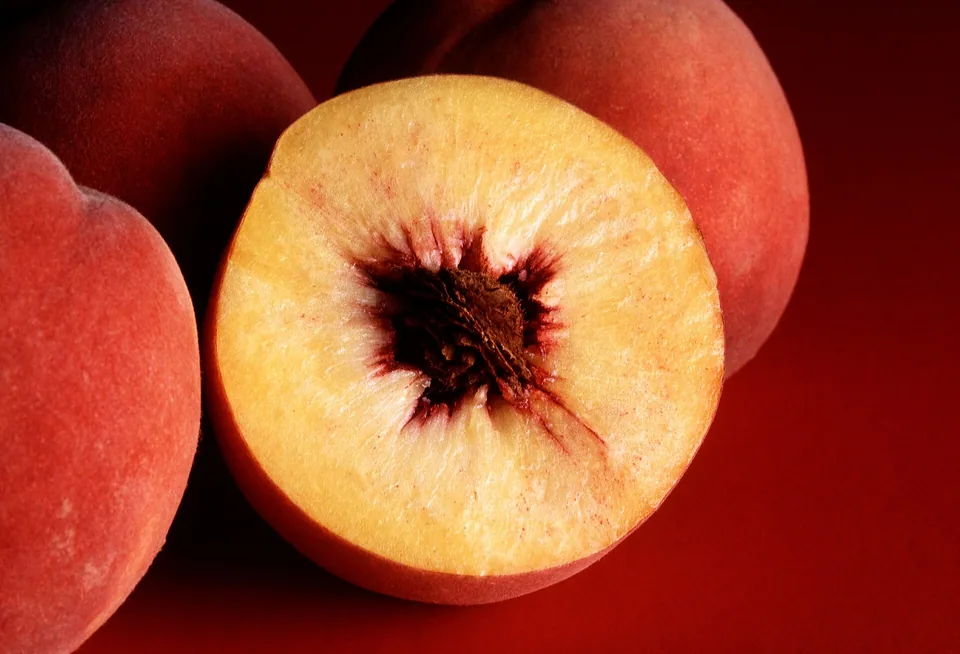


Cómo cultivar y cuidar Melocotonero
Prunus persica
Escrito por Emilio Marruso · última revisión
Tóxica para: Personas · Por qué
De un vistazo
Basta un solo melocotonero para tener fruta, porque cuaja con su propio polen. Del verano al otoño, según la variedad, podrás recoger melocotones madurados en el árbol para el mejor sabor: deliciosos frescos, en postres o en conserva. Dale un riego profundo cada 7–14 días y un poco de abono cada primavera, y verás cómo te lo agradece.
- Riego
Riego profundo cada 7–14 días, mojando la tierra hasta 46–61 cm; riega el suelo, no las hojas
Qué dicen las fuentes (4)
Riego: Cada 7 a 14 días según el tipo de suelo y el índice de calor, con agua que penetre hasta una profundidad de 18 a 24 pulgadas [46–61 cm]
When watering established trees, irrigation water should be applied every 7 to 14 days (depending on soil type and the heat index) and penetrate to a depth of 18 to 24 inches.
— How to Grow Peaches in Your Garden | USU [3] Notas sobre el riego: Aproximadamente 30 pulgadas [76 cm] de agua durante la temporada de crecimiento; riega con menos frecuencia pero con un remojo profundo; mantén los árboles nuevos bien regados durante el establecimiento; evita los aspersores para mantener el dosel seco.
Peach trees require a total of about 30 inches of water over the growing season.
— How to Grow Peaches in Your Garden | USU [3] Keeping new peach trees well-irrigated during establishment is critical.
— How to Grow Peaches in Your Garden | USU [3] Avoid using sprinklers to keep the tree canopy dry, prevent foliar diseases, and minimize fruit exposure to untreated irrigation water.
— How to Grow Peaches in Your Garden | USU [3] - Frío
Aguanta inviernos de hasta −28,9 °C (−20 °F)
Muy rústica · USDA 5a · RHS H7 · Z5
Qué dicen las fuentes (4)
Rusticidad, zona más fría: 5a [mínima invernal de −28,9 a −26,1 °C (de −20 a −15 °F)]
5a, 5b, 6a, 6b, 7a, 7b, 8a, 8b, 9a, 9b
— Prunus persica (Clingstone peach, Common Peach, Freestone peach, Nectarine, Peach, White peach) | North Carolina Extension Gardener Plant Toolbox [1] Rusticidad, zona más cálida:
Según NC State Extension: USDA Plant Hardiness Zone: 5a, 5b, 6a, 6b, 7a, 7b, 8a, 8b, 9a, 9b
— Prunus persica (Clingstone peach, Common Peach, Freestone peach, Nectarine, Peach, White peach) | North Carolina Extension Gardener Plant Toolbox [1] Según University of Illinois Extension: USDA Hardiness Zone 5 - 8 Soil Conditions Moist, Well-Drained
— Peach (Prunus persica)-Hort Answers - University of Illinois Extension [2] 5a, 5b, 6a, 6b, 7a, 7b, 8a, 8b, 9a, 9b
— Prunus persica (Clingstone peach, Common Peach, Freestone peach, Nectarine, Peach, White peach) | North Carolina Extension Gardener Plant Toolbox [1] - Suelo
Suelo con pH de hasta 8,0; en suelos muy calizos las hojas pueden amarillear entre los nervios
Qué dicen las fuentes (3)
pH del suelo, máximo: 8.0
For best success, soil pH should be below 8.0 and the soil should be low in salt.
— How to Grow Peaches in Your Garden | USU [3] Signos de carencia: Hierro: amarillamiento entre las nervaduras (clorosis intervenal); en casos graves las hojas se vuelven casi blancas y se caen. Frecuente en suelos de pH alto y arcillosos pesados.
Interveinal chlorosis (yellowing between veins) is the first sign of iron deficiency and is very common in Utah peach trees. In severe cases, leaves can turn almost white and will drop from the tree.
— How to Grow Peaches in Your Garden | USU [3] Peaches prefer welldrained soil, and can be prone to iron chlorosis on heavy clay soils.
— How to Grow Peaches in Your Garden | USU [3] - Distancia
3,7–4,9 m entre árboles, 6,1 m entre hileras
Qué dicen las fuentes (3)
Entre plantas: 3.66-4.88 m [12–16 ft] entre árboles, según el portainjerto y el sistema de formación.
huerto, espaciamiento estándar (Georgia, EE. UU.): For standard spacing, plant trees at these intersections that are spaced at 20 ft between rows and 20 ft within the row.
— Peach Orchard Establishment and Young Tree Care | CAES Field Report [6] Depending on rootstock and training system, trees should be placed 12 to 16 feet apart.
— How to Grow Peaches in Your Garden | USU [3] Distancia entre hileras: 610 cm (20 pies)
For standard spacing, plant trees at these intersections that are spaced at 20 ft between rows and 20 ft within the row.
— Peach Orchard Establishment and Young Tree Care | CAES Field Report [6] - Plantación
No plantes con calor y sequía, y mantén bien regados los árboles nuevos mientras arraigan
Qué dicen las fuentes (5)
Sequía: Los árboles establecidos necesitan riego profundo cada 7-14 días, según el tipo de suelo y el calor, humedeciendo el suelo hasta 46-61 cm [18–24 in].
Al plantar.: Planting in hot, dry conditions should be avoided.
— [7] When watering established trees, irrigation water should be applied every 7 to 14 days (depending on soil type and the heat index) and penetrate to a depth of 18 to 24 inches.
— How to Grow Peaches in Your Garden | USU [3] Notas sobre el riego: Aproximadamente 30 pulgadas [76 cm] de agua durante la temporada de crecimiento; riega con menos frecuencia pero con un remojo profundo; mantén los árboles nuevos bien regados durante el establecimiento; evita los aspersores para mantener el dosel seco.
Peach trees require a total of about 30 inches of water over the growing season.
— How to Grow Peaches in Your Garden | USU [3] Keeping new peach trees well-irrigated during establishment is critical.
— How to Grow Peaches in Your Garden | USU [3] Avoid using sprinklers to keep the tree canopy dry, prevent foliar diseases, and minimize fruit exposure to untreated irrigation water.
— How to Grow Peaches in Your Garden | USU [3] - Abonado
Abona una vez al año en primavera, antes de que se hinchen las yemas; nunca después de mediados de julio
Qué dicen las fuentes (7)
Cuándo: Cada primavera antes de la hinchazón de las yemas, antes de que el árbol forme hojas; no fertilizar después de mediados de julio.
Árboles jóvenes, primer y segundo año.: Second year trees should be similarly fertilized: 2 cups 10-10-10 in March, ¾ cup ammonium nitrate or 1½ cups calcium nitrate in May and again in July.
— Peach Orchard Establishment and Young Tree Care | CAES Field Report [6] Prune the trees every year, and apple compound fertilizer such as 10-10-10 in the root zone of the tree every spring before bud swell
— Peach (Prunus persica)-Hort Answers - University of Illinois Extension [2] For underperforming trees 3 years old or less, apply ½ cup of 20-0-0, in a circle around the root-zone in early spring, before the tree forms leaves, and then water the fertilizer into the soil.
— How to Grow Peaches in Your Garden | USU [3] A second application may be needed in mid-May. Do not fertilize after mid-July.
— How to Grow Peaches in Your Garden | USU [3] Frecuencia: Una vez al año en primavera; una aplicación adicional en verano solo según el análisis de nutrientes de las hojas.
Árboles jóvenes, primer y segundo año.: Follow this application in May and again in July with ½ cup ammonium nitrate or 1 cup calcium nitrate.
— Peach Orchard Establishment and Young Tree Care | CAES Field Report [6] Árboles de bajo rendimiento de 3 años o menos.: A second application may be needed in mid-May. Do not fertilize after mid-July.
— How to Grow Peaches in Your Garden | USU [3] apple compound fertilizer such as 10-10-10 in the root zone of the tree every spring before bud swell, and additional fertilizer applied in summer based onleaf nutrient analysis results.
— Peach (Prunus persica)-Hort Answers - University of Illinois Extension [2] - Poda
Florece en la madera del año anterior; podar demasiado los árboles jóvenes da menos fruta
Qué dicen las fuentes (4)
Madera que florece: Florece en madera vieja (el crecimiento del año anterior)
Remember that flowers and fruit are borne on wood produced the previous year.
— Peach Tree Pruning - Managing Light and Crop Load [5] The fruits are produced almost entirely on shoots made the previous year, so pruning aims to replace old fruited wood with new, young wood.
— [7] Poda drástica: La poda intensa estimula la madera nueva durante las dos temporadas siguientes; la poda excesiva de árboles jóvenes reduce el rendimiento.
Heavy pruning encourages growth of new wood during the two seasons following treatment.
— Peach Tree Pruning - Managing Light and Crop Load [5] Such trees will also have numerous flower buds, and, if pruned moderately, may produce 20 to 40 pounds of fruit during the third summer. Excessive pruning will reduce yield the third summer.
— Peach Tree Pruning - Managing Light and Crop Load [5] - Cosecha
Del verano al otoño; recoge cuando cambie el color y el fruto se ablande, en dos a cuatro pasadas
Qué dicen las fuentes (9)
Cosecha: Verano a otoño según la variedad; en Utah, cultivares tempranos desde mediados de julio hasta septiembre
Según University of Illinois Extension: Harvest Time Harvest in summer to fall depending on the variety
— Peach (Prunus persica)-Hort Answers - University of Illinois Extension [2] Utah (Extensión de USU): In Utah, early cultivars can be harvested as early as mid-July and harvest continues into September.
— How to Grow Peaches in Your Garden | USU [3] Pensilvania (Extensión de Penn State): Peaches may be harvested from mid-July through early September depending on the cultivars selected.
— Peach Production [4] Harvest in summer to fall depending on the variety
— Peach (Prunus persica)-Hort Answers - University of Illinois Extension [2] In Utah, early cultivars can be harvested as early as mid-July and harvest continues into September.
— How to Grow Peaches in Your Garden | USU [3] Cómo cosechar: Observa el cambio de color de la fruta (amarillo/naranja o rojo según el cultivar) y el ablandamiento; deja la fruta en el árbol hasta que madure para obtener el mejor sabor; manéjala con cuidado para evitar magulladuras; la fruta no madura toda a la vez, por lo que un árbol necesita de dos a cuatro recolecciones.
Watch for a change in color of the fruit as the first indicator of ripeness. Depending on cultivar, ripe fruit will be yellow/orange or red. Fruits soften as they ripen
— How to Grow Peaches in Your Garden | USU [3] Allow the fruit to stay on the tree until ripe to achieve the best flavor.
— How to Grow Peaches in Your Garden | USU [3] Peaches do not mature all at once, and normally it will be necessary to harvest a tree two to four times.
— Peach Production [4] Extreme care must be taken not to bruise or damage peaches and nectarines during the harvesting process.
— Peach Production [4] - Polinización
Basta un árbol; florece pronto, con pocas abejas activas, así que polinizar a mano ayuda
Qué dicen las fuentes (6)
Cuajado: Autofértil: produce fruto con su propio polen
cultivar 'J.H. Hale': The majority of peach cultivars are self-fruitful. However, there are a few cultivars, such as J.H. Hale, that require crosspollination.
— How to Grow Peaches in Your Garden | USU [3] Peaches and nectarines are self-fruitful, so there is no need for trees or cultivars used specifically as pollenizers
— Peach Production [4] The majority of peach cultivars are self-fruitful. However, there are a few cultivars, such as J.H. Hale, that require crosspollination.
— How to Grow Peaches in Your Garden | USU [3] Qué necesita: Un solo árbol es suficiente; los melocotones florecen temprano en primavera, cuando hay pocos insectos polinizadores activos, por lo que la polinización manual ayuda, y los árboles en invernadero siempre deben polinizarse a mano.
cultivar 'J.H. Hale': In this case, a peach tree of a different cultivar needs to be within a few hundred yards of the tree to facilitate cross pollination and fruit set.
— How to Grow Peaches in Your Garden | USU [3] Peaches are self-fertile but they flower early in spring when few pollinating insects are around, so it's a good idea to hand-pollinate them to ensure a good crop.
— [7] Trees grown in a greenhouse should always be hand- pollinated
— [7] - Plagas
Polilla oriental, pulgón verde y taladro del melocotonero; lepra y podredumbre parda
Qué dicen las fuentes (5)
Plagas: polilla oriental de la fruta, pulgón verde del melocotón, barrenador del melocotón, barrenador menor del melocotón, escarabajo de la corteza del melocotón, barrenador de agujeros de perdigón, barrenador americano del ciruelo, gusano de la fruta del cerezo
Oriental Fruit Moth ( Grapholitha molesta ) - Green Peach Aphid ( Myzus persicae ) - Plum Curculio Plant Bugs Peachtree Borer ( Synanthedon exitiosa ) - Lesser Peachtree Borer ( Synanthedon pictipes )
— Peach (Prunus persica)-Hort Answers - University of Illinois Extension [2] Peach Bark Beetle ( Phloeotribus liminaris ) - Shothole Borer ( Scolytus rugulosus ) - American Plum Borer ( Euzophera semifuneralis ) - Cherry Fruitworm ( Grapholitha packardi )
— Peach (Prunus persica)-Hort Answers - University of Illinois Extension [2] Enfermedades: nudo negro, rizado del melocotón, antracnosis, pudrición de raíz por armillaria, mancha bacteriana, cancro bacteriano, podredumbre parda, gomosis, cancro perenne (cytospora), oídio, mancha oxidada, sarna, pudrición de raíz por phytophthora
Black Knot ( Apiosporina morbosa [syn. Dibotryon morbosum] ) - Peach Leaf Curl and Plum Pocket ( Taphrina spp. ) - Wood Rots and Decays ( Many genus and species involved )
— Peach (Prunus persica)-Hort Answers - University of Illinois Extension [2] Anthracnose ( Glomerella cingulata ) - Armillaria Root Rot - Bacterial Spot ( Xanthomonas subsp. pruni ) - Bacterial Canker ( Pseudomonas syringae pv. syringae ) - Brown Rot ( Monilinia fructicola )
— Peach (Prunus persica)-Hort Answers - University of Illinois Extension [2] Gummosis ( Botryosphaeria spp .) - Perennial Canker ( Cytospora cincta ) - Powdery Mildew ( Podosphaera oxyacanthae ) - Rusty Spot ( Sphaerotheca pannosa ) - Scab ( Cladosporium carpophilum ) - Phytophthora root rot
— Peach (Prunus persica)-Hort Answers - University of Illinois Extension [2] - Atención
Pueden brotar chupones del patrón y las raíces, que roban agua y acaban dominando la variedad injertada
Qué dicen las fuentes (2)
Chupones: Los chupones de raíz pueden crecer desde el tronco del portainjerto, la corona o a lo largo de las raíces; compiten con el árbol por azúcar y agua y pueden eventualmente dominar la variedad injertada.
It may be necessary during the first several growing seasons to spend a bit of time removing root suckers, vigorous shoots that initiate from the rootstock trunk, at the crown, or along the root.
— Peach Orchard Establishment and Young Tree Care | CAES Field Report [6] Root suckers compete with the rest of the tree, especially the scion, for the sugar and water resources of the tree and can eventually overtake the scion to the extent that the variety of choice is lost.
— Peach Orchard Establishment and Young Tree Care | CAES Field Report [6] - Tamaño
4,6–7,6 m de ancho
Qué dicen las fuentes (1)
Anchura adulta: 457-762 cm (15-25 pies)
Width: 15 ft. 0 in. - 25 ft. 0 in.
— Prunus persica (Clingstone peach, Common Peach, Freestone peach, Nectarine, Peach, White peach) | North Carolina Extension Gardener Plant Toolbox [1] - Multiplicación
Se multiplica por injerto sobre un patrón
Qué dicen las fuentes (2)
Propagación: Injerto sobre un portainjerto
Peaches and nectarines are almost always grafted onto a rootstock, which influences tree size, productivity, growth rate, cold hardiness,
— How to Grow Peaches in Your Garden | USU [3] It is recommended to purchase one-year-old seedlings grafted onto a standardrootstock mainly for colder climates.
— Peach (Prunus persica)-Hort Answers - University of Illinois Extension [2] - Seguridad
Come el fruto y tira el hueso: los huesos y las hojas marchitas son venenosos
Resumen
El durazno es un árbol frutal de hoja caduca originario de Asia que crece rápidamente hasta formar una copa redondeada y necesita poda para mantener una estructura fuerte. [1] Las heladas tardías de primavera y muchas plagas de insectos y enfermedades son los principales peligros para la producción de fruta. [1]
Citado en inglés, como en la fuente.
Cuidados
Las medidas entre corchetes son nuestra conversión al otro sistema de unidades; el texto citado no cambia.
Riego
Riego
Cada 7 a 14 días según el tipo de suelo y el índice de calor, con agua que penetre hasta una profundidad de 18 a 24 pulgadas [46–61 cm]
Qué dicen las fuentes (1)
When watering established trees, irrigation water should be applied every 7 to 14 days (depending on soil type and the heat index) and penetrate to a depth of 18 to 24 inches.Notas sobre el riego
Aproximadamente 30 pulgadas [76 cm] de agua durante la temporada de crecimiento; riega con menos frecuencia pero con un remojo profundo; mantén los árboles nuevos bien regados durante el establecimiento; evita los aspersores para mantener el dosel seco.
Qué dicen las fuentes (3)
Peach trees require a total of about 30 inches of water over the growing season.Keeping new peach trees well-irrigated during establishment is critical.Avoid using sprinklers to keep the tree canopy dry, prevent foliar diseases, and minimize fruit exposure to untreated irrigation water.Luz
Las fuentes dan valores distintos según la región, la zona o las condiciones de cultivo.
Lo que dice cada fuente
Según NC State Extension: Pleno sol (6 o más horas de luz solar directa al día)
Según USU Extension: Al menos 8 horas de pleno sol
Según UGA Extension: Luz solar plena al menos el 80 por ciento del día
Qué dicen las fuentes (6)
Según NC State Extension: Light: Full sun (6 or more hours of direct sunlight a day)Según USU Extension: Choose a site that receives at least 8 hours of full sun.Según UGA Extension: To produce a high quality peach crop, trees need full sunlight at least 80 percent of the day.Full sun (6 or more hours of direct sunlight a day)Choose a site that receives at least 8 hours of full sun.trees need full sunlight at least 80 percent of the day.Clima y frío
Rusticidad, zona más fría
5a [mínima invernal de −28,9 a −26,1 °C (de −20 a −15 °F)]
Qué dicen las fuentes (1)
5a, 5b, 6a, 6b, 7a, 7b, 8a, 8b, 9a, 9bRusticidad, zona más cálida
Las fuentes dan valores distintos según la región, la zona o las condiciones de cultivo.
Lo que dice cada fuente
Según NC State Extension: 9b [mínima invernal de −3,9 a −1,1 °C (de 25 a 30 °F)]
Según University of Illinois Extension: 8 [mínima invernal de −12,2 a −6,7 °C (de 10 a 20 °F)]
Qué dicen las fuentes (3)
Según NC State Extension: USDA Plant Hardiness Zone: 5a, 5b, 6a, 6b, 7a, 7b, 8a, 8b, 9a, 9bSegún University of Illinois Extension: USDA Hardiness Zone 5 - 8 Soil Conditions Moist, Well-Drained5a, 5b, 6a, 6b, 7a, 7b, 8a, 8b, 9a, 9bSuelo
8.0
Qué dicen las fuentes (1)
For best success, soil pH should be below 8.0 and the soil should be low in salt.Dónde cultivarla
Las fuentes dan valores distintos según la región, la zona o las condiciones de cultivo.
Lo que dice cada fuente
jardín doméstico, Utah (Extensión USU): 365.8-487.7 cm (12 a 16 pies)
huerto comercial, Pensilvania (Extensión Penn State): 426.7 x 670.6 cm (14 pies por 22 pies)
espaciamiento estándar de huerto (Extensión UGA): 609.6 cm entre hileras y 609.6 cm dentro de la hilera (20 pies por 20 pies)
Qué dicen las fuentes (4)
jardín doméstico, Utah (Extensión USU): Depending on rootstock and training system, trees should be placed 12 to 16 feet apart.huerto comercial, Pensilvania (Extensión Penn State): One of the most common tree spacings in peach orchards is 14 feet by 22 feet, or approximately 141 trees per acre.espaciamiento estándar de huerto (Extensión UGA): For standard spacing, plant trees at these intersections that are spaced at 20 ft between rows and 20 ft within the row.Depending on rootstock and training system, trees should be placed 12 to 16 feet apart.Propagación
Injerto sobre un portainjerto
Qué dicen las fuentes (2)
Peaches and nectarines are almost always grafted onto a rootstock, which influences tree size, productivity, growth rate, cold hardiness,It is recommended to purchase one-year-old seedlings grafted onto a standardrootstock mainly for colder climates.Cultivo
La planta
Familia
Rosáceas
Qué dicen las fuentes (1)
The common peach is a deciduous fruit tree in the rose family that is native to Asia and has many cultivarsAltura adulta
Anchura adulta
457-762 cm (15-25 pies)
Qué dicen las fuentes (1)
Width: 15 ft. 0 in. - 25 ft. 0 in.Siembra y crecimiento
Distancia entre hileras
610 cm (20 pies)
Qué dicen las fuentes (1)
For standard spacing, plant trees at these intersections that are spaced at 20 ft between rows and 20 ft within the row.Cosecha y conservación
Cómo cosechar
Observa el cambio de color de la fruta (amarillo/naranja o rojo según el cultivar) y el ablandamiento; deja la fruta en el árbol hasta que madure para obtener el mejor sabor; manéjala con cuidado para evitar magulladuras; la fruta no madura toda a la vez, por lo que un árbol necesita de dos a cuatro recolecciones.
Qué dicen las fuentes (4)
Watch for a change in color of the fruit as the first indicator of ripeness. Depending on cultivar, ripe fruit will be yellow/orange or red. Fruits soften as they ripenAllow the fruit to stay on the tree until ripe to achieve the best flavor.Peaches do not mature all at once, and normally it will be necessary to harvest a tree two to four times.Extreme care must be taken not to bruise or damage peaches and nectarines during the harvesting process.Conservación
Mantén la fruta cosechada en un área fresca hasta por 2 semanas; a -0.6 a 0 °C (31-32 °F) y 90-95% de humedad, hasta dos a cuatro semanas.
Plagas y enfermedades
Plagas
polilla oriental de la fruta, pulgón verde del melocotón, barrenador del melocotón, barrenador menor del melocotón, escarabajo de la corteza del melocotón, barrenador de agujeros de perdigón, barrenador americano del ciruelo, gusano de la fruta del cerezo
Qué dicen las fuentes (2)
Oriental Fruit Moth ( Grapholitha molesta )
- Green Peach Aphid ( Myzus persicae )
- Plum Curculio Plant Bugs Peachtree Borer ( Synanthedon exitiosa )
- Lesser Peachtree Borer ( Synanthedon pictipes )Peach Bark Beetle ( Phloeotribus liminaris )
- Shothole Borer ( Scolytus rugulosus )
- American Plum Borer ( Euzophera semifuneralis )
- Cherry Fruitworm ( Grapholitha packardi )Enfermedades
nudo negro, rizado del melocotón, antracnosis, pudrición de raíz por armillaria, mancha bacteriana, cancro bacteriano, podredumbre parda, gomosis, cancro perenne (cytospora), oídio, mancha oxidada, sarna, pudrición de raíz por phytophthora
Qué dicen las fuentes (3)
Black Knot ( Apiosporina morbosa [syn. Dibotryon morbosum] )
- Peach Leaf Curl and Plum Pocket ( Taphrina spp. )
- Wood Rots and Decays ( Many genus and species involved )Anthracnose ( Glomerella cingulata )
- Armillaria Root Rot
- Bacterial Spot ( Xanthomonas subsp. pruni )
- Bacterial Canker ( Pseudomonas syringae pv. syringae )
- Brown Rot ( Monilinia fructicola )Gummosis ( Botryosphaeria spp .)
- Perennial Canker ( Cytospora cincta )
- Powdery Mildew ( Podosphaera oxyacanthae )
- Rusty Spot ( Sphaerotheca pannosa )
- Scab ( Cladosporium carpophilum )
- Phytophthora root rotAbonado
Cuándo
Cada primavera antes de la hinchazón de las yemas, antes de que el árbol forme hojas; no fertilizar después de mediados de julio.
Lo que dice cada fuente
Árboles jóvenes, primer y segundo año.: Marzo, luego mayo y julio.
Qué dicen las fuentes (4)
Árboles jóvenes, primer y segundo año.: Second year trees should be similarly fertilized: 2 cups 10-10-10 in March, ¾ cup ammonium nitrate or 1½ cups calcium nitrate in May and again in July.Prune the trees every year, and apple compound fertilizer such as 10-10-10 in the root zone of the tree every spring before bud swellFor underperforming trees 3 years old or less, apply ½ cup of 20-0-0, in a circle around the root-zone in early spring, before the tree forms leaves, and then water the fertilizer into the soil.A second application may be needed in mid-May. Do not fertilize after mid-July.Frecuencia
Una vez al año en primavera; una aplicación adicional en verano solo según el análisis de nutrientes de las hojas.
Lo que dice cada fuente
Árboles jóvenes, primer y segundo año.: Tres veces al año: marzo, mayo y julio.
Árboles de bajo rendimiento de 3 años o menos.: Principios de primavera, con una segunda aplicación a mediados de mayo si es necesario.
Qué dicen las fuentes (3)
Árboles jóvenes, primer y segundo año.: Follow this application in May and again in July with ½ cup ammonium nitrate or 1 cup calcium nitrate.Árboles de bajo rendimiento de 3 años o menos.: A second application may be needed in mid-May. Do not fertilize after mid-July.apple compound fertilizer such as 10-10-10 in the root zone of the tree every spring before bud swell, and additional fertilizer applied in summer based onleaf nutrient analysis results.Abonos minerales
Un fertilizante compuesto como 10-10-10 en la zona de raíces cada primavera; fertilizante nitrogenado (20-0-0) para árboles con crecimiento débil de brotes; un 16-16-16 equilibrado donde haya deficiencia de fósforo o potasio.
Lo que dice cada fuente
Árboles de bajo rendimiento de 3 años o menos.: 118.5 mL de 20-0-0 esparcido en círculo sobre la zona de raíces y luego regado.
árboles de más de 4 años con crecimiento débil: 237-474 mL de 20-0-0 a principios de primavera; la misma cantidad de 16-16-16 si el fósforo o el potasio son deficientes.
árboles de primer año: 237 mL de 10-10-10 esparcido en la línea de goteo en marzo, manteniéndolo alejado del tronco.
árboles de primer año: 118.5 mL de nitrato de amonio o 237 mL de nitrato de calcio en mayo y nuevamente en julio.
árboles de segundo año: 474 mL de 10-10-10 en marzo; 177.8 mL de nitrato de amonio o 355.5 mL de nitrato de calcio en mayo y nuevamente en julio.
árboles viejos después de poda de renovación: Fertilizante nitrogenado aumentado en 10 a 20%.
árboles de más de 4 años que crecen menos de 30.5 cm al año: 237-474 mL de 20-0-0 a principios de primavera.
Qué dicen las fuentes (9)
Árboles de bajo rendimiento de 3 años o menos.: For underperforming trees 3 years old or less, apply ½ cup of 20-0-0, in a circle around the root-zone in early spring, before the tree forms leaves, and then water the fertilizer into the soil.árboles de más de 4 años con crecimiento débil: For trees not growing at this rate, apply 1 to 2 cups of 20-0-0 in early spring. If phosphorus and/or potassium are deficient, apply a similar quantity of 16-16-16, or an equivalent balanced fertilizerárboles de primer año: In March, after planting, distribute 1 cup of 10-10-10 fertilizer around the drip line of the growing tree, taking care not to place fertilizer against the trunk.árboles de primer año: Follow this application in May and again in July with ½ cup ammonium nitrate or 1 cup calcium nitrate.árboles de segundo año: Second year trees should be similarly fertilized: 2 cups 10-10-10 in March, ¾ cup ammonium nitrate or 1½ cups calcium nitrate in May and again in July.árboles viejos después de poda de renovación: Increasing the nitrogen fertilizer by 10 to 20% may also help encourage new growth.árboles de más de 4 años que crecen menos de 30.5 cm al año: Trees older than 4 years should grow approximately 1 foot per year (excluding the water sprouts). For trees not growing at this rate, apply 1 to 2 cups of 20-0-0 in early spring.Prune the trees every year, and apple compound fertilizer such as 10-10-10 in the root zone of the tree every spring before bud swellFor trees not growing at this rate, apply 1 to 2 cups of 20-0-0 in early spring. If phosphorus and/or potassium are deficient, apply a similar quantity of 16-16-16, or an equivalent balanced fertilizerMicroelementos
Calcio, boro, cobre y zinc en niveles adecuados; en suelos de pH alto, hierro quelado (FeEDDHA) sobre el suelo o el follaje como remedio temporal para la clorosis férrica.
Qué dicen las fuentes (2)
In addition to nitrogen, phosphorus, and potassium, peach trees need adequate levels of calcium, boron, copper, and zinc to maintain the health of the tree and produce quality fruit.Chelated iron (FeEDDHA) applied to the soil or foliage will temporarily alleviate the problem since chelated iron is not affected by soil pH and the plants can absorb the nutrient.Evitar
Evita el fertilizante nitrogenado en el hoyo de plantación o en tierra suelta justo después de plantar (quema los árboles de raíz desnuda); evita el fertilizante contra el tronco; evita el nitrógeno en árboles jóvenes que ya producen más de 61 cm [24 in] de brotes nuevos al año; evita fertilizar después de mediados de julio; evita plantar en céspedes, cuyas necesidades de agua y nutrientes son diferentes.
Qué dicen las fuentes (5)
To avoid burning the bareroot fruit trees, never mix nitrogen fertilizer in the planting hole or put it on the loose soil immediately after planting.In March, after planting, distribute 1 cup of 10-10-10 fertilizer around the drip line of the growing tree, taking care not to place fertilizer against the trunk.Trees less than 3 years old should average about 18 to 24 inches of new shoot growth per year. If shoot growth is more than 24 inches, do not apply nitrogen to trees.A second application may be needed in mid-May. Do not fertilize after mid-July.Avoid planting trees in lawns as water and nutrient requirements differ significantly between the two.Signos de carencia
Hierro: amarillamiento entre las nervaduras (clorosis intervenal); en casos graves las hojas se vuelven casi blancas y se caen. Frecuente en suelos de pH alto y arcillosos pesados.
Qué dicen las fuentes (2)
Interveinal chlorosis (yellowing between veins) is the first sign of iron deficiency and is very common in Utah peach trees. In severe cases, leaves can turn almost white and will drop from the tree.Peaches prefer welldrained soil, and can be prone to iron chlorosis on heavy clay soils.Distancias
Entre plantas
3.66-4.88 m [12–16 ft] entre árboles, según el portainjerto y el sistema de formación.
Lo que dice cada fuente
huerto, espaciamiento estándar (Georgia, EE. UU.): 6.1 m [20 ft] dentro de la fila
Qué dicen las fuentes (2)
huerto, espaciamiento estándar (Georgia, EE. UU.): For standard spacing, plant trees at these intersections that are spaced at 20 ft between rows and 20 ft within the row.Depending on rootstock and training system, trees should be placed 12 to 16 feet apart.Entre hileras
Las fuentes dan valores distintos según la región, la zona o las condiciones de cultivo.
Lo que dice cada fuente
huerto, espaciamiento estándar (Georgia, EE. UU.): 6.1 m [20 ft] entre filas
Qué dicen las fuentes (1)
huerto, espaciamiento estándar (Georgia, EE. UU.): For standard spacing, plant trees at these intersections that are spaced at 20 ft between rows and 20 ft within the row.Raíces
Chupones
Los chupones de raíz pueden crecer desde el tronco del portainjerto, la corona o a lo largo de las raíces; compiten con el árbol por azúcar y agua y pueden eventualmente dominar la variedad injertada.
Qué dicen las fuentes (2)
It may be necessary during the first several growing seasons to spend a bit of time removing root suckers, vigorous shoots that initiate from the rootstock trunk, at the crown, or along the root.Root suckers compete with the rest of the tree, especially the scion, for the sugar and water resources of the tree and can eventually overtake the scion to the extent that the variety of choice is lost.Tras la cosecha
Conservación
-0.6 a 0 °C [33–32 °F] con 90-95% de humedad relativa: hasta 2-4 semanas.
Qué dicen las fuentes (1)
At a temperature of 31 to 32°F and humidity of 90 to 95 percent, peaches may be stored for up to two to four weeks.Calor y sequía
Sequía
Los árboles establecidos necesitan riego profundo cada 7-14 días, según el tipo de suelo y el calor, humedeciendo el suelo hasta 46-61 cm [18–24 in].
Lo que dice cada fuente
Al plantar.: Evita plantar en condiciones calurosas y secas
Qué dicen las fuentes (2)
Al plantar.: Planting in hot, dry conditions should be avoided.When watering established trees, irrigation water should be applied every 7 to 14 days (depending on soil type and the heat index) and penetrate to a depth of 18 to 24 inches.Polinización
Cuajado
Autofértil: produce fruto con su propio polen
Lo que dice cada fuente
cultivar 'J.H. Hale': No autofértil: necesita polen de otra variedad
Qué dicen las fuentes (3)
cultivar 'J.H. Hale': The majority of peach cultivars are self-fruitful. However, there are a few cultivars, such as J.H. Hale, that require crosspollination.Peaches and nectarines are self-fruitful, so there is no need for trees or cultivars used specifically as pollenizersThe majority of peach cultivars are self-fruitful. However, there are a few cultivars, such as J.H. Hale, that require crosspollination.Qué necesita
Un solo árbol es suficiente; los melocotones florecen temprano en primavera, cuando hay pocos insectos polinizadores activos, por lo que la polinización manual ayuda, y los árboles en invernadero siempre deben polinizarse a mano.
Lo que dice cada fuente
cultivar 'J.H. Hale': Necesita un melocotón de otra variedad cercano para la polinización cruzada.
Qué dicen las fuentes (3)
cultivar 'J.H. Hale': In this case, a peach tree of a different cultivar needs to be within a few hundred yards of the tree to facilitate cross pollination and fruit set.Peaches are self-fertile but they flower early in spring when few pollinating insects are around, so it's a good idea to hand-pollinate them to ensure a good crop.Trees grown in a greenhouse should always be hand- pollinatedLo transportan
Insectos
Qué dicen las fuentes (1)
Honey bee hives are usually brought into the orchard to ensure good pollination.Polinizadores
abeja melífera
Qué dicen las fuentes (1)
Honey bee hives are usually brought into the orchard to ensure good pollination.Poda
Madera que florece
Florece en madera vieja (el crecimiento del año anterior)
Qué dicen las fuentes (2)
Remember that flowers and fruit are borne on wood produced the previous year.The fruits are produced almost entirely on shoots made the previous year, so pruning aims to replace old fruited wood with new, young wood.Cuándo podar
Las fuentes dan valores distintos según la región, la zona o las condiciones de cultivo.
Lo que dice cada fuente
Estados Unidos (Utah): Durante la temporada de reposo, en febrero o marzo.
Estados Unidos (Pensilvania): Desde finales de marzo hasta principios de mayo.
Reino Unido: Solo en primavera o verano.
Qué dicen las fuentes (3)
Estados Unidos (Utah): Prune peach trees during the dormant season, usually in February or March.Estados Unidos (Pensilvania): The best time to prune peaches in Pennsylvania is from late March to early May.Reino Unido: Timing is important – as with other stone fruits, peach trees should only be pruned in spring or summer, to minimise the risk of infection from silver leaf disease and bacterial canker .Poda drástica
La poda intensa estimula la madera nueva durante las dos temporadas siguientes; la poda excesiva de árboles jóvenes reduce el rendimiento.
Qué dicen las fuentes (2)
Heavy pruning encourages growth of new wood during the two seasons following treatment.Such trees will also have numerous flower buds, and, if pruned moderately, may produce 20 to 40 pounds of fruit during the third summer. Excessive pruning will reduce yield the third summer.Frío invernal
Horas de frío
100–1200 horas entre 0 y 7,2 °C [32–45 °F]
Lo que dice cada fuente
especie «Peach»: 100–1200 horas
especie «Peach»: 200–800 horas
especie «Peach»: 375–1200 horas
especie «Peaches»: 600–900 horas
cultivar 'Redhaven': 950 horas
cultivar 'Redhaven': 75 horas
cultivar 'Flordaprince': 8 horas
Qué dicen las fuentes (15)
especie «Peach»: Peach Chill hours: 100 to 1,200 Peaches and nectarines are self-fruitfulespecie «Peach»: Citrus 0–100 Fig 100–200 Grape 100–600 Peach 200–800 Pear 400–900especie «Peach»: Chill Hours Required to Break Dormancy Using the 45oF Model Apple 800 to 1750 Pear and sour cherry 600 to 1500 Plum (Japanese) 600 to 1600 Cherry (sweet) 500 to 1450 Peach 375 to 1200 Apricot 300 to 1000especie «Peaches»: Peaches and nectarines are best adapted to areas with 600 chilling hours for low-chill varieties to 900 for higher chilling varieties.cultivar 'Redhaven': | Redhaven | 950 | Freestone | Early-mid | Some fruit occasionally clingstone. May be suited to areas slightly colder than the Wasatch Front.cultivar 'Redhaven': Peach Flordaprince 2 8 † - - Earligrande 2 12 † - - Maravilha 2 12 † - - Redhaven 2 75 † - -cultivar 'Flordaprince': Peach Flordaprince 2 8 † - - Earligrande 2 12 † - - Maravilha 2 12 † - - Redhaven 2 75 † - -Peach Chill hours: 100 to 1,200 Peaches and nectarines are self-fruitfulCitrus 0–100 Fig 100–200 Grape 100–600 Peach 200–800 Pear 400–900Chill Hours Required to Break Dormancy Using the 45oF Model Apple 800 to 1750 Pear and sour cherry 600 to 1500 Plum (Japanese) 600 to 1600 Cherry (sweet) 500 to 1450 Peach 375 to 1200 Apricot 300 to 1000Peaches and nectarines are best adapted to areas with 600 chilling hours for low-chill varieties to 900 for higher chilling varieties.Chill hours are accumulated from November through February when temperatures are between 32° and 45°F.Different models exist to estimate chilling. One model defines a chill hour as each hour below 45°F starting on October 1.Chill Hours Required to Break Dormancy Using the 45oF Model Apple 800 to 1750Chilling hours are defined as the number of hours that the temperature is below 45° F.Problemas
Daño por heladas tardías y frío invernal
Síntoma: Los brotes y las flores se dañan por inviernos muy fríos y heladas tardías de primavera, lo que causa pérdida de cosecha.
Qué hacer: Elige un sitio con buen drenaje de aire frío y ten en cuenta los requisitos de horas de frío y la resistencia al elegir una variedad.
Qué dicen las fuentes (2)
Very cold winter temperatures and late spring frosts often cause significant damage to the buds/flowers of peaches.
— Prunus persica (Clingstone peach, Common Peach, Freestone peach, Nectarine, Peach, White peach) | North Carolina Extension Gardener Plant Toolbox [1] Peaches are particularly prone to crop loss due to late spring freezes.
— How to Grow Peaches in Your Garden | USU [3] Insectos plaga
Síntoma: El barrenador del durazno, el curculio del ciruelo, la polilla oriental de la fruta, los nematodos de la raíz, los ácaros y los pulgones afectan al árbol.
Qué hacer: Sigue un régimen de pulverización cuando cultives para obtener fruta.
Qué dicen las fuentes (2)
Subject to many pests such as peach tree borer, plum curculio, oriental fruit moth, root nematodes, mites, and aphids.
— Prunus persica (Clingstone peach, Common Peach, Freestone peach, Nectarine, Peach, White peach) | North Carolina Extension Gardener Plant Toolbox [1] If growing this three for the fruit, be prepared to follow a spraying regimen as they are susceptible to many insects.
— Prunus persica (Clingstone peach, Common Peach, Freestone peach, Nectarine, Peach, White peach) | North Carolina Extension Gardener Plant Toolbox [1] Clorosis férrica
Síntoma: Amarillamiento entre las nervaduras; en casos severos las hojas se vuelven casi blancas y se caen.
Qué hacer: El hierro quelado aplicado al suelo o al follaje alivia temporalmente el problema.
Qué dicen las fuentes (2)
Interveinal chlorosis (yellowing between veins) is the first sign of iron deficiency and is very common in Utah peach trees.
— How to Grow Peaches in Your Garden | USU [3] Chelated iron (FeEDDHA) applied to the soil or foliage will temporarily alleviate the problem since chelated iron is not affected by soil pH and the plants can absorb the nutrient.
— How to Grow Peaches in Your Garden | USU [3] Pudriciones de la corona y de la raíz
Síntoma: Amarillamiento de las hojas, decaimiento general, falta de vigor y muerte de ramas, común en árboles recién plantados.
Qué hacer: Maneja el riego según el tipo de suelo y asegura un buen drenaje.
Qué dicen las fuentes (2)
Yellowing leaves, general decline and lack of vigor. Branch dieback. Common with newly planted trees due to overwatering and poorly drained soils.
— How to Grow Peaches in Your Garden | USU [3] Manage irrigation carefully based on soil type (most critical on heavy soils). Ensure good drainage, avoid planting in turf.
— How to Grow Peaches in Your Garden | USU [3]
Remedios
Cada remedio indica qué dicen las fuentes oficiales; los remedios tradicionales sin fuente oficial aparecen marcados. Los perjudiciales están para que sepas evitarlos.
Primeros auxilios
Primeros auxilios: no sustituyen al médico
hueso de durazno tragado
Llama al centro de control de intoxicaciones. Fuente oficial, sin prueba independiente
Peach pits can be poisonous if too many are eaten or if they are prepared improperly.
— poison.org [13] Cómo: Si alguien consume un hueso de melocotón o una semilla de otra fruta de hueso, usa la herramienta en línea de control de intoxicaciones o llama al centro de intoxicaciones.
If someone consumes a peach pit or a seed of another stone fruit, use the web POISON CONTROL online tool to get help, or call your poison center at 1-800-222-1222 .
— poison.org [13]
Cuidar la planta
pulgones
spray de jabón insecticida Funciona
Avoid spraying soaps or oils at temperatures over 80°F, as some leaf burn may result.
— extension.usu.edu [15] Cómo: Para infestaciones menores o moderadas, trata con un jabón insecticida o aceite hortícola al 1%, y fomenta insectos benéficos como mariquitas, crisopas y moscas sírfidas.
For minor/moderate infestations treat with an insecticidal soap or 1% horticultural oil.
— How to Grow Peaches in Your Garden | USU [3] Qué dicen las pruebas For example, insecticidal soap is a safe, effective organic insecticide with minimal environmental impact.
— extension.psu.edu [14]
avispas europeas de papel
trampa con botella de jugo de fruta Funciona
Cómo: Corta el tercio superior de una botella de refresco e inviértela en la parte inferior. Haz agujeros a lo largo de los bordes superiores e inserta alambres para colgarla. Llena con 1 parte de jugo de fruta, 10 partes de agua y 1 cucharadita de detergente. Cuelga la trampa en los melocotoneros justo antes de que la fruta empiece a madurar.
To trap European paper wasps, cut the top third of a soda bottle off and invert it into the bottom portion.
— extension.usu.edu [15] Qué dicen las pruebas Remove rotting fruit from the ground and regularly pick ripe fruit. Traps can be successful.
— How to Grow Peaches in Your Garden | USU [3]
tijeretas
tiras de cartón enrolladas Fuente oficial, sin prueba independiente
Cómo: Mete tiras de cartón enrollado en las horquillas de las ramas para atrapar tijeretas, luego retira y reemplaza los rollos de cartón.
Rolled cardboard strips tucked into limb crotches can be used to trap and remove earwigs from trees (remove and replace cardboard rolls).
— extension.usu.edu [15]
podredumbre parda
eliminación de fruta momificada y ramas infectadas Funciona en parte
Cómo: Retira la fruta momificada vieja, los pedúnculos y las ramitas y partes de ramas infectadas del árbol y del suelo antes de la primavera; coloca las partes retiradas en una bolsa de plástico cerrada y destrúyela.
Remove old, mummified fruit, peduncles, and infected twigs/branch parts from the tree and ground before spring.
— extension.msstate.edu [16] Qué dicen las pruebas Remove old, mummified fruit, peduncles, and infected twigs/branch parts from the tree and ground before spring. If harvest weather favors the disease, regular and thorough sprays will be necessary
— extension.msstate.edu [16]
plagas y enfermedades de la fruta
bolsas para fruta Funciona
Cómo: Envuelve la fruta en desarrollo para protegerla de plagas y enfermedades; Clemson probó bolsas especiales para el huerto casero.
Instead, hobbyist gardeners may use bags to protect fruit from pests and diseases.
— hgic.clemson.edu [17] Qué dicen las pruebas Clemson University has tested and is promoting the use of specialty bags that, if used properly, allow for production of high quality fruit with very little pesticide input.
— hgic.clemson.edu [17]
torcedura de la hoja del durazno
bolsas de cáscara de huevo colgadas en el árbol No verificado
Remedio tradicional, no verificado por una fuente oficial.
Cómo: Llena una bolsa de malla con cáscaras de huevo crudas y cuelga 2 o 3 bolsas en el árbol; renueva una o dos veces al año, en primavera antes de los brotes nuevos. Las cáscaras cocidas no funcionan.
Toxicidad
Según la fuente, citada textualmente. No es un consejo médico ni veterinario: si una persona o un animal pudo haber ingerido esta planta, contacta con un centro de toxicología o con un veterinario.
While the fruit is edible the seeds and wilted leaves are poisonous especially if eaten in quantity.
[1]- Partes venenosas
Causes Contact Dermatitis: No Poison Part: Seeds
[1]- Principio tóxico
Poison Toxic Principle: Cyanogenic glycoside, amygdalin Causes Contact Dermatitis: No
[1]- Síntomas
Symptoms include Gasping, weakness, excitement, pupil dilation, spasms, convulsions, coma, respiratory failure.
[1]- Gravedad
Poison Severity: Medium Poison Symptoms: The pits contain cyanide compounds, which are poisonous.
[1]
The pits contain cyanide compounds, which are poisonous. If a couple of pits are accidentally swallowed, it will not cause poisoning.
[1]- Partes venenosas
Causes Contact Dermatitis: No Poison Part: Seeds
[1]- Principio tóxico
Poison Toxic Principle: Cyanogenic glycoside, amygdalin Causes Contact Dermatitis: No
[1]- Síntomas
Symptoms include Gasping, weakness, excitement, pupil dilation, spasms, convulsions, coma, respiratory failure.
[1]- Gravedad
Poison Severity: Medium Poison Symptoms: The pits contain cyanide compounds, which are poisonous.
[1]
Calendario
Plantación
Las fuentes dan valores distintos según la región, la zona o las condiciones de cultivo.
Lo que dice cada fuente
Utah (Extensión de USU): Principios de primavera u otoño
árboles latentes a raíz desnuda (Extensión UGA): A fines del invierno o principios de la primavera
Según University of Illinois Extension: Principios de primavera, tan pronto como el suelo pueda trabajarse
Qué dicen las fuentes (5)
Utah (Extensión de USU): Plant trees in the early spring or fall.árboles latentes a raíz desnuda (Extensión UGA): Peach trees are usually purchased and planted as bareroot trees during late winter or early spring, while they are still dormant.Según University of Illinois Extension: Select a site with good soil and air drainage, and plant in early spring as soon as the ground can be worked.Plant trees in the early spring or fall.Peach trees are usually purchased and planted as bareroot trees during late winter or early spring, while they are still dormant.Cosecha
Verano a otoño según la variedad; en Utah, cultivares tempranos desde mediados de julio hasta septiembre
Lo que dice cada fuente
Según University of Illinois Extension: De verano a otoño según la variedad
Utah (Extensión de USU): Cultivares tempranos desde mediados de julio, continuando hasta septiembre
Pensilvania (Extensión de Penn State): Mediados de julio hasta principios de septiembre según el cultivar
Qué dicen las fuentes (5)
Según University of Illinois Extension: Harvest Time Harvest in summer to fall depending on the varietyUtah (Extensión de USU): In Utah, early cultivars can be harvested as early as mid-July and harvest continues into September.Pensilvania (Extensión de Penn State): Peaches may be harvested from mid-July through early September depending on the cultivars selected.Harvest in summer to fall depending on the varietyIn Utah, early cultivars can be harvested as early as mid-July and harvest continues into September.Poda
Las fuentes dan valores distintos según la región, la zona o las condiciones de cultivo.
Lo que dice cada fuente
Utah (Extensión de USU): Época de reposo, generalmente febrero o marzo
Pensilvania (Extensión de Penn State): Finales de marzo hasta principios de mayo
poda de verano de árboles jóvenes (Extensión de Penn State): Julio
límite de poda en reposo (Extensión de Penn State): No antes de finales de febrero y no antes de las temperaturas mínimas previstas
Qué dicen las fuentes (7)
Utah (Extensión de USU): Prune peach trees during the dormant season, usually in February or March.Pensilvania (Extensión de Penn State): The best time to prune peaches in Pennsylvania is from late March to early May.poda de verano de árboles jóvenes (Extensión de Penn State): Summer pruning is performed in July, when sylleptic shoots are visible, to select scaffold branches on young trees and to redirect the growth of young scaffold branches.límite de poda en reposo (Extensión de Penn State): Therefore, avoid pruning before late February and before predicted low temperatures.Prune peach trees during the dormant season, usually in February or March.The best time to prune peaches in Pennsylvania is from late March to early May.Peach trees can be pruned in the summer or during the dormant season, but the objectives of pruning vary with time of pruning.Meses tal como los dan las fuentes, en su mayoría de Estados Unidos (hemisferio norte). En el hemisferio sur se desplazan unos seis meses.
Comestibilidad
Según la fuente, citada textualmente. No comas una planta basándote solo en esta página: los errores de identificación pueden ser peligrosos.
Valores orientativos
Valores de una fuente secundaria, no comprobados palabra por palabra como el resto de esta página. Úselos como punto de partida.
- Ciclo de vida
- PerenneValor orientativo, adáptalo a tu clima · Fuente secundaria · Dato de la variedad Prunus persica 'Belle of Georgia'
- Horas de sol
- 6-8 horasValor orientativo, adáptalo a tu clima · Fuente secundaria · Dato de la variedad Prunus persica 'Belle of Georgia'
- Resiste la sequía
- SíValor orientativo, adáptalo a tu clima · Fuente secundaria · Dato de la variedad Prunus persica 'Belle of Georgia'
- Crecimiento
- BajoValor orientativo, adáptalo a tu clima · Fuente secundaria · Dato de la variedad Prunus persica 'Belle of Georgia'
Plantas similares
- Afghan Cherry Prunus jacquemontii
- Ciruelo Americano Prunus americana
- Albaricoque Prunus armeniaca
- Cerezo de racimos Prunus padus
- Cerezo criollo Prunus serotina
- Canadian plum Prunus nigra
- Carolina Cherry Laurel Prunus caroliniana
- Lauroceraso Prunus laurocerasus
Fuentes
Cada valor anterior se cita de estos documentos. Los enlaces llevan al editor original.
- Prunus persica (Clingstone peach, Common Peach, Freestone peach, Nectarine, Peach, White peach) | North Carolina Extension Gardener Plant Toolbox · plants.ces.ncsu.edu, consultado
- Peach (Prunus persica)-Hort Answers - University of Illinois Extension · web.extension.illinois.edu, consultado
- How to Grow Peaches in Your Garden | USU · extension.usu.edu, consultado
- Peach Production · extension.psu.edu, consultado
- Peach Tree Pruning - Managing Light and Crop Load · extension.psu.edu, consultado
- Peach Orchard Establishment and Young Tree Care | CAES Field Report · extension.uga.edu, consultado
- rhs.org.uk · rhs.org.uk
- escholarship.org · escholarship.org
- extension.msstate.edu · extension.msstate.edu
- extension.illinois.edu · extension.illinois.edu
- ipm.ucanr.edu · ipm.ucanr.edu
- treephenology.ucdavis.edu · treephenology.ucdavis.edu
- poison.org · poison.org
- extension.psu.edu · extension.psu.edu
- extension.usu.edu · extension.usu.edu
- extension.msstate.edu · extension.msstate.edu
- hgic.clemson.edu · hgic.clemson.edu
Escrito por Emilio Marruso · última revisión