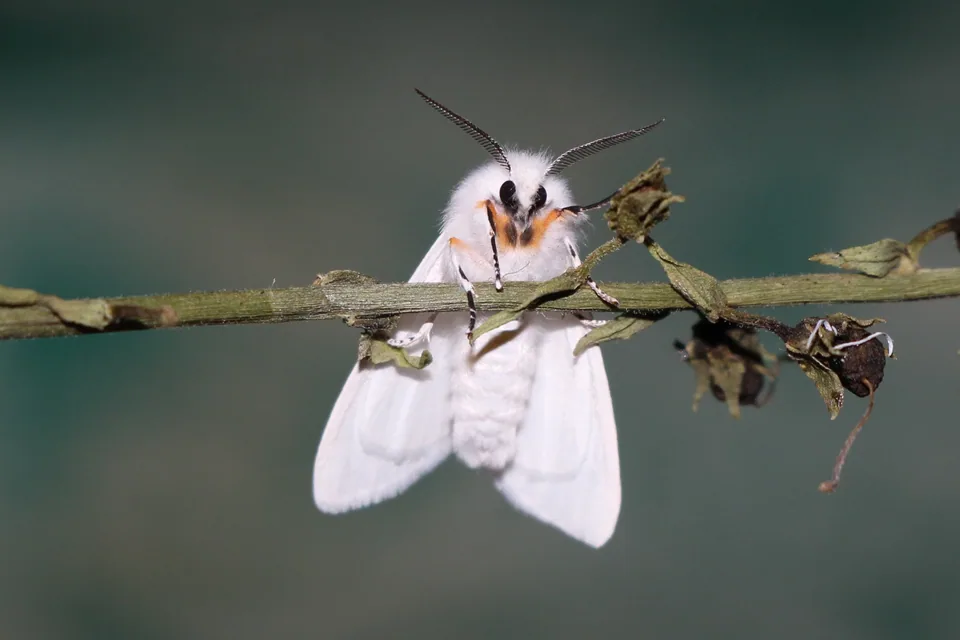
Insect
Fall webworm
Hyphantria cunea
Written by Emilio Marruso
Classification: Arthropoda › Hexapoda › Insecta › Lepidoptera › Erebidae › Hyphantria
Plants it attacks
Plants in our guide where this problem is reported. Open a plant to see the sources.
- Sourwood
Symptom: Fall webworm is an occasional problem; leaf spot and twig blight infrequently occur
Also reported on: Allegheny Serviceberry, Boxelder, Carolina Willow, Common hop, Deerberry, English Walnut, Fire Cherry, Grape, Hazelnut, Longleaf pine, Mockernut Hickory, Norway Maple, Paradise apple, Pear, Pecan, Pignut, Pin Oak, Plum, Serviceberry, Shagbark Hickory, Sour Cherry, Sweet Cherry, Tree-of-Heaven, Turkish Hazel, White Mulberry
Remedies
What our plant sheets report, with the outcome checked against official sources. Traditional remedies without an official source are flagged.
Treat
Bacillus thuringiensis spray Works
How: Foliar sprays of Bacillus thuringiensis in larger infestations; consult the label for dosage rates and safety precautions.
Reported for 3 plants: Pignut, Shagbark Hickory, Mockernut Hickory
pruning out and destroying nests Works
How: Prune the webbed nests and destroy them in light infestations.
Reported for 2 plants: Pignut, Shagbark Hickory
prune and destroy the webbed nests Works
How: In light infestations, prune out the nests and destroy them.
Reported for 1 plant: Mockernut Hickory
pruning out nests Partly works
How: In light infestations, prune out the nests and destroy them
Reported for 1 plant: Serviceberry
pruning out the webs Partly works
How: Remove and destroy the tents as soon as you notice them, by pruning the end of the branch.
Reported for 1 plant: Sourwood
tearing the webs open with a hooked pole Partly works
How: Fasten a hook, such as a bent clothes hanger, to a long pole and tear the webs apart so predators can reach the caterpillars.
Reported for 1 plant: Pecan
pruning or removing webs by hand Official source, not independently tested
How: Destroy nests by pruning or removing by hand; a stick may be inserted into large webs and twisted to loosen them.
Reported for 1 plant: Deerberry
pruning out and destroying nests Official source, not independently tested
How: In light infestations prune out the nests and destroy them
Reported for 1 plant: Allegheny Serviceberry
pruning webworm nests Official source, not independently tested
How: In light infestations, prune the nests and destroy them.
Reported for 1 plant: Carolina Willow
removing webs with a pole Official source, not independently tested
How: If the webbing is accessible from ground level, it can be removed with a pole; even breaking up the webbing makes the caterpillars more vulnerable to natural enemies.
Reported for 1 plant: Fire Cherry
bacillus thuringiensis Not verified
How: Apply Bacillus thuringiensis to the foliage when the webworms are young.
Reported for 1 plant: White Mulberry
burning the webs Not verified
How: The source warns against setting fire to the tents in the tree.
Reported for 1 plant: Sourwood
burning the webs in the tree Not verified
How: Burning webs while they are still in the tree is not recommended.
Reported for 1 plant: Pecan
opening the webs to natural predators Not verified
How: Open the webs with a stick, rake or stream of water to allow the natural predators inside.
Reported for 1 plant: Sourwood
pruning out webbed limbs Not verified
How: Prune limbs with webworms from the tree and remove them from the site; use a telescoping pruning tool for webs higher in the tree.
Reported for 1 plant: Pecan
sweeping away the nests Not verified
How: On a small tree, sweeping the nests away might be effective enough.
Reported for 1 plant: White Mulberry
Where it is found
Present in 33 countries.
Regulated as a quarantine pest in: Argentina, Armenia, Azerbaijan, Belarus, Brazil, Chile, China, Georgia, Iran, Israel, Jordan, Kazakhstan, Russia, Tunisia, Ukraine, Uruguay, Uzbekistan.