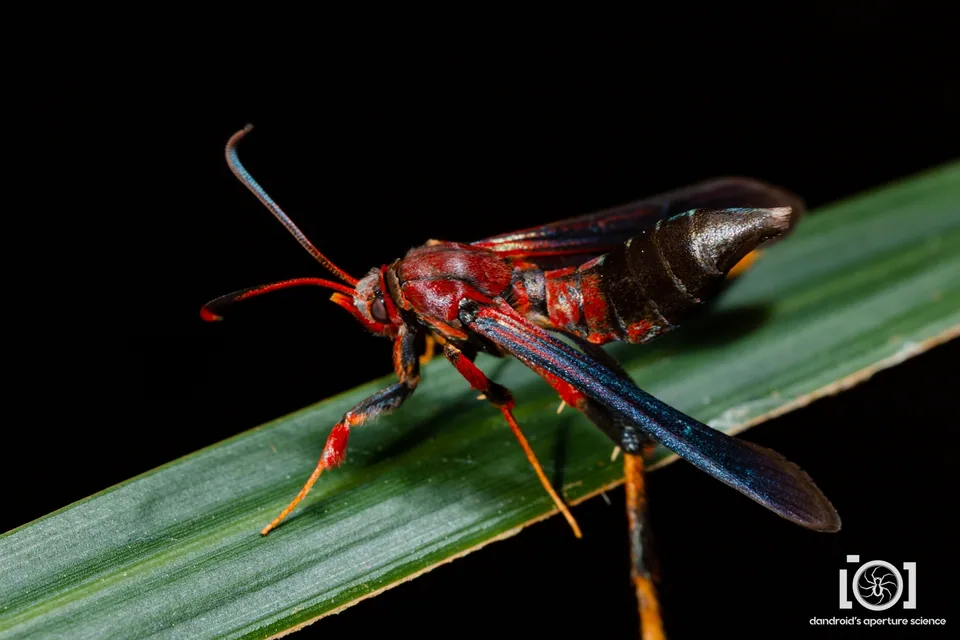
Insect
Lilac borer
Podosesia syringae
Written by Emilio Marruso
Classification: Arthropoda › Hexapoda › Insecta › Lepidoptera › Sesiidae › Podosesia
Plants it attacks
Plants in our guide where this problem is reported. Open a plant to see the sources.
- Common Lilac
Symptom: Larvae tunnel into the wood; continual reinfestation causes branch dieback and heavy infestations may kill plants.
Also reported on: Early Lilac, Japanese Tree Lilac, Late Lilac, Persian lilac
Remedies
What our plant sheets report, with the outcome checked against official sources. Traditional remedies without an official source are flagged.
Treat
beneficial nematodes Partly works
How: Applied to the bark of trunks and twigs to control larvae in their galleries.
Reported for 1 plant: Early Lilac
pruning out the infected branch Partly works
How: Cut out the branch bored by the larva.
Reported for 1 plant: Early Lilac
beneficial nematodes Official source, not independently tested
How: Apply beneficial nematodes to the bark of trunks and twigs to control larvae in their galleries.
Reported for 2 plants: Persian lilac, Late Lilac
do not prune when adults are present Official source, not independently tested
How: Avoid pruning while the adults are present, as they are drawn to wounds as egg laying sites.
Reported for 1 plant: Late Lilac
pruning out infested branch Official source, not independently tested
How: Prune out the infected branch.
Reported for 1 plant: Japanese Tree Lilac
Where it is found
Regulated as a quarantine pest in: Chile.