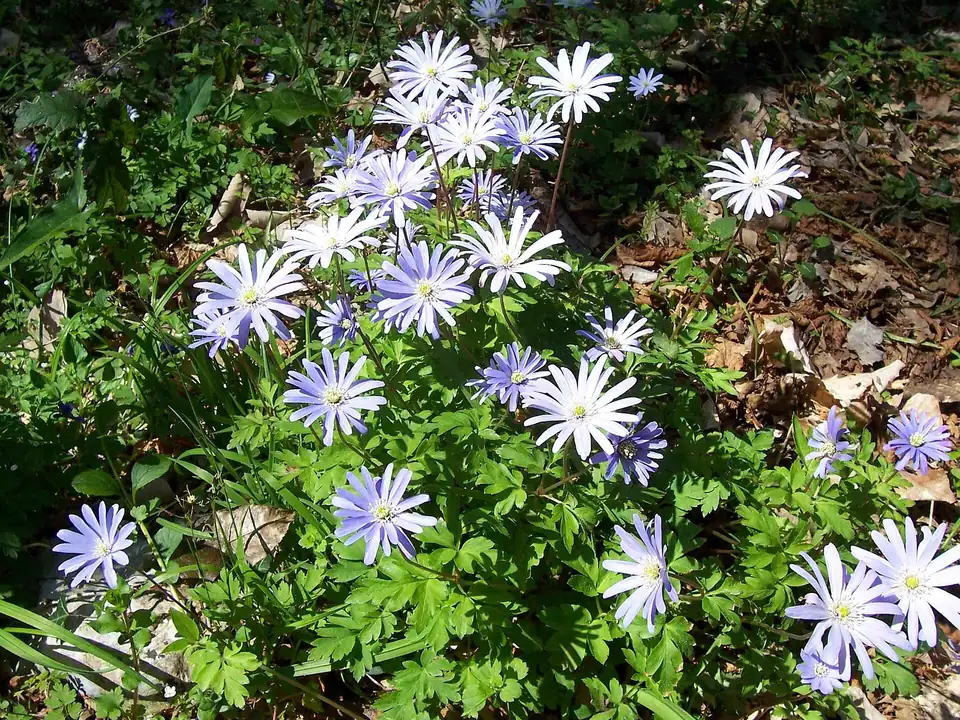
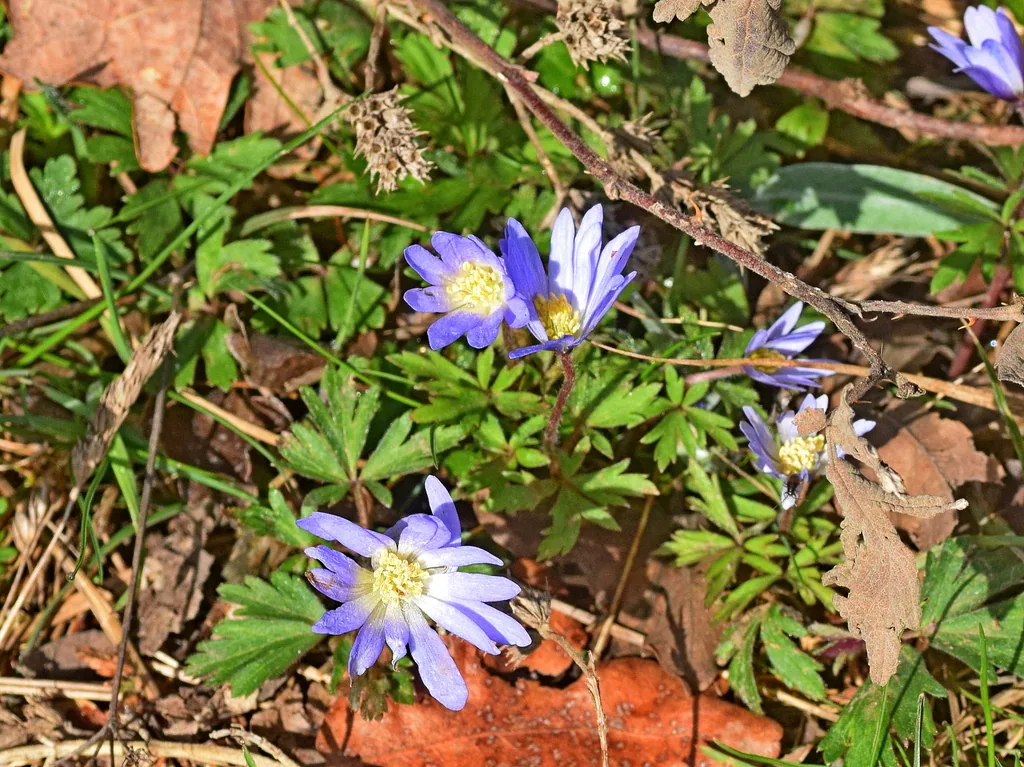

How to Grow and Care for Blue anemone
Anemone apennina
Written by Emilio Marruso · last checked
At a glance
The Apennine anemone is a gentle friend for half-shady corners: it likes soil that stays moist, rich and well drained. Each spring, a mulch of garden compost at the base of the clumps is all the feeding it needs, in borders or woodland gardens. Sow its seeds in winter, or divide the resting tubers to make new plants to share.
- Sun
Half shade
- Water
Keep the soil moist, but let extra water drain away
What the sources say (1)
Watering notes: Moist, rich, drained soil
alpine house, moist, rich, drained soil, semi-shade
— Anemonoides apennina (L.) Holub [2] - Soil
Rich soil that drains well
What the sources say (1)
Watering notes: Moist, rich, drained soil
alpine house, moist, rich, drained soil, semi-shade
— Anemonoides apennina (L.) Holub [2] - Feeding
Each spring, spread compost at the base of the clumps; rich soil needs nothing more
What the sources say (3)
When: Each spring, as a mulch of organic matter at the base of the clumps
When growing in borders or woodland areas, spread a mulch of organic matter (such as garden compost ) around the clumps each spring. This helps to enrich the soil and deter weed germination
— How to grow spring-flowering anemones / RHS Growing Guide [1] How often: Not usually needed in soil rich in organic matter
Anemones growing in soil that is rich in organic matter shouldn’t need additional feeding.
— How to grow spring-flowering anemones / RHS Growing Guide [1] Natural fertilizers: Mulch of organic matter such as garden compost at the base of the clumps each spring, in borders or woodland
When growing in borders or woodland areas, spread a mulch of organic matter (such as garden compost ) around the clumps each spring. This helps to enrich the soil and deter weed germination
— How to grow spring-flowering anemones / RHS Growing Guide [1] - Propagation
Grow from seed or divide the tubers while they rest
- Sowing
Sow in winter
What the sources say (1)
Sowing: Winter
seed in winter, barely covered, germ. 3-6 months, 10-13°C
— Anemonoides apennina (L.) Holub [2]
Overview
A tuberous perennial of grassland and thickets with blue or white spring flowers. [2] Grown in moist, rich, drained soil in semi-shade; propagated by seed sown in winter or by division of resting tubers. [2]
This record is incomplete: the sources we read do not cover every field yet.
Not yet covered by our sources: Watering, Hardiness, coldest zone, Hardiness, warmest zone, Pruning
Blue anemone care
How to water Blue anemone
Watering
Not stated in the sources we read.
Watering notes
Moist, rich, drained soil
What the sources say (1)
alpine house, moist, rich, drained soil, semi-shadeHow much light Blue anemone needs
How much cold Blue anemone can take
Hardiness, coldest zone
Not stated in the sources we read.
Hardiness, warmest zone
Not stated in the sources we read.
How to propagate Blue anemone
How to grow Blue anemone
Fertilizing
When
Each spring, as a mulch of organic matter at the base of the clumps
What the sources say (1)
When growing in borders or woodland areas, spread a mulch of organic matter (such as garden compost ) around the clumps each spring. This helps to enrich the soil and deter weed germinationHow often
Not usually needed in soil rich in organic matter
What the sources say (1)
Anemones growing in soil that is rich in organic matter shouldn’t need additional feeding.Natural fertilizers
Mulch of organic matter such as garden compost at the base of the clumps each spring, in borders or woodland
What the sources say (1)
When growing in borders or woodland areas, spread a mulch of organic matter (such as garden compost ) around the clumps each spring. This helps to enrich the soil and deter weed germinationRemedies
Each remedy shows what official sources say about it; traditional remedies without an official source are marked as such. Harmful ones are listed so you know to avoid them.
Treating the plant
slugs
handpicking Works
How: Daily removal is most effective; after initially reducing the population, handpicking once a week keeps the numbers down. Pick them up and seal them in a plastic bag or drop them in a bucket of soapy water.
Handpicking is a time consuming but effective method of controlling slugs and snails when done regularly. Daily removal is most effective but after initially reducing the population, handpicking once a week will keep the numbers down.
— extension.usu.edu [3] What the evidence says Handpicking is a time consuming but effective method of controlling slugs and snails when done regularly. Daily removal is most effective but after initially reducing the population, handpicking once a week will keep the numbers down.
— extension.usu.edu [3] board trap Works
How: One inch strips of lumber nailed on two sides of a 12x12 board make a trap. The pests crawl underneath it each day; turn the trap over each day and destroy them.
Traps are an effective method of controlling the pests. One inch strips of lumber nailed on two sides of a 12"x12" board make an excellent trap.
— extension.usu.edu [3] What the evidence says Traps are an effective method of controlling the pests. One inch strips of lumber nailed on two sides of a 12"x12" board make an excellent trap.
— extension.usu.edu [3] beer trap Official source, not independently tested
How: Use a pie plate with the edges buried at ground level, filled with beer or yeast water; the pests crawl in and drown. Remove the carcasses to maintain the appeal of the trap.
Bait traps using beer, yeast water or even plain water also attract slugs. Use a pie plate with the edges buried at ground level so the pests crawl in and are drowned.
— extension.usu.edu [3] copper barrier Works
How: Mesh copper screens or sheeting 8 inches wide; slugs and snails do not like to slide over copper. Barriers are not lethal and divert the pests to other nearby vegetation.
Mesh copper screens or sheeting 8 inches wide make effective barriers.
— extension.usu.edu [3] What the evidence says Mesh copper screens or sheeting 8 inches wide make effective barriers.
— extension.usu.edu [3] salt on slugs Harmful
How: Putting salt on slugs is an often promoted method.
One often promoted method of controlling the pests is to put salt on them. This is not recommended because salt is very damaging to plants and might build up in the soil.
— extension.usu.edu [3] What the evidence says One often promoted method of controlling the pests is to put salt on them. This is not recommended because salt is very damaging to plants and might build up in the soil.
— extension.usu.edu [3]
Calendar
Sowing
Winter
What the sources say (1)
seed in winter, barely covered, germ. 3-6 months, 10-13°CPruning
Not stated in the sources we read.
Months as given by the sources, which are mostly from the United States (northern hemisphere). In the southern hemisphere they shift by about six months.
Similar plants
- Anemone palmata Anemone palmata
- Broad-leaved anemone Anemone hortensis
- Canadian anemone Anemone canadensis
- Grecian Windflower Anemone blanda
- Poppy Anemone Anemone coronaria
- Tall Anemone Anemone virginiana
- Wood Anemone Anemone nemorosa
- Yellow woodland anemone Anemone ranunculoides
Sources
Every value above is quoted from these documents. Links lead to the original publisher.
- How to grow spring-flowering anemones / RHS Growing Guide · rhs.org.uk, consulted
- Anemonoides apennina (L.) Holub · flora.kadel.cz, consulted
- extension.usu.edu · extension.usu.edu
Written by Emilio Marruso · last checked