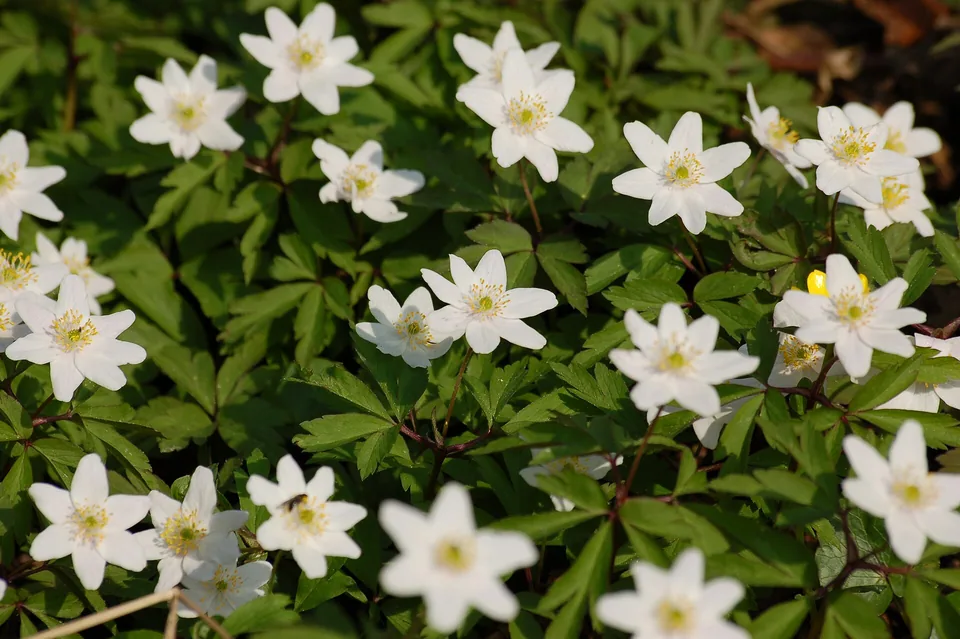
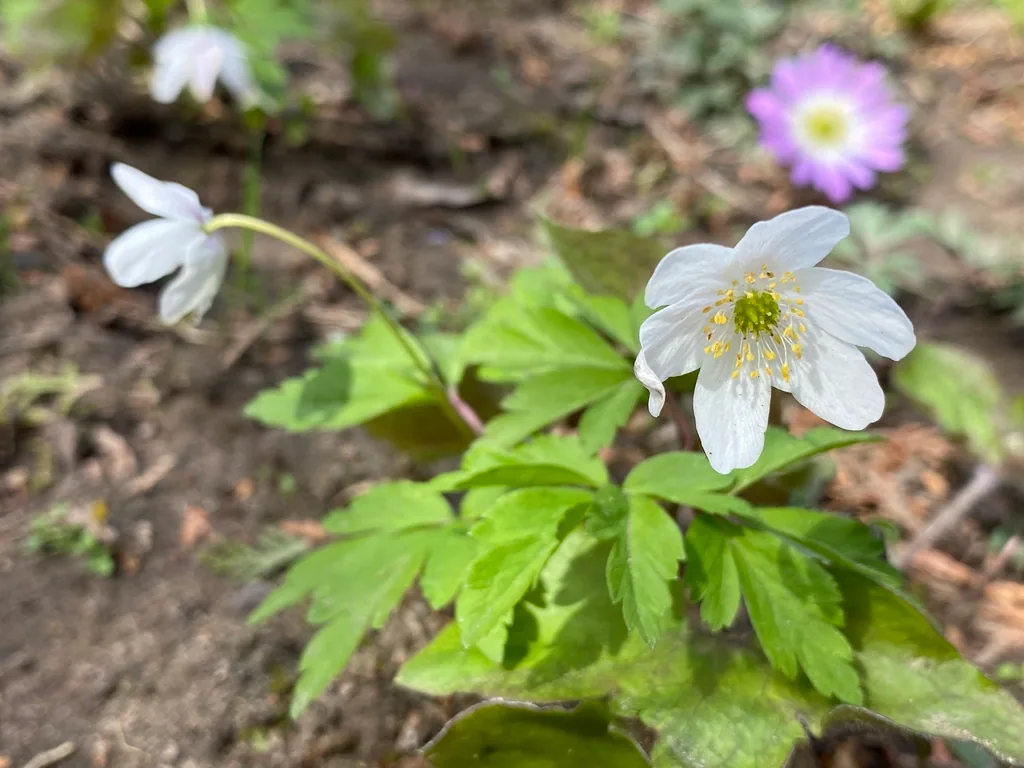

How to Grow and Care for Wood Anemone
Anemone nemorosa
Written by Emilio Marruso · last checked
Toxic to: Animals, People · Why
At a glance
Wood anemone is a gentle choice for shady corners: it grows happily in dappled shade and flowers best where a little more sunlight reaches the ground. Plant the dormant rhizomes in September or October, 4–6 inches apart, and keep the soil damp in spring. A yearly mulch of garden compost is all the feeding it needs, and it grows in containers too.
- Sun
Dappled shade; it takes deep shade but flowers best with a bit more sun
What the sources say (2)
Light: Dappled shade; tolerates deep shade but flowers best where more sunlight reaches the ground
Anemone nemorosa grows best in dappled shade in moist, humus-rich soil.
— How to Grow Wood Anemones | BBC Gardeners World Magazine [4] Wood anemones can grow in deep shade but they thrive in areas of coppiced woods where more sunlight reaches the woodland floor.
— How to Grow Wood Anemones | BBC Gardeners World Magazine [4] - Water
Keep the soil damp but not soggy in spring; water potted plants while they grow
What the sources say (2)
Watering: Soil kept damp but not waterlogged in spring
In their natural environment, wood anemones grow best in dappled shade in soil that remains damp, but not waterlogged, in spring.
— How to Grow Wood Anemones | BBC Gardeners World Magazine [4] Watering notes: Plants in containers need watering during the growing season
Wood anemones in containers need watering during the growing season and will benefit from liquid feed once they begin to flower.
— How to Grow Wood Anemones | BBC Gardeners World Magazine [4] - Spacing
4–6 in between plants
What the sources say (1)
Spacing: 10-15 cm [3.9–5.9 in]
Plant rhizomes in September or October - Soak dried rhizomes overnight - Add compost or leaf mould to the soil prior to planting - Plant rhizomes 10-15cm apart and 5cm deep
— How to Grow Wood Anemones | BBC Gardeners World Magazine [4] - Planting
Plant the dormant rhizomes in September or October
What the sources say (1)
Planting: September or October (dormant rhizomes)
Plant rhizomes in September or October - Soak dried rhizomes overnight - Add compost or leaf mould to the soil prior to planting - Plant rhizomes 10-15cm apart and 5cm deep
— How to Grow Wood Anemones | BBC Gardeners World Magazine [4] - Feeding
A mulch of garden compost around the clumps each spring is enough
What the sources say (3)
When: Each spring, as a mulch of organic matter at the base of the clumps
When growing in borders or woodland areas, spread a mulch of organic matter (such as garden compost ) around the clumps each spring. This helps to enrich the soil and deter weed germination
— [7] Natural fertilizers: Mulch of organic matter such as garden compost at the base of the clumps each spring, in borders or woodland
When growing in borders or woodland areas, spread a mulch of organic matter (such as garden compost ) around the clumps each spring. This helps to enrich the soil and deter weed germination
— [7] How often: Not usually needed in soil rich in organic matter
Anemones growing in soil that is rich in organic matter shouldn’t need additional feeding.
— [7] - Pests
Slugs, caterpillars, eelworms and powdery mildew; divide crowded clumps so air can flow
- Propagation
From seed, or divide the rhizomes in spring once the leaves have died back
What the sources say (1)
Propagation: Seed; division of rhizomes in spring once the foliage has died back
Wood anemones can be sown from seed or rhizomes can be lifted and divided in spring once the foliage has died back.
— How to Grow Wood Anemones | BBC Gardeners World Magazine [4] - Containers
Grows in containers too; keep pots watered
What the sources say (2)
In containers: Yes
Wood anemones in containers need watering during the growing season and will benefit from liquid feed once they begin to flower.
— How to Grow Wood Anemones | BBC Gardeners World Magazine [4] Watering notes: Plants in containers need watering during the growing season
Wood anemones in containers need watering during the growing season and will benefit from liquid feed once they begin to flower.
— How to Grow Wood Anemones | BBC Gardeners World Magazine [4] - Safety
Poisonous to people and animals
Overview
Wood anemone is a rhizomatous European perennial that grows best in dappled shade in moist, humus-rich soil. [4][6] It is propagated from seed or by dividing rhizomes in spring once the foliage has died back. [4] The plant is poisonous to humans and animals. [4]
This record is incomplete: the sources we read do not cover every field yet.
Not yet covered by our sources: Hardiness, coldest zone, Hardiness, warmest zone, Pruning
Wood Anemone care
Measurements in square brackets are our conversion into the other unit system; the quoted text is unchanged.
How to water Wood Anemone
Watering
Soil kept damp but not waterlogged in spring
What the sources say (1)
In their natural environment, wood anemones grow best in dappled shade in soil that remains damp, but not waterlogged, in spring.Watering notes
Plants in containers need watering during the growing season
What the sources say (1)
Wood anemones in containers need watering during the growing season and will benefit from liquid feed once they begin to flower.How much light Wood Anemone needs
Dappled shade; tolerates deep shade but flowers best where more sunlight reaches the ground
What the sources say (2)
Anemone nemorosa grows best in dappled shade in moist, humus-rich soil.Wood anemones can grow in deep shade but they thrive in areas of coppiced woods where more sunlight reaches the woodland floor.How much cold Wood Anemone can take
Hardiness, coldest zone
Not stated in the sources we read.
Hardiness, warmest zone
Not stated in the sources we read.
Where to grow Wood Anemone
In containers
Yes
What the sources say (1)
Wood anemones in containers need watering during the growing season and will benefit from liquid feed once they begin to flower.Spacing
10-15 cm [3.9–5.9 in]
What the sources say (1)
Plant rhizomes in September or October
- Soak dried rhizomes overnight
- Add compost or leaf mould to the soil prior to planting
- Plant rhizomes 10-15cm apart and 5cm deepHow to propagate Wood Anemone
Seed; division of rhizomes in spring once the foliage has died back
What the sources say (1)
Wood anemones can be sown from seed or rhizomes can be lifted and divided in spring once the foliage has died back.How to grow Wood Anemone
Fertilizing
When
Each spring, as a mulch of organic matter at the base of the clumps
What the sources say (1)
When growing in borders or woodland areas, spread a mulch of organic matter (such as garden compost ) around the clumps each spring. This helps to enrich the soil and deter weed germinationHow often
Not usually needed in soil rich in organic matter
What the sources say (1)
Anemones growing in soil that is rich in organic matter shouldn’t need additional feeding.Natural fertilizers
Mulch of organic matter such as garden compost at the base of the clumps each spring, in borders or woodland
What the sources say (1)
When growing in borders or woodland areas, spread a mulch of organic matter (such as garden compost ) around the clumps each spring. This helps to enrich the soil and deter weed germinationWood Anemone pests and problems
Slugs, caterpillars, eelworms and powdery mildew
Symptom: Damage can occasionally be caused by these pests and by powdery mildew.
What to do: Ensure good ventilation around plants by dividing congested clumps and keep potted plants well-watered.
What the sources say (2)
Damage can occasionally be caused by slugs , caterpillars , eelworms or powdery mildew .
— How to Grow Wood Anemones | BBC Gardeners World Magazine [4] To avoid issues with powdery mildew, ensure good ventilation around plants by dividing clumps if they become congested and keeping plants in pots well-watered.
— How to Grow Wood Anemones | BBC Gardeners World Magazine [4]
Remedies
Each remedy shows what official sources say about it; traditional remedies without an official source are marked as such. Harmful ones are listed so you know to avoid them.
First aid
First aid: not a substitute for a doctor
skin-irritation
wash sap off skin with running water Official source, not independently tested
if you think someone has been poisoned, DO NOT wait for symptoms to develop. Get medical help right away.
— medlineplus.gov [9] How: If you have plant material, juices, or sap on your skin, wash quickly with plenty of running water.
If you have plant material, juices, or sap on your skin, wash quickly with plenty of running water.
— poison.org [8]
Treating the plant
powdery mildew
divide congested clumps for ventilation Not verified
Traditional remedy, not verified by an official source.
How: To avoid issues with powdery mildew, ensure good ventilation around plants by dividing clumps if they become congested and keeping plants in pots well-watered.
Is Wood Anemone toxic to pets?
Reported by the source, quoted verbatim. This is not medical or veterinary advice: if a person or an animal may have eaten this plant, contact a poison control centre or a veterinarian.
Wood anemones are poisonous to humans and animals.
[4]- Poisonous parts
The entire plant is poisonous.
[6]- Toxic principle
All parts of this plant contain protoanemonin, an irritating acrid oil that is an enzymatic breakdown product of the glycoside ranunculin.
[1]- Symptoms
Gloves and eye protection should be worn when handling them as toxins can irritate the skin and eyes.
[4]
Calendar
September or October (dormant rhizomes)
What the sources say (1)
Plant rhizomes in September or October
- Soak dried rhizomes overnight
- Add compost or leaf mould to the soil prior to planting
- Plant rhizomes 10-15cm apart and 5cm deepNot stated in the sources we read.
Months as given by the sources, which are mostly from the United States (northern hemisphere). In the southern hemisphere they shift by about six months.
Similar plants
- Canadian anemone Anemone canadensis
- Grecian Windflower Anemone blanda
- Tall Anemone Anemone virginiana
- Yellow woodland anemone Anemone ranunculoides
- Anemone palmata Anemone palmata
- Blue anemone Anemone apennina
- Broad-leaved anemone Anemone hortensis
- Poppy Anemone Anemone coronaria
Sources
Every value above is quoted from these documents. Links lead to the original publisher.
- Anemone nemorosa - Useful Temperate Plants · temperate.theferns.info, consulted
- Anemone nemorosa, Wood Anemone: identification, distribution, habitat · first-nature.com, consulted
- Anemone nemorosa | Pacific Bulb Society · pacificbulbsociety.org, consulted
- How to Grow Wood Anemones | BBC Gardeners World Magazine · gardenersworld.com, consulted
- Wood anemone is a perfect plant for shady corners and spring displays · gardensillustrated.com, consulted
- · naturblick.museumfuernaturkunde.berlin, consulted
- rhs.org.uk · rhs.org.uk
- poison.org · poison.org
- medlineplus.gov · medlineplus.gov
Written by Emilio Marruso · last checked