
How to Grow and Care for Yellow woodland anemone
Anemone ranunculoides
Written by Emilio Marruso · last checked
Toxic to: People · Why
At a glance
This anemone is happy in partial shade, in borders or woodland, and asks for very little. Each spring, simply spread a mulch of garden compost at the base of the clumps; in soil rich in organic matter it usually needs nothing more. Just remember that every part of the plant is poisonous, so admire it in the garden and never eat it.
- Sun
Partial shade
What the sources say (1)
Light: Partial shade
Exposure: Partial Shade
— Anemone ranunculoides | Chicago Botanic Garden [3] - Cold
Survives winters down to −30 °F (−34.4 °C)
Very hardy · USDA 4 · RHS H7 · Z4
What the sources say (2)
Hardiness, coldest zone: 4 [winter low −34.4 to −28.9 °C (−30 to −20 °F)]
Hardiness Zone: 4 - 8
— Anemone ranunculoides | Chicago Botanic Garden [3] Hardiness, warmest zone: 8 [winter low −12.2 to −6.7 °C (10 to 20 °F)]
Hardiness Zone: 4 - 8
— Anemone ranunculoides | Chicago Botanic Garden [3] - Feeding
Each spring, a compost mulch at the base of the clumps; often not needed in rich soil
What the sources say (3)
When: Each spring, as a mulch of organic matter at the base of the clumps
When growing in borders or woodland areas, spread a mulch of organic matter (such as garden compost ) around the clumps each spring. This helps to enrich the soil and deter weed germination
— How to grow spring-flowering anemones / RHS Growing Guide [1] How often: Not usually needed in soil rich in organic matter
Anemones growing in soil that is rich in organic matter shouldn’t need additional feeding.
— How to grow spring-flowering anemones / RHS Growing Guide [1] Natural fertilizers: Mulch of organic matter such as garden compost at the base of the clumps each spring, in borders or woodland
When growing in borders or woodland areas, spread a mulch of organic matter (such as garden compost ) around the clumps each spring. This helps to enrich the soil and deter weed germination
— How to grow spring-flowering anemones / RHS Growing Guide [1] - Safety
All parts are poisonous: they cause nausea, diarrhea and kidney damage
Overview
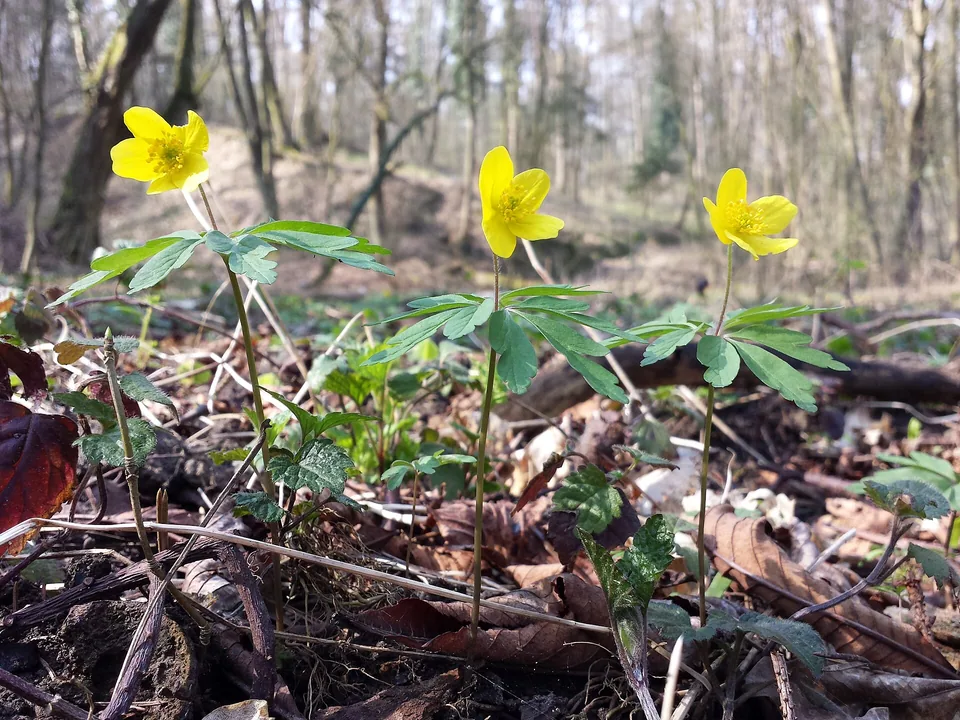
Yellow wood anemone is a European woodland perennial that spreads slowly by rhizomes and flowers in spring. [3] It is listed as poisonous in all parts. [2]
This record is incomplete: the sources we read do not cover every field yet.
Not yet covered by our sources: Watering, Pruning, Propagation
Yellow woodland anemone care
How to water Yellow woodland anemone
Not stated in the sources we read.
How much light Yellow woodland anemone needs
Partial shade
What the sources say (1)
Exposure:
Partial ShadeHow much cold Yellow woodland anemone can take
Hardiness, coldest zone
4 [winter low −34.4 to −28.9 °C (−30 to −20 °F)]
What the sources say (1)
Hardiness Zone:
4 - 8Hardiness, warmest zone
8 [winter low −12.2 to −6.7 °C (10 to 20 °F)]
What the sources say (1)
Hardiness Zone:
4 - 8How to propagate Yellow woodland anemone
Not stated in the sources we read.
How to grow Yellow woodland anemone
Fertilizing
When
Each spring, as a mulch of organic matter at the base of the clumps
What the sources say (1)
When growing in borders or woodland areas, spread a mulch of organic matter (such as garden compost ) around the clumps each spring. This helps to enrich the soil and deter weed germinationHow often
Not usually needed in soil rich in organic matter
What the sources say (1)
Anemones growing in soil that is rich in organic matter shouldn’t need additional feeding.Natural fertilizers
Mulch of organic matter such as garden compost at the base of the clumps each spring, in borders or woodland
What the sources say (1)
When growing in borders or woodland areas, spread a mulch of organic matter (such as garden compost ) around the clumps each spring. This helps to enrich the soil and deter weed germinationRemedies
Each remedy shows what official sources say about it; traditional remedies without an official source are marked as such. Harmful ones are listed so you know to avoid them.
Treating the plant
slugs and snails
handpicking Works
How: Slugs and snails found on the plants are removed by hand.
When found, these pests can be removed by handpicking or by making simple, effective traps.
— hgic.clemson.edu [5] What the evidence says When found, these pests can be removed by handpicking or by making simple, effective traps. Trap snails and slugs in shallow pans of stale beer sunken so that the lip of the container is even with the soil surface.
— hgic.clemson.edu [5] stale beer trap Works
How: Trap snails and slugs in shallow pans of stale beer sunken so that the lip of the container is even with the soil surface.
Trap snails and slugs in shallow pans of stale beer sunken so that the lip of the container is even with the soil surface.
— hgic.clemson.edu [5] What the evidence says When found, these pests can be removed by handpicking or by making simple, effective traps. Trap snails and slugs in shallow pans of stale beer sunken so that the lip of the container is even with the soil surface.
— hgic.clemson.edu [5]
Is Yellow woodland anemone poisonous?
Reported by the source, quoted verbatim. This is not medical or veterinary advice: if a person or an animal may have eaten this plant, contact a poison control centre or a veterinarian.
Calendar
Pruning
Not stated in the sources we read.
Months as given by the sources, which are mostly from the United States (northern hemisphere). In the southern hemisphere they shift by about six months.
Indicative values
Values from a secondary source, not checked word for word like the rest of this page. Use them as a starting point.
- Watering
- AverageIndicative value, adapt it to your climate · Secondary source
- Drought tolerant
- yesIndicative value, adapt it to your climate · Secondary source
- Soil pH
- 6-7Indicative value, adapt it to your climate · Secondary source
- Growth rate
- LowIndicative value, adapt it to your climate · Secondary source
- Pruning
- May, June, JulyIndicative value, adapt it to your climate · Secondary source
- Propagation
- Division, Seed Propagation, Cutting, Layering PropagationIndicative value, adapt it to your climate · Secondary source
Similar plants
- Canadian anemone Anemone canadensis
- Grecian Windflower Anemone blanda
- Tall Anemone Anemone virginiana
- Wood Anemone Anemone nemorosa
- Anemone palmata Anemone palmata
- Blue anemone Anemone apennina
- Broad-leaved anemone Anemone hortensis
- Poppy Anemone Anemone coronaria
Sources
Every value above is quoted from these documents. Links lead to the original publisher.
- How to grow spring-flowering anemones / RHS Growing Guide · rhs.org.uk, consulted
- · naturblick.museumfuernaturkunde.berlin, consulted
- Anemone ranunculoides | Chicago Botanic Garden · chicagobotanic.org, consulted
- Anemone ranunculoides | Pacific Bulb Society · pacificbulbsociety.org, consulted
- hgic.clemson.edu · hgic.clemson.edu
Written by Emilio Marruso · last checked