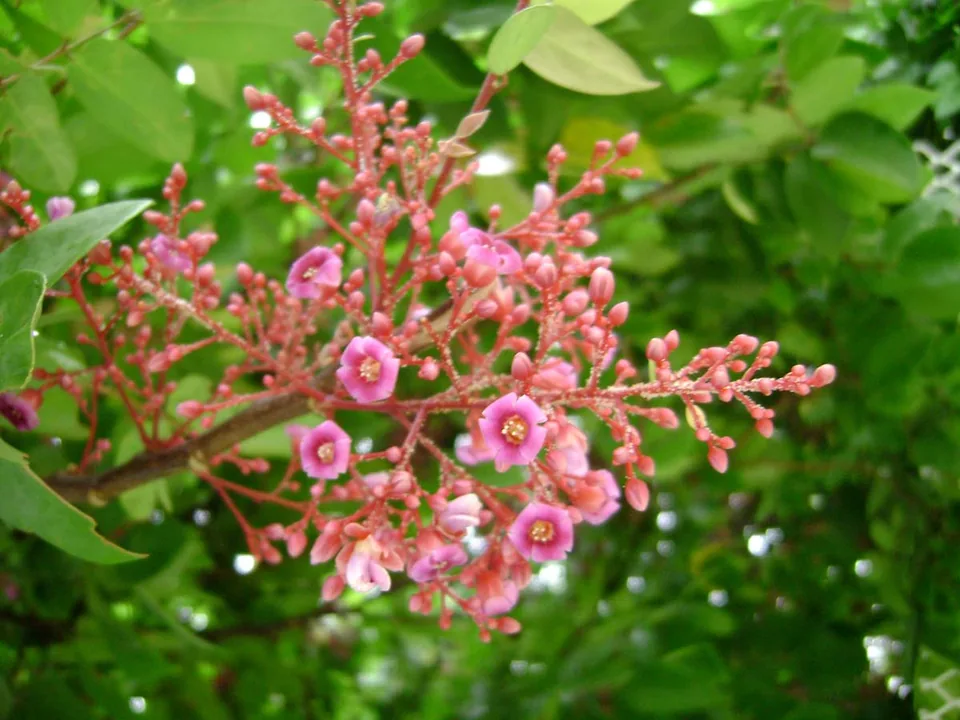
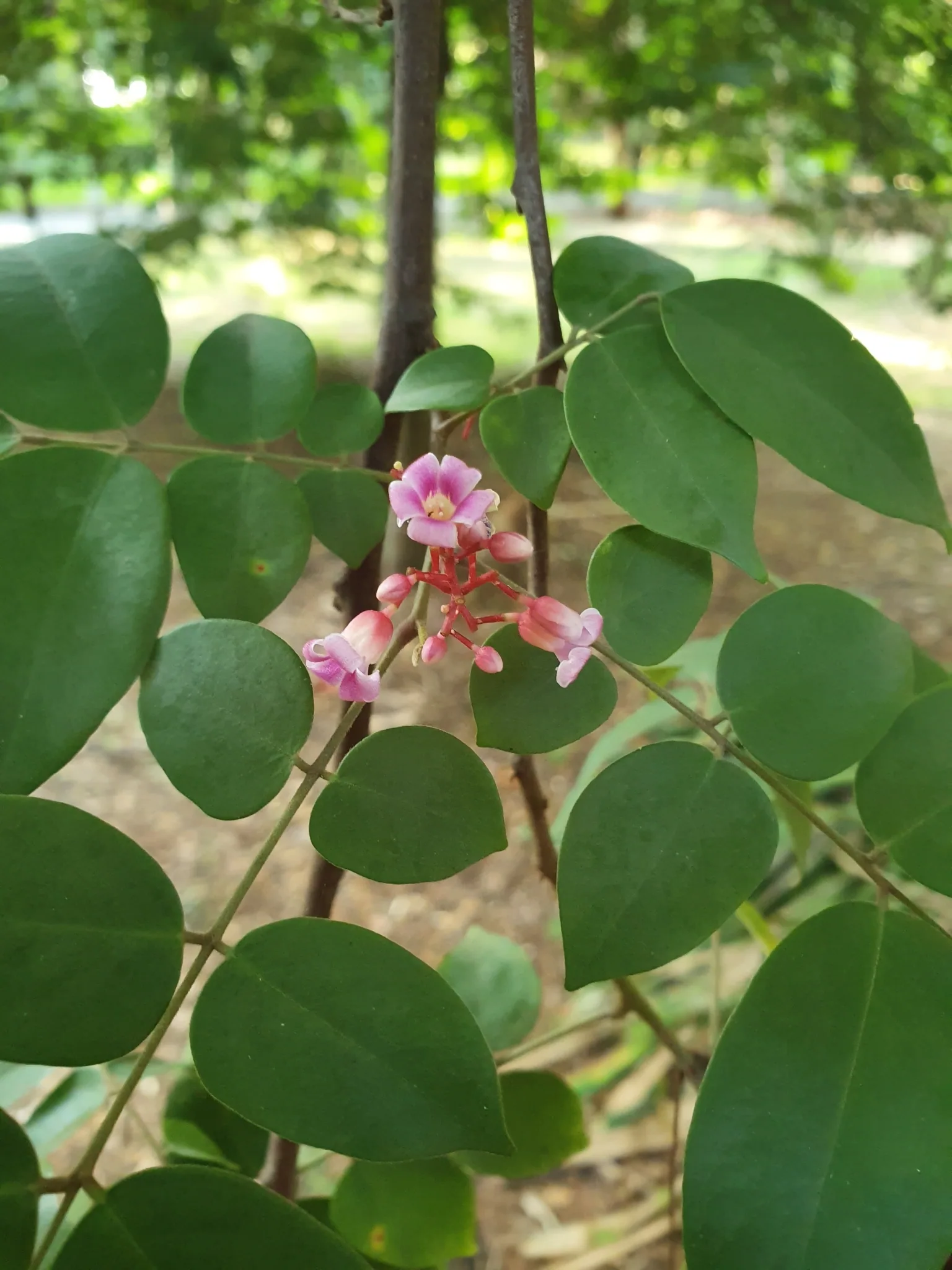

How to Grow and Care for Carambola
Averrhoa carambola
Written by Emilio Marruso · last checked
Toxic to: People · Why
At a glance
Star fruit is a sun-loving tree that can start bearing just 10 to 14 months after planting in a spot sheltered from wind. Pick the fruit when the grooves turn yellow and the fin tips are still green, then enjoy it fresh, in fruit salads or as a garnish. Water once or twice a week when it doesn't rain, and never too much.
- Sun
Full sun
What the sources say (1)
Light: Full sun
In general, carambola trees should be planted in full sun for best growth and fruit production.
— HS12/MG269: Carambola Growing in the Florida Home Landscape [2] - Water
Water 1–2 times a week if it doesn't rain, less in winter; too much water rots the roots
What the sources say (4)
Watering: Water 1 to 2 times per week if no rainfall occurs; less frequently during the cool winter months
Water trees during dry periods. Trees should be watered 1 to 2 times per week if no rainfall occurs.
— HS12/MG269: Carambola Growing in the Florida Home Landscape [2] Less frequent watering may be made during the cool winter months.
— HS12/MG269: Carambola Growing in the Florida Home Landscape [2] Watering notes: Too much water applied too often causes root rot; regular irrigation from flowering through harvest once trees bear
The use of lawn sprinkler systems on a timer may result in over watering and cause carambola trees to decline. This is because too much water too often applied causes root rot.
— HS12/MG269: Carambola Growing in the Florida Home Landscape [2] Once trees begin to bear (1 to 2 years after planting), trees should be irrigated regularly from flowering through harvest.
— HS12/MG269: Carambola Growing in the Florida Home Landscape [2] - Soil
Acidic to neutral soil, pH 4.5–7
What the sources say (2)
Soil pH, minimum: 4.5
Trees grow best where the soil reaction is moderately acid to neutral in pH (4.5 to 7).
— HS12/MG269: Carambola Growing in the Florida Home Landscape [2] Soil pH, maximum: 7
Trees grow best where the soil reaction is moderately acid to neutral in pH (4.5 to 7).
— HS12/MG269: Carambola Growing in the Florida Home Landscape [2] - Spacing
15–20 ft between trees
What the sources say (1)
Spacing: 457.2-609.6 cm (15-20 ft)
Trees should be planted on 15 to 20 foot centers in a sunny location.
— Star Fruit | Cooperative Extension Ventura County [1] - Feeding
At planting, mix compost into the soil, never alone in the bottom of the hole
What the sources say (4)
Natural fertilizers: Compost mixed with the excavated soil at planting, no more than 1:1, never placed alone in the bottom of the hole
If you wish to add topsoil or compost to the native soil, mix it with the excavated soil from making the hole in no more than a 1:1 ratio.
— HS12/MG269: Carambola Growing in the Florida Home Landscape [2] In fact, placing topsoil or compost in the hole first and then planting on top of it is not desirable.
— HS12/MG269: Carambola Growing in the Florida Home Landscape [2] Avoid: Heavy fertilization of the lawn next to the tree, which can reduce fruiting and fruit quality; compost or topsoil placed in the bottom of the planting hole
Roots of mature carambola trees spread beyond the drip-line of the tree canopy and heavy fertilization of the lawn next to carambola trees is not recommended because it may reduce fruiting and or fruit quality.
— HS12/MG269: Carambola Growing in the Florida Home Landscape [2] In fact, placing topsoil or compost in the hole first and then planting on top of it is not desirable.
— HS12/MG269: Carambola Growing in the Florida Home Landscape [2] - Harvest
First fruit 10–14 months after planting; pick when the grooves turn yellow and the fin tips are still green
What the sources say (2)
Years to first fruit: 0.83-1.17 (10 to 14 months after planting, in wind-protected areas)
Carambola trees grown in wind-protected areas may begin to produce fruit within 10 to 14 months after planting.
— HS12/MG269: Carambola Growing in the Florida Home Landscape [2] How to harvest: Pick when the fruit turns from green to yellow in the furrow between the ribs while the tips of the ribs (fins) remain green; sugar content does not increase after picking
should be picked when fruit turn from green to a yellow color in the furrow between the ribs while the tips of the ribs (fins) remain green.
— HS12/MG269: Carambola Growing in the Florida Home Landscape [2] - Pests
Scale insects, stink bugs, leaf spot and root rot
What the sources say (2)
Pests: scale insects, stink bugs, fruit blotch miner
Carambola can have issues with pests such as scale insects, stink bugs and fruit blotch miner. Potential diseases include leaf spot, red alga, fruit-rotting fungi and root rot.
— Star Fruit – Gardening Solutions [3] Diseases: leaf spot, red alga, fruit-rotting fungi, root rot
Carambola can have issues with pests such as scale insects, stink bugs and fruit blotch miner. Potential diseases include leaf spot, red alga, fruit-rotting fungi and root rot.
— Star Fruit – Gardening Solutions [3] - Watch out
In soils above pH 7, leaves may turn yellow between green veins: the tree lacks iron
What the sources say (3)
Signs of deficiency: In soils above pH 7. Iron: interveinal chlorosis (green veins, yellow between), smaller leaflets, leaflets almost white when severe. Magnesium: mottling of green and yellow areas. Manganese: smaller, yellowing leaves
Carambola trees generally develop iron, magnesium, and manganese deficiencies when grown in soils with a pH above 7.
— HS12/MG269: Carambola Growing in the Florida Home Landscape [2] Symptoms of iron deficiency are interveinal chlorosis (green veins with yellowing in between), reduced leaflet size, and, with severe deficiency, leaflets may become almost white.
— HS12/MG269: Carambola Growing in the Florida Home Landscape [2] Symptoms of magnesium deficiency include a mottling of green and yellow areas. Symptoms of manganese deficiency include reduced leaf size and yellowing.
— HS12/MG269: Carambola Growing in the Florida Home Landscape [2] - Size
22–33 ft tall and 20–25 ft wide
What the sources say (2)
Mature height: 670.56-1005.84 cm (22-33 ft)
The carambola tree is small to medium in height (22 to 33 ft; 7 to 10 m) and spreading (20 to 25 ft in diameter; 6 to 7.6 m)
— HS12/MG269: Carambola Growing in the Florida Home Landscape [2] Mature width: 609.6-762 cm (20-25 ft)
The carambola tree is small to medium in height (22 to 33 ft; 7 to 10 m) and spreading (20 to 25 ft in diameter; 6 to 7.6 m)
— HS12/MG269: Carambola Growing in the Florida Home Landscape [2] - Propagation
By grafting onto seedling rootstocks; air-layering hasn't worked
What the sources say (3)
Propagation: Grafting (veneer grafting, chip budding) onto seedling rootstocks; air-layering has not proved successful
Carambola cultivars are generally grafted on seedling rootstocks.
— HS12/MG269: Carambola Growing in the Florida Home Landscape [2] Air-layering (marcottage) has not proved successful due to poor root development.
— HS12/MG269: Carambola Growing in the Florida Home Landscape [2] Clonal reproduction is normally done by cleft or veneer grating.
— Star Fruit | Cooperative Extension Ventura County [1] - Safety
People with kidney disease shouldn't eat the fruit unless their doctor says it's safe
Overview
Carambola is a small to medium evergreen tree grown for its star-shaped fruit. [2] It is planted in full sun in a warm site protected from wind. [2] People diagnosed with kidney disease are advised not to eat the fruit. [2]
This record is incomplete: the sources we read do not cover every field yet.
Not yet covered by our sources: Planting
Carambola care
How to water Carambola
Watering
Water 1 to 2 times per week if no rainfall occurs; less frequently during the cool winter months
What the sources say (2)
Water trees during dry periods. Trees should be watered 1 to 2 times per week if no rainfall occurs.Less frequent watering may be made during the cool winter months.Watering notes
Too much water applied too often causes root rot; regular irrigation from flowering through harvest once trees bear
What the sources say (2)
The use of lawn sprinkler systems on a timer may result in over watering and cause carambola trees to decline. This is because too much water too often applied causes root rot.Once trees begin to bear (1 to 2 years after planting), trees should be irrigated regularly from flowering through harvest.How much light Carambola needs
Full sun
What the sources say (1)
In general, carambola trees should be planted in full sun for best growth and fruit production.Best soil for Carambola
Soil pH, minimum
4.5
What the sources say (1)
Trees grow best where the soil reaction is moderately acid to neutral in pH (4.5 to 7).Soil pH, maximum
7
What the sources say (1)
Trees grow best where the soil reaction is moderately acid to neutral in pH (4.5 to 7).Where to grow Carambola
457.2-609.6 cm (15-20 ft)
What the sources say (1)
Trees should be planted on 15 to 20 foot centers in a sunny location.How to propagate Carambola
Grafting (veneer grafting, chip budding) onto seedling rootstocks; air-layering has not proved successful
What the sources say (3)
Carambola cultivars are generally grafted on seedling rootstocks.Air-layering (marcottage) has not proved successful due to poor root development.Clonal reproduction is normally done by cleft or veneer grating.How to grow Carambola
The plant
Family
Oxalidaceae
What the sources say (1)
Family: Oxalidaceae
Genus: Averrhoa
Species: carambola
The star fruit, or carambola, is a member of the oxalis family.Mature height
670.56-1005.84 cm (22-33 ft)
What the sources say (1)
The carambola tree is small to medium in height (22 to 33 ft; 7 to 10 m) and spreading (20 to 25 ft in diameter; 6 to 7.6 m)Mature width
609.6-762 cm (20-25 ft)
What the sources say (1)
The carambola tree is small to medium in height (22 to 33 ft; 7 to 10 m) and spreading (20 to 25 ft in diameter; 6 to 7.6 m)Years to first fruit
0.83-1.17 (10 to 14 months after planting, in wind-protected areas)
What the sources say (1)
Carambola trees grown in wind-protected areas may begin to produce fruit within 10 to 14 months after planting.Harvest and storage
How to harvest
Pick when the fruit turns from green to yellow in the furrow between the ribs while the tips of the ribs (fins) remain green; sugar content does not increase after picking
What the sources say (1)
should be picked when fruit turn from green to a yellow color in the furrow between the ribs while the tips of the ribs (fins) remain green.Storage
In plastic bags in the refrigerator for up to about 21 days
What the sources say (1)
Fruit may be stored in plastic bags for up to about 21 days in the refrigerator.Pests and diseases
Pests
scale insects, stink bugs, fruit blotch miner
What the sources say (1)
Carambola can have issues with pests such as scale insects, stink bugs and fruit blotch miner. Potential diseases include leaf spot, red alga, fruit-rotting fungi and root rot.Diseases
leaf spot, red alga, fruit-rotting fungi, root rot
What the sources say (1)
Carambola can have issues with pests such as scale insects, stink bugs and fruit blotch miner. Potential diseases include leaf spot, red alga, fruit-rotting fungi and root rot.Fertilizing
How often
The sources give different values depending on region, zone or growing conditions.
What each source says
young trees: Every 30 to 60 days
young trees: Every 30 to 60 days
mature trees: 4 to 6 times a year
in California: Every 60 to 90 days
What the sources say (4)
young trees: Young trees should receive ¼ to ½ pound (113 to 226 g) of a mixed fertilizer containing nitrogen (N), phosphorus (P), potassium (K), and magnesium (Mg) every 30 to 60 days.young trees: It is recommended to apply ¼ to ½ pound of a mixed fertilizer containing nitrogen (N), phosphorus (P), potassium (K), and magnesium (Mg) to the young trees every 30 to 60 days.mature trees: As trees mature, the fertilizer rate should increase (1 to 5 lbs; 0.45 to 2.3 kg) with an application frequency of 4 to 6 times per year.in California: Regular applications of nitrogen rich fertilizer should be applied every 60 to 90 days.Natural fertilizers
Compost mixed with the excavated soil at planting, no more than 1:1, never placed alone in the bottom of the hole
What the sources say (2)
If you wish to add topsoil or compost to the native soil, mix it with the excavated soil from making the hole in no more than a 1:1 ratio.In fact, placing topsoil or compost in the hole first and then planting on top of it is not desirable.Mineral fertilizers
Mixed fertilizer with nitrogen, phosphorus, potassium and magnesium: 6-8% nitrogen, 2-4% available phosphoric acid, 6-8% potash, 3-4% magnesium
What each source says
young trees: 113 to 227 g of mixed fertilizer per application
mature trees: 454 g to 2.27 kg [5 lb] of mixed fertilizer per application
in California: Nitrogen-rich fertilizer
What the sources say (6)
young trees: Young trees should receive ¼ to ½ pound (113 to 226 g) of a mixed fertilizer containing nitrogen (N), phosphorus (P), potassium (K), and magnesium (Mg) every 30 to 60 days.mature trees: As trees mature, the fertilizer rate should increase (1 to 5 lbs; 0.45 to 2.3 kg) with an application frequency of 4 to 6 times per year.in California: Regular applications of nitrogen rich fertilizer should be applied every 60 to 90 days.Fertilizer mixtures containing 6-8% nitrogen, 2–4% available phosphoric acid, 6–8% potash and 3–4% magnesium are satisfactory.Young trees should receive ¼ to ½ pound (113 to 226 g) of a mixed fertilizer containing nitrogen (N), phosphorus (P), potassium (K), and magnesium (Mg) every 30 to 60 days.It is recommended to apply ¼ to ½ pound of a mixed fertilizer containing nitrogen (N), phosphorus (P), potassium (K), and magnesium (Mg) to the young trees every 30 to 60 days.Micronutrients
Manganese, zinc and iron: in acid to neutral soils applied to the soil or sprayed on the leaves 3 to 6 times a year; in high-pH soils 4 to 6 foliar sprays a year of a mix with zinc and manganese; iron sulfate 1 to 2 times a year in neutral or low-pH soils, chelated iron drenches 4 to 6 times a year in high-pH soils
What the sources say (4)
In acid to neutral-pH soils, micronutrients such as man- ganese, zinc, and iron may be applied in dry applications to the soil or in a liquid form and sprayed onto the leaves.in a liquid form and sprayed onto the leaves. Three to 6 applications should be made per year.Trees growing in high-pH or calcareous soils should receive 4 to 6 foliar applications per year of a micronutrient mix which includes zinc and manganese.1 to 2 yearly soil applications of iron sulfate for trees growing in neutral or low-pH soils and 4 to 6 soil drench applications of chelated ironAvoid
Heavy fertilization of the lawn next to the tree, which can reduce fruiting and fruit quality; compost or topsoil placed in the bottom of the planting hole
What the sources say (2)
Roots of mature carambola trees spread beyond the drip-line of the tree canopy and heavy fertilization of the lawn next to carambola trees is not recommended because it may reduce fruiting and or fruit quality.In fact, placing topsoil or compost in the hole first and then planting on top of it is not desirable.Signs of deficiency
In soils above pH 7. Iron: interveinal chlorosis (green veins, yellow between), smaller leaflets, leaflets almost white when severe. Magnesium: mottling of green and yellow areas. Manganese: smaller, yellowing leaves
What the sources say (3)
Carambola trees generally develop iron, magnesium, and manganese deficiencies when grown in soils with a pH above 7.Symptoms of iron deficiency are interveinal chlorosis (green veins with yellowing in between), reduced leaflet size, and, with severe deficiency, leaflets may become almost white.Symptoms of magnesium deficiency include a mottling of green and yellow areas. Symptoms of manganese deficiency include reduced leaf size and yellowing.Carambola pests and problems
Iron, magnesium and manganese deficiencies in high-pH soils
Symptom: Symptoms of iron deficiency are interveinal chlorosis (green veins with yellowing in between), reduced leaflet size, and, with severe deficiency, leaflets may become almost white.
What to do: trees in high-pH soils should be fertilized with a chelated iron material mixed in water and drenched from the drip-line in toward the tree trunk.
What the sources say (2)
Symptoms of iron deficiency are interveinal chlorosis (green veins with yellowing in between), reduced leaflet size, and, with severe deficiency, leaflets may become almost white.
— HS12/MG269: Carambola Growing in the Florida Home Landscape [2] trees in high-pH soils should be fertilized with a chelated iron material mixed in water and drenched from the drip-line in toward the tree trunk.
— HS12/MG269: Carambola Growing in the Florida Home Landscape [2]
Remedies
Each remedy shows what official sources say about it; traditional remedies without an official source are marked as such. Harmful ones are listed so you know to avoid them.
Treating the plant
birds
bird netting Official source, not independently tested
How: Use bird netting to protect carambola.
You should use bird netting to protect carambola from pests.
— nt.gov.au [5]
Is Carambola poisonous?
Reported by the source, quoted verbatim. This is not medical or veterinary advice: if a person or an animal may have eaten this plant, contact a poison control centre or a veterinarian.
Calendar
Not stated in the sources we read.
June through February
What each source says
south Florida: June through February
What the sources say (2)
south Florida: The harvest season is generally from June through February with peaks in fruit production during August through September and December through February.The harvest season is generally from June through February with peaks in fruit production during August through September and December through February.Months as given by the sources, which are mostly from the United States (northern hemisphere). In the southern hemisphere they shift by about six months.
Edibility
Reported by the source, quoted verbatim. Do not eat a plant on the basis of this page alone: identification mistakes can be dangerous.
Carambolas are primarily consumed as a fresh fruit. They may be used in fruit salads, as a garnish for meat, salad, and casserole dishes
[2]
Indicative values
Values from a secondary source, not checked word for word like the rest of this page. Use them as a starting point.
- Life cycle
- PerennialIndicative value, adapt it to your climate · Secondary source
- Hours of sun
- 8-10 hoursIndicative value, adapt it to your climate · Secondary source
- USDA hardiness zones
- 10-12 [winter low −1.1 to 15.6 °C (30 to 60 °F)]Indicative value, adapt it to your climate · Secondary source
- Care level
- MediumIndicative value, adapt it to your climate · Secondary source
- Growth rate
- LowIndicative value, adapt it to your climate · Secondary source
- Pruning
- FebruaryIndicative value, adapt it to your climate · Secondary source
Similar plants
- Purple Shamrock Oxalis triangularis
- Violet Wood Sorrel Oxalis violacea
- Redwood-sorrel Oxalis oregana
- Oxalis Oxalis articulata
- Aconite Aconitum napellus
- Adam's Needle Yucca flaccida
- Afghan Cherry Prunus jacquemontii
- African Blood Lily Scadoxus multiflorus
Sources
Every value above is quoted from these documents. Links lead to the original publisher.
- Star Fruit | Cooperative Extension Ventura County · ucanr.edu, consulted
- HS12/MG269: Carambola Growing in the Florida Home Landscape · edis.ifas.ufl.edu, consulted
- Star Fruit – Gardening Solutions · gardeningsolutions.ifas.ufl.edu, consulted
- Growing Star Fruit (carambola) in Florida - UF/IFAS Extension St. Lucie County · blogs.ifas.ufl.edu, consulted
- nt.gov.au · nt.gov.au
Written by Emilio Marruso · last checked