
How to Grow and Care for Downy birch
Betula pubescens
Written by Emilio Marruso · last checked
At a glance
Downy birch is a tree full of surprises: in spring its rising sap can be turned into refreshing drinks, and the tallest trees reach 66 feet (20 m). Give it plenty of light and never let it dry out, especially while it is a seedling. Start it from seed in April, after four weeks of cold, moist treatment, and watch it grow.
- Sun
Needs plenty of light
What the sources say (2)
Light: Light demander
A light demanding pioneer species with moderate early height growth which is frost resistant and windfirm.
— Downy birch (DBI) - Forest Research [5] Downy birch can grow on poor soils but is light-demanding and cannot tolerate drought. It thrives
— Betula pubescens - EUFORGEN European forest genetic resources programme [1] - Water
Cannot stand drought; never let seedlings dry out
What the sources say (2)
Watering notes: Cannot tolerate drought; seedlings must never dry out
Downy birch can grow on poor soils but is light-demanding and cannot tolerate drought. It thrives in a range of habitats from
— Betula pubescens - EUFORGEN European forest genetic resources programme [1] Never let your seeds or young seedlings dry out! Because these seeds
— Downy birch - how to grow Downy Birch from seed | a guide from TCV [2] - Harvest
Spring sap makes refreshing drinks; the inner bark is edible cooked or dried and ground
- Pests
Watch for birch rust, honey fungus root rot and dieback
What the sources say (3)
Diseases: birch rust (Melampsoridium betulinum), Armillaria root rot (honey fungus), dieback
Rust pathogen Melampsoridium betulinum is considered important on birch in several European countries, associated with retarded height growth and increased mortality.
— Downy birch (DBI) - Forest Research [5] Betula is also rated as very susceptible to Armillaria root rot (honey fungus).
— Downy birch (DBI) - Forest Research [5] Widespread and gradual dieback of birch occurs in some areas, especially in young trees 5-10 years after planting.
— Downy birch (DBI) - Forest Research [5] - Size
The tallest trees reach 66 ft (20 m)
What the sources say (1)
Mature height: 2000 cm (20 m, tallest trees)
Yield classes of 4-6 are usual, and the tallest trees are around 20 m
— Downy birch (DBI) - Forest Research [5] - Propagation
Grows from seed kept cold and moist for 4 weeks before sowing
What the sources say (2)
Propagation: Seed (cold-moist pretreatment for four weeks before sowing)
Four weeks prior to sowing, place your seeds in a cotton bag and soak them in clean, cold water for
— Downy birch - how to grow Downy Birch from seed | a guide from TCV [2] Mix the seeds with a little moist horticultural sand and place in loosely-tied plastic bags in the bottom of a fridge (not
— Downy birch - how to grow Downy Birch from seed | a guide from TCV [2] - Sowing
Sow in April
What the sources say (1)
Sowing: April
Aim to sow during April on seedbeds or in a pot (5-10 seeds per pot and remove all
— Downy birch - how to grow Downy Birch from seed | a guide from TCV [2]
Overview
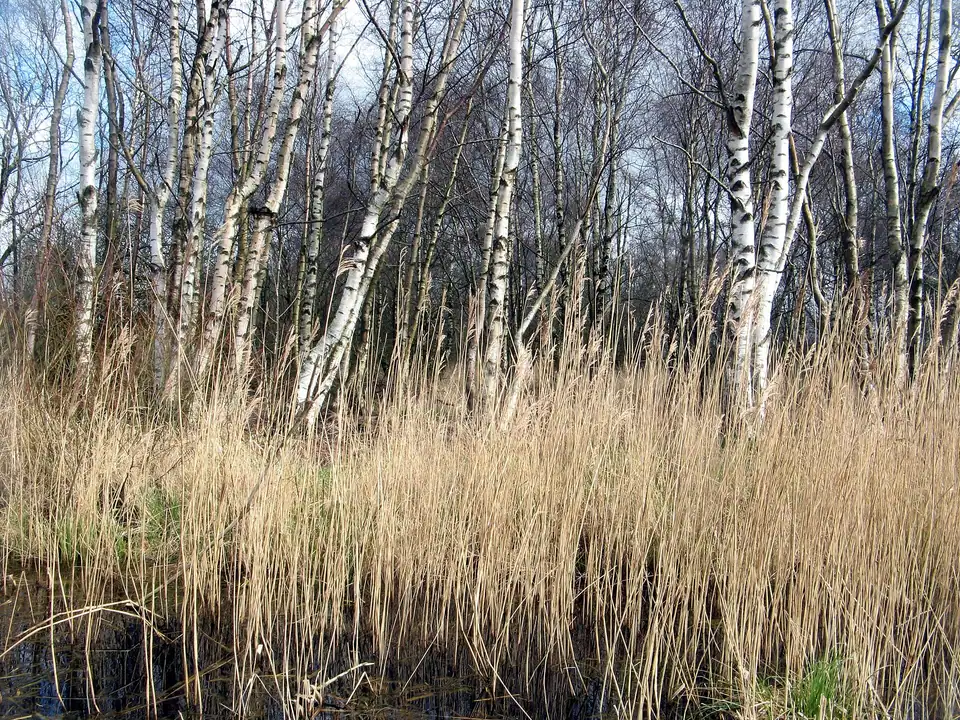
Downy birch is a fast-growing deciduous tree native to northern Europe and Asia that is cold hardy and light-demanding. [1] It occurs on moister soils than silver birch and can grow on peaty soils. [3][5] Birches are considered weeds by most foresters and often invasive by ecologists on lowland heaths. [5]
This record is incomplete: the sources we read do not cover every field yet.
Not yet covered by our sources: Hardiness, coldest zone, Hardiness, warmest zone
Downy birch care
How to water Downy birch
Cannot tolerate drought; seedlings must never dry out
What the sources say (2)
Downy birch can grow on poor soils but is light-demanding and cannot tolerate drought. It thrives in a range of habitats fromNever let your seeds or young seedlings dry out! Because these seedsHow much light Downy birch needs
Light demander
What the sources say (2)
A light demanding pioneer species with moderate early height growth which is frost resistant and windfirm.Downy birch can grow on poor soils but is light-demanding and cannot tolerate drought. It thrivesHow much cold Downy birch can take
Hardiness, coldest zone
Not stated in the sources we read.
Hardiness, warmest zone
Not stated in the sources we read.
How to propagate Downy birch
Seed (cold-moist pretreatment for four weeks before sowing)
What the sources say (2)
Four weeks prior to sowing, place your seeds in a cotton bag and soak them in clean, cold water forMix the seeds with a little moist horticultural sand and place in loosely-tied plastic bags in the bottom of a fridge (notHow to grow Downy birch
The plant
Mature height
2000 cm (20 m, tallest trees)
What the sources say (1)
Yield classes of 4-6 are usual, and the tallest trees are around 20 mPests and diseases
Diseases
birch rust (Melampsoridium betulinum), Armillaria root rot (honey fungus), dieback
What the sources say (3)
Rust pathogen Melampsoridium betulinum is considered important on birch in several European countries, associated with retarded height growth and increased mortality.Betula is also rated as very susceptible to Armillaria root rot (honey fungus).Widespread and gradual dieback of birch occurs in some areas, especially in young trees 5-10 years after planting.Remedies
Each remedy shows what official sources say about it; traditional remedies without an official source are marked as such. Harmful ones are listed so you know to avoid them.
Treating the plant
aphids
strong water spray Official source, not independently tested
How: Wash aphids from foliage with a strong stream of water.
Wash aphids from foliage with a strong stream of water.
— hortsense.cahnrs.wsu.edu [8] hand-wiping or pruning Official source, not independently tested
How: Hand-wipe or prune to control small, isolated infestations when practical.
Hand-wipe or prune to control small, isolated infestations when practical.
— hortsense.cahnrs.wsu.edu [8]
canker
removing cankered branches Official source, not independently tested
How: Remove and destroy dead or severely cankered branches or trees.
Remove and destroy dead or severely cankered branches or trees.
— pnwhandbooks.org [9]
Getting rid of it
downy birch encroachment
winter cutting at breast height Not verified
Traditional remedy, not verified by an official source.
How: Winter cutting at breast height; a single cut is not enough, so the treatment should be repeated in subsequent years.
Calendar
April
What the sources say (1)
Aim to sow during April on seedbeds or in a pot (5-10 seeds per pot and remove allMonths as given by the sources, which are mostly from the United States (northern hemisphere). In the southern hemisphere they shift by about six months.
Edibility
Reported by the source, quoted verbatim. Do not eat a plant on the basis of this page alone: identification mistakes can be dangerous.
Indicative values
Values from a secondary source, not checked word for word like the rest of this page. Use them as a starting point.
- Hours of sun
- 4-6 hoursIndicative value, adapt it to your climate · Secondary source
- Watering
- FrequentIndicative value, adapt it to your climate · Secondary source
- Soil pH
- 5-6.5Indicative value, adapt it to your climate · Secondary source
- Care level
- MediumIndicative value, adapt it to your climate · Secondary source
- Growth rate
- LowIndicative value, adapt it to your climate · Secondary source
- Pruning
- February, March, AprilIndicative value, adapt it to your climate · Secondary source
Similar plants
- Asian White Birch Betula platyphylla
- Black birch Betula occidentalis
- European White Birch Betula pendula
- Jacquemontii Birch Tree Betula jacquemontii
- Japanese Cherry Birch Betula grossa
- Monarch Birch Betula maximowicziana
- Paper Birch Betula papyrifera
- River Birch Betula nigra
Sources
Every value above is quoted from these documents. Links lead to the original publisher.
- Betula pubescens - EUFORGEN European forest genetic resources programme · euforgen.org, consulted
- Downy birch - how to grow Downy Birch from seed | a guide from TCV · treegrowing.tcv.org.uk, consulted
- Downy Birch (Betula pubescens) - Woodland Trust · woodlandtrust.org.uk, consulted
- Bean's Trees and Shrubs · beanstreesandshrubs.org, consulted
- Downy birch (DBI) - Forest Research · forestresearch.gov.uk, consulted
- Birch | Betula species · pfaf.org, consulted
- Bouleau pubescent · spot.creamontblanc.org, consulted
- hortsense.cahnrs.wsu.edu · hortsense.cahnrs.wsu.edu
- pnwhandbooks.org · pnwhandbooks.org
Written by Emilio Marruso · last checked