
How to Grow and Care for Kikuyugrass
Cenchrus clandestinus
Written by Emilio Marruso · last checked
At a glance
Kikuyu grass is a tough perennial that takes almost anything the weather throws at it, from wet ground to serious drought. Left unmowed it reaches 30 inches, and in pastures cattle and other grazing animals find it delicious. Just keep it in its place: its thick mats can creep into lawns and flower beds.
- Water
Handles anything from wet soil to serious drought
What the sources say (1)
Watering notes: Tolerates wet to serious drought conditions
Tolerates wet to serious drought conditions, hot to moderate cool, salt, wind, damage and grazing, and most soils.
— Kikuyu • Weedbusters [3] - Harvest
Not for people: in pastures, cattle and other grazing animals love it
- Watch out
Spreads in thick mats that choke lawns and beds; dig out young patches early and clean your tools
- Size
30 in tall when left unmowed
What the sources say (1)
Mature height: 76.2 cm (about 30 in, unmowed)
If left unmowed, kikuyugrass can attain a height of about 30 inches
— Kikuyugrass / Home and Landscape / UC Statewide IPM Program (UC IPM) [1]
Overview
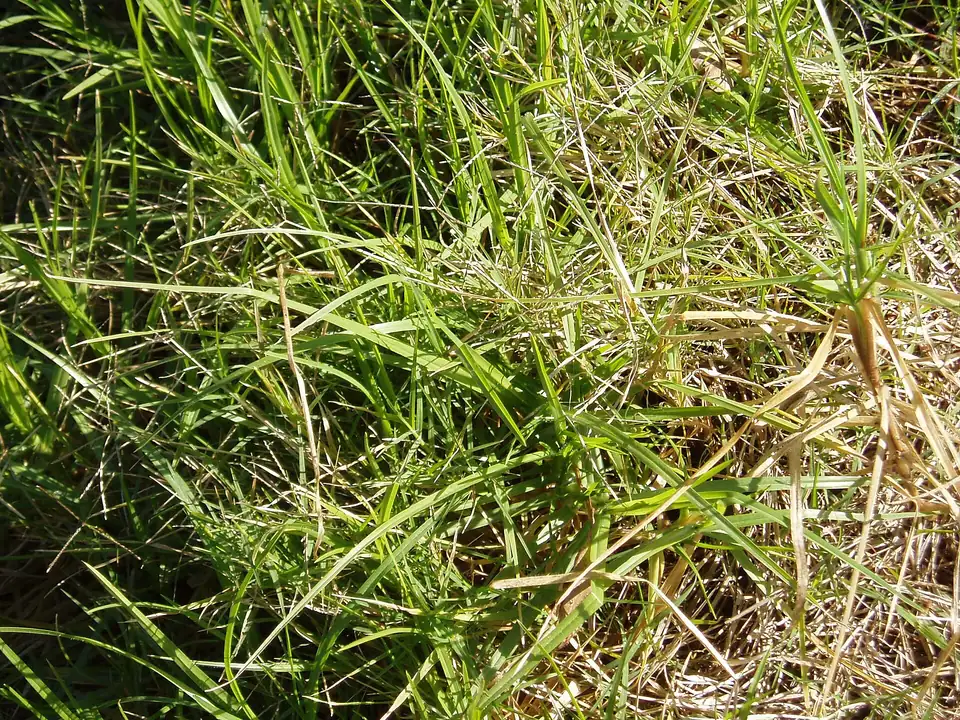
Kikuyugrass is an extremely aggressive perennial weed of turfgrass and ornamental plantings in California. [1] It spreads by stolons and rhizomes that root at the nodes, forming dense mats. [1][3] It is a valued forage grass, highly palatable to cattle and other grazing animals in managed pastures. [2]
This record is incomplete: the sources we read do not cover every field yet.
Not yet covered by our sources: Light, Hardiness, coldest zone, Hardiness, warmest zone, Propagation
Kikuyugrass care
How to water Kikuyugrass
Tolerates wet to serious drought conditions
What the sources say (1)
Tolerates wet to serious drought conditions, hot to moderate cool, salt, wind, damage and grazing, and most soils.How much light Kikuyugrass needs
Not stated in the sources we read.
How much cold Kikuyugrass can take
Hardiness, coldest zone
Not stated in the sources we read.
Hardiness, warmest zone
Not stated in the sources we read.
How to propagate Kikuyugrass
Not stated in the sources we read.
How to grow Kikuyugrass
The plant
Life cycle
perennial
What the sources say (1)
Kikuyugrass is a perennial grass that grows best under cool to warm temperaturesMature height
76.2 cm (about 30 in, unmowed)
What the sources say (1)
If left unmowed, kikuyugrass can attain a height of about 30 inchesKikuyugrass pests and problems
Invasion of lawns and ornamental plantings
Symptom: Thick mats crowd out desirable species, create uneven footing and can choke groundcovers and flower beds
What to do: Maintain vigorous turf and plantings; early grubbing of solitary patches; spot herbicide; overseed open spots; clean equipment to avoid spreading stem sections
What the sources say (2)
In lawns and turfgrass, kikuyugrass forms thick mats that crowd out desirable species.
— Kikuyugrass / Home and Landscape / UC Statewide IPM Program (UC IPM) [1] Maintain healthy plantings to make sure that they outcompete kikuyugrass.
— Kikuyugrass / Home and Landscape / UC Statewide IPM Program (UC IPM) [1]
Remedies
Each remedy shows what official sources say about it; traditional remedies without an official source are marked as such. Harmful ones are listed so you know to avoid them.
Getting rid of it
kikuyugrass in area to be replanted
solarization with clear plastic Partly works
How: Cover the area with clear plastic mulch in full sun during the hottest part of the year for 4 to 6 weeks, before replanting.
the area must be kept covered with clear plastic mulch for 4 to 6 weeks.
— ipm.ucanr.edu [5] What the evidence says Solarization may control infestations in areas that are to be replanted.
— ipm.ucanr.edu [5]
kikuyugrass in garden
smothering with black plastic Partly works
How: Cover the kikuyugrass with sturdy black plastic sheeting at the beginning of summer; by winter the plant should be easier to pull out of the soil.
Cover the kikugrass with sturdy black plastic sheeting in the beginning of summer. By winter, the plant should be easier to pull out of the soil.
— gardeningknowhow.com [6] What the evidence says Mulching with a strong landscape fabric can be effective if it is overlapped and no light is allowed to penetrate to the soil. Use a polypropylene or polyester fabric or black polyethylene (i.e., plastic tarp) to block all plant growth.
— ipm.ucanr.edu [5]
kikuyugrass in small isolated spots
weed mat Not verified
Traditional remedy, not verified by an official source.
How: Use weed mat only on small, isolated spots and leave it for 2 to 3 months; suitable only around plantings.
solitary kikuyugrass infestations
early grubbing by hand Partly works
How: Remove the entire plant, roots and all, early, in combination with vigorously growing turfgrass, and keep doing it diligently.
A vigorously growing turfgrass coupled with early grubbing (removal of the entire plant, roots and all) of solitary infestations has been successful when practiced diligently.
— ipm.ucanr.edu [5] What the evidence says A vigorously growing turfgrass coupled with early grubbing (removal of the entire plant, roots and all) of solitary infestations has been successful when practiced diligently.
— ipm.ucanr.edu [5]
kikuyugrass in ornamental beds
hoeing or cultivating Harmful
How: Hoeing breaks the rhizomes and transplants them to new areas, so the source warns against it.
Cultivation or hand hoeing, although possible under some circumstances, generally is detrimental because it breaks rhizomes and transplants them to new areas.
— ipm.ucanr.edu [5] What the evidence says Cultivation or hand hoeing, although possible under some circumstances, generally is detrimental because it breaks rhizomes and transplants them to new areas.
— ipm.ucanr.edu [5] organic mulch Not proven
How: Organic mulches may not control kikuyugrass because plants sprouting from rhizomes can grow through the mulch.
Organic mulches may not offer effective control of kikuyugrass, because plants sprouting from rhizomes can grow through the mulch.
— ipm.ucanr.edu [5] What the evidence says Organic mulches may not offer effective control of kikuyugrass, because plants sprouting from rhizomes can grow through the mulch.
— ipm.ucanr.edu [5]
Edibility
Reported by the source, quoted verbatim. Do not eat a plant on the basis of this page alone: identification mistakes can be dangerous.
In managed pastures, the grass is highly palatable to cattle and other grazing animals.
[2]
Similar plants
- Chinese Fountain Grass Cenchrus alopecuroides
- Fountain Grass Cenchrus setaceus
- Oriental Fountain Grass Cenchrus orientalis
- Sandbur Cenchrus longispinus
- Pearl millet Cenchrus americanus
- Abraham Trachystemon orientalis
- Acacia longifolia Acacia longifolia
- African Blue Lily Agapanthus praecox
Sources
Every value above is quoted from these documents. Links lead to the original publisher.
- Kikuyugrass / Home and Landscape / UC Statewide IPM Program (UC IPM) · ipm.ucanr.edu, consulted
- Kikuyu grass, Kikuyugrass (Cenchrus clandestinus) – Hawaii Invasive Species Council · dlnr.hawaii.gov, consulted
- Kikuyu • Weedbusters · weedbusters.org.nz, consulted
- Flora of New Zealand | Taxon Profile | Cenchrus clandestinus · nzflora.info, consulted
- ipm.ucanr.edu · ipm.ucanr.edu
- gardeningknowhow.com · gardeningknowhow.com
Written by Emilio Marruso · last checked