
How to Grow and Care for Elaeagnus ebbingei
Elaeagnus ebbingei
Written by Emilio Marruso · last checked
Not toxic to cats and dogs, according to the sources · Sources
At a glance
This tough evergreen-looking shrub is a favorite for garden hedges, and it gives you a bonus: edible fruit and seeds in spring. It grows happily in full sun or partial shade, shrugs off dry spells, and reaches 8–12 ft tall. Best of all, it is safe for cats, dogs and horses, so the whole family can enjoy it.
- Sun
Full sun to partial shade
What the sources say (1)
Light: Full sun to partial shade
Prefers full sun to partial shade, and light, sandy, loamy soil, but will grow in a range of soil types as long as they are well-drained.
— Elaeagnus x submacrophylla (Ebbinge's Silverberry, Elaeagnus, Oleaster) | North Carolina Extension Gardener Plant Toolbox [1] - Water
Drought tolerant: it handles dry spells well
What the sources say (1)
Watering: Drought tolerant
It is drought-, deer-, salt spray-, and wind-tolerant.
— Elaeagnus x submacrophylla (Ebbinge's Silverberry, Elaeagnus, Oleaster) | North Carolina Extension Gardener Plant Toolbox [1] - Harvest
Edible fruit and seeds in spring
- Pests
Watch for elaeagnus sucker insects, coral spot, leaf spot and honey fungus
What the sources say (2)
Pests: Elaeagnus sucker
No serious insect or disease problems. This shrub may be susceptible to a sap-sucking insect known as the Elaeagnus sucker. This insect can cause the leaves to become distorted.
— Elaeagnus x submacrophylla (Ebbinge's Silverberry, Elaeagnus, Oleaster) | North Carolina Extension Gardener Plant Toolbox [1] Diseases: coral spot, leaf spot, honey fungus
Monitor for fungal diseases such as coral spot, leaf spot, and honey fungus.
— Elaeagnus x submacrophylla (Ebbinge's Silverberry, Elaeagnus, Oleaster) | North Carolina Extension Gardener Plant Toolbox [1] - Size
8 to 12 ft tall
What the sources say (1)
Mature height: 243.84-365.76 cm (8-12 ft)
This shrub grows 8 to 12 feet tall, and usually a little wider than tall.
— Elaeagnus x submacrophylla (Ebbinge's Silverberry, Elaeagnus, Oleaster) | North Carolina Extension Gardener Plant Toolbox [1] - Propagation
Grow new plants from stem cuttings or from seed
What the sources say (2)
Propagation: Stem cuttings; seed
Best propagated by stem cuttings. Due to its mature size
— Elaeagnus x submacrophylla (Ebbinge's Silverberry, Elaeagnus, Oleaster) | North Carolina Extension Gardener Plant Toolbox [1] the seed is best sown as soon as it is ripe in a cold frame
— Elaeagnus (Elaeagnus x ebbingei) — Practical Plants [2] - Sowing
Sow seeds as soon as they are ripe, in a cold frame
What the sources say (1)
Sowing: As soon as ripe (cold frame)
the seed is best sown as soon as it is ripe in a cold frame
— Elaeagnus (Elaeagnus x ebbingei) — Practical Plants [2] - Safety
Not toxic to cats, dogs or horses
Overview
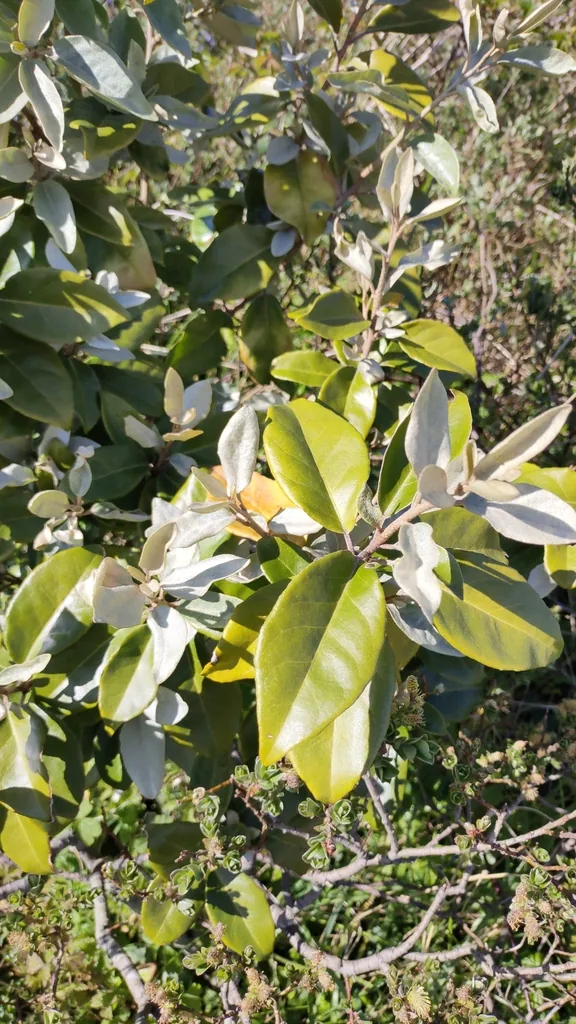
Ebbinge's silverberry is a large, rounded, evergreen hybrid shrub used as a screen, hedge or barrier. [1] It prefers full sun to partial shade and well-drained soil, and tolerates drought, deer, salt spray and wind. [1] It is best propagated by stem cuttings. [1]
This record is incomplete: the sources we read do not cover every field yet.
Not yet covered by our sources: Pruning
Elaeagnus ebbingei care
How to water Elaeagnus ebbingei
Drought tolerant
What the sources say (1)
It is drought-, deer-, salt spray-, and wind-tolerant.How much light Elaeagnus ebbingei needs
Full sun to partial shade
What the sources say (1)
Prefers full sun to partial shade, and light, sandy, loamy soil, but will grow in a range of soil types as long as they are well-drained.How much cold Elaeagnus ebbingei can take
Hardiness, coldest zone
The sources give different values depending on region, zone or growing conditions.
What each source says
According to NC State Extension: 7a [winter low −17.8 to −15 °C (0 to 5 °F)]
According to Practical Plants: 6 [winter low −23.3 to −17.8 °C (−10 to 0 °F)]
What the sources say (2)
According to NC State Extension: USDA Plant Hardiness Zone:
7a, 7b, 8a, 8b, 9a, 9b
-
Fruit:According to Practical Plants: Hardiness
Zone 6+
Soil textures
sandy, loamy, clayHardiness, warmest zone
9b [winter low −3.9 to −1.1 °C (25 to 30 °F)]
What the sources say (1)
USDA Plant Hardiness Zone:
7a, 7b, 8a, 8b, 9a, 9b
-
Fruit:How to propagate Elaeagnus ebbingei
Stem cuttings; seed
What the sources say (2)
Best propagated by stem cuttings.
Due to its mature sizethe seed is best sown as soon as it is ripe in a cold frameHow to grow Elaeagnus ebbingei
The plant
Family
Elaeagnaceae
What the sources say (1)
This shrub is a member of the oleaster family (Elaeagnaceae).Mature height
243.84-365.76 cm (8-12 ft)
What the sources say (1)
This shrub grows 8 to 12 feet tall, and usually a little wider than tall.Pests and diseases
Pests
Elaeagnus sucker
What the sources say (1)
No serious insect or disease problems. This shrub may be susceptible to a sap-sucking insect known as the Elaeagnus sucker. This insect can cause the leaves to become distorted.Diseases
coral spot, leaf spot, honey fungus
What the sources say (1)
Monitor for fungal diseases such as coral spot, leaf spot, and honey fungus.Remedies
Each remedy shows what official sources say about it; traditional remedies without an official source are marked as such. Harmful ones are listed so you know to avoid them.
Treating the plant
leaf spot
pruning out infected foliage Official source, not independently tested
How: Prune out heavily infected foliage if it becomes unsightly.
These fungi are rarely severe enough to warrant control measures. Prune out heavily infected foliage if it becomes unsightly.
— plantdiseasehandbook.tamu.edu [5]
Is Elaeagnus ebbingei poisonous?
Reported by the source, quoted verbatim. This is not medical or veterinary advice: if a person or an animal may have eaten this plant, contact a poison control centre or a veterinarian.
#non-toxic for cats #non-toxic for horses #non-toxic for dogs
[1]The source flags the risk for this animal but does not explain why.
Calendar
Sowing
As soon as ripe (cold frame)
What the sources say (1)
the seed is best sown as soon as it is ripe in a cold frameHarvest
The sources give different values depending on region, zone or growing conditions.
What each source says
According to NC State Extension: Winter
According to Practical Plants: Early to mid April until May
What the sources say (2)
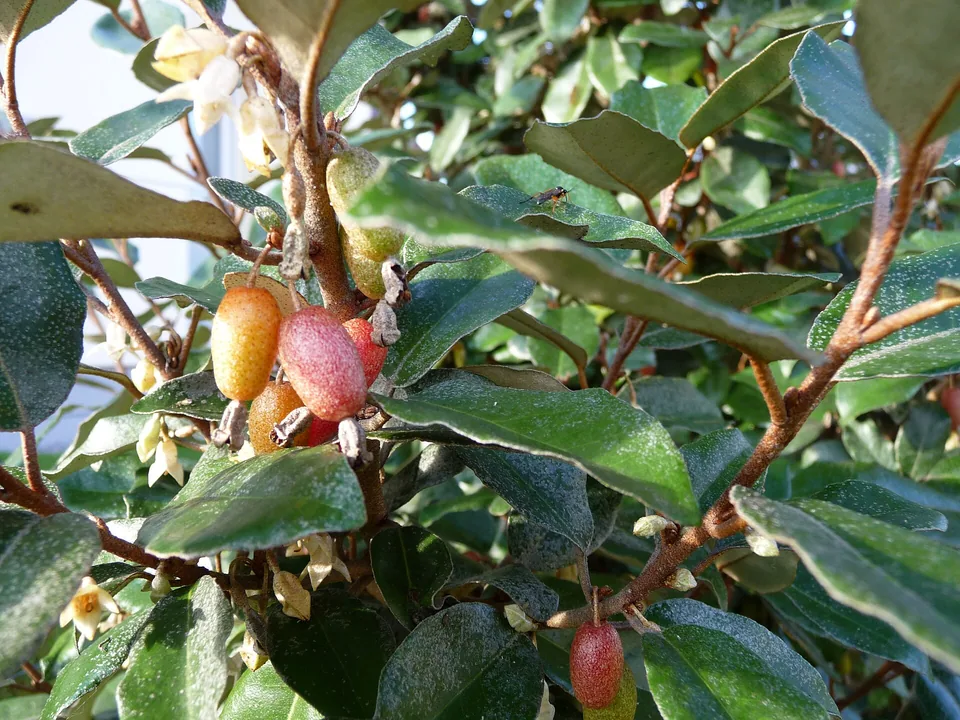
According to NC State Extension: The fruit is an oval, red drupe with silver specks. It measures 5/8-inches long. The fruits appear during the winter.According to Practical Plants: The fruit ripens intermittently over a period of about 6 weeks from early to mid April until MayPruning
Not stated in the sources we read.
Months as given by the sources, which are mostly from the United States (northern hemisphere). In the southern hemisphere they shift by about six months.
Edibility
Reported by the source, quoted verbatim. Do not eat a plant on the basis of this page alone: identification mistakes can be dangerous.
Widely grown as an ornamental in gardens, especially as a hedge, the plant also provides an edible fruit and seed in the spring.
[3]
Indicative values
Values from a secondary source, not checked word for word like the rest of this page. Use them as a starting point.
- Life cycle
- PerennialIndicative value, adapt it to your climate · Secondary source
- Hours of sun
- 8-10 hoursIndicative value, adapt it to your climate · Secondary source
- Drought tolerant
- yesIndicative value, adapt it to your climate · Secondary source
- Soil pH
- 6-7.5Indicative value, adapt it to your climate · Secondary source
- Care level
- MediumIndicative value, adapt it to your climate · Secondary source
- Growth rate
- LowIndicative value, adapt it to your climate · Secondary source
- Pruning
- February, March, AprilIndicative value, adapt it to your climate · Secondary source
Similar plants
- Autumn Olive Elaeagnus umbellata
- Russian Olive Elaeagnus angustifolia
- Thorny Olive Elaeagnus pungens
- Silverberry Elaeagnus commutata
- Cherry silverberry Elaeagnus multiflora
- Elaeagnus macrophylla Elaeagnus macrophylla
- Seaberry Hippophae rhamnoides
- Silver Buffaloberry Shepherdia argentea
Sources
Every value above is quoted from these documents. Links lead to the original publisher.
- Elaeagnus x submacrophylla (Ebbinge's Silverberry, Elaeagnus, Oleaster) | North Carolina Extension Gardener Plant Toolbox · plants.ces.ncsu.edu, consulted
- Elaeagnus (Elaeagnus x ebbingei) — Practical Plants · practicalplants.org, consulted
- Elaeagnus × ebbingei - Useful Temperate Plants · temperate.theferns.info, consulted
- How to Grow Elaeagnus · harvesttotable.com, consulted
- plantdiseasehandbook.tamu.edu · plantdiseasehandbook.tamu.edu
Written by Emilio Marruso · last checked