
How to Grow and Care for Cherry silverberry
Elaeagnus multiflora
Written by Emilio Marruso · last checked
At a glance
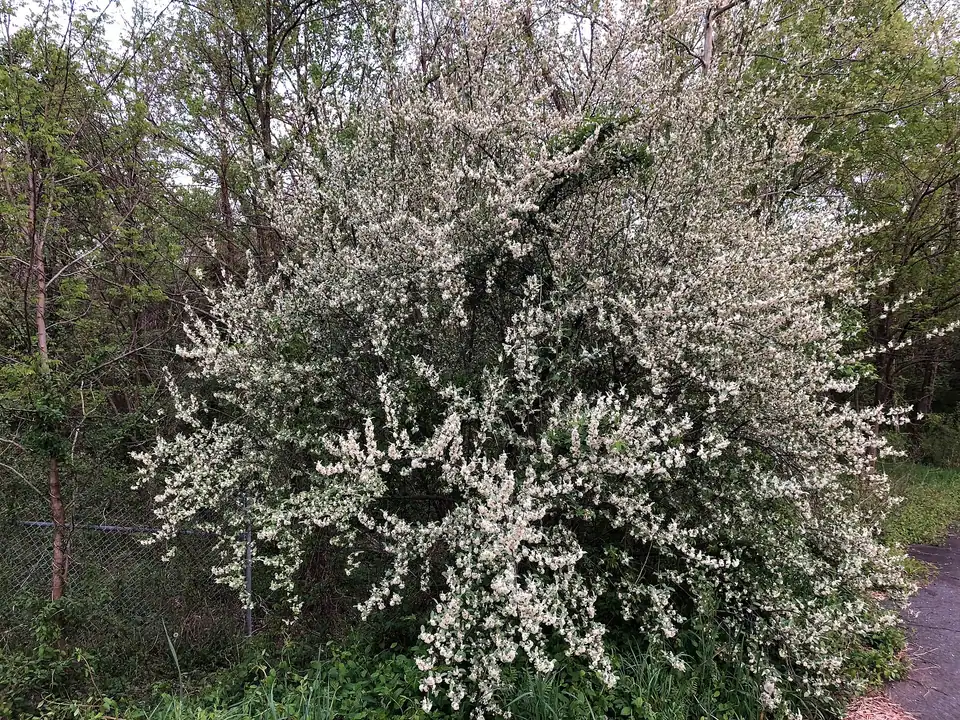
Goumi is an easygoing plant that thrives in full sun or partial shade and shrugs off dry spells. Its little bright red berries are very tasty eaten raw or cooked into jellies and pies, and even the seeds are edible. You can start new plants from seed or cuttings, so a single plant can easily become many.
- Sun
Full sun to partial shade
What the sources say (2)
Light: Full sun to partial shade
They will grow in nutritionally poor soil and polluted air and will do well in full sun or partial shade.
— Goumi Berry Information: Learn About Growing Goumi Berries | Gardening Know How [4] They prefer well-drained soils and locations with at least 6 hours of sun a day
— Appreciating Goumi Berry — Home Orchard Education Center [1] - Water
Handles dry spells very well; needs little watering
What the sources say (1)
Watering: Highly drought resistant
The species has similar fertilizer requirements to currants and gooseberries. Elaeagnus multiflora is highly resistant to drought.
— The Bioactive Profile, Nutritional Value, Health Benefits and Agronomic Requirements of Cherry Silverberry (Elaeagnus multiflora Thunb.): A Review - PMC [5] - Cold
Survives winters down to −30 °F (−34.4 °C)
Very hardy · USDA 4 · RHS H7 · Z4
What the sources say (4)
Hardiness, coldest zone: 4 [winter low −34.4 to −28.9 °C (−30 to −20 °F)]
They can be grown from USDA Hardiness Zones 4-9 and survive cold temperatures as low as -20F.
— Appreciating Goumi Berry — Home Orchard Education Center [1] goumi shrubs can be grown in USDA Hardiness Zones 4-9
— Spotlight on Goumi Berry: Nitrogen Fixer Extraordinaire – Philadelphia Orchard Project [3] Hardiness, warmest zone: 9 [winter low −6.7 to −1.1 °C (20 to 30 °F)]
They can be grown from USDA Hardiness Zones 4-9 and survive cold temperatures as low as -20F.
— Appreciating Goumi Berry — Home Orchard Education Center [1] goumi shrubs can be grown in USDA Hardiness Zones 4-9
— Spotlight on Goumi Berry: Nitrogen Fixer Extraordinaire – Philadelphia Orchard Project [3] - Spacing
Give each plant 13 by 7 ft of space
What the sources say (2)
Spacing: 400 x 200 cm (4 x 2 m [6.6 ft])
commercial plantations: In commercial plantations, cherry silverberry shrubs should be planted at 4 × 2 m spacing, 5–8 cm deeper than in the seed bed
— The Bioactive Profile, Nutritional Value, Health Benefits and Agronomic Requirements of Cherry Silverberry (Elaeagnus multiflora Thunb.): A Review - PMC [5] In commercial plantations, cherry silverberry shrubs should be planted at 4 × 2 m spacing, 5–8 cm deeper than in the seed bed
— The Bioactive Profile, Nutritional Value, Health Benefits and Agronomic Requirements of Cherry Silverberry (Elaeagnus multiflora Thunb.): A Review - PMC [5] - Harvest
Tasty red berries, raw or in jellies and pies; the seeds are edible too
- Propagation
From seed (needs a warm, then a cold period) or from cuttings
What the sources say (2)
Propagation: Seed (needs warm then cold stratification); cuttings
Goumi Berries can be propagated from seed or from cuttings.
— Appreciating Goumi Berry — Home Orchard Education Center [1] Cuttings of half-ripe wood, 7 - 10cm with a heel, mid summer in a frame.
— Elaeagnus multiflora - Useful Temperate Plants [6] - Sowing
Sow as soon as the seed is ripe, in a cold frame
What the sources say (1)
Sowing: As soon as the seed is ripe (cold frame)
Seed - best sown as soon as it is ripe in a cold frame
— Elaeagnus multiflora - Useful Temperate Plants [6]
Overview
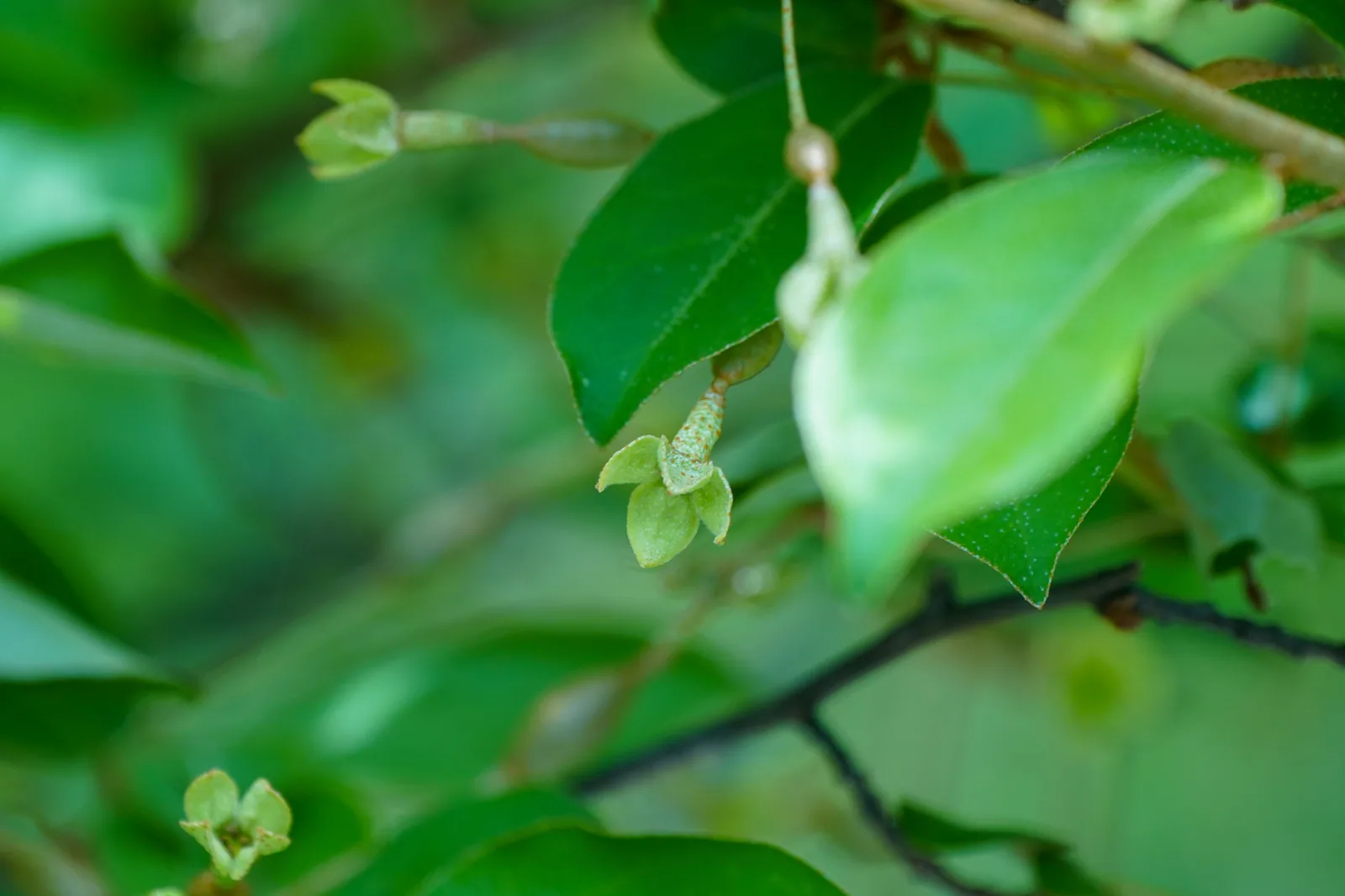
Goumi is a deciduous shrub native to China, Japan, Korea and the Russian Far East, grown for its sweet-tart red fruit and as an ornamental. [1] It tolerates a wide range of soils and fixes nitrogen through symbiotic root bacteria. [4][1] It is propagated from seed or cuttings and is highly drought resistant. [1][5]
This record is incomplete: the sources we read do not cover every field yet.
Not yet covered by our sources: Planting
Cherry silverberry care
Measurements in square brackets are our conversion into the other unit system; the quoted text is unchanged.
How to water Cherry silverberry
Highly drought resistant
What the sources say (1)
The species has similar fertilizer requirements to currants and gooseberries. Elaeagnus multiflora is highly resistant to drought.How much light Cherry silverberry needs
Full sun to partial shade
What the sources say (2)
They will grow in nutritionally poor soil and polluted air and will do well in full sun or partial shade.They prefer well-drained soils and locations with at least 6 hours of sun a dayHow much cold Cherry silverberry can take
Hardiness, coldest zone
4 [winter low −34.4 to −28.9 °C (−30 to −20 °F)]
What the sources say (2)
They can be grown from USDA Hardiness Zones 4-9 and survive cold temperatures as low as -20F.goumi shrubs can be grown in USDA Hardiness Zones 4-9Hardiness, warmest zone
9 [winter low −6.7 to −1.1 °C (20 to 30 °F)]
What the sources say (2)
They can be grown from USDA Hardiness Zones 4-9 and survive cold temperatures as low as -20F.goumi shrubs can be grown in USDA Hardiness Zones 4-9Where to grow Cherry silverberry
400 x 200 cm (4 x 2 m [6.6 ft])
What each source says
commercial plantations: 400 x 200 cm (4 x 2 m [6.6 ft])
What the sources say (2)
commercial plantations: In commercial plantations, cherry silverberry shrubs should be planted at 4 × 2 m spacing, 5–8 cm deeper than in the seed bedIn commercial plantations, cherry silverberry shrubs should be planted at 4 × 2 m spacing, 5–8 cm deeper than in the seed bedHow to propagate Cherry silverberry
Seed (needs warm then cold stratification); cuttings
Remedies
The sources we checked give no remedies for this plant.
Calendar
Sowing
As soon as the seed is ripe (cold frame)
What the sources say (1)
Seed - best sown as soon as it is ripe in a cold framePlanting
Not stated in the sources we read.
Harvest
The sources give different values depending on region, zone or growing conditions.
What each source says
Philadelphia: Late May to early June
According to Home Orchard Education Center: Early to mid-summer
According to Gardening Know How: High summer
What the sources say (3)
Philadelphia: Here in Philadelphia, the ripening period is usually late May to early June, making it one of the first fruits to ripen in most years.According to Home Orchard Education Center: By early to mid- summer, these give way to ½-inch-long, intensely red drupes speckled all over with silvery scales.According to Gardening Know How: The shrub flowers in the spring and the fruits ripen in high summer.Months as given by the sources, which are mostly from the United States (northern hemisphere). In the southern hemisphere they shift by about six months.
Edibility
Reported by the source, quoted verbatim. Do not eat a plant on the basis of this page alone: identification mistakes can be dangerous.
Indicative values
Values from a secondary source, not checked word for word like the rest of this page. Use them as a starting point.
- Life cycle
- PerennialIndicative value, adapt it to your climate · Secondary source
- Mature height
- 182.9-304.8 cm (6-10 ft)Indicative value, adapt it to your climate · Secondary source
- Hours of sun
- 4-6 hoursIndicative value, adapt it to your climate · Secondary source
- Drought tolerant
- yesIndicative value, adapt it to your climate · Secondary source
- Soil pH
- 5.5-7.5Indicative value, adapt it to your climate · Secondary source
- Care level
- MediumIndicative value, adapt it to your climate · Secondary source
- Growth rate
- LowIndicative value, adapt it to your climate · Secondary source
- Pruning
- February, March, AprilIndicative value, adapt it to your climate · Secondary source
Similar plants
- Autumn Olive Elaeagnus umbellata
- Elaeagnus ebbingei Elaeagnus ebbingei
- Russian Olive Elaeagnus angustifolia
- Thorny Olive Elaeagnus pungens
- Elaeagnus macrophylla Elaeagnus macrophylla
- Silverberry Elaeagnus commutata
- Abies grandis Abies grandis
- Abraham Trachystemon orientalis
Sources
Every value above is quoted from these documents. Links lead to the original publisher.
- Appreciating Goumi Berry — Home Orchard Education Center · homeorchardeducationcenter.org, consulted
- How to Grow Elaeagnus · harvesttotable.com, consulted
- Spotlight on Goumi Berry: Nitrogen Fixer Extraordinaire – Philadelphia Orchard Project · phillyorchards.org, consulted
- Goumi Berry Information: Learn About Growing Goumi Berries | Gardening Know How · gardeningknowhow.com, consulted
- The Bioactive Profile, Nutritional Value, Health Benefits and Agronomic Requirements of Cherry Silverberry (Elaeagnus multiflora Thunb.): A Review - PMC · ncbi.nlm.nih.gov, consulted
- Elaeagnus multiflora - Useful Temperate Plants · temperate.theferns.info, consulted
Written by Emilio Marruso · last checked