
How to Grow and Care for Elaeagnus macrophylla
Elaeagnus macrophylla
Written by Emilio Marruso · last checked
At a glance
This elaeagnus is an easygoing plant: it grows in sun or shade and tolerates drought in dry, well-drained soil. Its real gift comes in April and May, when the fruit ripens with a rich flavor, ready to eat raw or cooked. Even the seeds are edible, with a mild flavor and a hint of peanut.
- Sun
Sun or shade
What the sources say (2)
Light: Sun or shade
Succeeds in most soils that are well-drained [2] [5] . Prefers a soil that is only moderately fertile, succeeding in poor soils and in dry soils [2] [5] . Succeeds in sun or shade
— Elaeagnus macrophylla — Practical Plants [2] Light full sun Shade tolerance permanent shade Water moderate
— Elaeagnus macrophylla — Practical Plants [2] - Water
Moderate watering; it tolerates drought
What the sources say (2)
Watering: Moderate; drought tolerant
Water moderate Hardiness Zone 7+ Soil textures sandy, loamy, clay
— Elaeagnus macrophylla — Practical Plants [2] Drainage well drained Tolerances high wind, maritime exposure, drought Wind Yes Maritime Yes Tolerates Nutritionally Poor Soil No Drought tolerant
— Elaeagnus macrophylla — Practical Plants [2] - Cold
Survives winters down to 0 °F (−17.8 °C)
Hardy in very cold winters · USDA 7 · RHS H6 · Z7
What the sources say (1)
Hardiness, coldest zone: 7 [winter low −17.8 to −12.2 °C (0 to 10 °F)]
Water moderate Hardiness Zone 7+ Soil textures sandy, loamy, clay
— Elaeagnus macrophylla — Practical Plants [2] - Soil
Well-drained soil; it does fine in dry soil
What the sources say (2)
Watering notes: Needs well-drained soil; succeeds in dry soils
Succeeds in most soils that are well-drained [2] [5] . Prefers a soil that is only moderately fertile, succeeding in poor soils and in dry soils [2] [5] . Succeeds in sun or shade
— Elaeagnus macrophylla — Practical Plants [2] Prefers a soil that is only moderately fertile, succeeding in poor soils and in dry soils
— Elaeagnus macrophylla — Practical Plants [2] - Harvest
Fruit ripens in April–May; eat it fully ripe, raw or cooked, as it tastes sharp before then
What the sources say (1)
Harvest: April-May
A potentially very valuable crop, ripening as it does in April and May
— Elaeagnus macrophylla — Practical Plants [2] - Pests
Voles sometimes damage it
- Watch out
In very wet seasons, wind can rock and loosen the plant
- Propagation
From seed, cuttings or layering
What the sources say (4)
Propagation: Seed, half-ripe cuttings, mature-wood cuttings, layering
Seed - best sown as soon as it is ripe in a cold frame [10] . It should germinate freely within 4 weeks
— Elaeagnus macrophylla — Practical Plants [2] Cuttings of half-ripe wood, 7 - 10cm with a heel, July/August in a frame. Good percentage
— Elaeagnus macrophylla — Practical Plants [2] Cuttings of mature wood of the current year's growth, 10 - 12cm with a heel, November in a frame. Leave for 12 months.
— Elaeagnus macrophylla — Practical Plants [2] Leave for 12 months. Fair to good percentage [10] . Layering in September/October. Takes 12 months
— Elaeagnus macrophylla — Practical Plants [2] - Sowing
Sow as soon as the seed is ripe, in a cold frame
What the sources say (1)
Sowing: As soon as ripe (cold frame)
Seed - best sown as soon as it is ripe in a cold frame [10] . It should germinate freely within 4 weeks
— Elaeagnus macrophylla — Practical Plants [2]
Overview
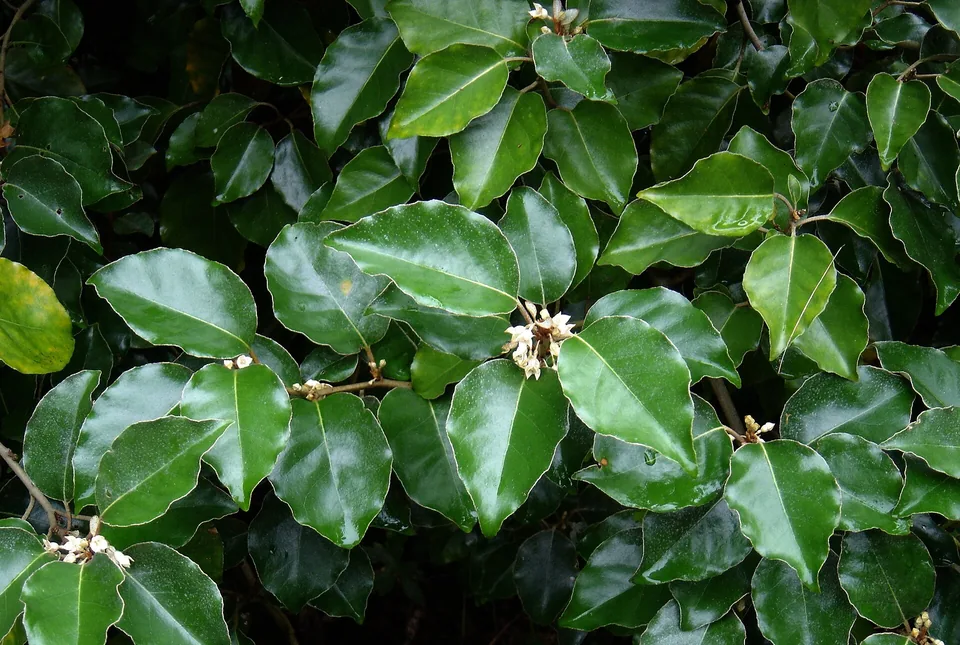
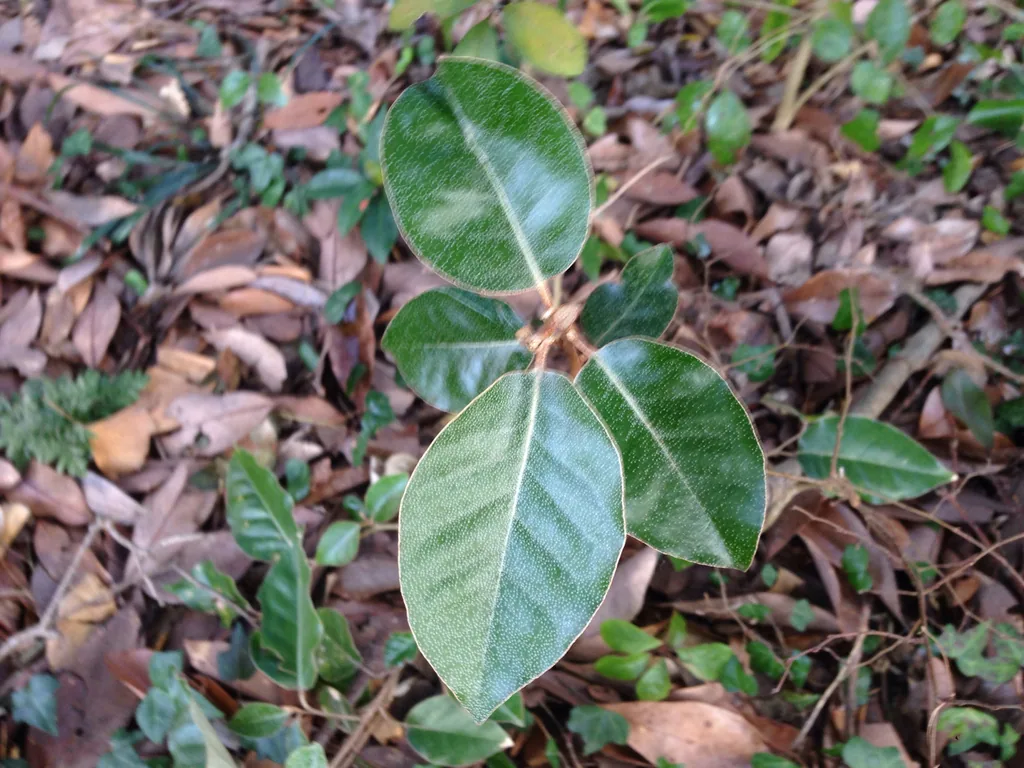
Elaeagnus macrophylla is a robust evergreen shrub of rounded, spreading habit with leaves that are silvery when young. [1] It flowers in autumn, when few other blossoms remain outdoors, and can be grown as a hedge in exposed maritime positions. [1][2] The fruit is eaten raw or cooked and ripens in spring. [2]
This record is incomplete: the sources we read do not cover every field yet.
Not yet covered by our sources: Hardiness, warmest zone, Pruning
Elaeagnus macrophylla care
How to water Elaeagnus macrophylla
Watering
Moderate; drought tolerant
What the sources say (2)
Water
moderate
Hardiness
Zone 7+
Soil textures
sandy, loamy, clayDrainage
well drained
Tolerances
high wind, maritime exposure, drought
Wind
Yes
Maritime
Yes
Tolerates Nutritionally Poor Soil
No
Drought
tolerantWatering notes
Needs well-drained soil; succeeds in dry soils
What the sources say (2)
Succeeds in most soils that are well-drained [2] [5] . Prefers a soil that is only moderately fertile, succeeding in poor soils and in dry soils [2] [5] . Succeeds in sun or shadePrefers a soil that is only moderately fertile, succeeding in poor soils and in dry soilsHow much light Elaeagnus macrophylla needs
Sun or shade
What the sources say (2)
Succeeds in most soils that are well-drained [2] [5] . Prefers a soil that is only moderately fertile, succeeding in poor soils and in dry soils [2] [5] . Succeeds in sun or shadeLight
full sun
Shade tolerance
permanent shade
Water
moderateHow much cold Elaeagnus macrophylla can take
Hardiness, coldest zone
7 [winter low −17.8 to −12.2 °C (0 to 10 °F)]
What the sources say (1)
Water
moderate
Hardiness
Zone 7+
Soil textures
sandy, loamy, clayHardiness, warmest zone
Not stated in the sources we read.
How to propagate Elaeagnus macrophylla
Seed, half-ripe cuttings, mature-wood cuttings, layering
What the sources say (4)
Seed - best sown as soon as it is ripe in a cold frame [10] . It should germinate freely within 4 weeksCuttings of half-ripe wood, 7 - 10cm with a heel, July/August in a frame. Good percentageCuttings of mature wood of the current year's growth, 10 - 12cm with a heel, November in a frame. Leave for 12 months.Leave for 12 months. Fair to good percentage [10] .
Layering in September/October. Takes 12 monthsElaeagnus macrophylla pests and problems
Wind-rock and voles
Symptom: Plants can succumb to wind-rock in very wet seasons and are sometimes damaged by voles.
What the sources say (1)
Plants can succumb to wind-rock in very wet seasons [9] . Plants are sometimes damaged by voles
— Elaeagnus macrophylla — Practical Plants [2]
Remedies
The sources we checked give no remedies for this plant.
Calendar
As soon as ripe (cold frame)
What the sources say (1)
Seed - best sown as soon as it is ripe in a cold frame [10] . It should germinate freely within 4 weeksApril-May
What the sources say (1)
A potentially very valuable crop, ripening as it does in April and MayNot stated in the sources we read.
Months as given by the sources, which are mostly from the United States (northern hemisphere). In the southern hemisphere they shift by about six months.
Edibility
Reported by the source, quoted verbatim. Do not eat a plant on the basis of this page alone: identification mistakes can be dangerous.
Indicative values
Values from a secondary source, not checked word for word like the rest of this page. Use them as a starting point.
- Life cycle
- PerennialIndicative value, adapt it to your climate · Secondary source
- Mature height
- 243.8-365.8 cm (8-12 ft)Indicative value, adapt it to your climate · Secondary source
- Hours of sun
- 6-8 hoursIndicative value, adapt it to your climate · Secondary source
- Drought tolerant
- yesIndicative value, adapt it to your climate · Secondary source
- Soil pH
- 6-7.5Indicative value, adapt it to your climate · Secondary source
- Care level
- MediumIndicative value, adapt it to your climate · Secondary source
- Growth rate
- LowIndicative value, adapt it to your climate · Secondary source
- Pruning
- MayIndicative value, adapt it to your climate · Secondary source
Similar plants
- Autumn Olive Elaeagnus umbellata
- Cherry silverberry Elaeagnus multiflora
- Elaeagnus ebbingei Elaeagnus ebbingei
- Russian Olive Elaeagnus angustifolia
- Silverberry Elaeagnus commutata
- Thorny Olive Elaeagnus pungens
- Aaron's Beard Hypericum calycinum
- Abies grandis Abies grandis
Sources
Every value above is quoted from these documents. Links lead to the original publisher.
- Elaeagnus macrophylla - Trees and Shrubs Online · treesandshrubsonline.org, consulted
- Elaeagnus macrophylla — Practical Plants · practicalplants.org, consulted
- RBG Census · data.rbg.vic.gov.au, consulted
Written by Emilio Marruso · last checked