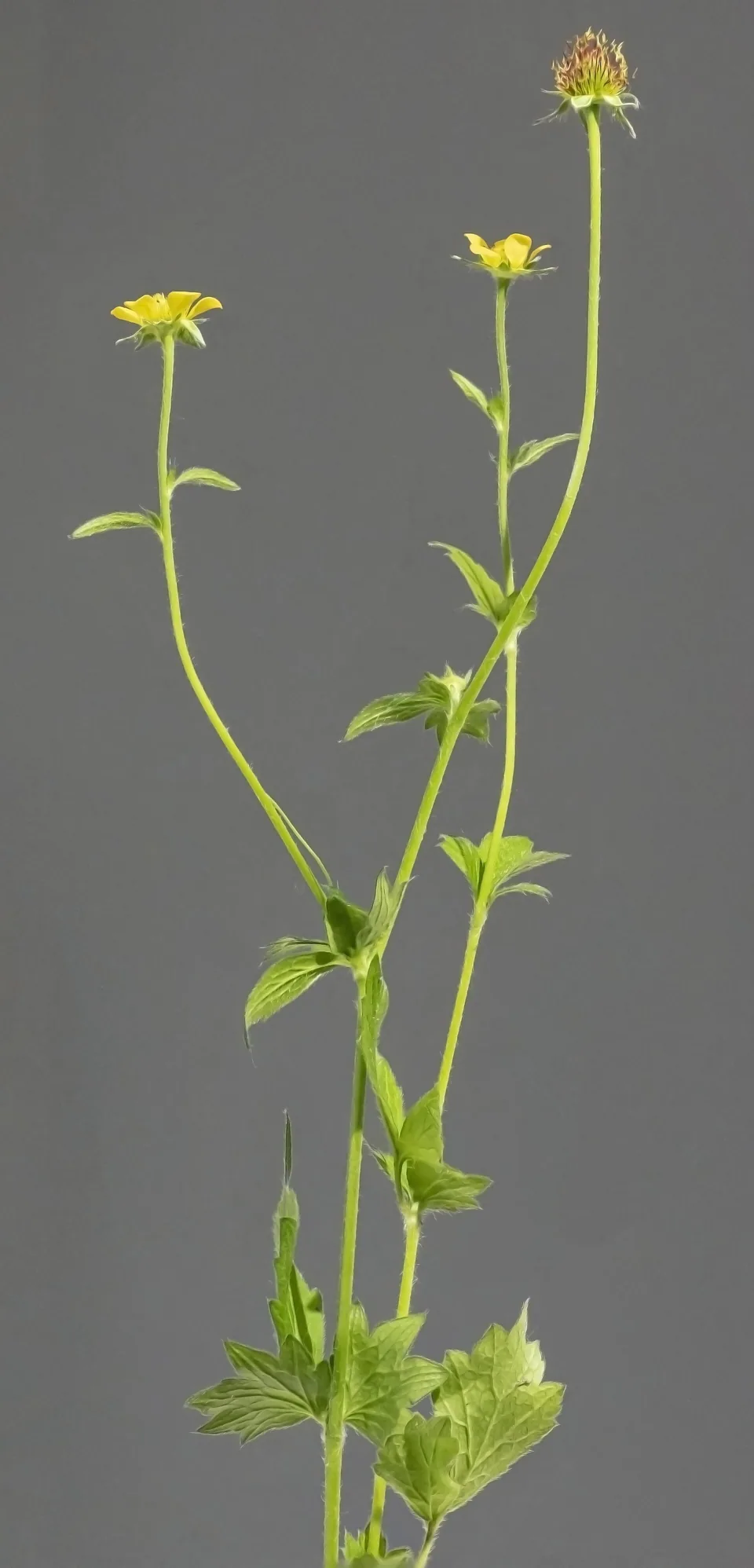

How to Grow and Care for Herb bennet
Geum urbanum
Written by Emilio Marruso · last checked
At a glance
Wood avens is an easygoing perennial that is happiest in moist, shady corners where many plants struggle. Its young leaves can be cooked, and the root, dug in spring, adds a spicy flavor to soups and stews. Sow it in spring or autumn and it settles in quickly; just snip off the flowers before they set seed, or it will happily spread.
- Sun
Likes shade; it grows weaker in sunny spots
What the sources say (2)
Watering notes: Prefers moist, shady places; less vigorous in dry soils and sunny positions
Preferring moist, shady places, herb bennet is less vigorous in dry soils and sunny positions.
— Herb Bennet | RHS Advice [1] Drought: Less vigorous in dry soils and sunny positions; prefers moist, shady places
Preferring moist, shady places, herb bennet is less vigorous in dry soils and sunny positions.
— Herb Bennet | RHS Advice [1] - Water
Moderate water; keep the soil moist, it does not like drought
What the sources say (3)
Watering: Moderate water; drought intolerant
Shade tolerance light shade Water moderate Hardiness Zone 6+ Soil textures
— Wood Avens (Geum urbanum) — Practical Plants [3] Drainage well drained Tolerates Nutritionally Poor Soil No Drought intolerant
— Wood Avens (Geum urbanum) — Practical Plants [3] Watering notes: Prefers moist, shady places; less vigorous in dry soils and sunny positions
Preferring moist, shady places, herb bennet is less vigorous in dry soils and sunny positions.
— Herb Bennet | RHS Advice [1] - Planting
Plant seedlings in summer and divisions in spring
What the sources say (2)
Planting: Summer (seedlings); spring (divisions)
prick the seedlings out into individual pots and plant them out in the summer
— Wood Avens (Geum urbanum) — Practical Plants [3] though it is best to pot up smaller clumps and grow them on in a cold frame until they are rooting well. Plant them out in the spring.
— Wood Avens (Geum urbanum) — Practical Plants [3] - Harvest
Dig the root in spring to spice soups and stews; young leaves are eaten cooked
What the sources say (2)
- Watch out
Spreads by seed: cut off flowers before they seed, and don't hoe, as root bits regrow
What the sources say (3)
Root system: Short, horizontal rhizome with a tangle of wiry roots; individual plants do not spread far, but can regenerate from rhizome fragments
Underground, herb bennet grows from a short, horizontal rhizome and produces a tangle of wiry roots.
— Herb Bennet | RHS Advice [1] Although herb bennet grows from a rhizome (underground stem), individual plants don’t tend to spread far.
— Herb Bennet | RHS Advice [1] herb bennet can regenerate from rhizome fragments, so avoid chopping them up by hoeing
— Herb Bennet | RHS Advice [1] - Size
Grows up to 2 ft tall
What the sources say (1)
Mature height: 60 cm (2 ft)
Herb bennet is an evergreen perennial that grows to around 60cm (2ft) tall.
— Herb Bennet | RHS Advice [1] - Propagation
Grow new plants from seed or by dividing clumps
What the sources say (2)
- Sowing
Sow in spring or autumn
What the sources say (1)
Sowing: Spring or autumn
Seed - sow spring or autumn in a cold frame
— Wood Avens (Geum urbanum) — Practical Plants [3]
Overview
Geum urbanum is a perennial of woodland and shady hedgerows that self-seeds readily. [1] The aromatic root is used as a clove-like spice. [3] It is propagated by seed or by division in spring or autumn. [3]
Herb bennet care
How to water Herb bennet
Watering
Moderate water; drought intolerant
Watering notes
Prefers moist, shady places; less vigorous in dry soils and sunny positions
What the sources say (1)
Preferring moist, shady places, herb bennet is less vigorous in dry soils and sunny positions.How much light Herb bennet needs
The sources give different values depending on region, zone or growing conditions.
What each source says
According to Chicago Botanic Garden: Full sun, partial shade
According to Practical Plants: Full sun; light shade tolerated
How much cold Herb bennet can take
Hardiness, coldest zone
The sources give different values depending on region, zone or growing conditions.
What each source says
According to Chicago Botanic Garden: 5 [winter low −28.9 to −23.3 °C (−20 to −10 °F)]
According to Practical Plants: 6 [winter low −23.3 to −17.8 °C (−10 to 0 °F)]
What the sources say (2)
According to Chicago Botanic Garden: Plant Type:
Perennial
Hardiness Zone:
5 - 9According to Practical Plants: Shade tolerance
light shade
Water
moderate
Hardiness
Zone 6+
Soil texturesHardiness, warmest zone
9 [winter low −6.7 to −1.1 °C (20 to 30 °F)]
What the sources say (1)
Plant Type:
Perennial
Hardiness Zone:
5 - 9How to propagate Herb bennet
How to grow Herb bennet
The plant
Life cycle
perennial
What the sources say (1)
It is a UK native perennial found in woodland and shady hedgerowsFamily
Rosaceae
What the sources say (1)
Checklist: 1021580 - Rosaceae - Geum - Geum urbanum L. Contains:Mature height
60 cm (2 ft)
What the sources say (1)
Herb bennet is an evergreen perennial that grows to around 60cm (2ft) tall.Roots
Root system
Short, horizontal rhizome with a tangle of wiry roots; individual plants do not spread far, but can regenerate from rhizome fragments
What the sources say (3)
Underground, herb bennet grows from a short, horizontal rhizome and produces a tangle of wiry roots.Although herb bennet grows from a rhizome (underground stem), individual plants don’t tend to spread far.herb bennet can regenerate from rhizome fragments, so avoid chopping them up by hoeingHeat and drought
Drought
Less vigorous in dry soils and sunny positions; prefers moist, shady places
What the sources say (1)
Preferring moist, shady places, herb bennet is less vigorous in dry soils and sunny positions.Herb bennet pests and problems
Self-seeding spread
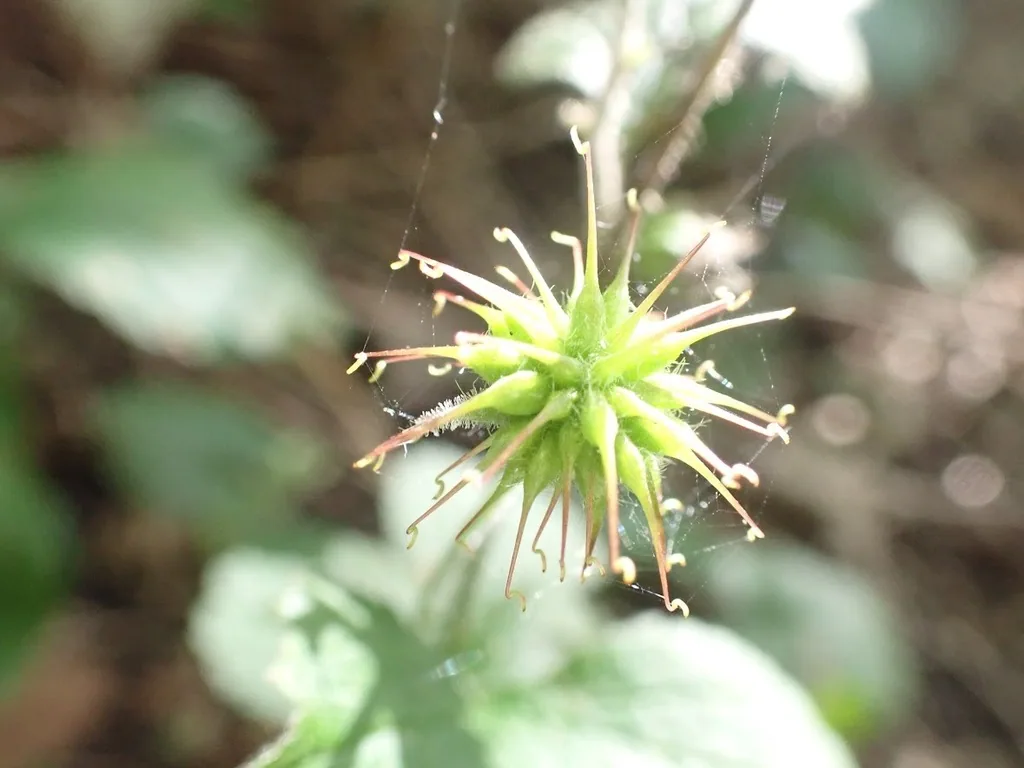
Symptom: Self-seeds readily and the hooked seeds are carried on clothing and animal fur, so one plant becomes several.
What to do: Deadhead before seed set, fork out plants or smother seedlings with mulch in early spring; avoid hoeing, since it regenerates from rhizome fragments.
What the sources say (3)
The good news is that deadheading stops plants from setting seed
— Herb Bennet | RHS Advice [1] use a hand fork, inserted to its full depth, to prize the roots from the soil
— Herb Bennet | RHS Advice [1] herb bennet can regenerate from rhizome fragments, so avoid chopping them up by hoeing
— Herb Bennet | RHS Advice [1]
Remedies
Each remedy shows what official sources say about it; traditional remedies without an official source are marked as such. Harmful ones are listed so you know to avoid them.
Getting rid of it
weed
fork out plants Official source, not independently tested
herb bennet can regenerate from rhizome fragments, so avoid chopping them up by hoeing
— Herb Bennet | RHS Advice [1] How: Insert a hand fork to its full depth at the base of the leaf rosette and prize the roots out, best in spring before flowering and seed set.
Fork out individual plants – use a hand fork, inserted to its full depth, to prize the roots from the soil. Target your fork at the base of the rosette of leaves to minimise soil disturbance .
— Herb Bennet | RHS Advice [1] organic mulch Official source, not independently tested
How: Apply about 10 cm (4 in) of organic matter in early spring to smother emerging seedlings, or fill border gaps with ground cover plants.
Smother seedlings – apply a mulch of organic matter , around 10cm (4in) thick, to your soil in early spring to smother emerging seedlings.
— Herb Bennet | RHS Advice [1] deadheading before seed set Official source, not independently tested
How: Deadhead plants before they set seed and remove seedlings where they are not wanted.
It is, however, a good idea to limit the spread of herb bennet by deadheading plants before they set seed and removing any seedlings that appear where you don’t want them.
— Herb Bennet | RHS Advice [1] mowing or line trimming at flowering Works
How: Cut plants down with a line trimmer or mower during flowering to prevent seed development.
Non-chemical control can be achieved by line trimming or mowing to cut down plants during the flowering stage to prevent seed development,
— botanicgardens.uw.edu [8] What the evidence says Non-chemical control can be achieved by line trimming or mowing to cut down plants during the flowering stage to prevent seed development,
— botanicgardens.uw.edu [8]
Calendar
Sowing
Spring or autumn
What the sources say (1)
Seed - sow spring or autumn in a cold framePlanting
Summer (seedlings); spring (divisions)
What the sources say (2)
prick the seedlings out into individual pots and plant them out in the summerthough it is best to pot up smaller clumps and grow them on in a cold frame until they are rooting well. Plant them out in the spring.Months as given by the sources, which are mostly from the United States (northern hemisphere). In the southern hemisphere they shift by about six months.
Edibility
Reported by the source, quoted verbatim. Do not eat a plant on the basis of this page alone: identification mistakes can be dangerous.
Similar plants
- Old man's whiskers Geum triflorum
- Geum coccineum Geum coccineum
- Largeleaf Avens Geum macrophyllum
- Afghan Cherry Prunus jacquemontii
- Agrimony Agrimonia eupatoria
- Alabama Snow Wreath Neviusia alabamensis
- Allegheny Serviceberry Amelanchier laevis
- American Ipecac Porteranthus trifoliatus
Sources
Every value above is quoted from these documents. Links lead to the original publisher.
- Herb Bennet | RHS Advice · rhs.org.uk, consulted
- Geum urbanum - Useful Temperate Plants · temperate.theferns.info, consulted
- Wood Avens (Geum urbanum) — Practical Plants · practicalplants.org, consulted
- Geum urbanum | Chicago Botanic Garden · chicagobotanic.org, consulted
- Geum urbanum L. · infoflora.ch, consulted
- Geum urbanum - FNA · floranorthamerica.org, consulted
- The traditional and modern uses of wood avens (herb bennet) · eatweeds.co.uk, consulted
- botanicgardens.uw.edu · botanicgardens.uw.edu
Written by Emilio Marruso · last checked