
How to Grow and Care for Agrimony
Agrimonia eupatoria
Written by Emilio Marruso · last checked
At a glance
Agrimony is a perennial that grows happily in containers too. Sow it in autumn or spring, or plant it out after the last frost, and water it well for the first few weeks. In late spring and early summer, gather its fresh leaves, flowers and stems to brew a refreshing tea, and in autumn its root gives you a dye.
- Water
Water well the first few weeks; after that, when the top 2 inches of soil are dry
What the sources say (2)
Watering: Water when the top 2 inches (5 cm) of soil is dry or the plant shows signs of needing it
Once they are growing well, just water when the top two inches of soil is dry or the plant shows signs of needing it
— How to Grow Agrimony in Your Herb Garden [5] Watering notes: Water well for the first few weeks, making sure the soil does not dry out
Water well for the first few weeks, making sure the soil doesn’t dry out.
— How to Grow Agrimony in Your Herb Garden [5] - Cold
Survives winters down to −10 °F (−23.3 °C)
Very hardy · USDA 6 · RHS H7 · Z6
What the sources say (2)
Hardiness, coldest zone: 6 [winter low −23.3 to −17.8 °C (−10 to 0 °F)]
Agrimony grows best in USDA zones 6 to 9.
— How to Grow Agrimony in Your Herb Garden [5] Hardiness, warmest zone: 9 [winter low −6.7 to −1.1 °C (20 to 30 °F)]
Agrimony grows best in USDA zones 6 to 9.
— How to Grow Agrimony in Your Herb Garden [5] - Planting
Plant out after the last frost, from late spring to early summer
What the sources say (2)
- Harvest
Late spring and early summer: leaves, flowers and stems make a refreshing tea
What the sources say (2)
Harvest: Late spring and early summer
dye from the root: Harvested in autumn [2] , the yellow becomes deeper the later that the plant is harvested [19] .
— Agrimony (Agrimonia eupatoria) — Practical Plants [2] The plant is harvested in late spring and early summer and can be dried for later use [23] .
— Agrimony (Agrimonia eupatoria) — Practical Plants [2] - Size
Up to 3 ft tall
What the sources say (1)
Mature height: up to 100 cm [39 in]
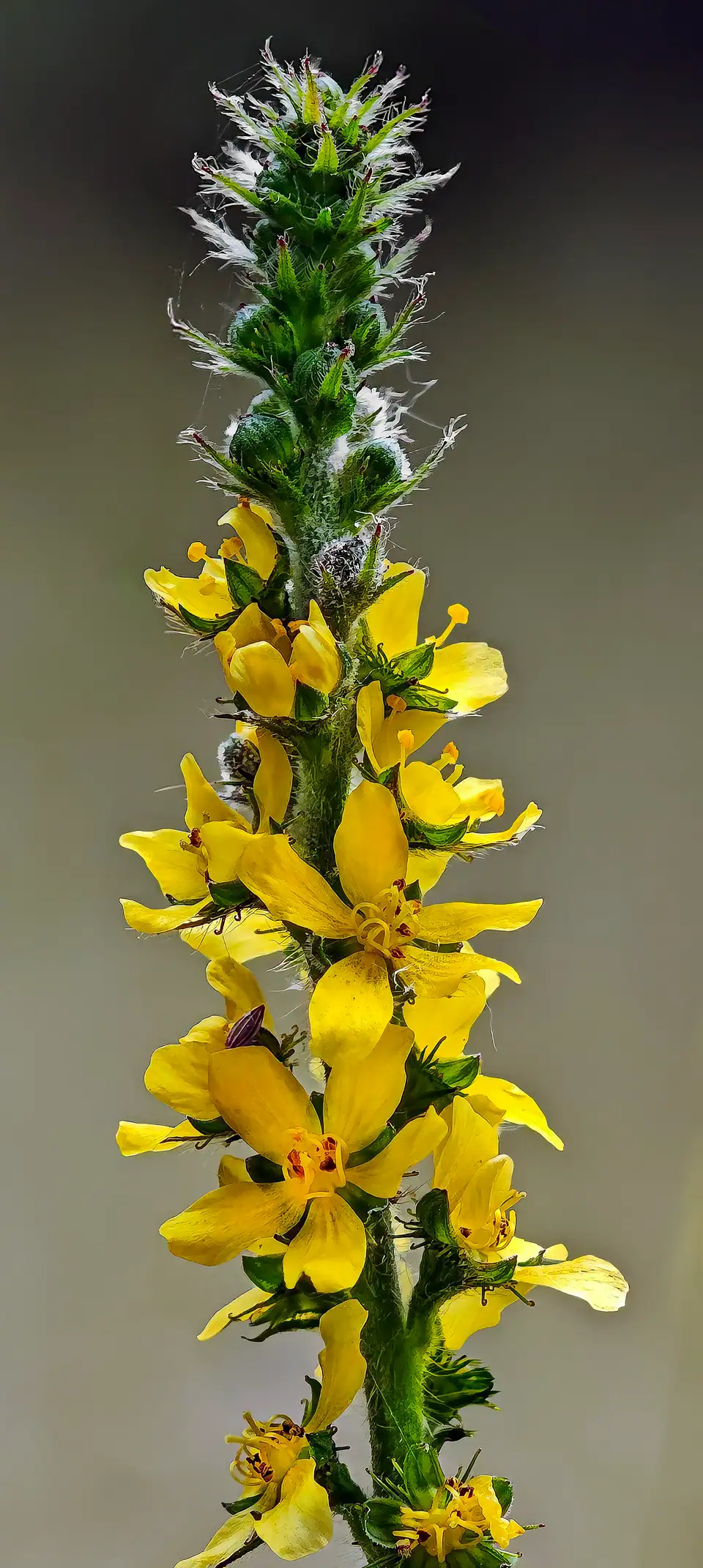
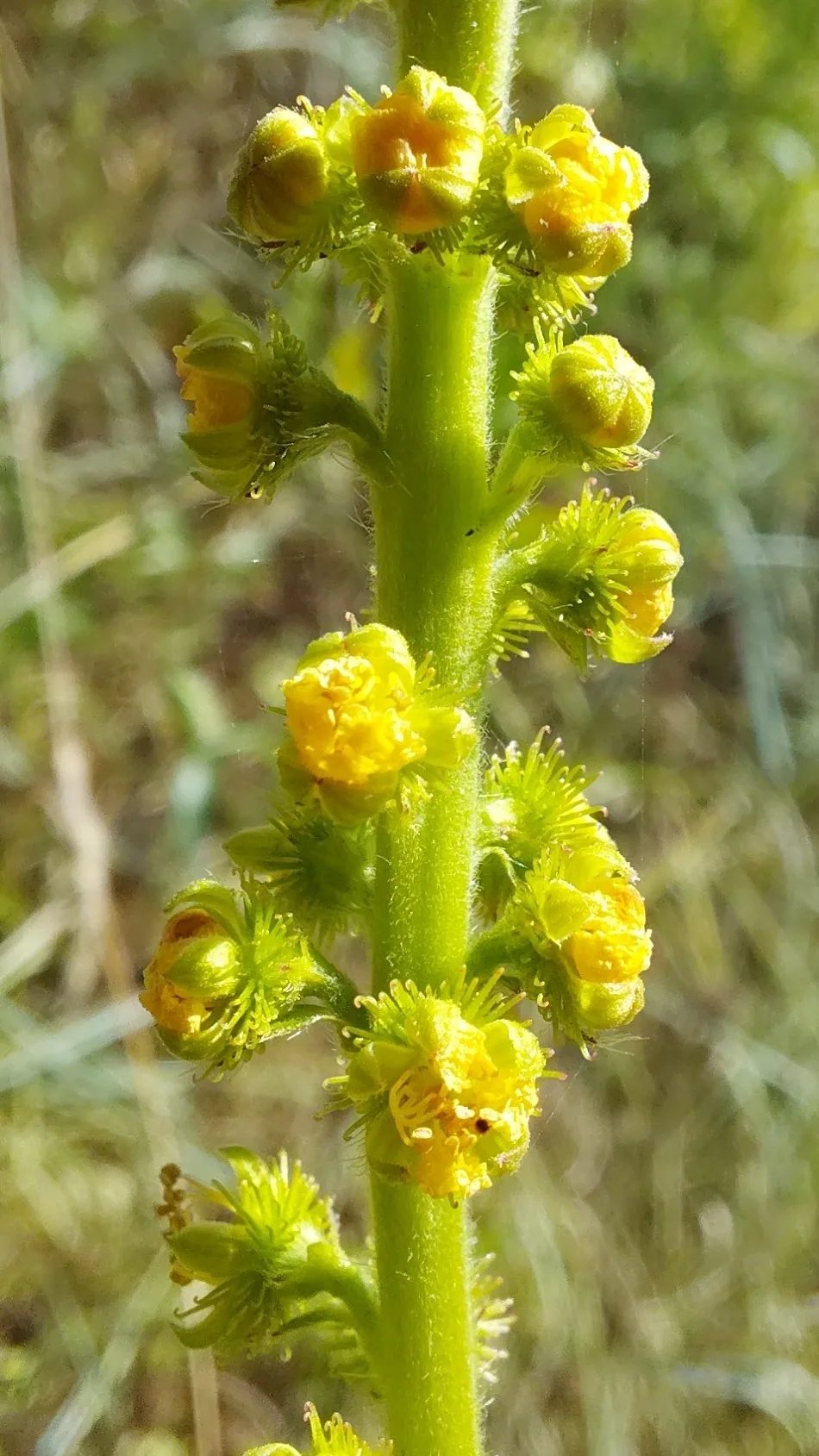
A perennial and rhizomatous herbaceous plant. Emerges forming a stem erect (up to 100cm.) and pilose, which ends in an inflorescence of yellow flowers.
— Agrimonia eupatoria L. subsp. eupatoria - Herbari Virtual del Mediterrani Occidental [8] - Propagation
From seed, by dividing the clump in autumn, or from pieces of root
What the sources say (3)
Propagation: Seed; division in autumn; root sections
Seed - can be sown in spring or autumn, either in pots in a cold frame or in situ.
— Agrimony (Agrimonia eupatoria) — Practical Plants [2] Division in autumn [12] . Very easy, the divisions can be planted straight out into their permanent positions.
— Agrimony (Agrimonia eupatoria) — Practical Plants [2] Although germinating seeds of agrimony is easy, you can also propagate from roots.
— How to Grow Agrimony in Your Herb Garden [5] - Sowing
Sow in autumn or spring
What the sources say (2)
Sowing: Autumn or spring
Seed - can be sown in spring or autumn, either in pots in a cold frame or in situ.
— Agrimony (Agrimonia eupatoria) — Practical Plants [2] Do this in the fall so that the plants will emerge in the spring once the last of the winter frost is over.
— How to Grow Agrimony in Your Herb Garden [5] - Containers
Grows in containers too
What the sources say (1)
In containers: Yes
Agrimony grows well in a container, like most herbs.
— How to Grow Agrimony in Your Herb Garden [5]
Overview
A tea is made from the leaves, flowers and stems. [2] It is propagated by seed, division or root sections, and the burr-like fruits attach to animal fur. [2][5]
Agrimony care
How to water Agrimony
Watering
Water when the top 2 inches (5 cm) of soil is dry or the plant shows signs of needing it
What the sources say (1)
Once they are growing well, just water when the top two inches of soil is dry or the plant shows signs of needing itWatering notes
Water well for the first few weeks, making sure the soil does not dry out
What the sources say (1)
Water well for the first few weeks, making sure the soil doesn’t dry out.How much light Agrimony needs
The sources disagree:
The common agrimony does not tolerate shade and acidic soils.
[6]
How much cold Agrimony can take
Hardiness, coldest zone
6 [winter low −23.3 to −17.8 °C (−10 to 0 °F)]
What the sources say (1)
Agrimony grows best in USDA zones 6 to 9.Hardiness, warmest zone
9 [winter low −6.7 to −1.1 °C (20 to 30 °F)]
What the sources say (1)
Agrimony grows best in USDA zones 6 to 9.Where to grow Agrimony
Yes
What the sources say (1)
Agrimony grows well in a container, like most herbs.How to propagate Agrimony
Seed; division in autumn; root sections
What the sources say (3)
Seed - can be sown in spring or autumn, either in pots in a cold frame or in situ.Division in autumn [12] . Very easy, the divisions can be planted straight out into their permanent positions.Although germinating seeds of agrimony is easy, you can also propagate from roots.How to grow Agrimony
The plant
Life cycle
perennial
What the sources say (1)
A perennial and rhizomatous herbaceous plant. Emerges forming a stem erect (up to 100cm.) and pilose, which ends in an inflorescence of yellow flowers.Family
Rosaceae
What the sources say (1)
Family: ROSACEAE
Genus: Agrimonia
Species: eupatoria L.
Common names: AgrimonyMature height
up to 100 cm [39 in]
What the sources say (1)
A perennial and rhizomatous herbaceous plant. Emerges forming a stem erect (up to 100cm.) and pilose, which ends in an inflorescence of yellow flowers.Remedies
Each remedy shows what official sources say about it; traditional remedies without an official source are marked as such. Harmful ones are listed so you know to avoid them.
Treating the plant
gall midge
removing deformed flower buds and galled parts Not verified
Traditional remedy, not verified by an official source.
How: Remove any flower buds that are deformed and any parts of the plant with knotty galls.
insect pests
neem oil Works
How: Used preventatively on plants that bugs want to eat, to make them unpalatable.
I use neem oil preventatively on any plants that bugs want to eat just to make them unpalatable.
— How to Grow Agrimony in Your Herb Garden [5] What the evidence says When applied directly to insect’s bodies, it can block their breathing openings and cause suffocation. Neem is also known to interfere with insect growth and behavior.
— extension.unh.edu [9]
Calendar
Sowing
Autumn or spring
What the sources say (2)
Seed - can be sown in spring or autumn, either in pots in a cold frame or in situ.Do this in the fall so that the plants will emerge in the spring once the last of the winter frost is over.Planting
After the last expected frost (late spring to early summer)
Harvest
Late spring and early summer
What each source says
dye from the root: Autumn
What the sources say (2)
dye from the root: Harvested in autumn [2] , the yellow becomes deeper the later that the plant is harvested [19] .The plant is harvested in late spring and early summer and can be dried for later use [23] .Months as given by the sources, which are mostly from the United States (northern hemisphere). In the southern hemisphere they shift by about six months.
Edibility
Reported by the source, quoted verbatim. Do not eat a plant on the basis of this page alone: identification mistakes can be dangerous.
Indicative values
Values from a secondary source, not checked word for word like the rest of this page. Use them as a starting point.
- Drought tolerant
- yesIndicative value, adapt it to your climate · Secondary source
- Soil pH
- 6-7.5Indicative value, adapt it to your climate · Secondary source
- Care level
- MediumIndicative value, adapt it to your climate · Secondary source
- Growth rate
- LowIndicative value, adapt it to your climate · Secondary source
- Pruning
- May, March, April, May, May, AugustIndicative value, adapt it to your climate · Secondary source
Similar plants
- Afghan Cherry Prunus jacquemontii
- Alabama Snow Wreath Neviusia alabamensis
- Allegheny Serviceberry Amelanchier laevis
- American Ipecac Porteranthus trifoliatus
- American Plum Prunus americana
- Amur chokecherry Prunus maackii
- Antelope bitterbrush Purshia tridentata
- Apple Rose Rosa villosa
Sources
Every value above is quoted from these documents. Links lead to the original publisher.
- Agrimonia eupatoria L. · garden.rcp.ac.uk, consulted
- Agrimony (Agrimonia eupatoria) — Practical Plants · practicalplants.org, consulted
- Agrimonia eupatoria, Agrimony: identification, distribution, habitat · first-nature.com, consulted
- Learn How to Plant and Grow Agrimony in Your Herb Garden · gardenerspath.com, consulted
- How to Grow Agrimony in Your Herb Garden · morningchores.com, consulted
- · naturblick.museumfuernaturkunde.berlin, consulted
- Agrimonia eupatoria - Monaco Nature Encyclopedia · monaconatureencyclopedia.com, consulted
- Agrimonia eupatoria L. subsp. eupatoria - Herbari Virtual del Mediterrani Occidental · herbarivirtual.uib.cat, consulted
- extension.unh.edu · extension.unh.edu
Written by Emilio Marruso · last checked