
How to Grow and Care for Himalayan honeysuckle
Leycesteria formosa
Written by Emilio Marruso · last checked
At a glance
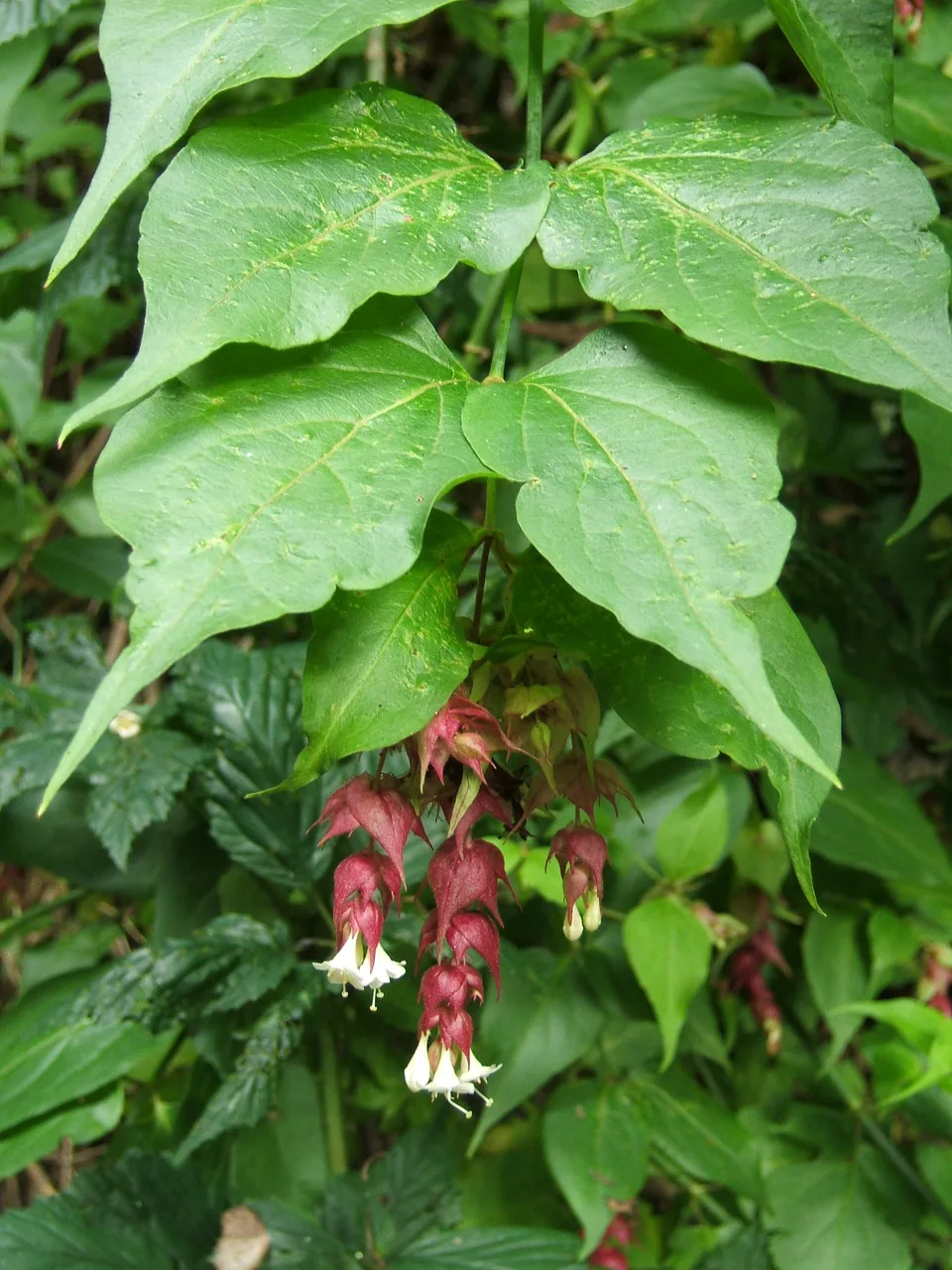
This fast-growing shrub reaches 4–6 ft and is happy in full sun or partial shade. Its small white flowers last until fall and are followed by tiny purple berries, edible and prized for their flavor. Keep the soil moist while it settles in, prune it in late winter, and enjoy its sweet show every fall.
- Sun
Full sun to partial shade; some afternoon shade in warm climates
What the sources say (3)
Light: Full sun to partial shade; a bit of afternoon shade is desirable in warmer areas
Grow Leycesteria formosa in moist but well-drained soil in full sun to partial shade. It can be pruned back hard if desired.
— Leycesteria formosa | BBC Gardeners World Magazine [4] L. formosa enjoys a full sun location, but note that a bit of afternoon shade is desirable in warmer areas.
— How to Grow and Care for Himalayan Honeysuckle | Gardener’s Path [5] Sun or light shade. Needs regular watering. Rejuvenate by pruning to the ground
— Leycesteria formosa | Landscape Plants | Oregon State University [1] - Water
First two years: 1 inch of water a week when it doesn't rain; keep the soil moist
What the sources say (2)
Watering notes: In the first two years after transplanting, water regularly in the absence of rain (about an inch [2.5 cm] of water per week); keep the soil moist while the plant is becoming established
In the first two years after transplanting it should be watered regularly in the absence of rain, receiving about an inch of water per week.
— How to Grow and Care for Himalayan Honeysuckle | Gardener’s Path [5] As long as the soil is kept moist while it is becoming established, this plant does not require a lot of attention.
— How to Grow and Care for Himalayan Honeysuckle | Gardener’s Path [5] - Cold
Survives winters down to 0 °F (−17.8 °C)
Hardy in very cold winters · USDA 7 · RHS H6 · Z7
What the sources say (3)
Hardiness, coldest zone: 7 [winter low −17.8 to −12.2 °C (0 to 10 °F)]
Hardy to USDA Zone 7 Native to western China and eastern Tibet
— Leycesteria formosa | Landscape Plants | Oregon State University [1] Himalayan honeysuckle is winter hardy in USDA Hardiness Zones 7-9.
— How to Grow and Care for Himalayan Honeysuckle | Gardener’s Path [5] Hardiness, warmest zone: 9 [winter low −6.7 to −1.1 °C (20 to 30 °F)]
Himalayan honeysuckle is winter hardy in USDA Hardiness Zones 7-9.
— How to Grow and Care for Himalayan Honeysuckle | Gardener’s Path [5] - Soil
Slightly acidic to alkaline soil, pH 6.0–8.0
What the sources say (2)
Soil pH, minimum: 6.0
it tolerates everything from sand to clay, and a pH range of 6.0 to 8.0.
— How to Grow and Care for Himalayan Honeysuckle | Gardener’s Path [5] Soil pH, maximum: 8.0
it tolerates everything from sand to clay, and a pH range of 6.0 to 8.0.
— How to Grow and Care for Himalayan Honeysuckle | Gardener’s Path [5] - Spacing
2–3 ft between plants
What the sources say (1)
Spacing: 61-91 cm (2-3 ft)
If you wish to grow multiple plants, space them about two to three feet apart. This will allow you to form a hedge or border without overcrowding the plants.
— How to Grow and Care for Himalayan Honeysuckle | Gardener’s Path [5] - Planting
Plant rooted cuttings in fall
What the sources say (1)
Planting: Fall (rooted cuttings)
Once the roots have developed, you may transplant cuttings to the garden in the fall.
— How to Grow and Care for Himalayan Honeysuckle | Gardener’s Path [5] - Pruning
Prune in late winter or early spring, while the plant is resting
What the sources say (1)
Pruning: Late winter or early spring, when plants are dormant
Your plant can be cut back to within just a few inches of the ground in the late winter or early spring, when plants are dormant.
— How to Grow and Care for Himalayan Honeysuckle | Gardener’s Path [5] - Harvest
Tiny purple berries follow the flowers: edible and prized for their flavor
- Watch out
Grows fast and can spread: keep it in one spot, in a pot, or divide it often
- Size
4–6 ft tall
What the sources say (1)
Mature height: 120-180 cm (4-6 ft)
Deciduous shrub or subshrub, fast growing, basal branching, multistemmed (purplish), upright habit, 4-6 ft (1.2-1.8 m) tall.
— Leycesteria formosa | Landscape Plants | Oregon State University [1] - Propagation
From seed or from soft cuttings taken in summer
What the sources say (2)
Propagation: Seed; softwood cuttings in summer
Himalayan honeysuckle can be propagated by seed as well as from softwood cuttings.
— How to Grow and Care for Himalayan Honeysuckle | Gardener’s Path [5] you can take softwood cuttings of about four inches in length in the summer.
— How to Grow and Care for Himalayan Honeysuckle | Gardener’s Path [5] - Sowing
Sow in fall; the seeds sprout in spring
What the sources say (2)
Sowing: Fall (seeds germinate in spring)
just sow seeds into a tray of moist seed starting mixture in the fall, and cover them to their own depth (1/8 inch or so) with sand.
— How to Grow and Care for Himalayan Honeysuckle | Gardener’s Path [5] Seeds almost always germinate in the spring regardless of when they were sown
— How to Grow and Care for Himalayan Honeysuckle | Gardener’s Path [5] - Containers
Grows in containers too
What the sources say (1)
In containers: Yes
You can always grow it in a container or create divisions on a regular basis to control its spread.
— How to Grow and Care for Himalayan Honeysuckle | Gardener’s Path [5]
Overview
Himalayan honeysuckle is a deciduous shrub native to the Himalayas and western China that grows in full sun to partial shade. [1][4] It is regarded as a weed or potential invasive plant in Australia and New Zealand. [1][5]
Himalayan honeysuckle care
Measurements in square brackets are our conversion into the other unit system; the quoted text is unchanged.
How to water Himalayan honeysuckle
Watering
The sources give different values depending on region, zone or growing conditions.
What each source says
According to Oregon State University: Needs regular watering
once established: Occasional water in dry periods
What the sources say (2)
According to Oregon State University: Sun or light shade. Needs regular watering. Rejuvenate by pruning to the groundonce established: This is a low-maintenance plant, requiring only occasional water in dry periods once established.Watering notes
In the first two years after transplanting, water regularly in the absence of rain (about an inch [2.5 cm] of water per week); keep the soil moist while the plant is becoming established
What the sources say (2)
In the first two years after transplanting it should be watered regularly in the absence of rain, receiving about an inch of water per week.As long as the soil is kept moist while it is becoming established, this plant does not require a lot of attention.How much light Himalayan honeysuckle needs
Full sun to partial shade; a bit of afternoon shade is desirable in warmer areas
What the sources say (3)
Grow Leycesteria formosa in moist but well-drained soil in full sun to partial shade. It can be pruned back hard if desired.L. formosa enjoys a full sun location, but note that a bit of afternoon shade is desirable in warmer areas.Sun or light shade. Needs regular watering. Rejuvenate by pruning to the groundHow much cold Himalayan honeysuckle can take
Hardiness, coldest zone
7 [winter low −17.8 to −12.2 °C (0 to 10 °F)]
Hardiness, warmest zone
9 [winter low −6.7 to −1.1 °C (20 to 30 °F)]
What the sources say (1)
Himalayan honeysuckle is winter hardy in USDA Hardiness Zones 7-9.Best soil for Himalayan honeysuckle
Soil pH, minimum
6.0
What the sources say (1)
it tolerates everything from sand to clay, and a pH range of 6.0 to 8.0.Soil pH, maximum
8.0
What the sources say (1)
it tolerates everything from sand to clay, and a pH range of 6.0 to 8.0.Where to grow Himalayan honeysuckle
In containers
Yes
What the sources say (1)
You can always grow it in a container or create divisions on a regular basis to control its spread.Spacing
61-91 cm (2-3 ft)
What the sources say (1)
If you wish to grow multiple plants, space them about two to three feet apart. This will allow you to form a hedge or border without overcrowding the plants.How to propagate Himalayan honeysuckle
Seed; softwood cuttings in summer
What the sources say (2)
Himalayan honeysuckle can be propagated by seed as well as from softwood cuttings.you can take softwood cuttings of about four inches in length in the summer.How to grow Himalayan honeysuckle
The plant
Family
Caprifoliaceae
What the sources say (1)
Common name:
Pheasant-eye
Himalaya Honeysuckle
Pheasantberry
Pronunciation:
li-ses-TE-ri-a, lest-E-ree-a for-MO-sa
Family:
CaprifoliaceaeMature height
120-180 cm (4-6 ft)
What the sources say (1)
Deciduous shrub or subshrub, fast growing, basal branching, multistemmed (purplish), upright habit, 4-6 ft (1.2-1.8 m) tall.Himalayan honeysuckle pests and problems
Invasive spread
Symptom: Grows rapidly and can spread; considered invasive in some areas.
What to do: Isolate it in one area of the garden, grow it in a container or divide it regularly to control its spread.
What the sources say (2)
You can always grow it in a container or create divisions on a regular basis to control its spread.
— How to Grow and Care for Himalayan Honeysuckle | Gardener’s Path [5] It grows rapidly and is adaptable to many garden conditions, and as such, it is considered invasive today in some areas.
— How to Grow and Care for Himalayan Honeysuckle | Gardener’s Path [5] Winter dieback
Symptom: If winter temperatures regularly dip below 15°F, the stems freeze to the ground.
What to do: New stems sprout in spring as long as the roots are protected; apply winter mulch near the northern edge of the growing range.
What the sources say (1)
If winter temperatures regularly dip below 15°F, the stems of this shrub will freeze to the ground.
— How to Grow and Care for Himalayan Honeysuckle | Gardener’s Path [5]
Remedies
Each remedy shows what official sources say about it; traditional remedies without an official source are marked as such. Harmful ones are listed so you know to avoid them.
Getting rid of it
unwanted spread
hand pulling or digging out small plants Not verified
Traditional remedy, not verified by an official source.
Stems or dislodged stem pieces which may be spread by slashing, by the dumping of garden waste and during manual removal can form roots on contact with moist soil.
— weeds.org.au [8] Stumps resprout so frequent followup required to ensure eradication.
— weedbusters.org.nz [9] How: Seedlings and small plants can be hand pulled if all the roots are removed; use a trowel or knife to assist by loosening the soil.
removing seeds, pods and fruit Not verified
Traditional remedy, not verified by an official source.
How: Gently remove any seeds, pods or fruit and carefully place in a bag.
Calendar
Sowing
Fall (seeds germinate in spring)
What the sources say (2)
just sow seeds into a tray of moist seed starting mixture in the fall, and cover them to their own depth (1/8 inch or so) with sand.Seeds almost always germinate in the spring regardless of when they were sownPlanting
Fall (rooted cuttings)
What the sources say (1)
Once the roots have developed, you may transplant cuttings to the garden in the fall.Pruning
Late winter or early spring, when plants are dormant
What the sources say (1)
Your plant can be cut back to within just a few inches of the ground in the late winter or early spring, when plants are dormant.Months as given by the sources, which are mostly from the United States (northern hemisphere). In the southern hemisphere they shift by about six months.
Edibility
Reported by the source, quoted verbatim. Do not eat a plant on the basis of this page alone: identification mistakes can be dangerous.
The small flowers (usually white) generally endure until fall and are followed by tiny purple, edible berries that are prized for their flavor.
[5]
Indicative values
Values from a secondary source, not checked word for word like the rest of this page. Use them as a starting point.
- Life cycle
- PerennialIndicative value, adapt it to your climate · Secondary source
- Soil
- Well-drainedIndicative value, adapt it to your climate · Secondary source
- Care level
- MediumIndicative value, adapt it to your climate · Secondary source
- Growth rate
- HighIndicative value, adapt it to your climate · Secondary source
- Pests
- Pest resistant, Disease resistantIndicative value, adapt it to your climate · Secondary source
Similar plants
- Alpine honeysuckle Lonicera alpigena
- Beauty Bush Kolkwitzia amabilis
- Bush Honeysuckle Diervilla sessilifolia
- Chinese Abelia Abelia chinensis
- Common Valerian Valeriana officinalis
- Coralberry Symphoricarpos orbiculatus
- Dwarf honeysuckle Lonicera xylosteum
- European Honeysuckle Lonicera periclymenum
Sources
Every value above is quoted from these documents. Links lead to the original publisher.
- Leycesteria formosa | Landscape Plants | Oregon State University · landscapeplants.oregonstate.edu, consulted
- Leycesteria formosa • New Zealand Plant Conservation Network · nzpcn.org.nz, consulted
- Leycesteria formosa - Trees and Shrubs Online · treesandshrubsonline.org, consulted
- Leycesteria formosa | BBC Gardeners World Magazine · gardenersworld.com, consulted
- How to Grow and Care for Himalayan Honeysuckle | Gardener’s Path · gardenerspath.com, consulted
- Leycesteria formosa - Useful Temperate Plants · temperate.theferns.info, consulted
- VicFlora: Leycesteria formosa · vicflora.rbg.vic.gov.au, consulted
- weeds.org.au · weeds.org.au
- weedbusters.org.nz · weedbusters.org.nz
Written by Emilio Marruso · last checked