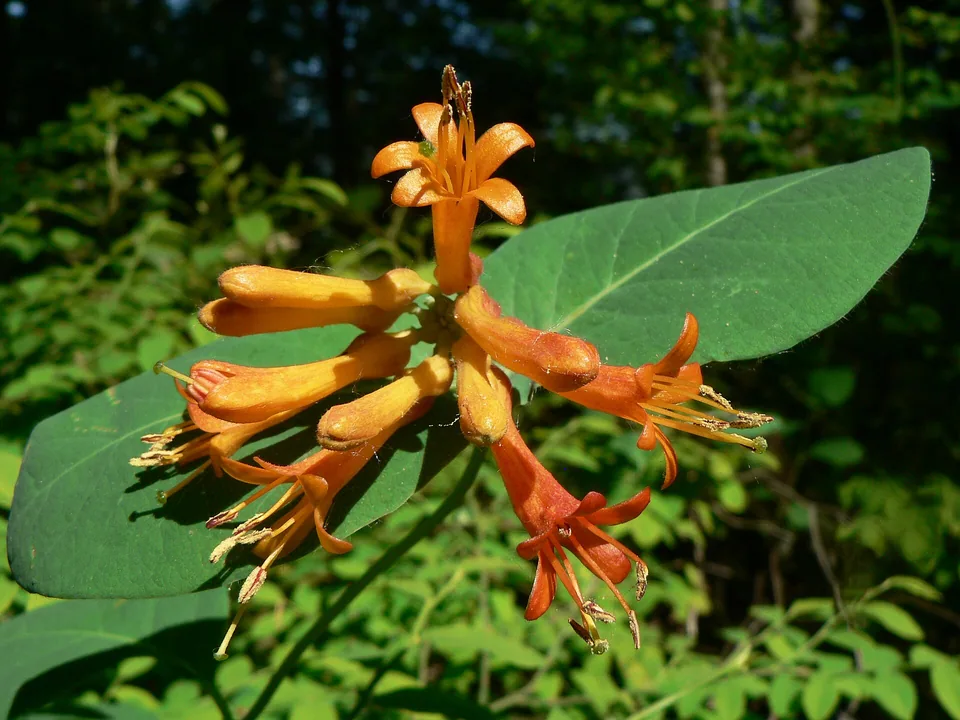
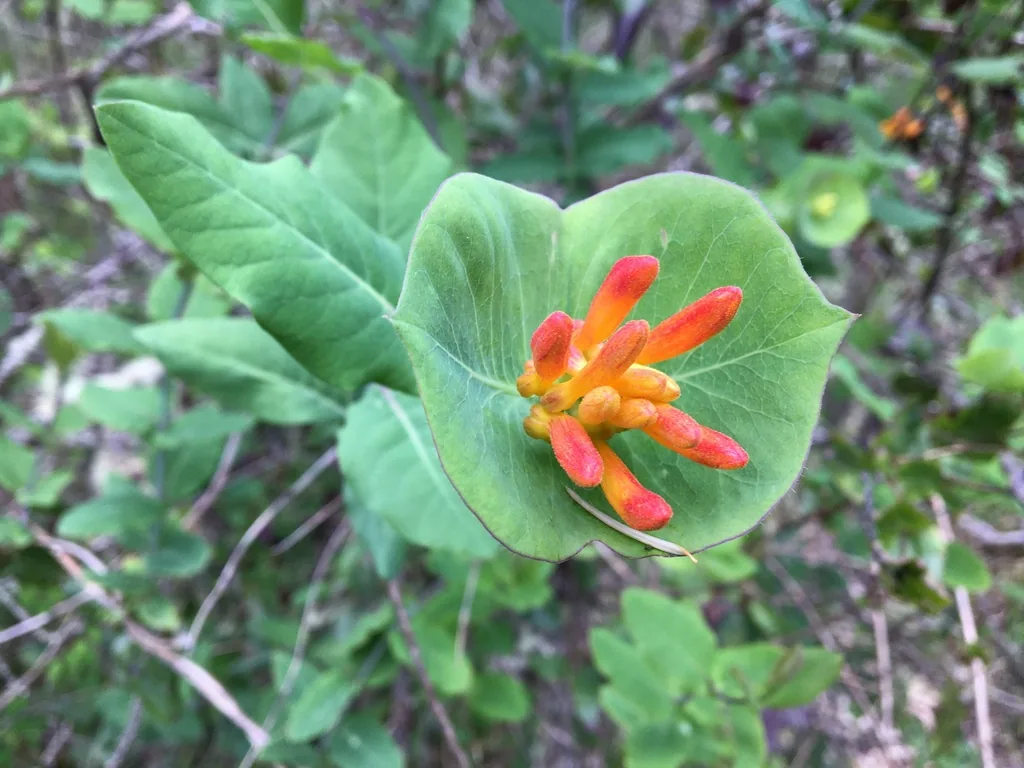

How to Grow and Care for Orange honeysuckle
Lonicera ciliosa
Written by Emilio Marruso · last checked
At a glance
This honeysuckle loves cool, moist roots and is easiest to care for in soil that stays moist but never soggy. Give each plant 7 feet or more of room to spread out. You can grow new plants from whole fruits sown outdoors in fall, from cuttings, or by layering a stem, so it's a lovely, patient project to share.
- Water
Keep the soil moist and the roots cool, but never soggy; water now and then in dry spells
What the sources say (3)
Watering: Not tolerant of saturated conditions; may need occasional watering under dry conditions after installation
Orange honeysuckle is not tolerant of saturated conditions but under dry conditions after installation may need occasional watering.
— Species (common name, Latin name) [1] Watering notes: Care is easiest in moist soil; cool moist conditions at the roots preferred
Western honeysuckle care is easiest if you plant the vine in moist soil.
— Western Honeysuckle Vines: Growing Orange Honeysuckles In The Garden | Gardening Know How [5] Prefers a good loamy soil and cool moist conditions at the roots
— Lonicera ciliosa - Useful Temperate Plants [6] - Cold
Survives winters down to −30 °F (−34.4 °C)
Very hardy · USDA 4 · RHS H7 · Z4
What the sources say (2)
Hardiness, coldest zone: 4 [winter low −34.4 to −28.9 °C (−30 to −20 °F)]
Plant them in USDA plant hardiness zones 4 through 8.
— Western Honeysuckle Vines: Growing Orange Honeysuckles In The Garden | Gardening Know How [5] Hardiness, warmest zone: 8 [winter low −12.2 to −6.7 °C (10 to 20 °F)]
Plant them in USDA plant hardiness zones 4 through 8.
— Western Honeysuckle Vines: Growing Orange Honeysuckles In The Garden | Gardening Know How [5] - Spacing
7 ft or more between plants
What the sources say (1)
Spacing: 200 cm [79 in] or more (2 m [6.6 ft] or more)
Orange honeysuckle is a twining, rambling vine that can cover a considerable area therefore wide spacings of 2 m or more might be appropriate.
— Species (common name, Latin name) [1] - Planting
Plant out in late spring or early summer, after the last frosts
What the sources say (1)
Planting: Late spring or early summer, after the last expected frosts (seedlings raised in a greenhouse)
Plant them out into their permanent positions in late spring or early summer, after the last expected frosts.
— Lonicera ciliosa - Useful Temperate Plants [6] - Harvest
The fruit can be eaten raw or cooked, but some say it is mildly poisonous: be careful
- Propagation
From seed, from cuttings, or by layering a stem
What the sources say (4)
Propagation: Seed; hardwood, softwood and half-ripe cuttings; layering
Hardwood cuttings can be treated with root hormone and stuck in pots of sand outside.
— Species (common name, Latin name) [1] Vigorous softwood, hardwood cuttings or naturally layered sections of prostrate stems.
— Species (common name, Latin name) [1] Cuttings of half-ripe wood, 7 - 10cm with or without a heel, mid summer in a frame.
— Lonicera ciliosa - Useful Temperate Plants [6] You can start the vine by planting seeds or by propagating it from cuttings of mature wood.
— Western Honeysuckle Vines: Growing Orange Honeysuckles In The Garden | Gardening Know How [5] - Sowing
Sow whole fruits outdoors in fall
What the sources say (1)
Sowing: Fall (whole fruits sown outdoors)
beyond sowing whole fruits outdoors in the fall and that greenhouse propagated seeds require a three month cold stratification.
— Species (common name, Latin name) [1]
Overview
Lonicera ciliosa is a twining honeysuckle vine native to western North America. [4][5] It can be propagated from seed or from cuttings. [5]
This record is incomplete: the sources we read do not cover every field yet.
Not yet covered by our sources: Pruning
Orange honeysuckle care
Measurements in square brackets are our conversion into the other unit system; the quoted text is unchanged.
How to water Orange honeysuckle
Watering
Not tolerant of saturated conditions; may need occasional watering under dry conditions after installation
What the sources say (1)
Orange honeysuckle is not tolerant of saturated conditions
but under dry conditions after installation may need occasional watering.Watering notes
Care is easiest in moist soil; cool moist conditions at the roots preferred
What the sources say (2)
Western honeysuckle care is easiest if you plant the vine in moist soil.Prefers a good loamy soil and cool moist conditions at the rootsHow much light Orange honeysuckle needs
The sources give different values depending on region, zone or growing conditions.
What each source says
According to University of Washington: Partial to full shade
According to Gardening Know How: Sunny or partially sunny
According to Plants For A Future: Partial shade
What the sources say (3)
According to University of Washington: Partial to full shade in well-drained soils especially
in forest edge ecotones.According to Gardening Know How: Western honeysuckle vines do well in a sunny or partially sunny site.According to Plants For A Future: Succeeds in partial shadeHow much cold Orange honeysuckle can take
Hardiness, coldest zone
4 [winter low −34.4 to −28.9 °C (−30 to −20 °F)]
What the sources say (1)
Plant them in USDA plant hardiness zones 4 through 8.Hardiness, warmest zone
8 [winter low −12.2 to −6.7 °C (10 to 20 °F)]
What the sources say (1)
Plant them in USDA plant hardiness zones 4 through 8.Where to grow Orange honeysuckle
200 cm [79 in] or more (2 m [6.6 ft] or more)
What the sources say (1)
Orange honeysuckle is a twining, rambling vine that can
cover a considerable area therefore wide spacings of 2 m or more might be
appropriate.How to propagate Orange honeysuckle
Seed; hardwood, softwood and half-ripe cuttings; layering
What the sources say (4)
Hardwood
cuttings can be treated with root hormone and stuck in pots of sand outside.Vigorous softwood, hardwood cuttings or
naturally layered sections of prostrate stems.Cuttings of half-ripe wood, 7 - 10cm with or without a heel, mid summer in a frame.You can start the vine by planting seeds or by propagating it from cuttings of mature wood.How to grow Orange honeysuckle
The plant
Family
Caprifoliaceae
What the sources say (1)
western trumpet honeysuckle Caprifoliaceae Lonicera
ciliosa (Pursh) Poir. ex DC.
symbol: LOCI3Remedies
The sources we checked give no remedies for this plant.
Calendar
Sowing
Fall (whole fruits sown outdoors)
What the sources say (1)
beyond sowing whole fruits outdoors in the fall and that
greenhouse propagated seeds require a three month cold stratification.Planting
Late spring or early summer, after the last expected frosts (seedlings raised in a greenhouse)
What the sources say (1)
Plant them out into their permanent positions in late spring or early summer, after the last expected frosts.Pruning
Not stated in the sources we read.
Months as given by the sources, which are mostly from the United States (northern hemisphere). In the southern hemisphere they shift by about six months.
Edibility
Reported by the source, quoted verbatim. Do not eat a plant on the basis of this page alone: identification mistakes can be dangerous.
Indicative values
Values from a secondary source, not checked word for word like the rest of this page. Use them as a starting point.
- Life cycle
- PerennialIndicative value, adapt it to your climate · Secondary source
- Hours of sun
- 4-6 hoursIndicative value, adapt it to your climate · Secondary source
- Drought tolerant
- yesIndicative value, adapt it to your climate · Secondary source
- Soil
- Sandy, Loamy, RockyIndicative value, adapt it to your climate · Secondary source
- Soil pH
- 6-7.5Indicative value, adapt it to your climate · Secondary source
- Care level
- MediumIndicative value, adapt it to your climate · Secondary source
- Growth rate
- LowIndicative value, adapt it to your climate · Secondary source
- Pruning
- December, January, February, March, AprilIndicative value, adapt it to your climate · Secondary source
Similar plants
- Alpine honeysuckle Lonicera alpigena
- Amur Honeysuckle Lonicera maackii
- Dwarf honeysuckle Lonicera xylosteum
- European Honeysuckle Lonicera periclymenum
- Grape Honysuckle Lonicera reticulata
- Honeysuckle Lonicera japonica
- Honeysuckle Lonicera sempervirens
- Italian woodbine Lonicera caprifolium
Sources
Every value above is quoted from these documents. Links lead to the original publisher.
- Species (common name, Latin name) · depts.washington.edu, consulted
- Species (common name, Latin name) http://depts.washington.edu/propplnt/Plants/LOCI.htm · courses.washington.edu, consulted
- Virginia Tech Dendrology Fact Sheet · dendro.cnre.vt.edu, consulted
- Lonicera ciliosa - Trees and Shrubs Online · treesandshrubsonline.org, consulted
- Western Honeysuckle Vines: Growing Orange Honeysuckles In The Garden | Gardening Know How · gardeningknowhow.com, consulted
- Lonicera ciliosa - Useful Temperate Plants · temperate.theferns.info, consulted
- Lonicera ciliosa | Orange Honeysuckle | Wildflowers of the Pacific Northwest · pnwflowers.com, consulted
Written by Emilio Marruso · last checked