
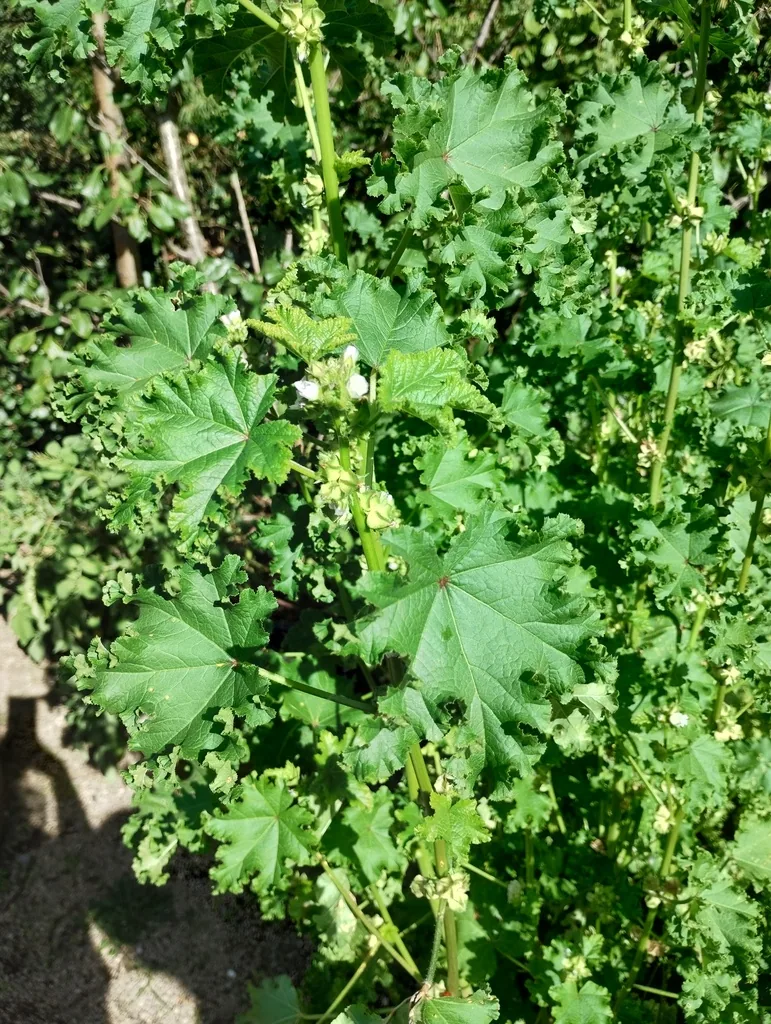

How to Grow and Care for Cluster mallow
Malva verticillata
Written by Emilio Marruso · last checked
At a glance
This mallow is a generous leafy green: sow it straight in the garden in early spring, give it full sun or light shade, and you can pick leaves again and again until it flowers. Well-grown plants make leaves 6 inches or more across, tasty raw or cooked, and even the young green seeds are good to eat.
- Sun
Full sun to light shade
- Water
Moderate watering: it dislikes both drying out and soggy soil
What the sources say (4)
Watering: Moderate
Shade tolerance light shade Water moderate Hardiness Zone 6+
— Chinese Mallow (Malva verticillata) — Practical Plants [3] irrigation: moderate; priority fertilizer: organic matter; crop management: free standing
— Cluster mallow [5] Watering notes: Drought intolerant; sensitive to flooding; prefers well-drained soil
Drainage well drained Tolerates Nutritionally Poor Soil No Drought intolerant
— Chinese Mallow (Malva verticillata) — Practical Plants [3] preferred soil type: sandy, loamy, clayey; sensitivity: heat, flooding
— Cluster mallow [5] - Cold
Survives winters down to −10 °F (−23.3 °C)
Very hardy · USDA 6 · RHS H7 · Z6
What the sources say (1)
Hardiness, coldest zone: 6 [winter low −23.3 to −17.8 °C (−10 to 0 °F)]
Water moderate Hardiness Zone 6+ Soil textures sandy, loamy, clay
— Chinese Mallow (Malva verticillata) — Practical Plants [3] - Soil
Well-drained soil
What the sources say (2)
Watering notes: Drought intolerant; sensitive to flooding; prefers well-drained soil
Drainage well drained Tolerates Nutritionally Poor Soil No Drought intolerant
— Chinese Mallow (Malva verticillata) — Practical Plants [3] preferred soil type: sandy, loamy, clayey; sensitivity: heat, flooding
— Cluster mallow [5] - Harvest
Pick leaves again and again until it flowers; eat them raw or cooked, young green seeds too
What the sources say (1)
Harvest: Harvested repeatedly until flowering
irrigation: moderate; priority fertilizer: organic matter; crop management: free standing; harvesting: repeated until flowering.
— Cluster mallow [5] - Pests
Watch out for rust on the leaves
- Propagation
From seed or soft stem cuttings; plants can be short-lived, so start new ones every year
What the sources say (3)
Propagation: Seed, cuttings
Seed - sow early spring in situ. Germination should take place within 2 weeks.
— Chinese Mallow (Malva verticillata) — Practical Plants [3] System: monocropping; planting material: seeds, cuttings; planting method: direct planting, transplanting
— Cluster mallow [5] Cuttings: Softwood cuttings; plants can be short-lived, so annual propagation is recommended.
Propagate by seed or by softwood cuttings. Plants can be short-lived so annual propagation is recommended
— [6] - Sowing
Sow straight in the garden in early spring
What the sources say (1)
Sowing: Early spring, sown in situ
Seed - sow early spring in situ. Germination should take place within 2 weeks.
— Chinese Mallow (Malva verticillata) — Practical Plants [3]
Overview
Chinese mallow is an annual herb of eastern Asian origin, long cultivated as a cooked vegetable and salad plant. [1] It is easy to grow in ordinary garden soil, preferring a reasonably well-drained, moderately fertile soil in a sunny position. [3] On nitrogen-rich soils the leaves can concentrate high levels of nitrates. [4]
This record is incomplete: the sources we read do not cover every field yet.
Not yet covered by our sources: Spacing
Cluster mallow care
How to water Cluster mallow
Watering
Moderate
Watering notes
Drought intolerant; sensitive to flooding; prefers well-drained soil
How much light Cluster mallow needs
How much cold Cluster mallow can take
6 [winter low −23.3 to −17.8 °C (−10 to 0 °F)]
What the sources say (1)
Water
moderate
Hardiness
Zone 6+
Soil textures
sandy, loamy, clayWhere to grow Cluster mallow
Not stated in the sources we read.
How to propagate Cluster mallow
Seed, cuttings
How to grow Cluster mallow
Propagation
Cuttings
Softwood cuttings; plants can be short-lived, so annual propagation is recommended.
What the sources say (1)
Propagate by seed or by softwood cuttings. Plants can be short-lived so annual propagation is recommendedCluster mallow pests and problems
Rust
Symptom: Rust fungus infestation
What the sources say (1)
Plants are prone to infestation by rust fungus [9] .
— Chinese Mallow (Malva verticillata) — Practical Plants [3]
Remedies
The sources we checked give no remedies for this plant.
Calendar
Sowing
Early spring, sown in situ
What the sources say (1)
Seed - sow early spring in situ. Germination should take place within 2 weeks.Harvest
Harvested repeatedly until flowering
What the sources say (1)
irrigation: moderate; priority fertilizer: organic matter; crop management: free standing; harvesting: repeated until flowering.Months as given by the sources, which are mostly from the United States (northern hemisphere). In the southern hemisphere they shift by about six months.
Edibility
Reported by the source, quoted verbatim. Do not eat a plant on the basis of this page alone: identification mistakes can be dangerous.
Leaves - raw or cooked [8] [17] [18] [2] [7] . The leaves of well-grown plants can be 15cm or more across.
[3]Young seeds - raw or cooked. Used when green and immature [21] .
[3]Seedlings, tender leaves, and shoots are eaten boiled, stir-fried, pickled, roasted with soy sauce, or added to soups.
[5]
Similar plants
- Common mallow Malva sylvestris
- Mallow Malva neglecta
- Musk Mallow Malva moschata
- Tree Mallow Malva arborea
- Tree Mallow Malva trimestris
- Bull mallow Malva nicaeensis
- Cheeseweed mallow Malva parviflora
- Abies grandis Abies grandis
Sources
Every value above is quoted from these documents. Links lead to the original publisher.
- Malva verticillata - FNA · floranorthamerica.org, consulted
- Malva verticillata (whorled mallow): Go Botany · gobotany.nativeplanttrust.org, consulted
- Chinese Mallow (Malva verticillata) — Practical Plants · practicalplants.org, consulted
- Malva verticillata - Useful Temperate Plants · temperate.theferns.info, consulted
- Cluster mallow · worldveg.tind.io, consulted
- rhs.org.uk · rhs.org.uk
Written by Emilio Marruso · last checked