
How to Grow and Care for Mesembryanthemum cordifolium
Mesembryanthemum cordifolium
Written by Emilio Marruso · last checked
At a glance
This low perennial grows up to 4 inches tall yet spreads 1 to 2 feet wide, and all it really asks for is full sun. Once settled in the garden, it needs little if any watering in most years, and a light feeding two or three times a year keeps it happy. It grows in containers too; just let the soil get fairly dry between waterings.
- Sun
Full sun
What the sources say (1)
Light: Full sun
Light requirement: plant grows in full sun
— FPS-47 [1] - Water
Once settled in the garden, little or no watering in most years
What the sources say (2)
Watering: Established landscape plants should require little if any irrigation in most years
Established landscape plants should require little if any irrigation in most years.
— FPS-47 [1] Watering notes: In containers, let the soil become fairly dry between waterings
After watering plants in containers, be sure to allow the soil to become fairly dry before watering again.
— FPS-47 [1] - Cold
Survives winters down to 30 °F (−1.1 °C)
Half hardy: mild winters or an unheated greenhouse · USDA 10a · RHS H3 · Z10
- Soil
Well-drained soil, so the roots don't rot
- Spacing
2–3 ft between plants
What the sources say (1)
Spacing: 61.0-91.4 cm (24 to 36 inches)
Plant spacing: 24 to 36 inches
— FPS-47 [1] - Planting
In warm climates you can plant it any time of year
What the sources say (1)
Planting: Year-round (zones 10 and 11)
Planting month for zones 10 and 11: year-round
— FPS-47 [1] - Feeding
A light feeding two or three times a year
What the sources say (1)
How often: A light fertilization two or three times a year
A light fertilization two or three times during the year should be all the plant needs to maintain a good appearance.
— FPS-47 [1] - Pests
Too much water causes root rot: yellow leaves, poor growth, even death
What the sources say (1)
Diseases: root rot
Overwatering can cause root rot, leading to poor plant growth, chlorosis, and plant death.
— FPS-47 [1] - Size
Up to 4 in tall and 1–2 ft wide
- Containers
Grows in containers too; let the soil get fairly dry between waterings
What the sources say (2)
In containers: Yes
It may be grown in a hanging basket in a well-drained medium or as a groundcover in a small landscape or rock garden.
— FPS-47 [1] Watering notes: In containers, let the soil become fairly dry between waterings
After watering plants in containers, be sure to allow the soil to become fairly dry before watering again.
— FPS-47 [1]
Overview
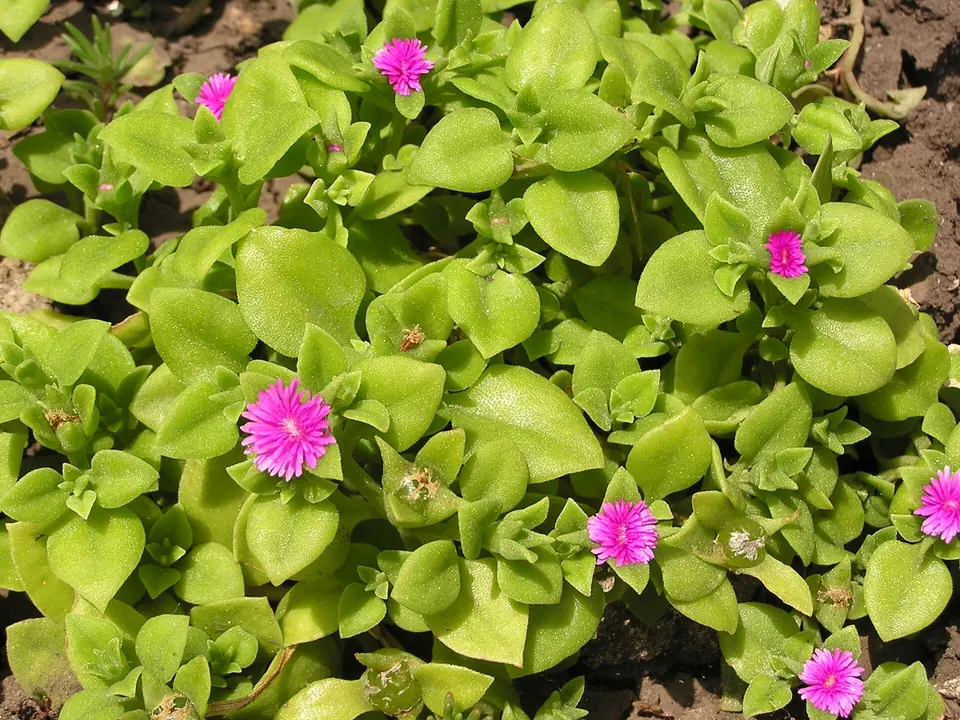
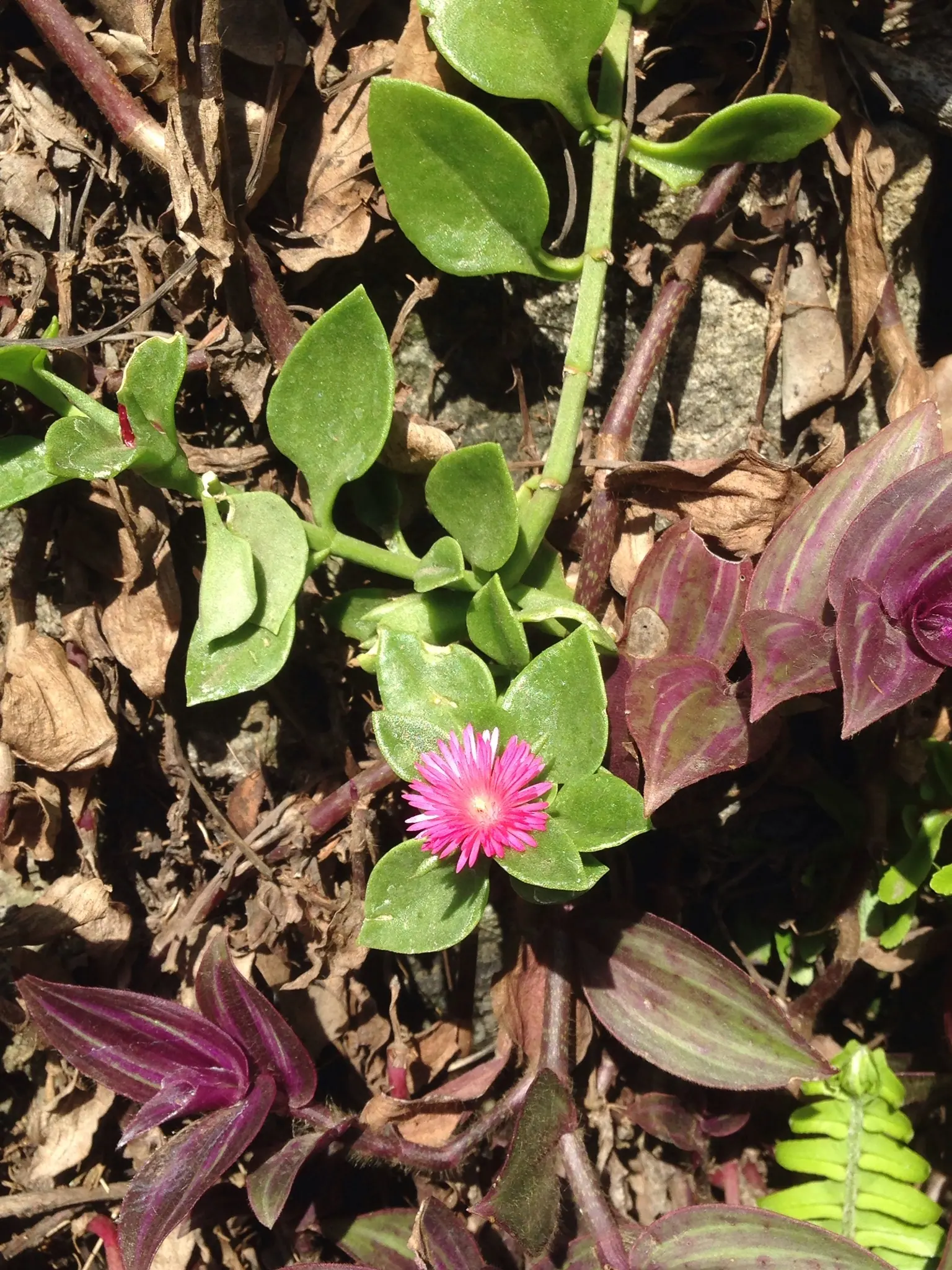
Baby sun rose is a prostrate perennial groundcover growing 3 to 4 inches [8–10 cm] tall. [1] It is planted in full sun in well-drained soil to prevent root rot. [1]
This record is incomplete: the sources we read do not cover every field yet.
Not yet covered by our sources: Pruning, Propagation
Mesembryanthemum cordifolium care
Measurements in square brackets are our conversion into the other unit system; the quoted text is unchanged.
How to water Mesembryanthemum cordifolium
Watering
Established landscape plants should require little if any irrigation in most years
What the sources say (1)
Established landscape plants should require little if any irrigation in most years.Watering notes
In containers, let the soil become fairly dry between waterings
What the sources say (1)
After watering plants in containers, be sure to allow the soil to become fairly dry before watering again.How much light Mesembryanthemum cordifolium needs
Full sun
What the sources say (1)
Light requirement: plant grows in full sunHow much cold Mesembryanthemum cordifolium can take
Hardiness, coldest zone
10a [winter low −1.1 to 1.7 °C (30 to 35 °F)]
What the sources say (1)
USDA hardiness zones: 10A through 11BHardiness, warmest zone
11b [winter low 7.2 to 10 °C (45 to 50 °F)]
What the sources say (1)
USDA hardiness zones: 10A through 11BWhere to grow Mesembryanthemum cordifolium
In containers
Yes
What the sources say (1)
It may be grown in a hanging basket in a well-drained medium or as a groundcover in a small landscape or rock garden.Spacing
61.0-91.4 cm (24 to 36 inches)
What the sources say (1)
Plant spacing: 24 to 36 inchesHow to propagate Mesembryanthemum cordifolium
Not stated in the sources we read.
How to grow Mesembryanthemum cordifolium
The plant
Life cycle
perennial
What the sources say (1)
Baby sun rose is a perennial groundcover with a prostrate growth habit. This plant may reach a height of 3 to 4 inches and spreads in the landscape, hugging the ground forming a tight, almost clipped appearanceFamily
Aizoaceae
What the sources say (1)
Common name(s): baby sun rose, heartleaf iceplant Family: Aizoaceae Plant type: groundcover USDA hardiness zones: 10A through 11BMature height
up to 10.16 cm (4 in)
What the sources say (1)
Height: up to 4 inches Spread: 1 to 2 feet Plant habit: prostrate (flat)Mature width
30.48-60.96 cm (1-2 ft)
What the sources say (1)
Height: up to 4 inches Spread: 1 to 2 feet Plant habit: prostrate (flat)Pests and diseases
Diseases
root rot
What the sources say (1)
Overwatering can cause root rot, leading to poor plant growth, chlorosis, and plant death.Fertilizing
How often
A light fertilization two or three times a year
What the sources say (1)
A light fertilization two or three times during the year should be all the plant needs to maintain a good appearance.Mesembryanthemum cordifolium pests and problems
Root rot from overwatering
Symptom: Poor plant growth, chlorosis, and plant death
What to do: Plant in well-drained soil and let container soil become fairly dry between waterings
What the sources say (1)
Overwatering can cause root rot, leading to poor plant growth, chlorosis, and plant death.
— FPS-47 [1]
Remedies
Each remedy shows what official sources say about it; traditional remedies without an official source are marked as such. Harmful ones are listed so you know to avoid them.
Getting rid of it
unwanted spreading groundcover
hand pulling Not verified
Traditional remedy, not verified by an official source.
How: Remove by hand pulling; all live shoot segments must be removed from contact with the soil to prevent resprouting.
mulching with the removed plant material Not verified
Traditional remedy, not verified by an official source.
How: If complete removal is not possible, mulch with the removed plant material; at least one follow-up treatment is needed to remove resprouts.
Calendar
Planting
Year-round (zones 10 and 11)
What the sources say (1)
Planting month for zones 10 and 11: year-roundPruning
Not stated in the sources we read.
Months as given by the sources, which are mostly from the United States (northern hemisphere). In the southern hemisphere they shift by about six months.
Indicative values
Values from a secondary source, not checked word for word like the rest of this page. Use them as a starting point.
- Hours of sun
- 6-8 hoursIndicative value, adapt it to your climate · Secondary source
- Drought tolerant
- yesIndicative value, adapt it to your climate · Secondary source
- Soil pH
- 6-7.5Indicative value, adapt it to your climate · Secondary source
- Care level
- EasyIndicative value, adapt it to your climate · Secondary source
- Growth rate
- HighIndicative value, adapt it to your climate · Secondary source
- Pruning
- March, April, May, June, July, August, September, March, April, May, June, July, August, May, May, November, December, January, May, March, April, November, December, JanuaryIndicative value, adapt it to your climate · Secondary source
- Propagation
- Cutting, Division, Seed Propagation, Layering Propagation, Grafting PropagationIndicative value, adapt it to your climate · Secondary source
Similar plants
- Common iceplant Mesembryanthemum crystallinum
- Delosperma sutherlandii Delosperma sutherlandii
- Hardy Ice Plant Delosperma cooperi
- Hardy Ice Plant Delosperma nubigenum
- Sour fig Carpobrotus edulis
- African Living Rock Pleiospilos bolusii
- Abies grandis Abies grandis
- Abraham Trachystemon orientalis
Sources
Every value above is quoted from these documents. Links lead to the original publisher.
- FPS-47 · edis.ifas.ufl.edu, consulted
Written by Emilio Marruso · last checked