
How to Grow and Care for Oxalis adenophylla
Oxalis adenophylla
Written by Emilio Marruso · last checked
Toxic to: People · Why
At a glance
This little bulb fits almost anywhere: it grows happily in pots and even indoors. Plant divided bulbs in early fall, water generously in spring until it blooms, and keep the soil barely moist, never soggy. As a bonus, its leaves and flowers can be eaten raw, with a sour, tangy flavor that surprises everyone who tries it.
- Water
Water from below when the top 2 inches are dry; keep the soil barely moist, never soggy
What the sources say (5)
Watering: Keep soil barely moist but never soggy; water liberally in spring until flowering without overwatering
According to World of Succulents: Keep the soil barely moist but never soggy. Water only when the top 2 inches (5 cm) of the soil are dry.
— Oxalis adenophylla (Silver Shamrock) - World of Succulents [4] According to LLIFLE: Water: Water and feed liberally only in spring till the plants bloom, but do not over water.
— Oxalis adenophylla [3] Keep the soil barely moist but never soggy. Water only when the top 2 inches (5 cm) of the soil are dry.
— Oxalis adenophylla (Silver Shamrock) - World of Succulents [4] Water: Water and feed liberally only in spring till the plants bloom, but do not over water.
— Oxalis adenophylla [3] Watering notes: Water from the bottom; protect from winter rain, bulbs rot easily in damp soil
The plant tolerates low temperatures (-30° C or less) but needs protection against winter rains, can tolerate snow cover for several weeks per year..
— Oxalis adenophylla [3] - Planting
Plant divided bulbs in early fall
What the sources say (1)
Planting: Early fall (divided bulbs)
The easiest way to propagate Oxalis adenophylla is to dig up an established clump, divide it, and replant the bulbs early in the fall.
— Oxalis adenophylla (Silver Shamrock) - World of Succulents [4] - Harvest
Leaves and flowers can be eaten raw; they taste sour
- Pests
Watch for rust, slugs and snails
- Watch out
Bulbs rot in wet soil: keep them out of winter rain or lift them and store dry
What the sources say (1)
Watering notes: Water from the bottom; protect from winter rain, bulbs rot easily in damp soil
The plant tolerates low temperatures (-30° C or less) but needs protection against winter rains, can tolerate snow cover for several weeks per year..
— Oxalis adenophylla [3] - Propagation
From offsets, by dividing clumps, or from seed
What the sources say (2)
Propagation: Offsets; division of clumps; seed
It may be propagated by offsets and by seeds. Sow them during autumn, in a mix of equal parts of compost, regular garden soil and sharp river sand.
— Oxalis adenophylla [3] The easiest way to propagate Oxalis adenophylla is to dig up an established clump, divide it, and replant the bulbs early in the fall.
— Oxalis adenophylla (Silver Shamrock) - World of Succulents [4] - Containers
Grows in pots and indoors too
What the sources say (2)
In containers: Yes
They make superb rock garden plants, as well as adequate for the front of a border as well as being perfect for pots and containers.
— Oxalis adenophylla [3] Indoors: Yes
If grown indoors put this pot plant in full sun to enjoy the flowers for a few weeks.
— Oxalis adenophylla [3] - Safety
Contains oxalic acid: large amounts can be toxic to people and pets
Overview
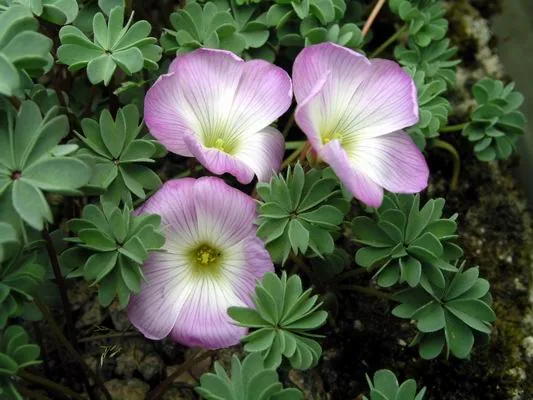
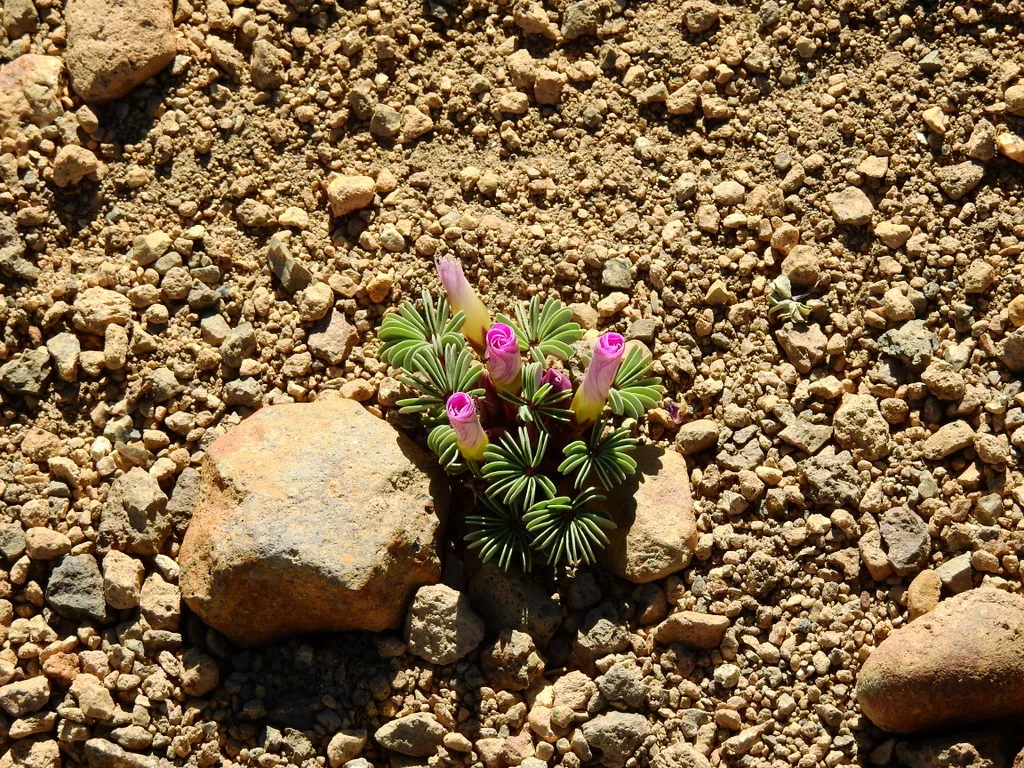
Silver shamrock is a low, clump-forming bulbous perennial from the Andes of Chile and Argentina with grey-green folded leaves and pinkish-purple flowers. [1] It is an alpine suited to rock gardens, raised beds and pots, and rots easily in damp winter soil. [3]
This record is incomplete: the sources we read do not cover every field yet.
Not yet covered by our sources: Pruning
Oxalis adenophylla care
How to water Oxalis adenophylla
Watering
Keep soil barely moist but never soggy; water liberally in spring until flowering without overwatering
What each source says
According to World of Succulents: Keep soil barely moist, never soggy; water when the top 5 cm (2 in) is dry
According to LLIFLE: Water liberally only in spring until bloom, without overwatering
What the sources say (4)
According to World of Succulents: Keep the soil barely moist but never soggy. Water only when the top 2 inches (5 cm) of the soil are dry.According to LLIFLE: Water: Water and feed liberally only in spring till the plants bloom, but do not over water.Keep the soil barely moist but never soggy. Water only when the top 2 inches (5 cm) of the soil are dry.Water: Water and feed liberally only in spring till the plants bloom, but do not over water.Watering notes
Water from the bottom; protect from winter rain, bulbs rot easily in damp soil
What the sources say (1)
The plant tolerates low temperatures (-30° C or less) but needs protection against winter rains, can tolerate snow cover for several weeks per year..How much light Oxalis adenophylla needs
The sources give different values depending on region, zone or growing conditions.
What each source says
According to LLIFLE: Full sun
According to World of Succulents: Bright, indirect light; tolerates some shade
According to KPU Plant DB: Filtered shade, deep shade
What the sources say (3)
According to LLIFLE: Exposure: Grow it in full sun. Plants usually do not live well where the sun is not strong, but those who live where the sun in stronger may tolerate some shade.According to World of Succulents: Although it can tolerate some shade, Oxalis adenophylla needs bright, indirect light to grow well and produce flowers.According to KPU Plant DB: Hardiness Rating:
Zone 5: (-29 to -23 °C)
Exposure:
Filtered shade, Deep shadeHow much cold Oxalis adenophylla can take
Hardiness, coldest zone
The sources give different values depending on region, zone or growing conditions.
What each source says
According to LLIFLE: 5 [winter low −28.9 to −23.3 °C (−20 to −10 °F)]
According to World of Succulents: 4a [winter low −34.4 to −31.7 °C (−30 to −25 °F)]
What the sources say (2)
According to LLIFLE: can tolerate snow cover for several weeks per year.. USDA Hardiness Zone 5 to 8.According to World of Succulents: USDA Plant Hardiness Zones 4a to 9b, with average minimum winter temperatures ranging from -30°F to 30°F (-34.4°C to -1.1°C).Hardiness, warmest zone
The sources give different values depending on region, zone or growing conditions.
What each source says
According to LLIFLE: 8 [winter low −12.2 to −6.7 °C (10 to 20 °F)]
According to World of Succulents: 9b [winter low −3.9 to −1.1 °C (25 to 30 °F)]
What the sources say (2)
According to LLIFLE: can tolerate snow cover for several weeks per year.. USDA Hardiness Zone 5 to 8.According to World of Succulents: USDA Plant Hardiness Zones 4a to 9b, with average minimum winter temperatures ranging from -30°F to 30°F (-34.4°C to -1.1°C).Where to grow Oxalis adenophylla
Indoors
Yes
What the sources say (1)
If grown indoors put this pot plant in full sun to enjoy the flowers for a few weeks.In containers
Yes
What the sources say (1)
They make superb rock garden plants, as well as adequate for the front of a border as well as being perfect for pots and containers.How to propagate Oxalis adenophylla
Offsets; division of clumps; seed
What the sources say (2)
It may be propagated by offsets and by seeds. Sow them during autumn, in a mix of equal parts of compost, regular garden soil and sharp river sand.The easiest way to propagate Oxalis adenophylla is to dig up an established clump, divide it, and replant the bulbs early in the fall.Oxalis adenophylla pests and problems
Rust, slugs and snails
What the sources say (1)
Pests and diseases: Prone to rust, slugs and snails. Propagation: It may be propagated by offsets and by seeds.
— Oxalis adenophylla [3] Winter rot
Symptom: Bulbs rot in damp soil
What to do: Lift bulbs in winter and store dry, or grow in very well-drained gritty soil
What the sources say (1)
The general recommendation is that the bulbs be dug out in winter and stored dry (they rot very easily in damp terrains)
— Oxalis adenophylla [3]
Remedies
Each remedy shows what official sources say about it; traditional remedies without an official source are marked as such. Harmful ones are listed so you know to avoid them.
First aid
First aid: not a substitute for a doctor
ingestion
removing plant pieces from the mouth and rinsing Official source, not independently tested
Call the NSW Poisons Information Centre on 13 11 26 for immediate support. They will give you information about any first aid you need to do and tell you which emergency department to go to.
— schn.health.nsw.gov.au [5] How: Remove plant pieces from the mouth, then rinse with water.
flushing the eyes with clean, running water for 10-15 minutes - removing plant pieces from your child's mouth, then rinsing with water.
— schn.health.nsw.gov.au [5]
Treating the plant
winter rot
lift tubers and store dry over winter Not verified
Traditional remedy, not verified by an official source.
How: The general recommendation is to dig out the bulbs in winter and store them dry, as they rot very easily in damp ground; in moist-winter areas some growers leave them in the ground in very well-drained, gritty soil.
Is Oxalis adenophylla poisonous?
Reported by the source, quoted verbatim. This is not medical or veterinary advice: if a person or an animal may have eaten this plant, contact a poison control centre or a veterinarian.
contains oxalic acid and can be toxic to humans and pets if sufficient amounts are ingested.
[4]
Calendar
Sowing
The sources give different values depending on region, zone or growing conditions.
What each source says
According to LLIFLE: Autumn
According to World of Succulents: Late winter or early spring
What the sources say (2)
According to LLIFLE: It may be propagated by offsets and by seeds. Sow them during autumn, in a mix of equal parts of compost, regular garden soil and sharp river sand.According to World of Succulents: It can also be propagated by seeds sown in late winter or early spring.Planting
Early fall (divided bulbs)
What the sources say (1)
The easiest way to propagate Oxalis adenophylla is to dig up an established clump, divide it, and replant the bulbs early in the fall.Pruning
Not stated in the sources we read.
Months as given by the sources, which are mostly from the United States (northern hemisphere). In the southern hemisphere they shift by about six months.
Edibility
Reported by the source, quoted verbatim. Do not eat a plant on the basis of this page alone: identification mistakes can be dangerous.
Indicative values
Values from a secondary source, not checked word for word like the rest of this page. Use them as a starting point.
- Life cycle
- Herbaceous PerennialIndicative value, adapt it to your climate · Secondary source
- Hours of sun
- 6-8 hoursIndicative value, adapt it to your climate · Secondary source
- Drought tolerant
- yesIndicative value, adapt it to your climate · Secondary source
- Soil
- Humus richIndicative value, adapt it to your climate · Secondary source
- Soil pH
- 5.5-7.5Indicative value, adapt it to your climate · Secondary source
- Care level
- MediumIndicative value, adapt it to your climate · Secondary source
- Growth rate
- ModerateIndicative value, adapt it to your climate · Secondary source
- Pruning
- March, April, May, June, JulyIndicative value, adapt it to your climate · Secondary source
- Pests
- Pest resistant, Disease resistant, Deer resistant, Rabbit resistantIndicative value, adapt it to your climate · Secondary source
Similar plants
- Oxalis Oxalis articulata
- Purple Shamrock Oxalis triangularis
- Redwood-sorrel Oxalis oregana
- Violet Wood Sorrel Oxalis violacea
- Wood-sorrel Oxalis acetosella
- Aaron's Beard Hypericum calycinum
- Abies grandis Abies grandis
- Abraham Trachystemon orientalis
Sources
Every value above is quoted from these documents. Links lead to the original publisher.
- silver shamrock - KPU Plant DB · plantdatabase.kpu.ca, consulted
- Oxalis adenophylla - Useful Temperate Plants · temperate.theferns.info, consulted
- Oxalis adenophylla · llifle.com, consulted
- Oxalis adenophylla (Silver Shamrock) - World of Succulents · worldofsucculents.com, consulted
- schn.health.nsw.gov.au · schn.health.nsw.gov.au
Written by Emilio Marruso · last checked