
How to Grow and Care for Petrosedum sediforme
Petrosedum sediforme
Written by Emilio Marruso · last checked
At a glance
This tough little plant asks for very little: once established it tolerates drought, needing just a little water in summer and some in winter, as long as the soil drains well. You can start it from seed in spring, divide it, or grow new plants from its runners. Its leaves can even be cooked and eaten, in moderation.
- Water
Little water in summer, some in winter, never soggy; don't wet the leaves in humid weather
What the sources say (3)
Watering: Drought tolerant once established; more moisture in the growing season but never waterlogged; little water in summer, some in winter, good drainage
is able to tolerate dry periods and survive drought without the need for watering, but it will grow stronger if they receive adequate moisture during its growing season, but never allowing the plant to remain waterlogged
— Sedum sediforme [2] Watering Needs: Little water in summer, some water in winter, good drainage
— Pale Stonecrop (Sedum sediforme) [3] Watering notes: Avoid overhead watering under humid conditions, especially during winter
Avoid overhead watering under humid conditions, especially during winter.
— Sedum sediforme [2] - Planting
Plant seedlings out in summer or early the next summer; divisions can go straight outdoors
What the sources say (1)
Planting: Summer, or early summer of the following year (seedlings); divisions can be planted out directly
it is possible to plant them out during the summer, otherwise keep them in a cold-frame or greenhouse for their first winter and plant them out in early summer of the following year
— Sedum sediforme — Practical Plants [4] - Harvest
The leaves can be eaten cooked
- Propagation
From seed, by dividing the plant, or from its runners
What the sources say (2)
- Sowing
Sow in spring on the soil surface, in a greenhouse
What the sources say (1)
Sowing: Spring (surface sow in a greenhouse)
Seed - surface sow in spring in well-drained soil in a sunny position in a greenhouse.
— Sedum sediforme — Practical Plants [4] - Safety
Not poisonous, but eating a lot of it can upset the stomach
Overview
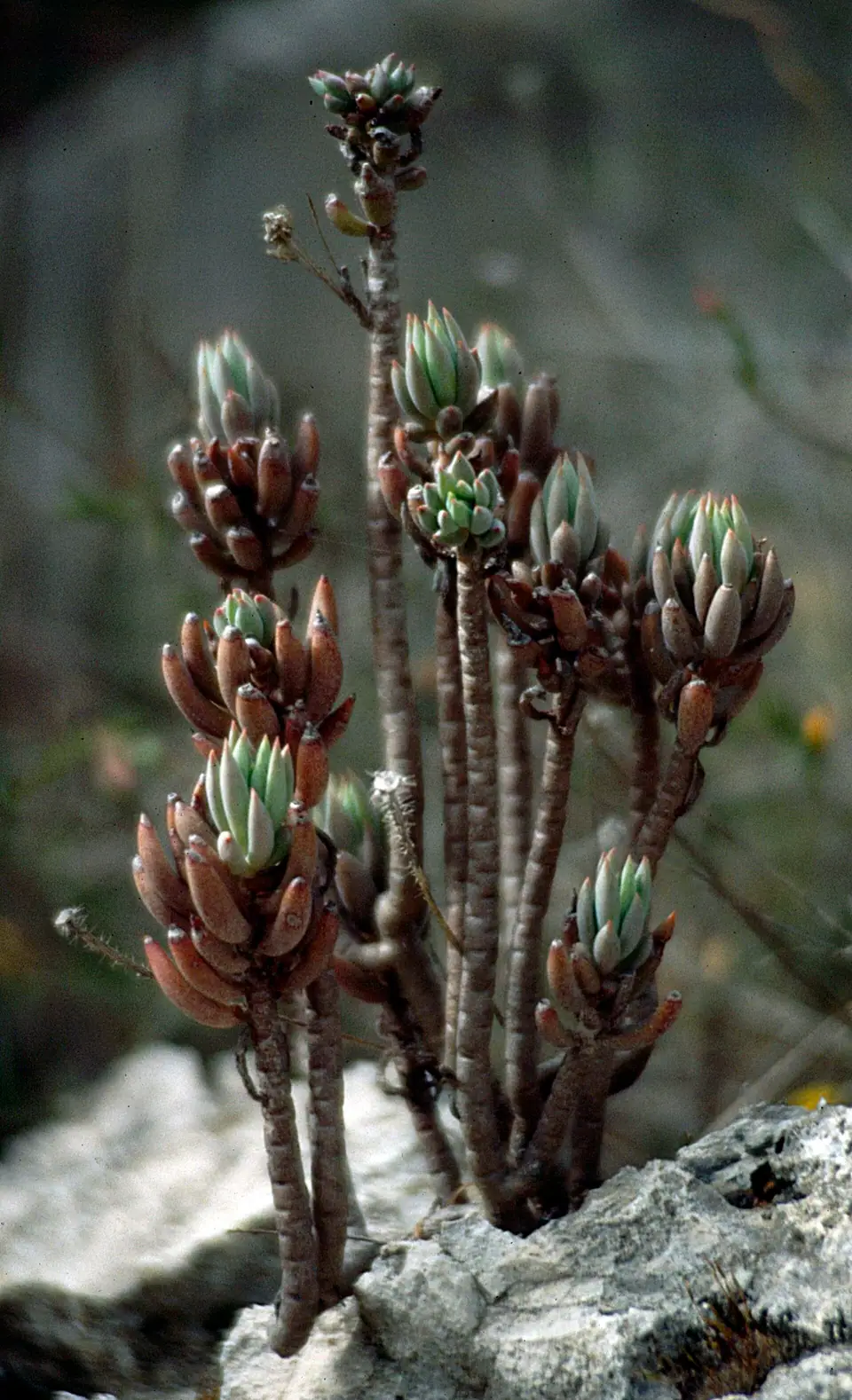
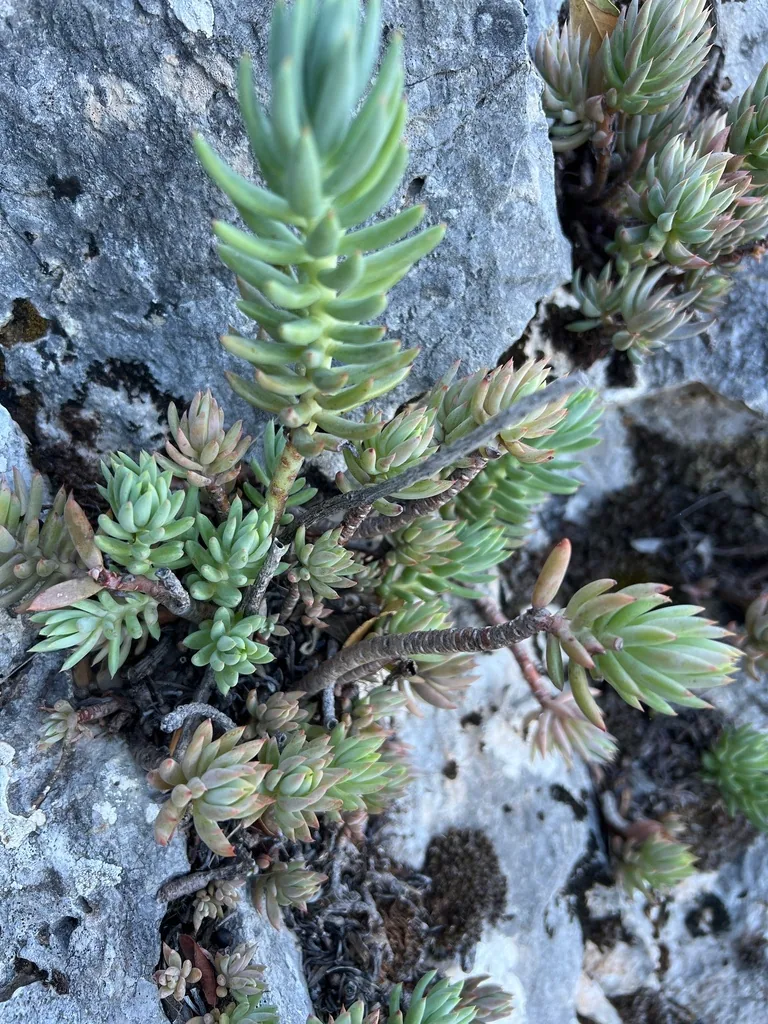
Pale stonecrop is an evergreen succulent perennial of Mediterranean rocks and walls, sometimes grown as an ornamental in rock gardens. [2][4] It tolerates drought once established and needs very porous, quick-draining soil. [1][2]
This record is incomplete: the sources we read do not cover every field yet.
Not yet covered by our sources: Hardiness, coldest zone, Hardiness, warmest zone, Pruning
Petrosedum sediforme care
How to water Petrosedum sediforme
Watering
Drought tolerant once established; more moisture in the growing season but never waterlogged; little water in summer, some in winter, good drainage
What the sources say (2)
is able to tolerate dry periods and survive drought without the need for watering, but it will grow stronger if they receive adequate moisture during its growing season, but never allowing the plant to remain waterloggedWatering Needs: Little water in summer, some water in winter, good drainageWatering notes
Avoid overhead watering under humid conditions, especially during winter
What the sources say (1)
Avoid overhead watering under humid conditions, especially during winter.How much light Petrosedum sediforme needs
The sources disagree:
It prefers light shade with ample airflow rather than full sun, except in cool coast-side locations.
[2]
How much cold Petrosedum sediforme can take
Hardiness, coldest zone
Not stated in the sources we read.
Hardiness, warmest zone
Not stated in the sources we read.
How to propagate Petrosedum sediforme
Seed; division; stolons
How to grow Petrosedum sediforme
The plant
Family
Crassulaceae
What the sources say (1)
Family:
CRASSULACEAE
Genus:
Sedum
Catalan common name:
Arròs. Arròs de pardal. Crespinell. Crespinella. Pinyons de rata.Remedies
Each remedy shows what official sources say about it; traditional remedies without an official source are marked as such. Harmful ones are listed so you know to avoid them.
Treating the plant
basal or root rot
removing infected plants Official source, not independently tested
How: Control with fungicides is not reliably effective, so infected plants are removed.
Control with fungicides is not reliably effective and may be prohibitively expensive, so removal of infected plants is important.
— portal.ct.gov [7]
root rot
good drainage and water management Works
How: Grow in full sun on well-drained soil and manage watering so the soil is not saturated.
Grow in full sun on well-drained soil or media at neutral to slightly alkaline pH.
— pnwhandbooks.org [8] What the evidence says Good drainage and water management are essential components of a management plan. Ensure growing media and holding areas are well drained.
— pnwhandbooks.org [8]
gray mold
sanitation, removing dead flowers Works
How: Remove dead flowers before gray mold develops.
Sanitation is the most important means of control. Remove dead flowers before gray mold develops.
— portal.ct.gov [7] What the evidence says Sanitation is the most important means of control. Remove dead flowers before gray mold develops.
— portal.ct.gov [7]
black vine weevil
insect pathogenic nematodes in the soil Works
How: Treat the soil with insect pathogenic nematodes to control the larvae.
Treating the soil with insect pathogenic nematodes can control the larvae, and should be the first line of defense in the landscape.
— portal.ct.gov [7] What the evidence says Treating the soil with insect pathogenic nematodes can control the larvae, and should be the first line of defense in the landscape.
— portal.ct.gov [7]
Is Petrosedum sediforme poisonous?
Reported by the source, quoted verbatim. This is not medical or veterinary advice: if a person or an animal may have eaten this plant, contact a poison control centre or a veterinarian.
Calendar
Sowing
Spring (surface sow in a greenhouse)
What the sources say (1)
Seed - surface sow in spring in well-drained soil in a sunny position in a greenhouse.Planting
Summer, or early summer of the following year (seedlings); divisions can be planted out directly
What the sources say (1)
it is possible to plant them out during the summer, otherwise keep them in a cold-frame or greenhouse for their first winter and plant them out in early summer of the following yearPruning
Not stated in the sources we read.
Months as given by the sources, which are mostly from the United States (northern hemisphere). In the southern hemisphere they shift by about six months.
Edibility
Reported by the source, quoted verbatim. Do not eat a plant on the basis of this page alone: identification mistakes can be dangerous.
Edible Uses: The leaves are cooked. Although not poisonous, if large quantities of this plant are eaten it can cause a stomach upset.
[2]
Similar plants
- Allegheny Stonecrop Hylotelephium telephioides
- Carpet Sedum Sedum lineare
- Caucasian stonecrop Phedimus spurius
- Copper Rose Echeveria multicaulis
- Evergreen Orpine Hylotelephium anacampseros
- Ghost Plant Graptopetalum paraguayense
- Hens and Chicks Sempervivum tectorum
- Jade Plant Crassula ovata
Sources
Every value above is quoted from these documents. Links lead to the original publisher.
- Sedum sediforme - Useful Temperate Plants · temperate.theferns.info, consulted
- Sedum sediforme · llifle.com, consulted
- Pale Stonecrop (Sedum sediforme) · desert-tropicals.com, consulted
- Sedum sediforme — Practical Plants · practicalplants.org, consulted
- VIRBOGA - Sedum sediforme · virboga.de, consulted
- Sedum sediforme (Jacq.) Pau subsp. sediforme - Herbari Virtual del Mediterrani Occidental · herbarivirtual.uib.cat, consulted
- portal.ct.gov · portal.ct.gov
- pnwhandbooks.org · pnwhandbooks.org
Written by Emilio Marruso · last checked