
How to Grow and Care for Caucasian stonecrop
Phedimus spurius
Written by Emilio Marruso · last checked
Toxic to: People · Why
At a glance
This easygoing perennial stays just 2–6 inches tall but spreads 2–3 feet wide. It loves very dry soil and shrugs off drought, so it asks for little more than a light hand with the hose. It grows in containers and indoors too, and making new plants is simple by division or stem cuttings.
- Water
Don't overwater: it prefers very dry soil and handles drought
What the sources say (2)
Watering: Do not overwater; prefers very dry soil and is drought tolerant
Stonecrop requires full sun and well-drained, sandy or shallow rocky soil. Do not overwater, as it prefers very dry soil and is tolerant of drought.
— Phedimus spurius (Creeping Stonecrop, Stonecrop, Two-row Stonecrop) | North Carolina Extension Gardener Plant Toolbox [1] Drought: Drought tolerant; prefers very dry soil and should not be overwatered.
Do not overwater, as it prefers very dry soil and is tolerant of drought.
— Phedimus spurius (Creeping Stonecrop, Stonecrop, Two-row Stonecrop) | North Carolina Extension Gardener Plant Toolbox [1] - Cold
Survives winters down to −40 °F (−40 °C)
Very hardy · USDA 3a · RHS H7 · Z3
What the sources say (2)
Hardiness, coldest zone: 3a [winter low −40 to −37.2 °C (−40 to −35 °F)]
USDA Plant Hardiness Zone: 3a, 3b, 4a, 4b, 5a, 5b, 6a, 6b, 7a, 7b, 8a, 8b, 9a, 9b
— Phedimus spurius (Creeping Stonecrop, Stonecrop, Two-row Stonecrop) | North Carolina Extension Gardener Plant Toolbox [1] Hardiness, warmest zone: 9b [winter low −3.9 to −1.1 °C (25 to 30 °F)]
USDA Plant Hardiness Zone: 3a, 3b, 4a, 4b, 5a, 5b, 6a, 6b, 7a, 7b, 8a, 8b, 9a, 9b
— Phedimus spurius (Creeping Stonecrop, Stonecrop, Two-row Stonecrop) | North Carolina Extension Gardener Plant Toolbox [1] - Planting
Plant out in summer, or early next summer after a winter in a cold frame
What the sources say (1)
Planting: Summer; or early summer of the following year after overwintering in a cold frame
If sufficient growth is made, it is possible to plant them out during the summer, otherwise keep them in a cold-frame or greenhouse for their first winter and plant them out in early summer of the following year
— Phedimus spurius - Useful Temperate Plants [2] - Harvest
Eat very young, tender stems and leaves raw; later, until it flowers, cook them briefly
What the sources say (1)
Harvest: Very young, tender stems and leaves; later, until flowering
Stems and leaves, when very young and tender, may be eaten raw. Later, until they flower, they may be briefly cooked.
— Phedimus spurius (Creeping Stonecrop, Stonecrop, Two-row Stonecrop) | North Carolina Extension Gardener Plant Toolbox [1] - Size
2–6 in tall and 2–3 ft wide
What the sources say (2)
Mature height: 5.08-15.24 cm (2-6 in)
It is native to northeastern Turkey and northern Iran and grows 2 to 6 inches high and 2 to 3 feet wide.
— Phedimus spurius (Creeping Stonecrop, Stonecrop, Two-row Stonecrop) | North Carolina Extension Gardener Plant Toolbox [1] Mature width: 60.96-91.44 cm (2-3 ft)
It is native to northeastern Turkey and northern Iran and grows 2 to 6 inches high and 2 to 3 feet wide.
— Phedimus spurius (Creeping Stonecrop, Stonecrop, Two-row Stonecrop) | North Carolina Extension Gardener Plant Toolbox [1] - Propagation
Easy to multiply by division, stem cuttings or seed
What the sources say (4)
Propagation: Division, stem cuttings, seed
Do not overwater, as it prefers very dry soil and is tolerant of drought. Propagate stonecrop by division or stem cutting.
— Phedimus spurius (Creeping Stonecrop, Stonecrop, Two-row Stonecrop) | North Carolina Extension Gardener Plant Toolbox [1] Division is very easy and can be carried out at almost any time in the growing season, though is probably best done in spring or early summer.
— Phedimus spurius - Useful Temperate Plants [2] Seed - surface sow in spring in well-drained soil in a sunny position in a greenhouse.
— Phedimus spurius - Useful Temperate Plants [2] Cuttings: Propagated by stem cuttings or by division.
Do not overwater, as it prefers very dry soil and is tolerant of drought. Propagate stonecrop by division or stem cutting.
— Phedimus spurius (Creeping Stonecrop, Stonecrop, Two-row Stonecrop) | North Carolina Extension Gardener Plant Toolbox [1] - Sowing
Sow in spring in a greenhouse, on the soil surface without covering
What the sources say (1)
Sowing: Spring, surface-sown in a greenhouse
Seed - surface sow in spring in well-drained soil in a sunny position in a greenhouse.
— Phedimus spurius - Useful Temperate Plants [2] - Containers
Grows in containers and indoors too
What the sources say (2)
In containers: Yes
Landscape Location: Container Naturalized Area Recreational Play Area Rock Wall
— Phedimus spurius (Creeping Stonecrop, Stonecrop, Two-row Stonecrop) | North Carolina Extension Gardener Plant Toolbox [1] Indoors: Yes
Also consider it for woodland, naturalized or recreational play areas. And it is well suited to growing as a houseplant.
— Phedimus spurius (Creeping Stonecrop, Stonecrop, Two-row Stonecrop) | North Carolina Extension Gardener Plant Toolbox [1] - Safety
Mildly poisonous to people: it may upset the stomach
Overview
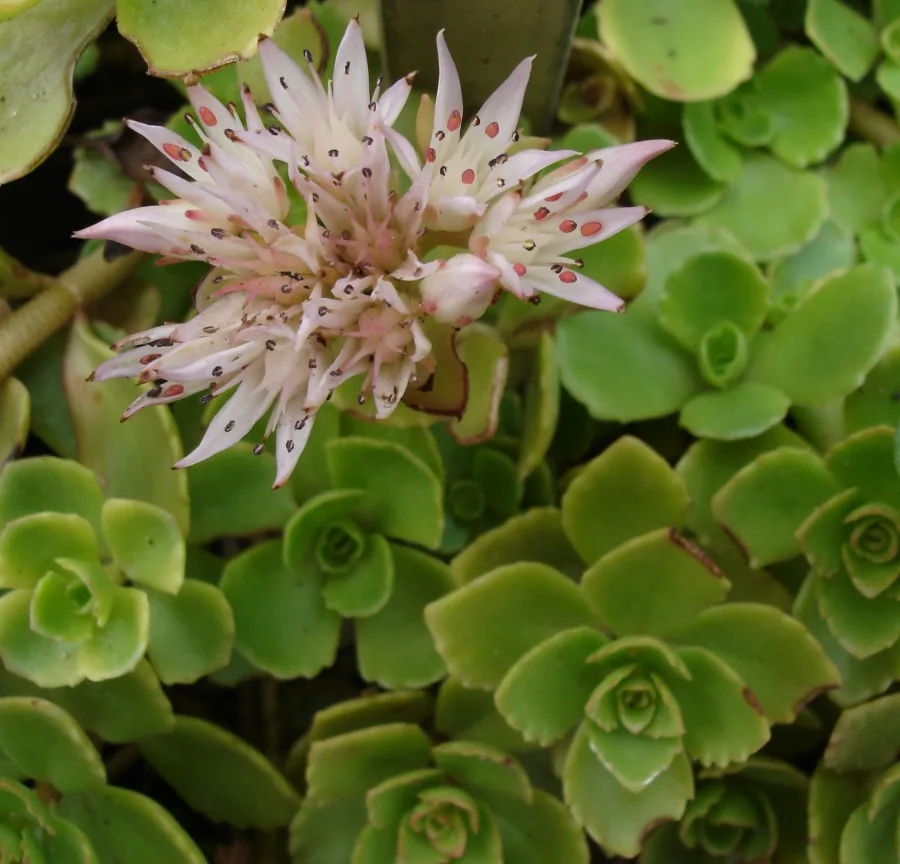
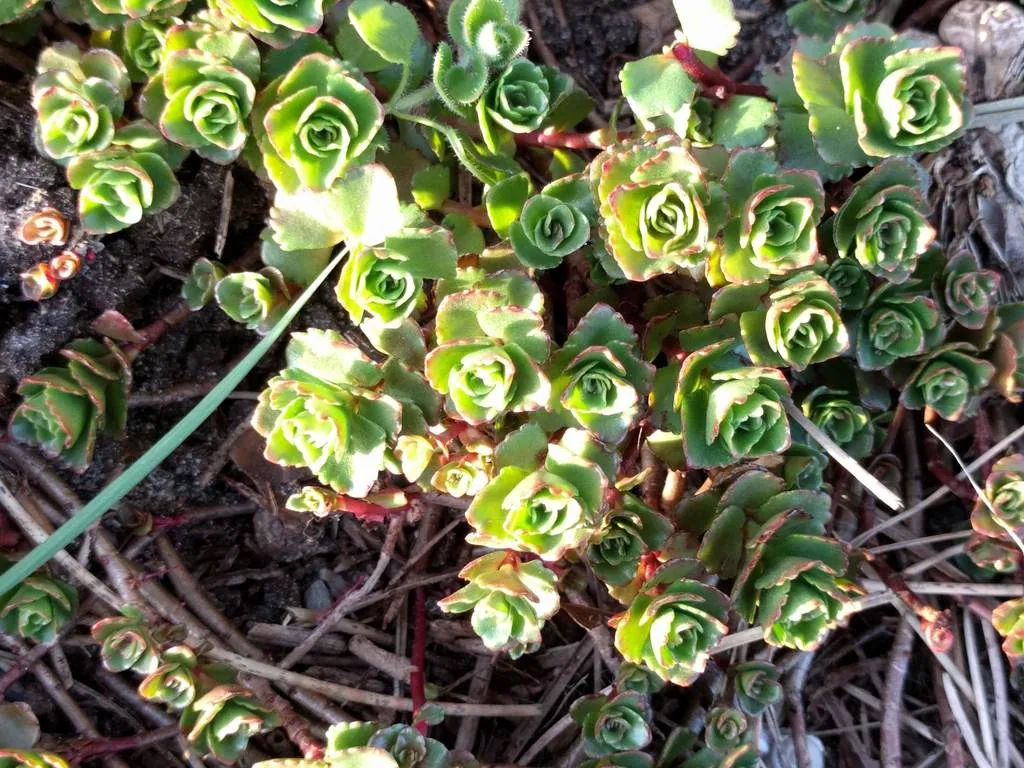
Phedimus spurius is a creeping, semi-evergreen perennial ground cover in the stonecrop family, native to northeastern Turkey and northern Iran. [1] It prefers well-drained, sandy or rocky soil, should not be overwatered and tolerates drought. [1] It escapes from gardens easily and is listed in Germany as an invasive plant. [4]
This record is incomplete: the sources we read do not cover every field yet.
Not yet covered by our sources: Pruning
Caucasian stonecrop care
How to water Caucasian stonecrop
Do not overwater; prefers very dry soil and is drought tolerant
What the sources say (1)
Stonecrop requires full sun and well-drained, sandy or shallow rocky soil. Do not overwater, as it prefers very dry soil and is tolerant of drought.How much light Caucasian stonecrop needs
The sources give different values depending on region, zone or growing conditions.
What each source says
According to NC State Extension (description): Full sun
According to NC State Extension (attributes): Partial shade (2-6 hours of direct sun)
According to Useful Temperate Plants (PFAF): Full sun, tolerates partial shade
What the sources say (3)
According to NC State Extension (description): Stonecrop requires full sun and well-drained, sandy or shallow rocky soil. Do not overwater, as it prefers very dry soil and is tolerant of drought.According to NC State Extension (attributes): Light:
Partial Shade (Direct sunlight only part of the day, 2-6 hours)According to Useful Temperate Plants (PFAF): Phedimus spurius is a moderately cold-hardy plant, tolerating temperatures down to around -15°c when dormant.
Grows best in a sunny position, but tolerates partial shadeHow much cold Caucasian stonecrop can take
Hardiness, coldest zone
3a [winter low −40 to −37.2 °C (−40 to −35 °F)]
What the sources say (1)
USDA Plant Hardiness Zone:
3a, 3b, 4a, 4b, 5a, 5b, 6a, 6b, 7a, 7b, 8a, 8b, 9a, 9bHardiness, warmest zone
9b [winter low −3.9 to −1.1 °C (25 to 30 °F)]
What the sources say (1)
USDA Plant Hardiness Zone:
3a, 3b, 4a, 4b, 5a, 5b, 6a, 6b, 7a, 7b, 8a, 8b, 9a, 9bWhere to grow Caucasian stonecrop
Indoors
Yes
What the sources say (1)
Also consider it for woodland, naturalized or recreational play areas. And it is well suited to growing as a houseplant.In containers
Yes
What the sources say (1)
Landscape Location:
Container
Naturalized Area
Recreational Play Area
Rock WallHow to propagate Caucasian stonecrop
Division, stem cuttings, seed
What the sources say (3)
Do not overwater, as it prefers very dry soil and is tolerant of drought. Propagate stonecrop by division or stem cutting.Division is very easy and can be carried out at almost any time in the growing season, though is probably best done in spring or early summer.Seed - surface sow in spring in well-drained soil in a sunny position in a greenhouse.How to grow Caucasian stonecrop
The plant
Life cycle
perennial
What the sources say (1)
Stonecrop is a creeping, semi-evergreen, perennial ground cover in the stonecrop family (Crassulaceae).Family
Crassulaceae
What the sources say (1)
Stonecrop is a creeping, semi-evergreen, perennial ground cover in the stonecrop family (Crassulaceae).Mature height
5.08-15.24 cm (2-6 in)
What the sources say (1)
It is native to northeastern Turkey and northern Iran and grows 2 to 6 inches high and 2 to 3 feet wide.Mature width
60.96-91.44 cm (2-3 ft)
What the sources say (1)
It is native to northeastern Turkey and northern Iran and grows 2 to 6 inches high and 2 to 3 feet wide.Propagation
Cuttings
Propagated by stem cuttings or by division.
What the sources say (1)
Do not overwater, as it prefers very dry soil and is tolerant of drought. Propagate stonecrop by division or stem cutting.Heat and drought
Drought
Drought tolerant; prefers very dry soil and should not be overwatered.
What the sources say (1)
Do not overwater, as it prefers very dry soil and is tolerant of drought.Remedies
Each remedy shows what official sources say about it; traditional remedies without an official source are marked as such. Harmful ones are listed so you know to avoid them.
First aid
First aid: not a substitute for a doctor
ingestion
save the vomit for identification Official source, not independently tested
DO NOT make a person throw up unless told to do so by poison control or a health care professional.
— medlineplus.gov [8] If someone eats a poisonous plant, use the web POISON CONTROL online tool to get expert help, or call your poison center at 1-800-222-1222
— poison.org [9] How: if the person has been sick from a plant part, save the vomit
If the person has been sick from a plant part, save the vomit. It may help experts identify what medicine can be used to help reverse the poisoning.
— medlineplus.gov [8]
Treating the plant
mealybugs
neem oil spray Partly works
How: spray the plant with neem oil once a week
Consider spraying your plant with neem oil once a week. It’s a great way to protect it from disease.
— laidbackgardener.blog [10] What the evidence says However, neem oil is not effective against every insect and disease, and often must be frequently reapplied to reach the desired outcome.
— extension.unh.edu [11]
insect pests
rubbing alcohol spray Not verified
Traditional remedy, not verified by an official source.
How: spray the plant with rubbing alcohol mixed with water
pepper spray Not verified
Traditional remedy, not verified by an official source.
The pepper spray can be very potent if it gets on your skin or in your eyes.
— extension.psu.edu [12] How: organic contact spray on the plant
garlic spray Not verified
Traditional remedy, not verified by an official source.
How: organic contact spray on the plant
removing dry leaves Not verified
Traditional remedy, not verified by an official source.
How: keep the plant clean by removing dry leaves, where bugs hide
root rot
letting soil dry between waterings Not verified
Traditional remedy, not verified by an official source.
How: let the soil dry out between waterings; overwatering leads to root rot
Getting rid of it
invasive spread
hand pulling the whole plant Works
How: uproot removing the whole plant; monitor and repeat for 3-5 years to catch regrowth from stem fragments
Piccole infestazioni: lotta meccanica - Sradicamento: avendo cura di rimuovere l'intera pianta. Sono necessari un monitoraggio e un trattamento continui per diversi anni (idealmente 3-5 anni)
— InfoFlora 2023 [7] What the evidence says Regularly pulling, hoeing or mowing weeds and encouraging grass to grow and out-compete the weeds is an excellent solution.
— extension.usu.edu [13] black plastic covering Partly works
How: cover infested areas with thick black plastic that blocks light, for at least four months
Copertura: coprire le aree infestate con uno telo di plastica spesso e nero che non lascia passare la luce. Secondo Huguenin-Elie (2011) la copertura deve durare almeno quattro mesi.
— InfoFlora 2023 [7] What the evidence says Be cautious about the weed barrier material used because items such as plastic shower curtains or old tarps are good barriers but can be difficult to work with later when it is time to rework the site.
— extension.usu.edu [13] disposal without garden composting Not verified
Traditional remedy, not verified by an official source.
How: never put stems or contaminated soil in the garden compost, landfills or dumps
Is Caucasian stonecrop poisonous?
Reported by the source, quoted verbatim. This is not medical or veterinary advice: if a person or an animal may have eaten this plant, contact a poison control centre or a veterinarian.
Poisonous to Humans: Poison Severity: Low Poison Symptoms: Unknown, but possibly gastrointestinal symptoms.
[1]- Poisonous parts
Causes Contact Dermatitis: No Poison Part: Flowers Leaves Roots Stems
[1]- Toxic principle
Poison Toxic Principle: Alkaloids sedine, sedamine, and others.
[1]- Symptoms
Poison Severity: Low Poison Symptoms: Unknown, but possibly gastrointestinal symptoms.
[1]- Severity
This plant has low severity poison characteristics. See below
[1]
Calendar
Sowing
Spring, surface-sown in a greenhouse
What the sources say (1)
Seed - surface sow in spring in well-drained soil in a sunny position in a greenhouse.Planting
Summer; or early summer of the following year after overwintering in a cold frame
What the sources say (1)
If sufficient growth is made, it is possible to plant them out during the summer, otherwise keep them in a cold-frame or greenhouse for their first winter and plant them out in early summer of the following yearHarvest
Very young, tender stems and leaves; later, until flowering
What the sources say (1)
Stems and leaves, when very young and tender, may be eaten raw. Later, until they flower, they may be briefly cooked.Pruning
Not stated in the sources we read.
Months as given by the sources, which are mostly from the United States (northern hemisphere). In the southern hemisphere they shift by about six months.
Edibility
Reported by the source, quoted verbatim. Do not eat a plant on the basis of this page alone: identification mistakes can be dangerous.
Similar plants
- Stonecrop Phedimus kamtschaticus
- Allegheny Stonecrop Hylotelephium telephioides
- Carpet Sedum Sedum lineare
- Chandelier Plant Kalanchoe delagoensis
- Copper Rose Echeveria multicaulis
- Evergreen Orpine Hylotelephium anacampseros
- Ghost Plant Graptopetalum paraguayense
- Hens and Chicks Sempervivum tectorum
Sources
Every value above is quoted from these documents. Links lead to the original publisher.
- Phedimus spurius (Creeping Stonecrop, Stonecrop, Two-row Stonecrop) | North Carolina Extension Gardener Plant Toolbox · plants.ces.ncsu.edu, consulted
- Phedimus spurius - Useful Temperate Plants · temperate.theferns.info, consulted
- Phedimus spurius (false stonecrop): Go Botany · gobotany.nativeplanttrust.org, consulted
- · naturblick.museumfuernaturkunde.berlin, consulted
- MBG: Research: Russia: Ornamental plants from Russia · mobot.org, consulted
- Sedum spurium M. Bieb. · infoflora.ch, consulted
- InfoFlora 2023 · infoflora.ch, consulted
- medlineplus.gov · medlineplus.gov
- poison.org · poison.org
- laidbackgardener.blog · laidbackgardener.blog
- extension.unh.edu · extension.unh.edu
- extension.psu.edu · extension.psu.edu
- extension.usu.edu · extension.usu.edu
Written by Emilio Marruso · last checked