
How to Grow and Care for Arctic violet
Pulsatilla vernalis
Written by Emilio Marruso · last checked
Classified as poisonous · Why
At a glance
Spring pasqueflower is a perennial from the buttercup family, so once it settles in, it comes back year after year. It is tough enough for cold-winter gardens, down to zone 4a. Want more plants? In winter, take root cuttings and grow new ones from the plant you already love, a rewarding project for the quiet season.
- Cold
Survives winters down to −30 °F (−34.4 °C)
Very hardy · USDA 4a · RHS H7 · Z4
What the sources say (1)
Hardiness, coldest zone: 4a [winter low −34.4 to −31.7 °C (−30 to −25 °F)]
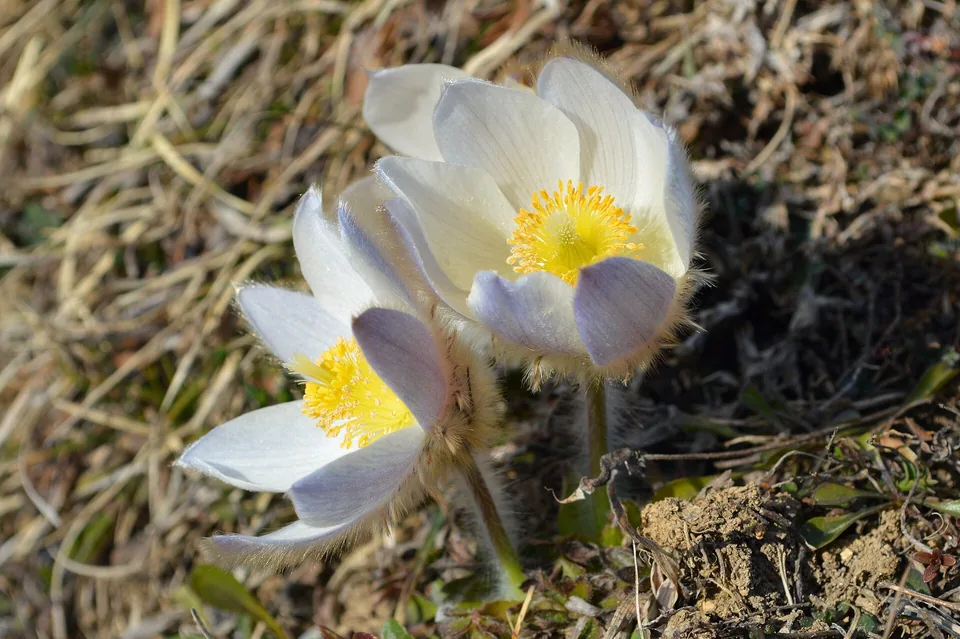
P. vernalis , called Spring Pasque Flower, is hardy to zone 4a, with evergreen leaves with few hairs, and white flowers with a bluish purple reverse.
— Pasque Flower, Pulsatilla vulgaris – Wisconsin Horticulture [4] - Propagation
Make new plants from root cuttings in winter
What the sources say (1)
Cuttings: Root cuttings in winter.
Propagate by seed sown in pots in an open frame as soon as seed is ripe. Propagate by taking root cuttings in winter
— [5]
Overview
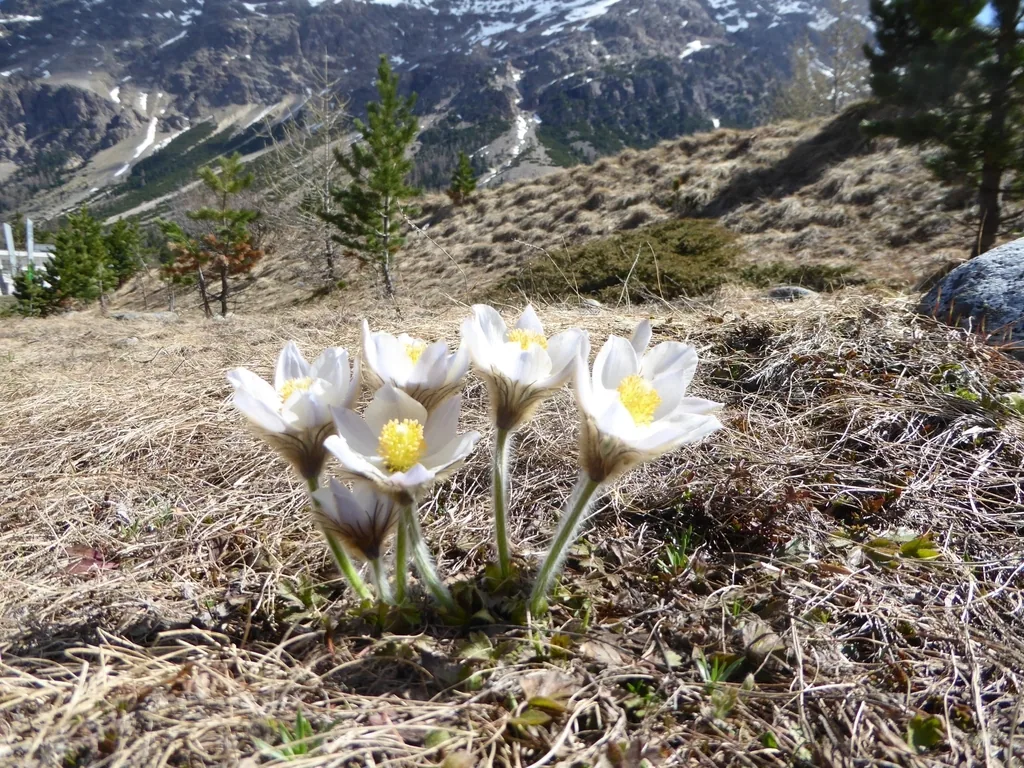
Pulsatilla vernalis is a perennial native from Norway to northern Spain and Bulgaria, growing mainly in the temperate biome. [1] In the Alps and Pyrenees it grows in mountain meadows, rocky grassland and open pine woods between 1300 and 3600 m [4,265.1–11,811 ft]. [3] It is described as a toxic plant, 5-30 cm [2–12 in] tall, with white flowers that are violet and hairy on the outside. [3]
This record is incomplete: the sources we read do not cover every field yet.
Not yet covered by our sources: Watering, Light, Hardiness, warmest zone, Pruning, Propagation
Arctic violet care
Measurements in square brackets are our conversion into the other unit system; the quoted text is unchanged.
How to water Arctic violet
Not stated in the sources we read.
How much light Arctic violet needs
Not stated in the sources we read.
How much cold Arctic violet can take
Hardiness, coldest zone
4a [winter low −34.4 to −31.7 °C (−30 to −25 °F)]
What the sources say (1)
P. vernalis , called Spring Pasque Flower, is hardy to zone 4a, with evergreen leaves with few hairs, and white flowers with a bluish purple reverse.Hardiness, warmest zone
Not stated in the sources we read.
How to propagate Arctic violet
Not stated in the sources we read.
How to grow Arctic violet
The plant
Life cycle
perennial
What the sources say (1)
The native range of this species is Norway to N. Spain and Bulgaria. It is a perennial and grows primarily in the temperate biome.Family
Ranunculaceae
What the sources say (1)
Family Ranunculaceae View Family Tree opens in a new tabPropagation
Cuttings
Root cuttings in winter.
What the sources say (1)
Propagate by seed sown in pots in an open frame as soon as seed is ripe. Propagate by taking root cuttings in winterRemedies
The sources we checked give no remedies for this plant.
Calendar
Pruning
Not stated in the sources we read.
Months as given by the sources, which are mostly from the United States (northern hemisphere). In the southern hemisphere they shift by about six months.
Similar plants
- Meadow Anemone Pulsatilla vulgaris
- Pulsatilla montana Pulsatilla montana
- Eastern Pasque Flower Pulsatilla patens
- Aconite Aconitum napellus
- Baneberry Actaea pachypoda
- Blooddrops Adonis annua
- Blue Jasmine Clematis crispa
- Bugbane Actaea simplex
Sources
Every value above is quoted from these documents. Links lead to the original publisher.
- Pulsatilla vernalis (L.) Mill. | Plants of the World Online | Kew Science · powo.science.kew.org, consulted
- Search for species - Frühlings-Kuhschelle (Pulsatilla vernalis (L.) Mill.) · i-flora.com, consulted
- Pulsatille printanière - Fleurs en randonnée · randozone.com, consulted
- Pasque Flower, Pulsatilla vulgaris – Wisconsin Horticulture · hort.extension.wisc.edu, consulted
- rhs.org.uk · rhs.org.uk
Written by Emilio Marruso · last checked