
How to Grow and Care for Roseroot stonecrop
Rhodiola rosea
Written by Emilio Marruso · last checked
Toxic to: Animals, People · Why
At a glance
Rhodiola rosea is a tough little plant that thrives in full sun or partial shade and grows happily in pots, even indoors. Water it deeply, then let the soil dry out before the next drink. As a bonus, its young shoots and leaves can be eaten raw or cooked like spinach, with a pleasantly bitter edge.
- Sun
Full sun to partial shade
What the sources say (2)
- Water
Water deeply, then let the soil dry; in winter, just enough to keep it from shriveling
What the sources say (2)
Watering: From spring through fall, water thoroughly and wait for the soil to dry out before watering again
From spring through fall, water thoroughly and wait for the soil to dry out before watering again.
— Rhodiola rosea (Roseroot) - World of Succulents [5] Watering notes: In winter, water just enough to keep the plant from shriveling; avoid wetting leaves, stems and flowers
During the winter, water the plant just enough to keep it from shriveling. When watering, avoid wetting the leaves, stems, and flowers.
— Rhodiola rosea (Roseroot) - World of Succulents [5] - Cold
Survives winters down to −50 °F (−45.6 °C)
Very hardy · USDA 2a · RHS H7 · Z2
What the sources say (2)
Hardiness, coldest zone: 2a [winter low −45.6 to −42.8 °C (−50 to −45 °F)]
USDA Plant Hardiness Zones 2a to 7b, with average minimum winter temperatures
— Rhodiola rosea (Roseroot) - World of Succulents [5] Hardiness, warmest zone: 7b [winter low −15 to −12.2 °C (5 to 10 °F)]
USDA Plant Hardiness Zones 2a to 7b, with average minimum winter temperatures
— Rhodiola rosea (Roseroot) - World of Succulents [5] - Harvest
Young shoots and leaves are edible raw or cooked like spinach; slightly bitter
- Propagation
Divide the roots, sow seeds or take stem cuttings
What the sources say (1)
Propagation: Root division; seed; stem cuttings
Rhodiola rosea can be propagated by root division during the growing season or by sowing seeds in spring or summer.
— Rhodiola rosea (Roseroot) - World of Succulents [5] - Sowing
Sow from spring to summer
What the sources say (1)
Sowing: Spring to summer
Rhodiola rosea can be propagated by root division during the growing season or by sowing seeds in spring or summer.
— Rhodiola rosea (Roseroot) - World of Succulents [5] - Containers
Grows in containers, even indoors
What the sources say (2)
In containers: Yes
When Rhodiola rosea outgrows its current pot, repot it into a larger one during the spring.
— Rhodiola rosea (Roseroot) - World of Succulents [5] Indoors: Yes
Place the plant near a sunny window or use artificial lights when growing indoors.
— Rhodiola rosea (Roseroot) - World of Succulents [5] - Safety
Not toxic to people, but can be mildly toxic to pets and children
Overview
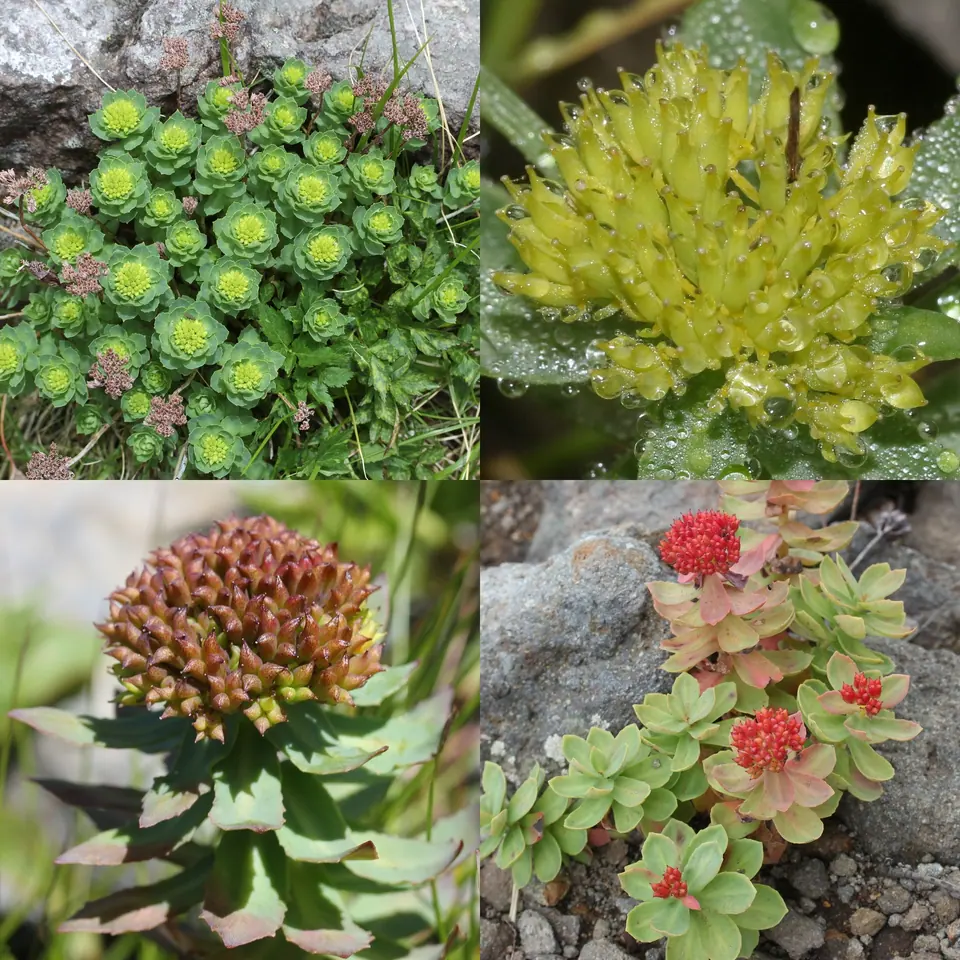
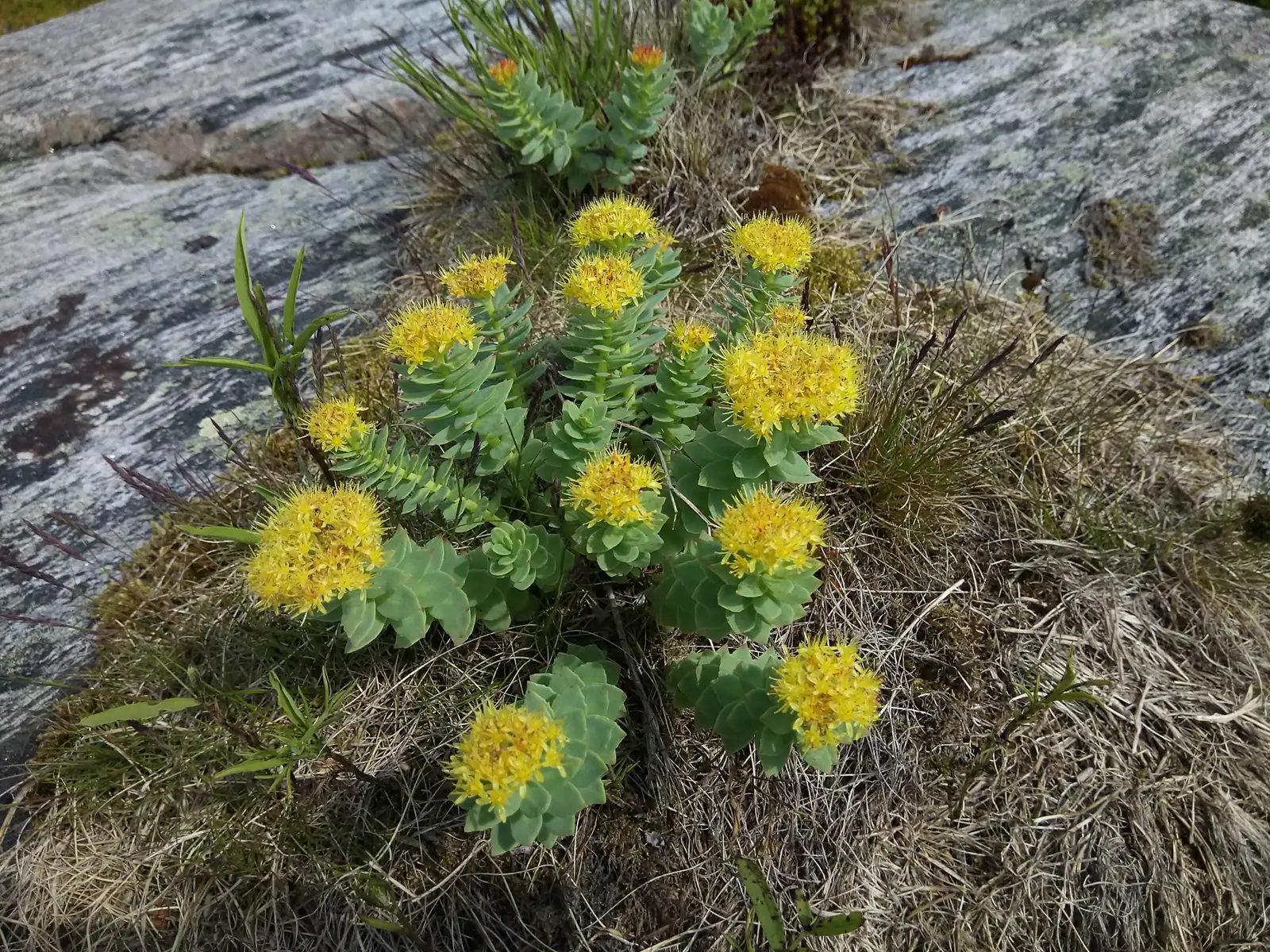
Rhodiola rosea is a succulent perennial of Crassulaceae found in well-drained rocky situations such as mountains and cliff tops. [6] It grows best in at least 6 hours of full sun a day with good drainage so the roots do not sit in waterlogged soil. [5] Italian research groups have studied bringing the species into cultivation in Trentino. [2]
This record is incomplete: the sources we read do not cover every field yet.
Not yet covered by our sources: Pruning
Roseroot stonecrop care
How to water Roseroot stonecrop
Watering
From spring through fall, water thoroughly and wait for the soil to dry out before watering again
What the sources say (1)
From spring through fall, water thoroughly and wait for the soil to dry out before watering again.Watering notes
In winter, water just enough to keep the plant from shriveling; avoid wetting leaves, stems and flowers
What the sources say (1)
During the winter, water the plant just enough to keep it from shriveling. When watering, avoid wetting the leaves, stems, and flowers.How much light Roseroot stonecrop needs
Full sun to partial shade
How much cold Roseroot stonecrop can take
Hardiness, coldest zone
2a [winter low −45.6 to −42.8 °C (−50 to −45 °F)]
What the sources say (1)
USDA Plant Hardiness Zones 2a to 7b, with average minimum winter temperaturesHardiness, warmest zone
7b [winter low −15 to −12.2 °C (5 to 10 °F)]
What the sources say (1)
USDA Plant Hardiness Zones 2a to 7b, with average minimum winter temperaturesWhere to grow Roseroot stonecrop
Indoors
Yes
What the sources say (1)
Place the plant near a sunny window or use artificial lights when growing indoors.In containers
Yes
What the sources say (1)
When Rhodiola rosea outgrows its current pot, repot it into a larger one during the spring.How to propagate Roseroot stonecrop
Root division; seed; stem cuttings
What the sources say (1)
Rhodiola rosea can be propagated by root division during the growing season or by sowing seeds in spring or summer.How to grow Roseroot stonecrop
The plant
Family
Crassulaceae
What the sources say (1)
Rhodiola rosea L. (Crassulaceae) has been used for years in the traditional medicine of several countries as an adaptogen drug, able to preserve homeostasis in response to stress stimuli.Remedies
The sources we checked give no remedies for this plant.
Is Roseroot stonecrop toxic to pets?
Reported by the source, quoted verbatim. This is not medical or veterinary advice: if a person or an animal may have eaten this plant, contact a poison control centre or a veterinarian.
Animals
Rhodiola rosea is not considered toxic to people but can be mildly toxic to pets and children.
[5]The source flags the risk for this animal but does not explain why.
People
Rhodiola ‘Rosea’ has no toxic effects reported.
[6]
Calendar
Sowing
Spring to summer
What the sources say (1)
Rhodiola rosea can be propagated by root division during the growing season or by sowing seeds in spring or summer.Planting
The sources give different values depending on region, zone or growing conditions.
What each source says
According to BBC Gardeners World: May to September
What the sources say (1)
According to BBC Gardeners World: | Plant | | | | | yes | yes | yes | yes | yes | | | Pruning
Not stated in the sources we read.
Months as given by the sources, which are mostly from the United States (northern hemisphere). In the southern hemisphere they shift by about six months.
Edibility
Reported by the source, quoted verbatim. Do not eat a plant on the basis of this page alone: identification mistakes can be dangerous.
The young shoots and leaves have a slightly bitter taste and can be eaten raw or cooked like spinach.
[5]
Similar plants
- Allegheny Stonecrop Hylotelephium telephioides
- Carpet Sedum Sedum lineare
- Copper Rose Echeveria multicaulis
- Evergreen Orpine Hylotelephium anacampseros
- Ghost Plant Graptopetalum paraguayense
- Hens and Chicks Sempervivum tectorum
- Kalanchoe Kalanchoe beharensis
- Moss Stonecrop Sedum acre
Sources
Every value above is quoted from these documents. Links lead to the original publisher.
- Rhodiola rosea: main features and its beneficial properties · iris.unina.it, consulted
- Agronomical and chemical studies aimed at turning Rhodiola rosea L. from Alps into a herbal medicine · iris.unitn.it, consulted
- Morphological and qualitative characteristics of Rhodiola rosea L. wild populations of Trentino, Italy · research.unipd.it, consulted
- Rhodiola rosea L. modulates inflammatory processes in a CRH-activated BV2 cell model · air.unipr.it, consulted
- Rhodiola rosea (Roseroot) - World of Succulents · worldofsucculents.com, consulted
- Rhodiola rosea | BBC Gardeners World Magazine · gardenersworld.com, consulted
Written by Emilio Marruso · last checked