How to Grow and Care for Violet willow
Salix daphnoides
Written by Emilio Marruso · last checked
At a glance
Cut this willow back every second spring and it rewards you with a lovely show of stems all winter. It likes moist but well-drained soil and needs no routine feeding, just a mulch of garden compost. You can even start new plants yourself from cuttings of mature wood taken in late autumn, then plant them out the following autumn.
- Water
Likes moist but well-drained soil; don't let the roots dry out
What the sources say (1)
Watering notes: Genus tolerates moist but well-drained soils and dislikes dryness at the roots
Salix species generally require an open position and abhor dryness at the roots.
— Salix daphnoides - Useful Temperate Plants [3] - Planting
Plant in autumn; cuttings go to their final spot the following autumn
What the sources say (1)
Planting: Autumn (cuttings planted in permanent positions the following autumn)
Plant into their permanent positions in the following autumn.
— Salix daphnoides - Useful Temperate Plants [3] - Feeding
No routine feeding; mulch with garden compost or well-rotted manure
What the sources say (2)
How often: Not routinely; feed only if the tree shows signs of nutrient deficiency
Most willow trees are robust and vigorous and shouldn’t need feeding unless they are showing signs of nutrient deficiencies
— [5] Natural fertilizers: Mulch the soil beneath the tree with well-rotted organic matter such as garden compost or farmyard manure
Most willow trees are robust and vigorous and shouldn’t need feeding unless they are showing signs of nutrient deficiencies - Mulching around the tree with well-rotted organic matter , such as garden compost or farmyard manure
— [5] - Pruning
Cut back every second spring for a winter show of stems
What the sources say (1)
Pruning: Spring (cut back every second spring for a winter stem display)
If the plants are cut back every second spring the crop of young wands makes a pleasing winter effect.
— Salix daphnoides - Trees and Shrubs Online [2] - Harvest
Inner bark is edible but very bitter: food only when all else fails
- Propagation
Cuttings of mature wood in late autumn, or half-ripe wood in early to mid summer in a frame
What the sources say (2)
Propagation: Cuttings of mature wood (late autumn best); cuttings of half-ripe wood in early to mid summer in a frame; seed surface sown as soon as ripe
Cuttings of mature wood of the current year's growth or older can root at almost any time of the year, though late autumn is considered best
— Salix daphnoides - Useful Temperate Plants [3] Cuttings of half-ripe wood, early to mid summer in a frame.
— Salix daphnoides - Useful Temperate Plants [3] - Sowing
Sow on the surface as soon as the seed is ripe
What the sources say (1)
Sowing: As soon as the seed is ripe (surface sown)
It must be surface sown as soon as it is ripe.
— Salix daphnoides - Useful Temperate Plants [3]
Overview
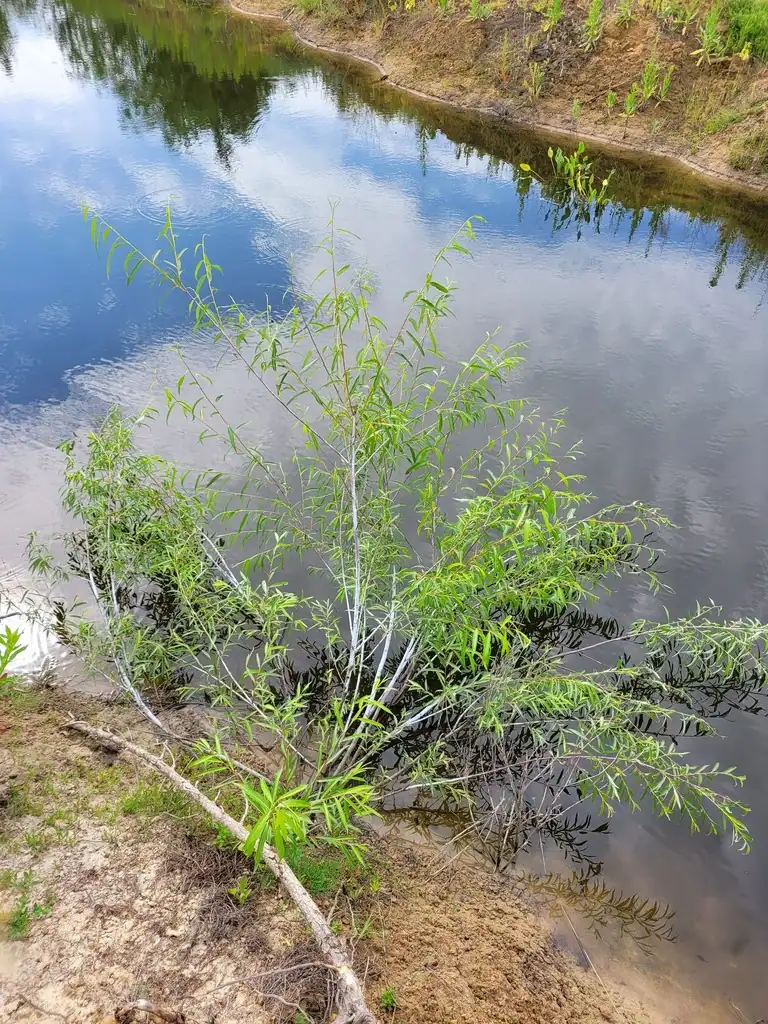
Salix daphnoides is a deciduous willow of erect, vigorous habit, described as a tree up to 40 ft [12.2 m] high in Bean's Trees and Shrubs. [2] It is grown for the violet-coloured bloom on its shoots and its catkins. [2] One-year-old branchlets carry a whitish waxy coating that looks violet in winter, which gives the plant its name. [1]
This record is incomplete: the sources we read do not cover every field yet.
Not yet covered by our sources: Watering, Light, Hardiness, coldest zone, Hardiness, warmest zone
Violet willow care
Measurements in square brackets are our conversion into the other unit system; the quoted text is unchanged.
How to water Violet willow
Watering
Not stated in the sources we read.
Watering notes
Genus tolerates moist but well-drained soils and dislikes dryness at the roots
What the sources say (1)
Salix species generally require an open position and abhor dryness at the roots.How much light Violet willow needs
Not stated in the sources we read.
How much cold Violet willow can take
Hardiness, coldest zone
Not stated in the sources we read.
Hardiness, warmest zone
Not stated in the sources we read.
How to propagate Violet willow
Cuttings of mature wood (late autumn best); cuttings of half-ripe wood in early to mid summer in a frame; seed surface sown as soon as ripe
What the sources say (2)
Cuttings of mature wood of the current year's growth or older can root at almost any time of the year, though late autumn is considered bestCuttings of half-ripe wood, early to mid summer in a frame.How to grow Violet willow
Fertilizing
How often
Not routinely; feed only if the tree shows signs of nutrient deficiency
What the sources say (1)
Most willow trees are robust and vigorous and shouldn’t need feeding unless they are showing signs of nutrient deficienciesNatural fertilizers
Mulch the soil beneath the tree with well-rotted organic matter such as garden compost or farmyard manure
What the sources say (1)
Most willow trees are robust and vigorous and shouldn’t need feeding unless they are showing signs of nutrient deficiencies
- Mulching around the tree with well-rotted organic matter , such as garden compost or farmyard manureMineral fertilizers
The sources give different values depending on region, zone or growing conditions.
What each source says
shrub willow grown as a short-rotation bioenergy crop: Few fertilizer inputs; nitrogen fertilizer as needed
What the sources say (1)
shrub willow grown as a short-rotation bioenergy crop: No annual maintenance of the crop should be necessary, and compared to other crops, willow requires few fertilizer inputs, but nitrogen fertilizer can be applied as needed.Remedies
The sources we checked give no remedies for this plant.
Calendar
Sowing
As soon as the seed is ripe (surface sown)
What the sources say (1)
It must be surface sown as soon as it is ripe.Planting
Autumn (cuttings planted in permanent positions the following autumn)
What the sources say (1)
Plant into their permanent positions in the following autumn.Pruning
Spring (cut back every second spring for a winter stem display)
What the sources say (1)
If the plants are cut back every second spring the crop of young wands makes a pleasing winter effect.Months as given by the sources, which are mostly from the United States (northern hemisphere). In the southern hemisphere they shift by about six months.
Edibility
Reported by the source, quoted verbatim. Do not eat a plant on the basis of this page alone: identification mistakes can be dangerous.
A very bitter flavour, it is a famine food that is only used when all else fails
[3]
Similar plants
- Black Willow Salix nigra
- Carolina Willow Salix caroliniana
- Common osier Salix viminalis
- Elaeagnus willow Salix eleagnos
- European Pussy Willow Salix caprea
- Japanese Pussy Willow Salix chaenomeloides
- Narrowleaf willow Salix exigua
- Purple Osier Willow Salix purpurea
Sources
Every value above is quoted from these documents. Links lead to the original publisher.
- Flora of New Zealand | Taxon Profile | Salix daphnoides · nzflora.info, consulted
- Salix daphnoides - Trees and Shrubs Online · treesandshrubsonline.org, consulted
- Salix daphnoides - Useful Temperate Plants · temperate.theferns.info, consulted
- 30 Churchill Place ● Canary Wharf ● London E14 5EU ● United Kingdom · ema.europa.eu, consulted
- rhs.org.uk · rhs.org.uk
- extension.psu.edu · extension.psu.edu
Written by Emilio Marruso · last checked