
How to Grow and Care for Stromanthe
Stromanthe sanguinea
Written by Emilio Marruso · last checked
At a glance
Stromanthe is a perennial that feels right at home indoors, growing 2–3 ft tall as a houseplant. Give it the moist air it loves with a humidifier or a tray of wet pebbles, and go easy on the watering to keep its roots healthy. Want more plants? Just divide it, and you'll have new ones to keep or share.
- Water
Loves humid air: use a humidifier or a tray of moist pebbles; too much water rots the roots
What the sources say (2)
Watering notes: Prefers high humidity; use a humidifier or a tray of moist pebbles; root and stem rot can follow overwatering
Consider using a humidifier or setting the plant's container on a bed of moist pebbles to increase the interior humidity
— Stromanthe thalia (Stromanthe) | North Carolina Extension Gardener Plant Toolbox [1] Root and stem rot can occur from overwatering.
— Stromanthe thalia (Stromanthe) | North Carolina Extension Gardener Plant Toolbox [1] - Soil
Acidic to slightly acidic soil, pH 5.5–6.5
- Pests
Mealybugs, aphids and spider mites; overwatering causes root and stem rot
What the sources say (2)
Pests: mealybugs, aphids, spider mites
Insects, Diseases, and Other Plant Problems: Monitor for mealybugs, aphids, and spider mites. Root and stem rot can occur from overwatering.
— Stromanthe thalia (Stromanthe) | North Carolina Extension Gardener Plant Toolbox [1] Diseases: root and stem rot
Insects, Diseases, and Other Plant Problems: Monitor for mealybugs, aphids, and spider mites. Root and stem rot can occur from overwatering.
— Stromanthe thalia (Stromanthe) | North Carolina Extension Gardener Plant Toolbox [1] - Size
2–3 ft tall as a houseplant; outdoors up to 5 ft tall and 3 ft wide
What the sources say (3)
Mature height: up to 152.4 cm (5 ft) outdoors; 61-91.44 (2-3 ft) as a houseplant
cultivar 'Tricolor': 45.72-76.2 cm (18-30 in) tall: S. thalia has short, creeping stems that can grow up to 5 feet tall under ideal conditions, but this cultivar remains much shorter (18 to 30 inches), especially when grown in containers.
— Stromanthe thalia ‘Tricolor’ – Wisconsin Horticulture [2] The plant grows up to 5 feet tall and 3 feet wide when grown outdoors, but as a houseplant, it is usually only 2 to 3 feet tall.
— Stromanthe thalia (Stromanthe) | North Carolina Extension Gardener Plant Toolbox [1] Mature width: 91.44 cm (3 ft) outdoors
The plant grows up to 5 feet tall and 3 feet wide when grown outdoors, but as a houseplant, it is usually only 2 to 3 feet tall.
— Stromanthe thalia (Stromanthe) | North Carolina Extension Gardener Plant Toolbox [1] - Propagation
Make new plants by dividing it
- Containers
Grows well in pots and indoors as a houseplant
What the sources say (2)
In containers: Yes
Grow Tricolor as a container plant in any quality soilless growing medium.
— Stromanthe thalia ‘Tricolor’ – Wisconsin Horticulture [2] Indoors: Yes
it is typically grown as a houseplant or annual
— Stromanthe thalia (Stromanthe) | North Carolina Extension Gardener Plant Toolbox [1]
Overview
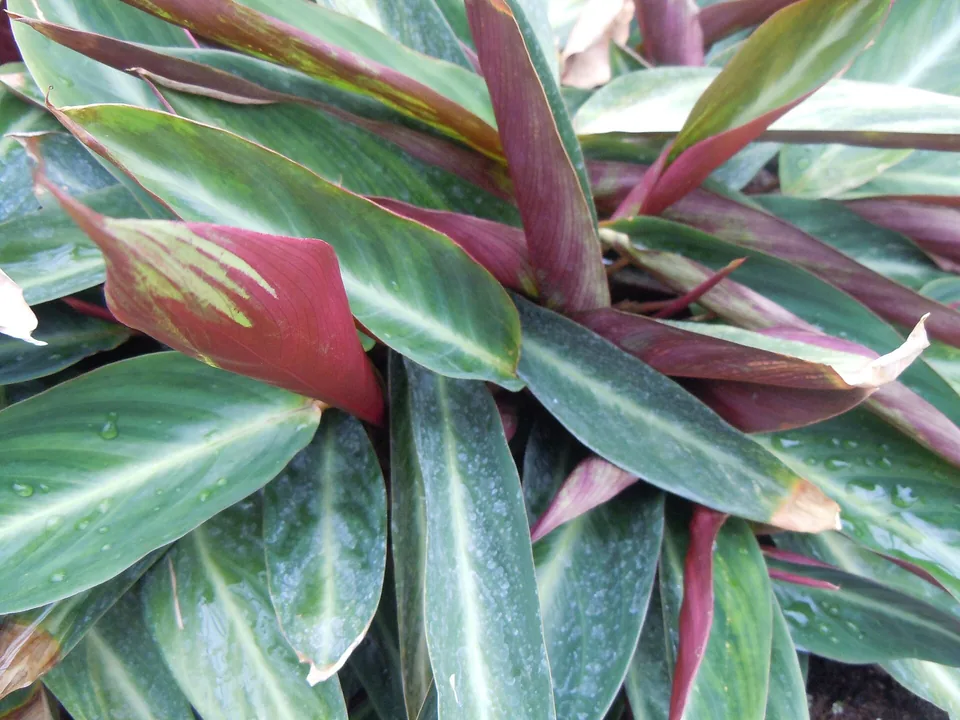
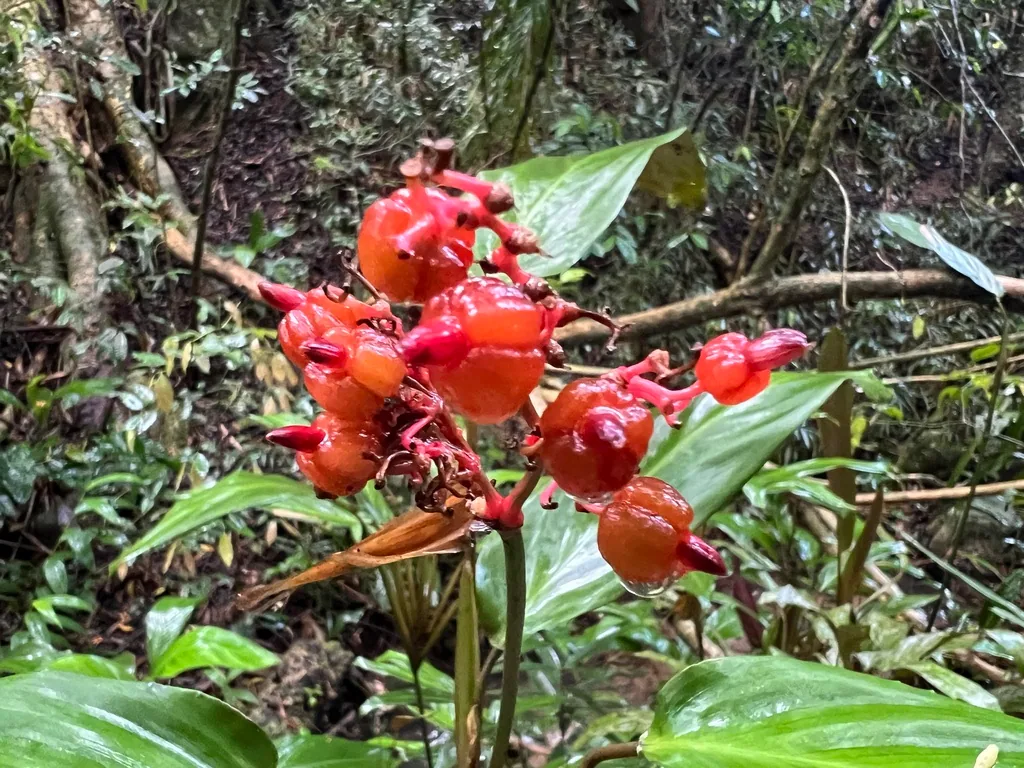
Stromanthe is a tender evergreen herbaceous perennial from Brazilian rainforests that prefers high humidity and warm temperatures and is usually grown as a houseplant. [1] It is grown for its glossy dark green leaves with burgundy undersides, can be kept in containers, and is propagated by division in spring. [2][1]
Stromanthe care
How to water Stromanthe
Watering
The sources disagree:
Keep the soil moist but allow the top inch (2.5 cm.) to dry out before watering again
[3]
What the sources say (2)
The medium should be kept evenly moist during the growing season, but allowed to dry a little more between waterings in the cooler, darker months indoorsit is intolerant of dry soilsWatering notes
Prefers high humidity; use a humidifier or a tray of moist pebbles; root and stem rot can follow overwatering
What the sources say (2)
Consider using a humidifier or setting the plant's container on a bed of moist pebbles to increase the interior humidityRoot and stem rot can occur from overwatering.How much light Stromanthe needs
The sources give different values depending on region, zone or growing conditions.
What each source says
According to NC State Extension: Partial to dappled shade
Midwest: Full sun to part shade, with adequate water
What the sources say (2)
According to NC State Extension: It prefers partial to dappled shade and moist, well-drained soils. Direct sun can scorch the leavesMidwest: In the Midwest the plants will tolerate full sun as long as they receive adequate water , but can also be grown in part shadeHow much cold Stromanthe can take
The sources give different values depending on region, zone or growing conditions.
What each source says
According to NC State Extension: 10 [winter low −1.1 to 4.4 °C (30 to 40 °F)]
According to University of Wisconsin Extension: 10a [winter low −1.1 to 1.7 °C (30 to 35 °F)]
Best soil for Stromanthe
Soil pH, minimum
5.5
What the sources say (1)
pH Range:
5.5 to 6.5Soil pH, maximum
6.5
What the sources say (1)
pH Range:
5.5 to 6.5Where to grow Stromanthe
Indoors
Yes
What the sources say (1)
it is typically grown as a houseplant or annualIn containers
Yes
What the sources say (1)
Grow Tricolor as a container plant in any quality soilless growing medium.How to propagate Stromanthe
How to grow Stromanthe
The plant
Life cycle
perennial
What the sources say (1)
Stromanthe is a tender evergreen herbaceous perennial that is native to the rainforests of Brazil.Family
Marantaceae
What the sources say (1)
The eye-catching plant is a member of the Marantaceae or prayer plant family.Mature height
up to 152.4 cm (5 ft) outdoors; 61-91.44 (2-3 ft) as a houseplant
What each source says
cultivar 'Tricolor': 45.72-76.2 cm (18-30 in) tall:
What the sources say (2)
cultivar 'Tricolor': 45.72-76.2 cm (18-30 in) tall: S. thalia has short, creeping stems that can grow up to 5 feet tall under ideal conditions, but this cultivar remains much shorter (18 to 30 inches), especially when grown in containers.The plant grows up to 5 feet tall and 3 feet wide when grown outdoors, but as a houseplant, it is usually only 2 to 3 feet tall.Mature width
91.44 cm (3 ft) outdoors
What the sources say (1)
The plant grows up to 5 feet tall and 3 feet wide when grown outdoors, but as a houseplant, it is usually only 2 to 3 feet tall.Pests and diseases
Pests
mealybugs, aphids, spider mites
What the sources say (1)
Insects, Diseases, and Other Plant Problems: Monitor for mealybugs, aphids, and spider mites. Root and stem rot can occur from overwatering.Diseases
root and stem rot
What the sources say (1)
Insects, Diseases, and Other Plant Problems: Monitor for mealybugs, aphids, and spider mites. Root and stem rot can occur from overwatering.Stromanthe pests and problems
Pests and rot
Symptom: Mealybugs, aphids and spider mites; root and stem rot from overwatering.
What the sources say (1)
Monitor for mealybugs, aphids, and spider mites. Root and stem rot can occur from overwatering.
— Stromanthe thalia (Stromanthe) | North Carolina Extension Gardener Plant Toolbox [1]
Remedies
Each remedy shows what official sources say about it; traditional remedies without an official source are marked as such. Harmful ones are listed so you know to avoid them.
Treating the plant
spider mites
neem oil spray after rinsing Not verified
Traditional remedy, not verified by an official source.
Certain chemicals, including oils and insecticidal soaps, may cause plant injury if used at the wrong stage of plant development or when temperatures are too high.
— extension.missouri.edu [6] How: Spray the plant with water to remove the mites, then apply neem oil, which kills eggs and makes adults infertile.
Indicative values
Values from a secondary source, not checked word for word like the rest of this page. Use them as a starting point.
- Hours of sun
- 4-6 hoursIndicative value, adapt it to your climate · Secondary source
- Drought tolerant
- yesIndicative value, adapt it to your climate · Secondary source
- Care level
- MediumIndicative value, adapt it to your climate · Secondary source
- Growth rate
- LowIndicative value, adapt it to your climate · Secondary source
- Pruning
- March, April, May, June, July, August, September, December, January, FebruaryIndicative value, adapt it to your climate · Secondary source
Similar plants
- Ctenanthe Ctenanthe lubbersiana
- Giant Bamburanta Ctenanthe oppenheimiana
- Hardy Canna Thalia dealbata
- Peacock Plant Calathea makoyana
- Prayer Plant Maranta leuconeura
- Rattle Snake Plant Calathea crotalifera
- Rattlesnake Plant Calathea lancifolia
- Rose-Painted Calathea Goeppertia roseopicta
Sources
Every value above is quoted from these documents. Links lead to the original publisher.
- Stromanthe thalia (Stromanthe) | North Carolina Extension Gardener Plant Toolbox · plants.ces.ncsu.edu, consulted
- Stromanthe thalia ‘Tricolor’ – Wisconsin Horticulture · hort.extension.wisc.edu, consulted
- About Stromanthe Houseplants - Tips For Growing Stromanthe Sanguinea | Gardening Know How · gardeningknowhow.com, consulted
- Stromanthe sanguinea · desert-tropicals.com, consulted
- Stromanthe sanguinea ( Stromanthe ) - Professional Gardening Tips · backyardgardener.com, consulted
- extension.missouri.edu · extension.missouri.edu
Written by Emilio Marruso · last checked