
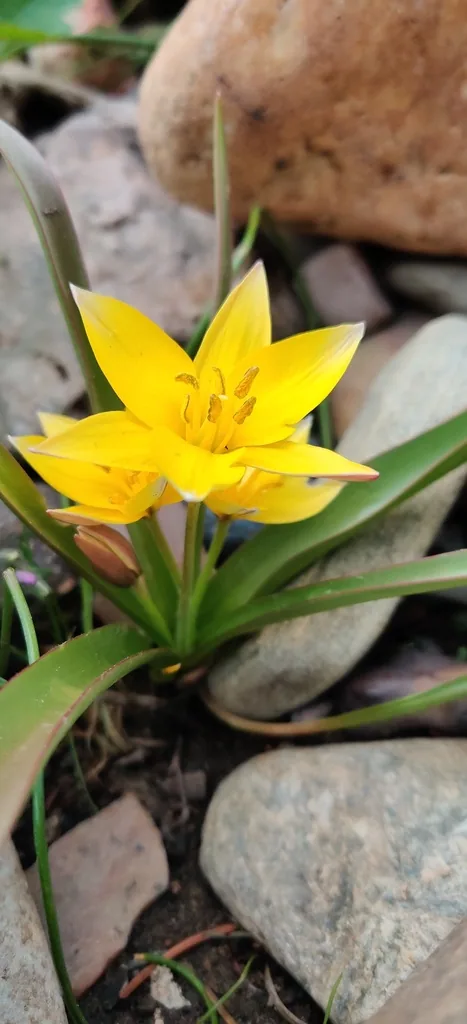

How to Grow and Care for Tulipa urumiensis
Tulipa tarda
Written by Emilio Marruso · last checked
Toxic to: Cats, Dogs, Horses · Why
At a glance
This tulip asks for very little: a spot in full sun and well-drained soil. Plant it from September to November, and it grows happily in containers too. After flowering, be patient and let the leaves turn yellow and die down on their own before you remove them. Keep it away from pets, though: it can be toxic to cats, dogs and horses.
- Sun
Full sun
What the sources say (2)
Light: Full sun
It should be planted in full sun in average, well-drained soil. Foliage should not be removed until it turns yellow.
— Tulipa tarda | Chicago Botanic Garden [1] Grow Tulipa tarda in well-drained soil in full sun. Allow foliage to die down fully after flowering.
— Tulipa tarda | BBC Gardeners World Magazine [2] - Cold
Survives winters down to −40 °F (−40 °C)
Very hardy · USDA 3 · RHS H7 · Z3
What the sources say (2)
Hardiness, coldest zone: 3 [winter low −40 to −34.4 °C (−40 to −30 °F)]
Landscape Use: Bedding or Border Plant Type: Bulb Hardiness Zone: 3 - 8
— Tulipa tarda | Chicago Botanic Garden [1] Hardiness, warmest zone: 8 [winter low −12.2 to −6.7 °C (10 to 20 °F)]
Landscape Use: Bedding or Border Plant Type: Bulb Hardiness Zone: 3 - 8
— Tulipa tarda | Chicago Botanic Garden [1] - Soil
Well-drained soil
What the sources say (2)
Watering notes: Well-drained soil
It should be planted in full sun in average, well-drained soil. Foliage should not be removed until it turns yellow.
— Tulipa tarda | Chicago Botanic Garden [1] Grow Tulipa tarda in well-drained soil in full sun. Allow foliage to die down fully after flowering.
— Tulipa tarda | BBC Gardeners World Magazine [2] - Planting
Plant from September to November
What the sources say (1)
Planting: September-November
| Plant | | | | | | | | | yes | yes | yes |
— Tulipa tarda | BBC Gardeners World Magazine [2] - Pruning
Remove the leaves only once they have turned yellow and died down after flowering
What the sources say (2)
Pruning: Remove foliage only after it has turned yellow and died down after flowering
It should be planted in full sun in average, well-drained soil. Foliage should not be removed until it turns yellow.
— Tulipa tarda | Chicago Botanic Garden [1] Grow Tulipa tarda in well-drained soil in full sun. Allow foliage to die down fully after flowering.
— Tulipa tarda | BBC Gardeners World Magazine [2] - Containers
Grows in containers too
What the sources say (1)
In containers: Yes
It's perfect for growing in rock gardens and gravel gardens, and works well in spring container displays.
— Tulipa tarda | BBC Gardeners World Magazine [2] - Safety
Can be toxic to cats, dogs and horses
Overview
Late tulip is a perennial bulb that blooms in early spring with several white, yellow-eyed flowers on short stems. [1] It is easy to grow in a sunny position in well-drained soil and suits rock gardens, gravel gardens and spring containers. [2] The foliage should be left until it has yellowed and died down after flowering. [1]
This record is incomplete: the sources we read do not cover every field yet.
Not yet covered by our sources: Watering, Propagation
Tulipa urumiensis care
How to water Tulipa urumiensis
Watering
Not stated in the sources we read.
Watering notes
Well-drained soil
What the sources say (2)
It should be planted in full sun in average, well-drained soil. Foliage should not be removed until it turns yellow.Grow Tulipa tarda in well-drained soil in full sun. Allow foliage to die down fully after flowering.How much light Tulipa urumiensis needs
Full sun
What the sources say (2)
It should be planted in full sun in average, well-drained soil. Foliage should not be removed until it turns yellow.Grow Tulipa tarda in well-drained soil in full sun. Allow foliage to die down fully after flowering.How much cold Tulipa urumiensis can take
Hardiness, coldest zone
3 [winter low −40 to −34.4 °C (−40 to −30 °F)]
What the sources say (1)
Landscape Use:
Bedding or Border
Plant Type:
Bulb
Hardiness Zone:
3 - 8Hardiness, warmest zone
8 [winter low −12.2 to −6.7 °C (10 to 20 °F)]
What the sources say (1)
Landscape Use:
Bedding or Border
Plant Type:
Bulb
Hardiness Zone:
3 - 8Where to grow Tulipa urumiensis
Yes
What the sources say (1)
It's perfect for growing in rock gardens and gravel gardens, and works well in spring container displays.How to propagate Tulipa urumiensis
Not stated in the sources we read.
Remedies
The sources we checked give no remedies for this plant.
Is Tulipa urumiensis toxic to pets?
Reported by the source, quoted verbatim. This is not medical or veterinary advice: if a person or an animal may have eaten this plant, contact a poison control centre or a veterinarian.
can be toxic. Toxic to: Is known to attract Cats Cats Is known to attract Dogs Dogs Is known to attract Horses Horses
[2]The source flags the risk for this animal but does not explain why.
Calendar
September-November
What the sources say (1)
| Plant | | | | | | | | | yes | yes | yes |Remove foliage only after it has turned yellow and died down after flowering
What the sources say (2)
It should be planted in full sun in average, well-drained soil. Foliage should not be removed until it turns yellow.Grow Tulipa tarda in well-drained soil in full sun. Allow foliage to die down fully after flowering.Months as given by the sources, which are mostly from the United States (northern hemisphere). In the southern hemisphere they shift by about six months.
Indicative values
Values from a secondary source, not checked word for word like the rest of this page. Use them as a starting point.
- Life cycle
- PerennialIndicative value, adapt it to your climate · Secondary source
- Mature height
- 7.6-15.2 cm (0.25-0.5 ft)Indicative value, adapt it to your climate · Secondary source
- Hours of sun
- 6-8 hoursIndicative value, adapt it to your climate · Secondary source
- Watering
- AverageIndicative value, adapt it to your climate · Secondary source
- Drought tolerant
- yesIndicative value, adapt it to your climate · Secondary source
- Soil pH
- 6-7Indicative value, adapt it to your climate · Secondary source
- Growth rate
- LowIndicative value, adapt it to your climate · Secondary source
- Propagation
- Division, Seed Propagation, Offsets, Bulbils, Grafting PropagationIndicative value, adapt it to your climate · Secondary source
Similar plants
- Fosteriana Tulips Tulipa fosteriana
- Kaufmanniana Tulips Tulipa kaufmanniana
- Lady Tulip Tulipa clusiana
- Tulipa greigii Tulipa greigii
- Didier's tulip Tulipa gesneriana
- Wild tulip Tulipa sylvestris
- Abies grandis Abies grandis
- Abraham Trachystemon orientalis
Sources
Every value above is quoted from these documents. Links lead to the original publisher.
- Tulipa tarda | Chicago Botanic Garden · chicagobotanic.org, consulted
- Tulipa tarda | BBC Gardeners World Magazine · gardenersworld.com, consulted
Written by Emilio Marruso · last checked