
How to Grow and Care for Veronica gentianoides
Veronica gentianoides
Written by Emilio Marruso · last checked
Toxic to: Cats, Dogs, Horses, Livestock · Why
At a glance
This veronica is easy to please in full sun or partial shade, as long as its soil stays moist but drains well. Plant it any time from May to September, cut back the flower spikes once they fade, and divide it in spring or autumn for more plants to share. Even better, it has no reported toxicity to cats, dogs or horses.
- Sun
Full sun to partial shade
What the sources say (3)
Light: Full sun to partial shade
Grow Veronica gentianoides in moist but well-drained soil in full sun to partial shade.
— Veronica gentianoides | BBC Gardeners World Magazine [1] Growth habit: Mat forming. Light: Full sun to partial shade.
— Veronica gentianoides - SPEEDWELL [3] Veronica gentianoides grows in full sun, but also does well in part shade.
— Veronica gentianoides, I love this plant [4] - Water
Keep the soil moist; it can't handle drought, so water regularly in dry spells
What the sources say (2)
Watering: Keep regularly moist; not drought tolerant, so water regularly in dry periods
Soil: well drained , humusy Water: regular moisture – does not like to dry out
— Veronica gentianoides, I love this plant [4] The little plants aren’t drought tolerant, so when our annual dry season rolls around, water them regularly.
— Veronica gentianoides - SPEEDWELL [3] - Cold
Survives winters down to −30 °F (−34.4 °C)
Very hardy · USDA 4 · RHS H7 · Z4
What the sources say (4)
- Soil
Soil that drains well; wet, soggy winters can rot the roots
What the sources say (1)
Watering notes: Needs well-drained soil; root rot can occur in wet winters where drainage is poor
Root rot may be a problem in our notorious Pacific Northwest wet winters, if soil is not well-drained.
— Veronica gentianoides - SPEEDWELL [3] - Planting
Plant from May to September
What the sources say (1)
Planting: May to September
| Plant | | | | | yes | yes | yes | yes | yes | | |
— Veronica gentianoides | BBC Gardeners World Magazine [1] - Pruning
Cut flower spikes after blooming; in September–October cut back to the low leaves
What the sources say (5)
Pruning: Cut back flower spikes after flowering; cut back to basal foliage in autumn (September-October)
According to BBC Gardeners' World: | Prune | | | | | | | | | yes | yes | |
— Veronica gentianoides | BBC Gardeners World Magazine [1] According to Rainy Side Gardeners (Pacific Northwest): Deadhead to promote a long bloom season. Cut back plants to basal foliage around mid autumn.
— Veronica gentianoides - SPEEDWELL [3] Cut back the flower spikes after flowering. Ad ## Plant calendar
— Veronica gentianoides | BBC Gardeners World Magazine [1] Deadhead to promote a long bloom season. Cut back plants to basal foliage around mid autumn.
— Veronica gentianoides - SPEEDWELL [3] | Prune | | | | | | | | | yes | yes | |
— Veronica gentianoides | BBC Gardeners World Magazine [1] - Pests
Watch for root rot in soggy soil and powdery mildew
- Propagation
Grow from seed, or divide the clump in spring or autumn
What the sources say (3)
Propagation: Seed; division in spring or autumn
Sow seed at 68-86°F (20-30°C), barely cover as they need light to germinate.
— Veronica gentianoides - SPEEDWELL [3] Mine germinated within 15 days on a heat mat. | Divide in spring or fall.
— Veronica gentianoides - SPEEDWELL [3] does not like to dry out USDA Hardiness Zone: 4-7 Propagation: seed, division
— Veronica gentianoides, I love this plant [4] - Safety
No reported toxicity to cats, dogs or horses
Overview
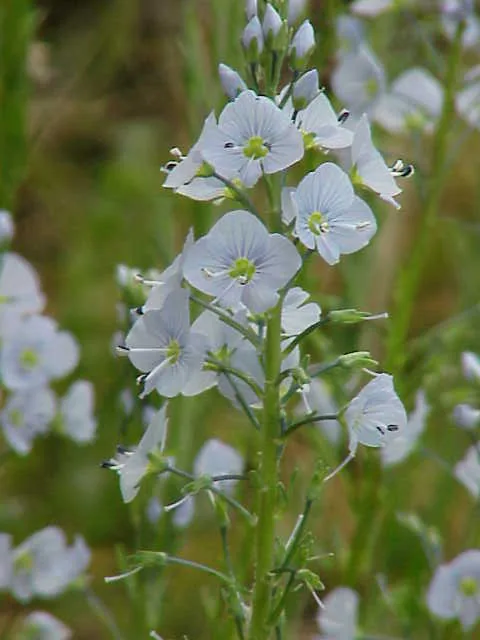
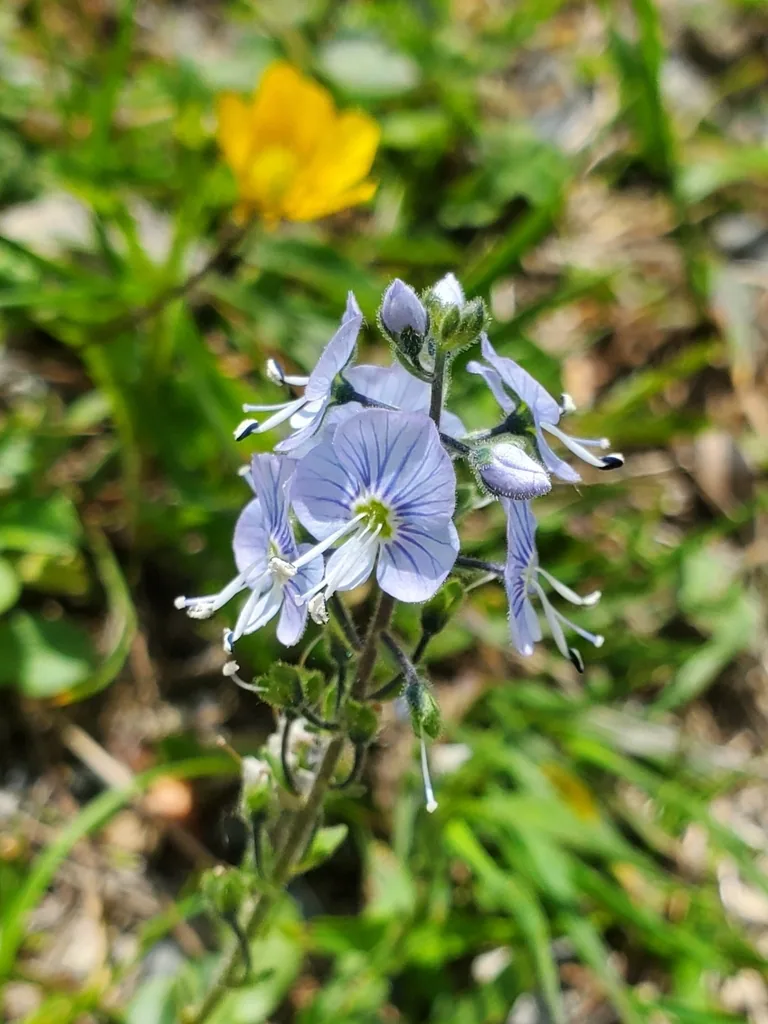
Veronica gentianoides (gentian speedwell) is a mat-forming perennial from Ukraine, Turkey and the Caucasus with pale blue, darker-veined flowers in late spring and early summer. [3] It grows in full sun to partial shade in moist but well-drained, humus-rich soil and is attractive to bees. [1] It is raised from seed or by division. [4]
Veronica gentianoides care
How to water Veronica gentianoides
Watering
Keep regularly moist; not drought tolerant, so water regularly in dry periods
Watering notes
Needs well-drained soil; root rot can occur in wet winters where drainage is poor
What the sources say (1)
Root rot may be a problem in our notorious Pacific Northwest wet winters, if soil is not well-drained.How much light Veronica gentianoides needs
Full sun to partial shade
What the sources say (3)
Grow Veronica gentianoides in moist but well-drained soil in full sun to partial shade.Growth habit:
Mat forming.
Light:
Full sun to partial shade.Veronica gentianoides grows in full sun, but also does well in part shade.How much cold Veronica gentianoides can take
Hardiness, coldest zone
4 [winter low −34.4 to −28.9 °C (−30 to −20 °F)]
Hardiness, warmest zone
7 [winter low −17.8 to −12.2 °C (0 to 10 °F)]
How to propagate Veronica gentianoides
Seed; division in spring or autumn
What the sources say (3)
Sow seed at 68-86°F (20-30°C), barely cover as they need light to germinate.Mine germinated within 15 days on a heat mat. | Divide in spring or fall.does not like to dry out
USDA Hardiness Zone: 4-7
Propagation: seed, divisionVeronica gentianoides pests and problems
Root rot
What to do: Grow in well-drained soil
What the sources say (1)
Root rot may be a problem in our notorious Pacific Northwest wet winters, if soil is not well-drained.
— Veronica gentianoides - SPEEDWELL [3] Powdery mildew
What the sources say (1)
Powdery mildew is reported to be a possible problem. It has not been a problem on my own plants.
— Veronica gentianoides - SPEEDWELL [3]
Remedies
Each remedy shows what official sources say about it; traditional remedies without an official source are marked as such. Harmful ones are listed so you know to avoid them.
Treating the plant
root rot
well-drained soil Not verified
Traditional remedy, not verified by an official source.
How: Grow in well-drained soil to avoid root rot in wet winters.
Is Veronica gentianoides toxic to pets?
Reported by the source, quoted verbatim. This is not medical or veterinary advice: if a person or an animal may have eaten this plant, contact a poison control centre or a veterinarian.
No reported toxicity to: Is not known to attract Birds Birds Is not known to attract Cats
[1]The source flags the risk for this animal but does not explain why.
No reported toxicity to: Is not known to attract Birds Birds Is not known to attract Cats Cats Is not known to attract Dogs
[1]The source flags the risk for this animal but does not explain why.
No reported toxicity to: Is not known to attract Birds Birds Is not known to attract Cats Cats Is not known to attract Dogs Dogs Is not known to attract Horses
[1]The source flags the risk for this animal but does not explain why.
No reported toxicity to: Is not known to attract Birds Birds Is not known to attract Cats Cats Is not known to attract Dogs Dogs Is not known to attract Horses Horses Is not known to attract Livestock
[1]The source flags the risk for this animal but does not explain why.
Calendar
May to September
What the sources say (1)
| Plant | | | | | yes | yes | yes | yes | yes | | |Cut back flower spikes after flowering; cut back to basal foliage in autumn (September-October)
What each source says
According to BBC Gardeners' World: September-October
According to Rainy Side Gardeners (Pacific Northwest): Mid autumn
What the sources say (5)
According to BBC Gardeners' World: | Prune | | | | | | | | | yes | yes | |According to Rainy Side Gardeners (Pacific Northwest): Deadhead to promote a long bloom season. Cut back plants to basal foliage around mid autumn.Cut back the flower spikes after flowering.
Ad
## Plant calendarDeadhead to promote a long bloom season. Cut back plants to basal foliage around mid autumn.| Prune | | | | | | | | | yes | yes | |Months as given by the sources, which are mostly from the United States (northern hemisphere). In the southern hemisphere they shift by about six months.
Indicative values
Values from a secondary source, not checked word for word like the rest of this page. Use them as a starting point.
- Life cycle
- Herbaceous PerennialIndicative value, adapt it to your climate · Secondary source
- Mature height
- 30.5-45.7 cm (1-1.5 ft)Indicative value, adapt it to your climate · Secondary source
- Hours of sun
- 6-8 hoursIndicative value, adapt it to your climate · Secondary source
- Drought tolerant
- yesIndicative value, adapt it to your climate · Secondary source
- Soil pH
- 5.5-7.5Indicative value, adapt it to your climate · Secondary source
- Care level
- MediumIndicative value, adapt it to your climate · Secondary source
- Growth rate
- LowIndicative value, adapt it to your climate · Secondary source
Similar plants
- Birdeye Speedwell Veronica persica
- Garden speedwell Veronica longifolia
- Speedwell Veronica spicata
- Thyme-leaved Speedwell Veronica serpyllifolia
- Veronica Veronica peduncularis
- Ivyleaf speedwell Veronica hederifolia
- Speedwell Veronica arvensis
- Abies grandis Abies grandis
Sources
Every value above is quoted from these documents. Links lead to the original publisher.
- Veronica gentianoides | BBC Gardeners World Magazine · gardenersworld.com, consulted
- Plant Finder | Veronica gentianoides - Gentian Speedwell · plants.bbg.org, consulted
- Veronica gentianoides - SPEEDWELL · rainyside.com, consulted
- Veronica gentianoides, I love this plant · gardenmyths.com, consulted
Written by Emilio Marruso · last checked