
How to Grow and Care for Crimson glory vine
Vitis coignetiae
Written by Emilio Marruso · last checked
At a glance
This vine is happy in full sun or partial shade and asks only for moderate, steady watering, since it does not tolerate drought. Its young leaves are a kitchen treat: wrap them around other foods and bake them for a pleasant flavor, and enjoy the young tendrils raw or cooked. Plant it in early summer and prune it in winter.
- Sun
Full sun to partial shade
What the sources say (2)
Light: Full sun to partial shade
Succeeds in sun or partial shade though a warm sunny position is required for the fruit to ripen
— Vitis coignetiae - Useful Temperate Plants [1] Grow Vitis coignetiae in fertile, well-drained, chalky soil and a sunny or semi-shaded site, with wire or netting to cling to.
— Vitis coignetiae | BBC Gardeners World Magazine [3] - Water
Moderate watering; it does not tolerate drought
What the sources say (2)
Watering: Moderate
Water moderate Hardiness Zone 5+ Soil textures sandy, loamy, clay
— Crimson Glory Vine (Vitis coignetiae) — Practical Plants [2] Watering notes: Drought intolerant
Drainage well drained Tolerates Nutritionally Poor Soil No Drought intolerant
— Crimson Glory Vine (Vitis coignetiae) — Practical Plants [2] - Cold
Survives winters down to −20 °F (−28.9 °C)
Very hardy · USDA 5 · RHS H7 · Z5
What the sources say (1)
Hardiness, coldest zone: 5 [winter low −28.9 to −23.3 °C (−20 to −10 °F)]
Hardiness Zone 5+ Soil textures sandy, loamy, clay Soil pH
— Crimson Glory Vine (Vitis coignetiae) — Practical Plants [2] - Spacing
11 ft between plants
What the sources say (2)
- Planting
Plant in early summer
What the sources say (1)
Planting: Early summer
Prick out the seedlings into individual pots when they are large enough to handle and grow them on in a cold frame for their first winter. Plant out in early summer.
— Crimson Glory Vine (Vitis coignetiae) — Practical Plants [2] - Pruning
Prune in winter, while the plant is resting
What the sources say (1)
Pruning: Winter, when dormant
Any pruning should be carried out in winter when the plants are dormant otherwise they bleed profusely
— Vitis coignetiae - Useful Temperate Plants [1] - Harvest
Bake young leaves wrapped around food; eat young tendrils raw or cooked; the fruit is barely edible
- Pests
Very prone to honey fungus
- Watch out
Late spring frosts can damage the new growth
- Propagation
Layering works best; seed and cuttings of mature wood also work
What the sources say (3)
Propagation: Layering (best method); seed; cuttings of mature wood
Layering. This is the best method for this species
— Crimson Glory Vine (Vitis coignetiae) — Practical Plants [2] Seed - best sown in a cold frame as soon as it is ripe
— Crimson Glory Vine (Vitis coignetiae) — Practical Plants [2] Cuttings of mature wood of the current seasons growth, December/January in a frame.
— Crimson Glory Vine (Vitis coignetiae) — Practical Plants [2] - Sowing
Sow as soon as the seed is ripe, in a cold frame
What the sources say (1)
Sowing: As soon as the seed is ripe (cold frame)
Seed - best sown in a cold frame as soon as it is ripe
— Crimson Glory Vine (Vitis coignetiae) — Practical Plants [2]
Overview
Vitis coignetiae is a fast-growing deciduous climber with large leaves that colour well in autumn. [2] It succeeds in sun or partial shade and needs wire or netting to cling to. [1][3] Layering is the best propagation method; seed and mature-wood cuttings are also used. [2]
This record is incomplete: the sources we read do not cover every field yet.
Not yet covered by our sources: Hardiness, warmest zone
Crimson glory vine care
How to water Crimson glory vine
Watering
Moderate
What the sources say (1)
Water
moderate
Hardiness
Zone 5+
Soil textures
sandy, loamy, clayWatering notes
Drought intolerant
What the sources say (1)
Drainage
well drained
Tolerates Nutritionally Poor Soil
No
Drought
intolerantHow much light Crimson glory vine needs
Full sun to partial shade
What the sources say (2)
Succeeds in sun or partial shade though a warm sunny position is required for the fruit to ripenGrow Vitis coignetiae in fertile, well-drained, chalky soil and a sunny or semi-shaded site, with wire or netting to cling to.How much cold Crimson glory vine can take
Hardiness, coldest zone
5 [winter low −28.9 to −23.3 °C (−20 to −10 °F)]
What the sources say (1)
Hardiness
Zone 5+
Soil textures
sandy, loamy, clay
Soil pHHardiness, warmest zone
Not stated in the sources we read.
Where to grow Crimson glory vine
350 cm (3.5 m)
What each source says
ground cover in a sunny position: 350 cm (3.5 m)
How to propagate Crimson glory vine
Layering (best method); seed; cuttings of mature wood
What the sources say (3)
Layering. This is the best method for this speciesSeed - best sown in a cold frame as soon as it is ripeCuttings of mature wood of the current seasons growth, December/January in a frame.Crimson glory vine pests and problems
Honey fungus
Symptom: Plants in this genus are notably susceptible to honey fungus.
What the sources say (1)
Plants in this genus are notably susceptible to honey fungus
— Crimson Glory Vine (Vitis coignetiae) — Practical Plants [2] Late spring frosts
Symptom: Young growth in spring can be damaged by late frosts.
What the sources say (1)
The fully dormant plant is hardy to about -25°c, though the young growth in spring can be damaged by late frosts.
— Vitis coignetiae - Useful Temperate Plants [1]
Remedies
The sources we checked give no remedies for this plant.
Calendar
Sowing
As soon as the seed is ripe (cold frame)
What the sources say (1)
Seed - best sown in a cold frame as soon as it is ripePlanting
Early summer
What the sources say (1)
Prick out the seedlings into individual pots when they are large enough to handle and grow them on in a cold frame for their first winter. Plant out in early summer.Pruning
Winter, when dormant
What the sources say (1)
Any pruning should be carried out in winter when the plants are dormant otherwise they bleed profuselyMonths as given by the sources, which are mostly from the United States (northern hemisphere). In the southern hemisphere they shift by about six months.
Edibility
Reported by the source, quoted verbatim. Do not eat a plant on the basis of this page alone: identification mistakes can be dangerous.
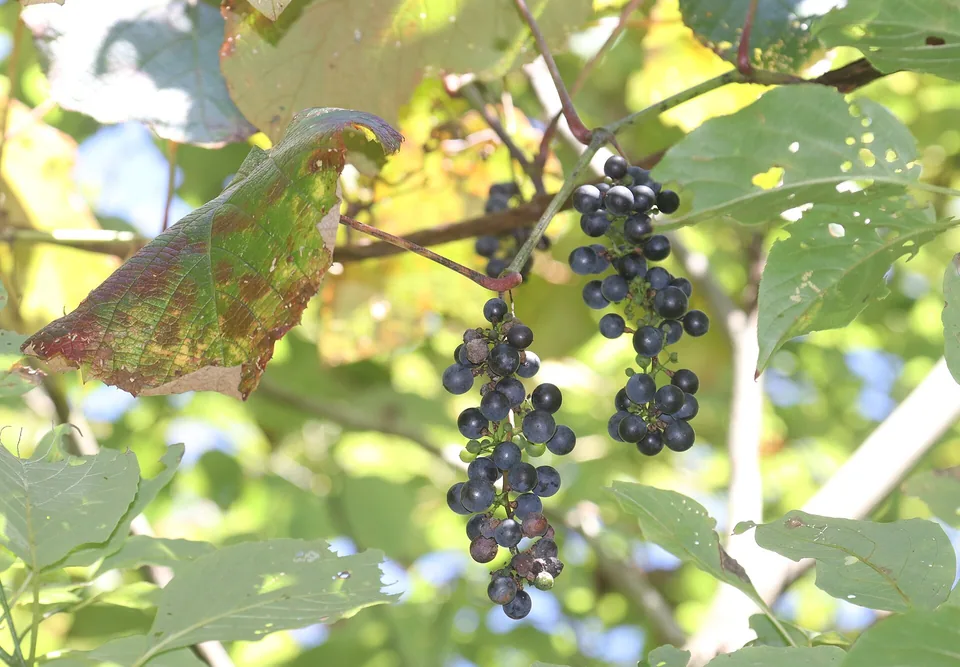
Fruit - raw or dried for winter use [2] [5] [7] . The fruit is about 12mm in diameter and is carried in bunches, but it is scarcely edible [9] .
[2]Young leaves are wrapped around other foods and then baked, they impart a pleasant flavour.
[2]Young tendrils - raw or cooked. Young stems and leafstalks - boiled
[2]
Indicative values
Values from a secondary source, not checked word for word like the rest of this page. Use them as a starting point.
- Life cycle
- PerennialIndicative value, adapt it to your climate · Secondary source
- Mature height
- 914.4-1828.8 cm (30-60 ft)Indicative value, adapt it to your climate · Secondary source
- Drought tolerant
- yesIndicative value, adapt it to your climate · Secondary source
- Soil pH
- 5.5-7Indicative value, adapt it to your climate · Secondary source
- Care level
- MediumIndicative value, adapt it to your climate · Secondary source
- Growth rate
- HighIndicative value, adapt it to your climate · Secondary source
Similar plants
- Fox grape Vitis labrusca
- Grape Vitis vinifera
- Summer Grape Vitis aestivalis
- Muscadine Grape Vitis rotundifolia
- Frost Grape Vitis vulpina
- Riverbank Grape Vitis riparia
- Abies grandis Abies grandis
- Abraham Trachystemon orientalis
Sources
Every value above is quoted from these documents. Links lead to the original publisher.
- Vitis coignetiae - Useful Temperate Plants · temperate.theferns.info, consulted
- Crimson Glory Vine (Vitis coignetiae) — Practical Plants · practicalplants.org, consulted
- Vitis coignetiae | BBC Gardeners World Magazine · gardenersworld.com, consulted
- Vitis coignetiae - Trees and Shrubs Online · treesandshrubsonline.org, consulted
Written by Emilio Marruso · last checked