
Cómo cultivar y cuidar Aloe aristata
Aloe aristata
Escrito por Emilio Marruso · última revisión
Tóxica para: Personas · Por qué
De un vistazo
La aristaloe es una planta perenne que crece feliz en maceta, incluso dentro de casa, así que puede alegrar una ventana o un patio. Dale un suelo con buen drenaje y riégala solo cuando la parte de arriba de la tierra esté seca, con menos agua en los meses fríos. Además, forma hijuelos que puedes plantar para tener nuevas plantas o regalarlas.
- Riego
Riega solo cuando la parte de arriba de la tierra esté seca, menos en invierno; nunca la dejes encharcada
Qué dicen las fuentes (2)
Notas sobre el riego: Nunca dejes que las plantas o macetas queden en suelo empapado o agua estancada; reduce el riego en los fríos meses de invierno
To discourage root rot, never let the plants or pots sit in soggy soil or puddled water.
— How to Grow and Care for Lace Aloe | Gardener’s Path [4] Reduce watering in cold winter months. Fleshy leaves retain water and allow this plant to easily survive drought.
— January 2023 Plant of the Month: Lace Aloe, Torch Plant – Public Works [2] - Frío
Aguanta inviernos de hasta −17,8 °C (0 °F)
Rústica en inviernos muy fríos · USDA 7 · RHS H6 · Z7
Qué dicen las fuentes (2)
Rusticidad, zona más fría: 7 [mínima invernal de −17,8 a −12,2 °C (de 0 a 10 °F)]
Hardiness (USDA Zone): | 7-10
— How to Grow and Care for Lace Aloe | Gardener’s Path [4] Rusticidad, zona más cálida: 10 [mínima invernal de −1,1 a 4,4 °C (de 30 a 40 °F)]
Hardiness (USDA Zone): | 7-10
— How to Grow and Care for Lace Aloe | Gardener’s Path [4] - Suelo
Suelo con buen drenaje, pH 5,5–7,0
- Distancia
30–60 cm entre plantas
Qué dicen las fuentes (1)
Distancia de plantación: 30.5-61.0 cm (1-2 pies)
Spacing: | 1-2 feet
— How to Grow and Care for Lace Aloe | Gardener’s Path [4] - Plagas
La tierra encharcada pudre las raíces; dentro de casa, vigila la cochinilla algodonosa y la de escudo
- Multiplicación
Nuevas plantas con hijuelos, esquejes de hoja o semillas
Qué dicen las fuentes (3)
Propagación: Hijuelos (brotes); esquejes de hoja; semilla
dividing pups produced by a parent plant is the simplest way to propagate
— How to Grow and Care for Lace Aloe | Gardener’s Path [4] To root a cutting instead, use a sanitized knife to cut a leaf off at its base.
— How to Grow and Care for Lace Aloe | Gardener’s Path [4] It is technically possible to propagate A. aristata from seed outdoors in sandy loam or inside in a potting mix.
— How to Grow and Care for Lace Aloe | Gardener’s Path [4] - Maceta
Crece bien en maceta, también dentro de casa
- Seguridad
Mantenla lejos de niños y mascotas que puedan morderla: ingerirla puede causar fuertes molestias
Resumen
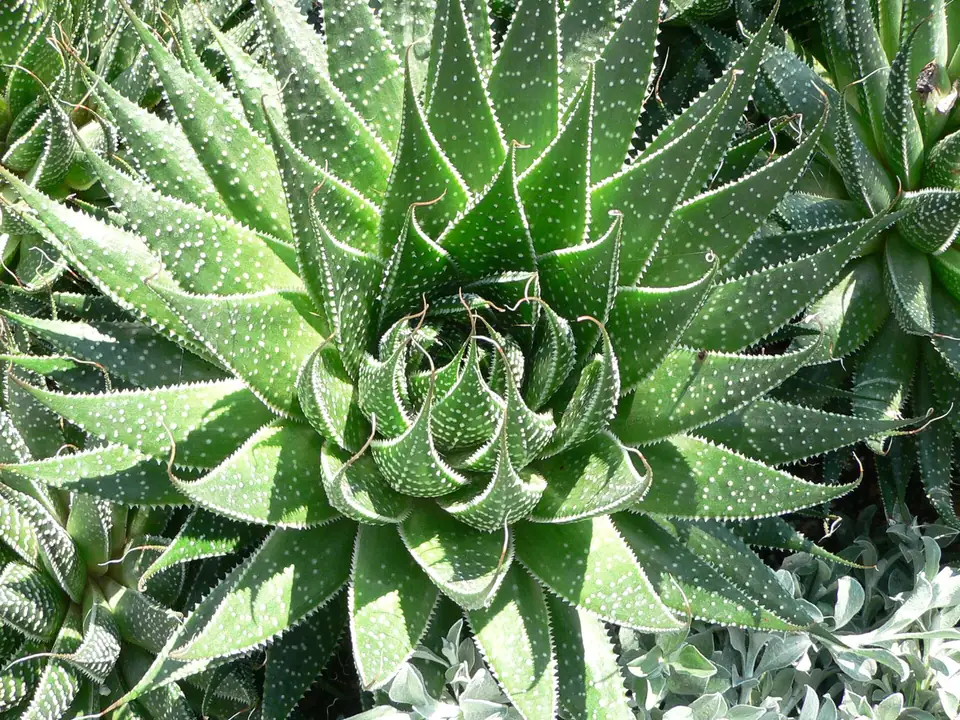
Aristaloe aristata es una suculenta perenne originaria de Sudáfrica, antes clasificada como Aloe aristata. [1][4] Separar los hijuelos que produce la planta madre es la forma más sencilla de propagarla. [4]
Citado en inglés, como en la fuente.
Esta ficha está incompleta: las fuentes consultadas aún no cubren todos los campos.
Aún no cubierto por nuestras fuentes: Poda
Cuidados
Las medidas entre corchetes son nuestra conversión al otro sistema de unidades; el texto citado no cambia.
Riego
Riego
Las fuentes dan valores distintos según la región, la zona o las condiciones de cultivo.
Lo que dice cada fuente
Según Gardener's Path: Riega profundamente solo cuando el suelo esté seco al menos 2 pulgadas [5,1 cm] de profundidad
Según Plant Care Today: Deja que se seque la media pulgada [1,3 cm] superior del suelo entre riegos
Según San Bernardino County Public Works: 2 a 4 veces al mes
Qué dicen las fuentes (3)
Según Gardener's Path: Water deeply but only when the ground or potting mix is dry to at least 2 inches deep.Según Plant Care Today: Allow the top half-inch of soil to dry between watering.Según San Bernardino County Public Works: needing watering only 2 to 4 times a monthNotas sobre el riego
Nunca dejes que las plantas o macetas queden en suelo empapado o agua estancada; reduce el riego en los fríos meses de invierno
Qué dicen las fuentes (2)
To discourage root rot, never let the plants or pots sit in soggy soil or puddled water.Reduce watering in cold winter months. Fleshy leaves retain water and allow this plant to easily survive drought.Luz
Clima y frío
Rusticidad, zona más fría
7 [mínima invernal de −17,8 a −12,2 °C (de 0 a 10 °F)]
Qué dicen las fuentes (1)
Hardiness (USDA Zone): | 7-10Rusticidad, zona más cálida
10 [mínima invernal de −1,1 a 4,4 °C (de 30 a 40 °F)]
Qué dicen las fuentes (1)
Hardiness (USDA Zone): | 7-10Suelo
pH del suelo, mínimo
5.5
Qué dicen las fuentes (1)
Soil pH: | 5.5-7.0pH del suelo, máximo
7.0
Qué dicen las fuentes (1)
Soil pH: | 5.5-7.0Dónde cultivarla
En interior
Sí
Qué dicen las fuentes (1)
Grown as a houseplant, A. aristata needs plenty of indirect lightEn maceta
Sí
Qué dicen las fuentes (1)
perfect for edging, ground covers, or in potsDistancia de plantación
30.5-61.0 cm (1-2 pies)
Qué dicen las fuentes (1)
Spacing: | 1-2 feetPropagación
Hijuelos (brotes); esquejes de hoja; semilla
Qué dicen las fuentes (3)
dividing pups produced by a parent plant is the simplest way to propagateTo root a cutting instead, use a sanitized knife to cut a leaf off at its base.It is technically possible to propagate A. aristata from seed outdoors in sandy loam or inside in a potting mix.Cultivo
La planta
Ciclo de vida
perenne
Qué dicen las fuentes (1)
The native range of this species is S. Africa. It is a succulent perennial and grows primarily in the subtropical biome.Familia
Asphodelaceae
Qué dicen las fuentes (1)
Family Asphodelaceae View Family Tree opens in a new tab - Genus Aristaloe View in Tree of Life opens in a new tab - Species Aristaloe aristataProblemas
Podredumbre de la raíz
Síntoma: Pudrición fúngica de las raíces en suelo demasiado empapado, que puede matar la planta
Qué hacer: Planta en un suelo con buen drenaje, riega solo cuando los primeros centímetros de la tierra estén secos y nunca la dejes reposar en agua acumulada.
Cochinillas harinosas y cochinillas escudo
Síntoma: Los pocos insectos plaga que atrae la planta, más comunes en interiores
Qué hacer: Aísla las plantas afectadas y usa un tratamiento etiquetado
Remedios
Las fuentes consultadas no dan remedios para esta planta.
Toxicidad
Según la fuente, citada textualmente. No es un consejo médico ni veterinario: si una persona o un animal pudo haber ingerido esta planta, contacta con un centro de toxicología o con un veterinario.
Calendario
Poda
No figura en las fuentes consultadas.
Meses tal como los dan las fuentes, en su mayoría de Estados Unidos (hemisferio norte). En el hemisferio sur se desplazan unos seis meses.
Valores orientativos
Valores de una fuente secundaria, no comprobados palabra por palabra como el resto de esta página. Úselos como punto de partida.
- Altura adulta
- 15.2-22.9 cm (0.5-0.75 pies)Valor orientativo, adáptalo a tu clima · Fuente secundaria
- Nivel de cuidado
- MedioValor orientativo, adáptalo a tu clima · Fuente secundaria
- Crecimiento
- BajoValor orientativo, adáptalo a tu clima · Fuente secundaria
- Poda
- abril, junio, septiembreValor orientativo, adáptalo a tu clima · Fuente secundaria
Plantas similares
- Sábila Aloe vera
- Aloe coral Aloe striata
- Áloe feroz Aloe ferox
- Planta pulpo Aloe arborescens
- Soap aloe Aloe maculata
- Asphodeline lutea Asphodeline lutea
- Bulbine frutescens Bulbine frutescens
- Lirios de día Hemerocallis fulva
Fuentes
Cada valor anterior se cita de estos documentos. Los enlaces llevan al editor original.
- Aristaloe aristata (Haw.) Boatwr. & J.C.Manning | Plants of the World Online | Kew Science · powo.science.kew.org, consultado
- January 2023 Plant of the Month: Lace Aloe, Torch Plant – Public Works · specialdistricts.sbcounty.gov, consultado
- Aloe aristata · calflora.net, consultado
- How to Grow and Care for Lace Aloe | Gardener’s Path · gardenerspath.com, consultado
- Aristaloe aristata · llifle.com, consultado
- How to Keep Lace Aloe Compact and Healthy - Houseplant Central · houseplantcentral.com, consultado
- Aloe Aristata Care: Learn Tips On Growing The Lace Aloe · plantcaretoday.com, consultado
Escrito por Emilio Marruso · última revisión