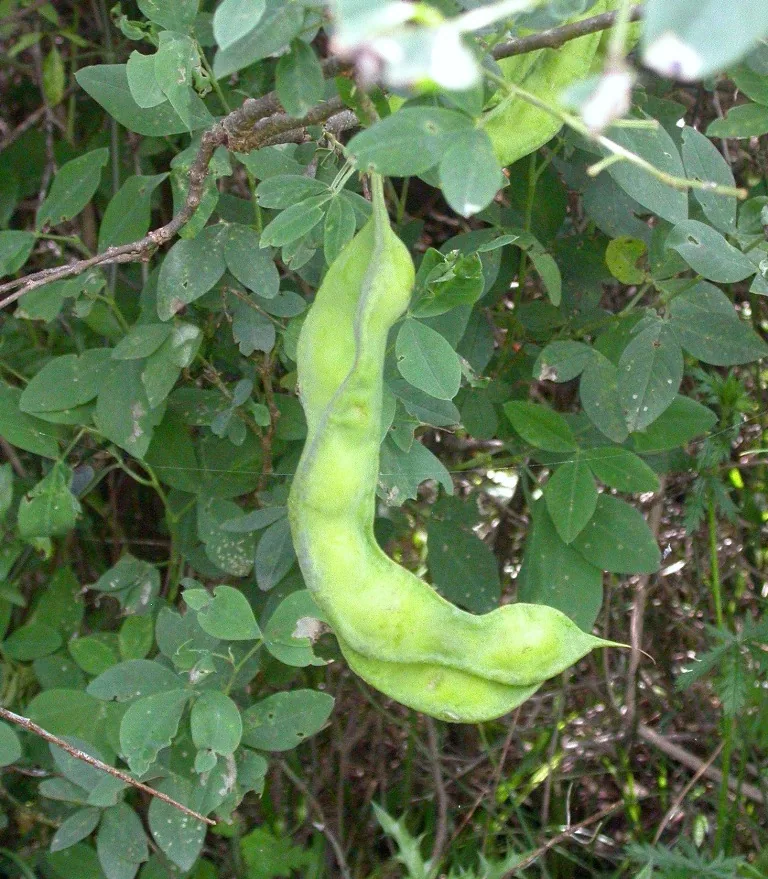
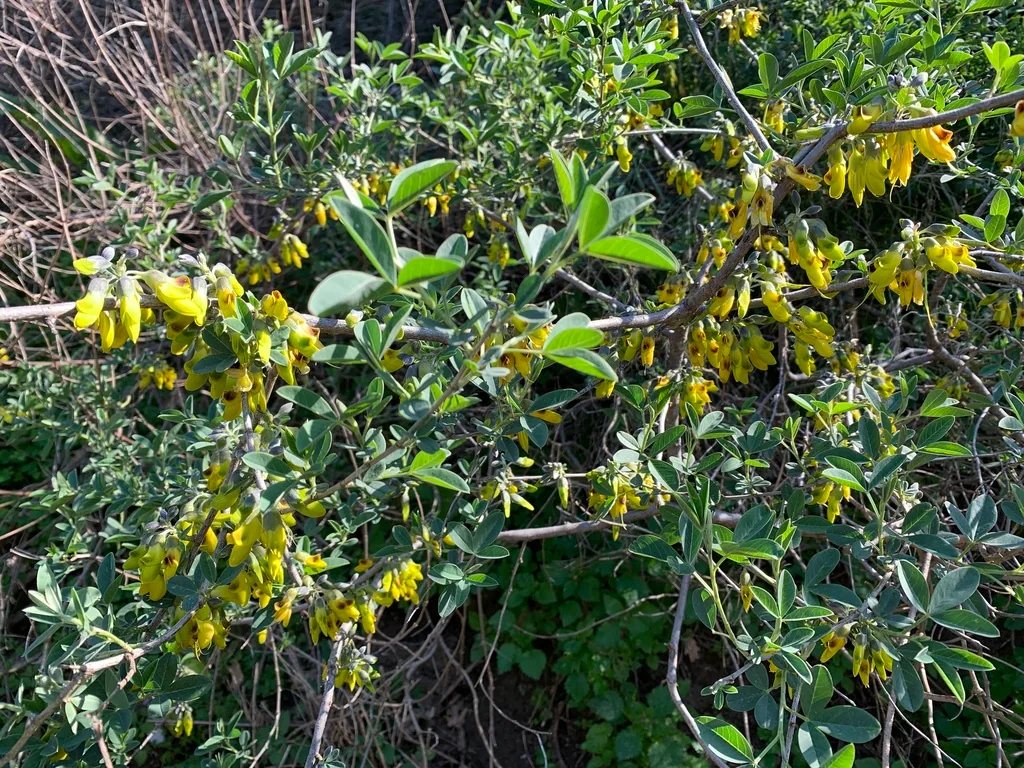

Cómo cultivar y cuidar Anagyris foetida
Anagyris foetida
Escrito por Emilio Marruso · última revisión
Tóxica para: Caballos, Ganado vacuno, Ovejas, Ganado, Personas · Por qué
De un vistazo
El altramuz hediondo es un arbusto robusto de la familia de las leguminosas que supera los 2 m de altura. Puedes cultivarlo desde semilla: solo tienes que lijar o rayar antes su cubierta dura. Su fuerte olor mantiene alejados a los animales que pastan, pero es tóxico, así que plántalo donde ni niños ni ganado puedan mordisquearlo.
- Frío
Aguanta inviernos de hasta −6,7 °C (20 °F)
Rústica en inviernos normales · USDA 9 · RHS H4 · Z9
Qué dicen las fuentes (2)
Rusticidad, zona más fría: 9 [mínima invernal de −6,7 a −1,1 °C (de 20 a 30 °F)]
USDA Hardiness Zone  9 RHS Hardiness Rating  H3
— Anagyris foetida - Trees and Shrubs Online [1] Rusticidad, zona más cálida: 9 [mínima invernal de −6,7 a −1,1 °C (de 20 a 30 °F)]
USDA Hardiness Zone  9 RHS Hardiness Rating  H3
— Anagyris foetida - Trees and Shrubs Online [1] - Tamaño
Supera los 2 m de alto
Qué dicen las fuentes (1)
Altura adulta: más de 200 cm [79 in] (más de dos metros [6,6 ft])
A bush that can reach up to more than two metres in height, with trifoliolate leaves that fall off during the summer.
— Anagyris foetida L. - Herbari Virtual del Mediterrani Occidental [2] - Multiplicación
Por semilla: lija o raya la cubierta dura antes de sembrar
Qué dicen las fuentes (2)
Propagación: Semilla, con escarificación de la cubierta dura de la semilla
These findings could be valuable for the generative reproduction of the species, especially for producing plants for afforestation/reforestation programs.
— Enhancement of seed germination rate and growth of Anagyris foetida L. | REFORESTA [8] The seeds of A. foetida predominantly exhibit physical dormancy attributed to their hard and impermeable seed coat.
— Enhancement of seed germination rate and growth of Anagyris foetida L. | REFORESTA [8] - Seguridad
Tóxico para niños, caballos, vacas y ovejas; su mal olor suele alejar a los animales
Resumen
El trébol hediondo es un arbusto mediterráneo caducifolio, ocasionalmente un árbol pequeño, cuyas hojas huelen desagradablemente al magullarse. [1] Se describe como una planta venenosa y el ganado no la ramonea. [2][1] Es delicada y apenas se cultiva en Gran Bretaña, donde necesita la protección de un muro orientado al sur. [1] Todas las partes son tóxicas, especialmente las semillas, debido a los alcaloides citisina y anagirina. [5]
Citado en inglés, como en la fuente.
Esta ficha está incompleta: las fuentes consultadas aún no cubren todos los campos.
Aún no cubierto por nuestras fuentes: Riego, Luz, Poda
Cuidados
Riego
No figura en las fuentes consultadas.
Luz
No figura en las fuentes consultadas.
Clima y frío
Rusticidad, zona más fría
9 [mínima invernal de −6,7 a −1,1 °C (de 20 a 30 °F)]
Qué dicen las fuentes (1)
USDA Hardiness Zone  9 RHS Hardiness Rating  H3Rusticidad, zona más cálida
9 [mínima invernal de −6,7 a −1,1 °C (de 20 a 30 °F)]
Qué dicen las fuentes (1)
USDA Hardiness Zone  9 RHS Hardiness Rating  H3Propagación
Semilla, con escarificación de la cubierta dura de la semilla
Qué dicen las fuentes (2)
These findings could be valuable for the generative reproduction of the species, especially for producing plants for afforestation/reforestation programs.The seeds of A. foetida predominantly exhibit physical dormancy attributed to their hard and impermeable seed coat.Cultivo
La planta
Familia
Leguminosae
Qué dicen las fuentes (1)
Family:
LEGUMINOSAE
Genus:
Anagyris
Catalan common name:
Arbre monjat.Altura adulta
más de 200 cm [79 in] (más de dos metros [6,6 ft])
Qué dicen las fuentes (1)
A bush that can reach up to more than two metres in height, with trifoliolate leaves that fall off during the summer.Remedios
Cada remedio indica qué dicen las fuentes oficiales; los remedios tradicionales sin fuente oficial aparecen marcados. Los perjudiciales están para que sepas evitarlos.
Primeros auxilios
Primeros auxilios: no sustituyen al médico
intoxicación por plantas, contacto con la piel o los ojos
Lava la piel y enjuaga los ojos con agua. Fuente oficial, sin prueba independiente
Call the NSW Poisons Information Centre on 13 11 26 for immediate support. They will give you information about any first aid you need to do and tell you which emergency department to go to.
— schn.health.nsw.gov.au [9] Cómo: lava la piel afectada con agua corriente; enjuaga los ojos con agua limpia y corriente durante 10-15 minutos
For plant poisoning , first aid may include: - washing the affected skin with running water - flushing the eyes with clean, running water for 10-15 minutes
— schn.health.nsw.gov.au [9]
intoxicación por plantas, ingestión
Retira los trozos de planta de la boca y enjuágate con agua. Fuente oficial, sin prueba independiente
Call the NSW Poisons Information Centre on 13 11 26 for immediate support. They will give you information about any first aid you need to do and tell you which emergency department to go to.
— schn.health.nsw.gov.au [9] Cómo: Retira los trozos de planta de la boca y luego enjuaga con agua.
- removing plant pieces from your child's mouth, then rinsing with water.
— schn.health.nsw.gov.au [9]
Venenosa para los animales
Según la fuente, citada textualmente. No es un consejo médico ni veterinario: si una persona o un animal pudo haber ingerido esta planta, contacta con un centro de toxicología o con un veterinario.
Animales
Its noxious smell and poisonous unpalatability mean that it is left unbrowsed even in areas with little available fodder
[1]La fuente señala el riesgo para este animal pero no explica por qué.
Toxicity: described in the child like in the horses and the bovines and sheep (more rarely because the odor of the shrub is dissuasive)
[5]
Personas
Calendario
Poda
No figura en las fuentes consultadas.
Meses tal como los dan las fuentes, en su mayoría de Estados Unidos (hemisferio norte). En el hemisferio sur se desplazan unos seis meses.
Plantas similares
- Hipérico rastrero Hypericum calycinum
- Acónito común Aconitum napellus
- Palma de aguja Yucca flaccida
- Afghan Cherry Prunus jacquemontii
- African Blood Lily Scadoxus multiflorus
- Agapanto Agapanthus praecox
- Cempasúchil Tagetes erecta
- African Spear Dracaena angolensis
Fuentes
Cada valor anterior se cita de estos documentos. Los enlaces llevan al editor original.
- Anagyris foetida - Trees and Shrubs Online · treesandshrubsonline.org, consultado
- Anagyris foetida L. - Herbari Virtual del Mediterrani Occidental · herbarivirtual.uib.cat, consultado
- · cretanflora.com, consultado
- Ethnobotanical Plant Anagyris foetida | Dr. Duke's Phytochemical and Ethnobotanical Databases · phytochem.nal.usda.gov, consultado
- Online Flora of the Maltese Islands - Plant Family Index · maltawildplants.com, consultado
- The Species of January 2015 – Κυπριακό Κέντρο Περιβαλλοντικής Έρευνας & Εκπαίδευσης – Κυκπεε · kykpee.org, consultado
- 210001 | Desert Legume Program · cales.arizona.edu, consultado
- Enhancement of seed germination rate and growth of Anagyris foetida L. | REFORESTA · journal.reforestationchallenges.org, consultado
- schn.health.nsw.gov.au · schn.health.nsw.gov.au
Escrito por Emilio Marruso · última revisión