
How to Grow and Care for Anagyris foetida
Anagyris foetida
Written by Emilio Marruso · last checked
Toxic to: Horses, Cattle, Sheep, Livestock, People · Why
At a glance
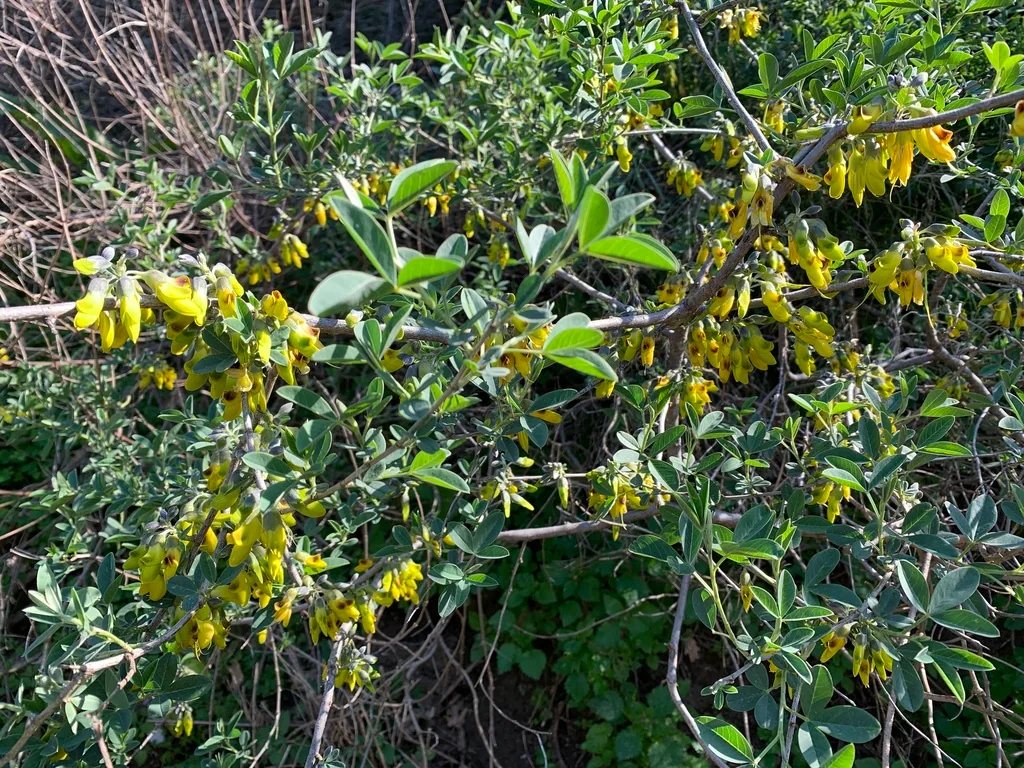
Stinking bean trefoil is a sturdy shrub from the pea family that grows to more than 6 feet tall. You can start it from seed; just nick or scratch the hard seed coat first. Its strong smell keeps grazing animals away, but the plant is poisonous, so grow it where children and livestock can't nibble it.
- Cold
Survives winters down to 20 °F (−6.7 °C)
Hardy in average winters · USDA 9 · RHS H4 · Z9
What the sources say (2)
Hardiness, coldest zone: 9 [winter low −6.7 to −1.1 °C (20 to 30 °F)]
USDA Hardiness Zone  9 RHS Hardiness Rating  H3
— Anagyris foetida - Trees and Shrubs Online [1] Hardiness, warmest zone: 9 [winter low −6.7 to −1.1 °C (20 to 30 °F)]
USDA Hardiness Zone  9 RHS Hardiness Rating  H3
— Anagyris foetida - Trees and Shrubs Online [1] - Size
Grows more than 6 ft tall
What the sources say (1)
Mature height: more than 200 cm [79 in] (more than two metres [6.6 ft])
A bush that can reach up to more than two metres in height, with trifoliolate leaves that fall off during the summer.
— Anagyris foetida L. - Herbari Virtual del Mediterrani Occidental [2] - Propagation
From seed: nick or scratch the hard seed coat before sowing
What the sources say (2)
Propagation: Seed, with scarification of the hard seed coat
These findings could be valuable for the generative reproduction of the species, especially for producing plants for afforestation/reforestation programs.
— Enhancement of seed germination rate and growth of Anagyris foetida L. | REFORESTA [8] The seeds of A. foetida predominantly exhibit physical dormancy attributed to their hard and impermeable seed coat.
— Enhancement of seed germination rate and growth of Anagyris foetida L. | REFORESTA [8] - Safety
Poisonous to children, horses, cattle and sheep; its foul smell usually keeps animals away
Overview
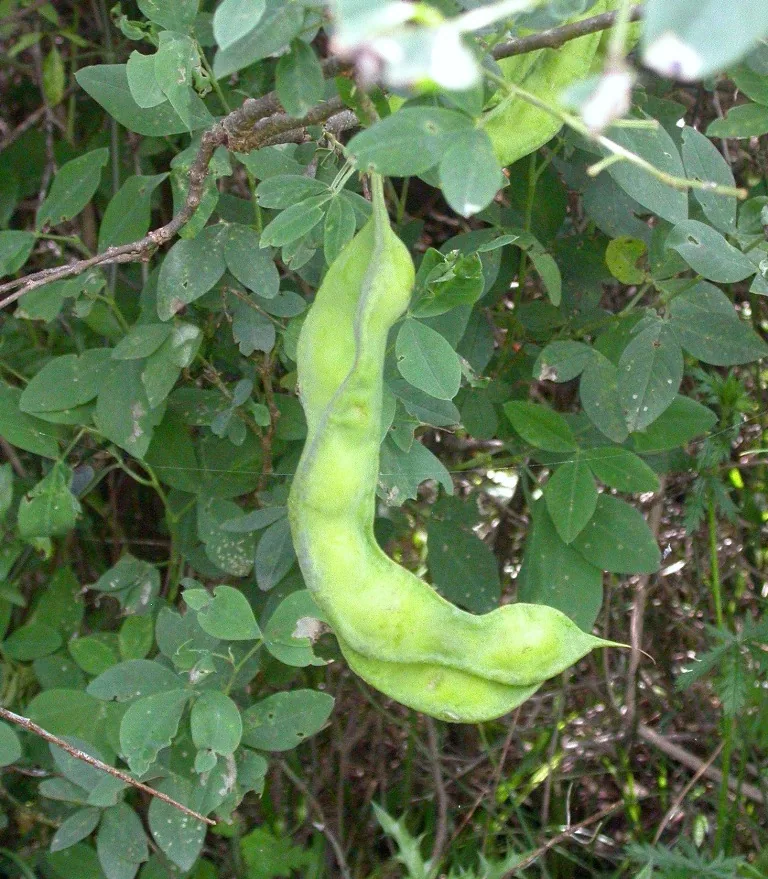
Stinking bean trefoil is a deciduous Mediterranean shrub, occasionally a small tree, whose leaves smell unpleasant when bruised. [1] It is described as a poisonous plant and is left unbrowsed by livestock. [2][1] It is tender and barely grown in Britain, where it needed the protection of a south wall. [1] All parts are toxic, especially the seeds, because of the alkaloids cytisine and anagyrine. [5]
This record is incomplete: the sources we read do not cover every field yet.
Not yet covered by our sources: Watering, Light, Pruning
Anagyris foetida care
How to water Anagyris foetida
Not stated in the sources we read.
How much light Anagyris foetida needs
Not stated in the sources we read.
How much cold Anagyris foetida can take
Hardiness, coldest zone
9 [winter low −6.7 to −1.1 °C (20 to 30 °F)]
What the sources say (1)
USDA Hardiness Zone  9 RHS Hardiness Rating  H3Hardiness, warmest zone
9 [winter low −6.7 to −1.1 °C (20 to 30 °F)]
What the sources say (1)
USDA Hardiness Zone  9 RHS Hardiness Rating  H3How to propagate Anagyris foetida
Seed, with scarification of the hard seed coat
What the sources say (2)
These findings could be valuable for the generative reproduction of the species, especially for producing plants for afforestation/reforestation programs.The seeds of A. foetida predominantly exhibit physical dormancy attributed to their hard and impermeable seed coat.How to grow Anagyris foetida
The plant
Family
Leguminosae
What the sources say (1)
Family:
LEGUMINOSAE
Genus:
Anagyris
Catalan common name:
Arbre monjat.Mature height
more than 200 cm [79 in] (more than two metres [6.6 ft])
What the sources say (1)
A bush that can reach up to more than two metres in height, with trifoliolate leaves that fall off during the summer.Remedies
Each remedy shows what official sources say about it; traditional remedies without an official source are marked as such. Harmful ones are listed so you know to avoid them.
First aid
First aid: not a substitute for a doctor
plant poisoning, skin or eye contact
washing skin and flushing eyes with water Official source, not independently tested
Call the NSW Poisons Information Centre on 13 11 26 for immediate support. They will give you information about any first aid you need to do and tell you which emergency department to go to.
— schn.health.nsw.gov.au [9] How: washing the affected skin with running water; flushing the eyes with clean, running water for 10-15 minutes
For plant poisoning , first aid may include: - washing the affected skin with running water - flushing the eyes with clean, running water for 10-15 minutes
— schn.health.nsw.gov.au [9]
plant poisoning, ingestion
removing plant pieces from the mouth and rinsing with water Official source, not independently tested
Call the NSW Poisons Information Centre on 13 11 26 for immediate support. They will give you information about any first aid you need to do and tell you which emergency department to go to.
— schn.health.nsw.gov.au [9] How: removing plant pieces from the mouth, then rinsing with water
- removing plant pieces from your child's mouth, then rinsing with water.
— schn.health.nsw.gov.au [9]
Is Anagyris foetida toxic to pets?
Reported by the source, quoted verbatim. This is not medical or veterinary advice: if a person or an animal may have eaten this plant, contact a poison control centre or a veterinarian.
Animals
Its noxious smell and poisonous unpalatability mean that it is left unbrowsed even in areas with little available fodder
[1]The source flags the risk for this animal but does not explain why.
Toxicity: described in the child like in the horses and the bovines and sheep (more rarely because the odor of the shrub is dissuasive)
[5]
People
Calendar
Pruning
Not stated in the sources we read.
Months as given by the sources, which are mostly from the United States (northern hemisphere). In the southern hemisphere they shift by about six months.
Similar plants
- Aaron's Beard Hypericum calycinum
- Aconite Aconitum napellus
- Adam's Needle Yucca flaccida
- Afghan Cherry Prunus jacquemontii
- African Blood Lily Scadoxus multiflorus
- African Blue Lily Agapanthus praecox
- African Marigold Tagetes erecta
- African Spear Dracaena angolensis
Sources
Every value above is quoted from these documents. Links lead to the original publisher.
- Anagyris foetida - Trees and Shrubs Online · treesandshrubsonline.org, consulted
- Anagyris foetida L. - Herbari Virtual del Mediterrani Occidental · herbarivirtual.uib.cat, consulted
- · cretanflora.com, consulted
- Ethnobotanical Plant Anagyris foetida | Dr. Duke's Phytochemical and Ethnobotanical Databases · phytochem.nal.usda.gov, consulted
- Online Flora of the Maltese Islands - Plant Family Index · maltawildplants.com, consulted
- The Species of January 2015 – Κυπριακό Κέντρο Περιβαλλοντικής Έρευνας & Εκπαίδευσης – Κυκπεε · kykpee.org, consulted
- 210001 | Desert Legume Program · cales.arizona.edu, consulted
- Enhancement of seed germination rate and growth of Anagyris foetida L. | REFORESTA · journal.reforestationchallenges.org, consulted
- schn.health.nsw.gov.au · schn.health.nsw.gov.au
Written by Emilio Marruso · last checked