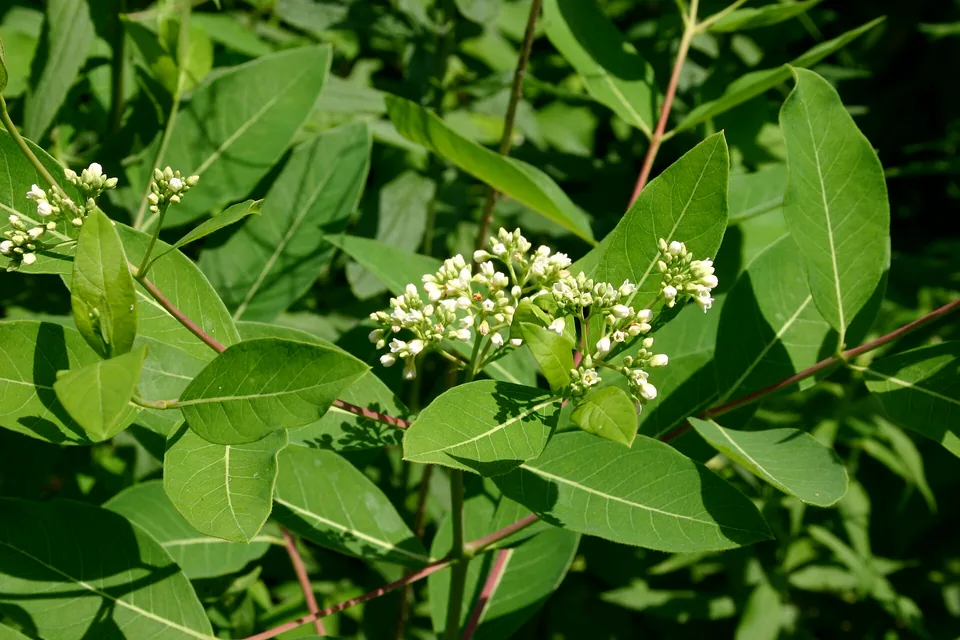


Cómo cultivar y cuidar Dogbane
Apocynum cannabinum
Escrito por Emilio Marruso · última revisión
Tóxica para: Perros, Personas · Por qué
De un vistazo
El cáñamo indio es una vivaz resistente que se adapta a sitios húmedos, bien drenados o incluso encharcados, y también aguanta algo de sequía. Se extiende con libertad mediante tallos subterráneos, así que dale un rincón silvestre donde pueda crecer a su aire. Puedes multiplicarlo por semilla o dividiendo las matas; eso sí, todas sus partes son tóxicas.
- Riego
Le gustan los sitios húmedos o encharcados, pero aguanta algo de sequía
Qué dicen las fuentes (1)
Notas sobre el riego: Tolera sitios húmedos, bien drenados a mojados; también puede tolerar algo de sequía
Full sun; moist, well drained soil to wet sites; can also tolerate some dryness.
— Indian Hemp (Apocynum cannabinum)-Hort Answers - University of Illinois Extension [3] - Frío
Aguanta inviernos de hasta −40 °C (−40 °F)
Muy rústica · USDA 3a · RHS H7 · Z3
Qué dicen las fuentes (6)
Rusticidad, zona más fría: 3a [mínima invernal de −40 a −37,2 °C (de −40 a −35 °F)]
Según NC State Extension: 3a, 3b, 4a, 4b, 5a, 5b, 6a, 6b, 7a, 7b, 8a, 8b, 9a, 9b, 10a, 10b, 11a, 11b
— Apocynum cannabinum (Amy Root, Dogbane, Hemp Dogbane, Indian Hemp, Prairie Dogbane) | North Carolina Extension Gardener Plant Toolbox [1] Según University of Illinois Extension: USDA Hardiness Zone 4 - 9
— Indian Hemp (Apocynum cannabinum)-Hort Answers - University of Illinois Extension [3] 3a, 3b, 4a, 4b, 5a, 5b, 6a, 6b, 7a, 7b, 8a, 8b, 9a, 9b, 10a, 10b, 11a, 11b
— Apocynum cannabinum (Amy Root, Dogbane, Hemp Dogbane, Indian Hemp, Prairie Dogbane) | North Carolina Extension Gardener Plant Toolbox [1] Rusticidad, zona más cálida: 11b [mínima invernal de 7,2 a 10 °C (de 45 a 50 °F)]
Según NC State Extension: 3a, 3b, 4a, 4b, 5a, 5b, 6a, 6b, 7a, 7b, 8a, 8b, 9a, 9b, 10a, 10b, 11a, 11b
— Apocynum cannabinum (Amy Root, Dogbane, Hemp Dogbane, Indian Hemp, Prairie Dogbane) | North Carolina Extension Gardener Plant Toolbox [1] Según University of Illinois Extension: USDA Hardiness Zone 4 - 9
— Indian Hemp (Apocynum cannabinum)-Hort Answers - University of Illinois Extension [3] 3a, 3b, 4a, 4b, 5a, 5b, 6a, 6b, 7a, 7b, 8a, 8b, 9a, 9b, 10a, 10b, 11a, 11b
— Apocynum cannabinum (Amy Root, Dogbane, Hemp Dogbane, Indian Hemp, Prairie Dogbane) | North Carolina Extension Gardener Plant Toolbox [1] - Atención
Se extiende mucho por tallos subterráneos: plántalo en zonas silvestres donde pueda crecer libre
- Multiplicación
Multiplícalo por semilla o dividiendo las matas
Qué dicen las fuentes (1)
Propagación: Semilla y división
It will spread aggressively by rhizomes. Propagate by seed and division.
— Apocynum cannabinum (Amy Root, Dogbane, Hemp Dogbane, Indian Hemp, Prairie Dogbane) | North Carolina Extension Gardener Plant Toolbox [1] - Seguridad
Todas sus partes son tóxicas para personas y perros; su savia lechosa puede causar ampollas en la piel
Resumen
Todas las partes de la planta se consideran altamente tóxicas para los humanos y los mamíferos. [1] Crece agresivamente y no se recomienda para uso en jardines. [1]
Citado en inglés, como en la fuente.
Cuidados
Riego
Tolera sitios húmedos, bien drenados a mojados; también puede tolerar algo de sequía
Qué dicen las fuentes (1)
Full sun; moist, well drained soil to wet sites; can also tolerate some dryness.Luz
Las fuentes dan valores distintos según la región, la zona o las condiciones de cultivo.
Lo que dice cada fuente
Según NC State Extension: Pleno sol a semisombra
Según University of Illinois Extension: Sombra completa
Según University of Illinois Extension (Culture): Pleno sol
Qué dicen las fuentes (4)
Según NC State Extension: Light:
Full sun (6 or more hours of direct sunlight a day)
Partial Shade (Direct sunlight only part of the day, 2-6 hours)Según University of Illinois Extension: Exposure/Light Requirements
Full ShadeSegún University of Illinois Extension (Culture): Full sun; moist, well drained soil to wet sites; can also tolerate some dryness.Full sun (6 or more hours of direct sunlight a day)
Partial Shade (Direct sunlight only part of the day, 2-6 hours)Clima y frío
Rusticidad, zona más fría
3a [mínima invernal de −40 a −37,2 °C (de −40 a −35 °F)]
Lo que dice cada fuente
Según NC State Extension: 3a [mínima invernal de −40 a −37,2 °C (de −40 a −35 °F)]
Según University of Illinois Extension: 4 [mínima invernal de −34,4 a −28,9 °C (de −30 a −20 °F)]
Qué dicen las fuentes (3)
Según NC State Extension: 3a, 3b, 4a, 4b, 5a, 5b, 6a, 6b, 7a, 7b, 8a, 8b, 9a, 9b, 10a, 10b, 11a, 11bSegún University of Illinois Extension: USDA Hardiness Zone
4 - 93a, 3b, 4a, 4b, 5a, 5b, 6a, 6b, 7a, 7b, 8a, 8b, 9a, 9b, 10a, 10b, 11a, 11bRusticidad, zona más cálida
11b [mínima invernal de 7,2 a 10 °C (de 45 a 50 °F)]
Lo que dice cada fuente
Según NC State Extension: 11b [mínima invernal de 7,2 a 10 °C (de 45 a 50 °F)]
Según University of Illinois Extension: 9 [mínima invernal de −6,7 a −1,1 °C (de 20 a 30 °F)]
Qué dicen las fuentes (3)
Según NC State Extension: 3a, 3b, 4a, 4b, 5a, 5b, 6a, 6b, 7a, 7b, 8a, 8b, 9a, 9b, 10a, 10b, 11a, 11bSegún University of Illinois Extension: USDA Hardiness Zone
4 - 93a, 3b, 4a, 4b, 5a, 5b, 6a, 6b, 7a, 7b, 8a, 8b, 9a, 9b, 10a, 10b, 11a, 11bPropagación
Semilla y división
Qué dicen las fuentes (1)
It will spread aggressively by rhizomes. Propagate by seed and division.Cultivo
La planta
Ciclo de vida
perenne
Qué dicen las fuentes (2)
Indian Hemp is a bushy herbaceous perennial of the dogbane family (Apocynaceae) native to the Northeastern United States and Canada.Life cycle: Perennial reproducing by seed and vegetative rootstalksFamilia
Apocynaceae
Qué dicen las fuentes (2)
Indian Hemp is a bushy herbaceous perennial of the dogbane family (Apocynaceae) native to the Northeastern United States and Canada.Family: Apocynaceae (Dogbane family)Altura adulta
Las fuentes no coinciden:
Problemas
Propagación agresiva
Síntoma: Se extiende agresivamente por rizomas
Qué hacer: Úsala en áreas naturalizadas donde pueda extenderse libremente
Qué dicen las fuentes (1)
It is not recommended for garden use due to its aggressive behavior. Use in naturalized areas where they can spread freely.
— Apocynum cannabinum (Amy Root, Dogbane, Hemp Dogbane, Indian Hemp, Prairie Dogbane) | North Carolina Extension Gardener Plant Toolbox [1]
Remedios
Cada remedio indica qué dicen las fuentes oficiales; los remedios tradicionales sin fuente oficial aparecen marcados. Los perjudiciales están para que sepas evitarlos.
Cómo eliminarla
propagación agresiva
desyerbe, escarda o siega regulares Funciona
Cómo: Arranca, retira o interfiere con el crecimiento de las malas hierbas: arranca, escarda o siega regularmente.
To control weeds without using manufactured herbicides, the best option is to pull, remove or interfere with weed growth. Regularly pulling, hoeing or mowing weeds and encouraging grass to grow and out-compete the weeds is an excellent solution.
— extension.usu.edu [4] Qué dicen las pruebas Regularly pulling, hoeing or mowing weeds and encouraging grass to grow and out-compete the weeds is an excellent solution.
— extension.usu.edu [4] barrera de malezas con periódico y mantillo Fuente oficial, sin prueba independiente
Be cautious about the weed barrier material used because items such as plastic shower curtains or old tarps are good barriers but can be difficult to work with later when it is time to rework the site.
— extension.usu.edu [4] Cómo: Coloca periódico o un material similar para evitar que la luz solar llegue a las plantas no deseadas y cúbrelo con mantillo.
A variety of household items, such as newspapers, can be used as weed barriers. Lay the material down to prevent sunlight from reaching the unwanted plants, and cover with mulch or other plant-resistant material.
— extension.usu.edu [4] vinagre casero No demostrado
Any contact with the skin and eyes causes’ irreversible corrosion and damage, meaning gloves and goggles are a must when using vinegar herbicides.
— extension.illinois.edu [5] Cómo: Rocía vinagre de cocina sobre las plantas no deseadas.
Vinegar is reported to be an old-world herbicide, used for generations.
— extension.illinois.edu [5] Qué dicen las pruebas Simply put, kitchen vinegar does not make a good herbicide. The concentration of acetic acid, a compound found in kitchen vinegar, is typically around 5%. A concentration that low is just not strong enough to kill any but the smallest of weed seedlings.
— extension.illinois.edu [5] sal Perjudicial
Cómo: Aplica sal a las plantas no deseadas.
Sure, salt does the trick in knocking down weeds, but what are the long-term effects?
— extension.illinois.edu [5] Qué dicen las pruebas Salt is soluble and thus highly mobile in your soil allowing it to spread to areas planted with desirable vegetables and ornamentals, damaging them along with your weeds.
— extension.illinois.edu [5]
Venenosa para los animales
Según la fuente, citada textualmente. No es un consejo médico ni veterinario: si una persona o un animal pudo haber ingerido esta planta, contacta con un centro de toxicología o con un veterinario.
Animales
Genus name comes from the classical Greek name for this or a related plant. Believed to be poisonous to dogs.
[1]
Personas
All parts of this plant exude a milky juice when bruised and all plant parts are considered highly toxic to humans. and mammals.
[1]- Partes venenosas
Poison Part: Flowers Fruits Leaves Roots Seeds Stems
[1]- Principio tóxico
Poison Toxic Principle: Resins and cardiac glycosides
[1]- Síntomas
Poison Symptoms: Cardiac Arrest, nausea, vomiting, weakness, diarrhea. The milky sap from stems can cause blisters on skin.
[1]- Gravedad
Poison Severity: High
[1]
Cardiac Arrest, nausea, vomiting, weakness, diarrhea. The milky sap from stems can cause blisters on skin.
[1]
Valores orientativos
Valores de una fuente secundaria, no comprobados palabra por palabra como el resto de esta página. Úselos como punto de partida.
- Horas de sol
- 6-8 horasValor orientativo, adáptalo a tu clima · Fuente secundaria
- Riego
- MínimoValor orientativo, adáptalo a tu clima · Fuente secundaria
- Suelo
- Arcilla, Arena, MargaValor orientativo, adáptalo a tu clima · Fuente secundaria
- pH del suelo
- 5.5-7.5Valor orientativo, adáptalo a tu clima · Fuente secundaria
- Nivel de cuidado
- MedioValor orientativo, adáptalo a tu clima · Fuente secundaria
- Crecimiento
- BajoValor orientativo, adáptalo a tu clima · Fuente secundaria
- Poda
- Mayo, junio, julioValor orientativo, adáptalo a tu clima · Fuente secundaria
Plantas similares
- Dogbane Apocynum androsaemifolium
- Jazmín de Cuba Allamanda cathartica
- Jazmín de Tucumán Araujia sericifera
- Butterfly Weed Asclepias tuberosa
- Clasping Milkweed Asclepias amplexicaulis
- Thlalayotl de México Asclepias syriaca
- Sabi star Adenium obesum
- Few-flower Milkweed Asclepias lanceolata
Fuentes
Cada valor anterior se cita de estos documentos. Los enlaces llevan al editor original.
- Apocynum cannabinum (Amy Root, Dogbane, Hemp Dogbane, Indian Hemp, Prairie Dogbane) | North Carolina Extension Gardener Plant Toolbox · plants.ces.ncsu.edu, consultado
- Hemp dogbane | Integrated Crop Management · crops.extension.iastate.edu, consultado
- Indian Hemp (Apocynum cannabinum)-Hort Answers - University of Illinois Extension · web.extension.illinois.edu, consultado
- extension.usu.edu · extension.usu.edu
- extension.illinois.edu · extension.illinois.edu
Escrito por Emilio Marruso · última revisión