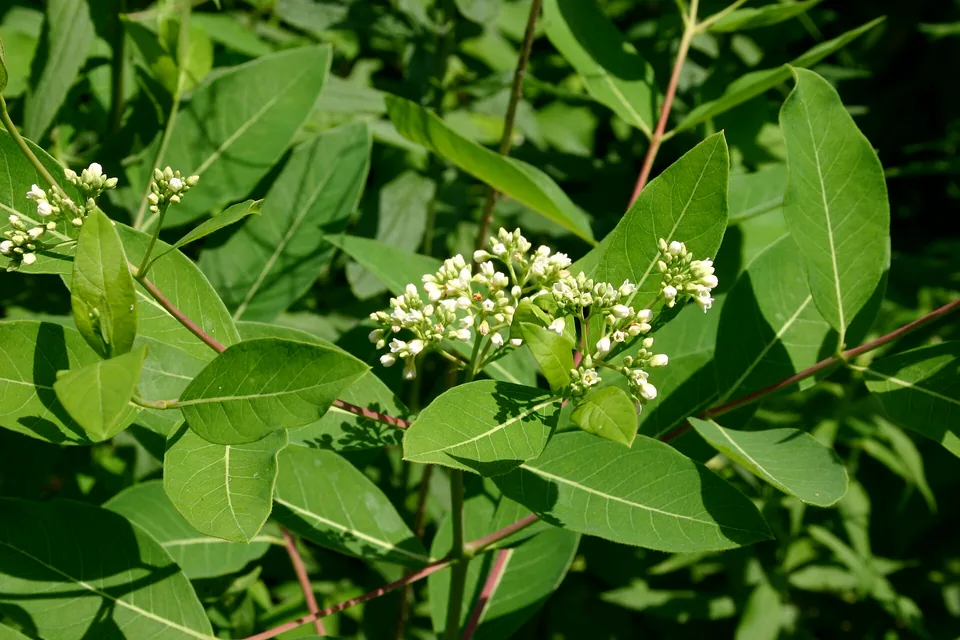


How to Grow and Care for Dogbane
Apocynum cannabinum
Written by Emilio Marruso · last checked
Toxic to: Dogs, People · Why
At a glance
Indian hemp is a tough perennial that takes moist, well-drained or even wet spots in stride, and it can handle some dryness too. It spreads freely by underground stems, so give it a wild, natural corner where it can roam. You can start new plants from seed or by dividing clumps; just keep in mind that every part is toxic.
- Water
Likes moist to wet spots, but can handle some dryness
What the sources say (1)
Watering notes: Tolerates moist, well-drained to wet sites; can also tolerate some dryness
Full sun; moist, well drained soil to wet sites; can also tolerate some dryness.
— Indian Hemp (Apocynum cannabinum)-Hort Answers - University of Illinois Extension [3] - Cold
Survives winters down to −40 °F (−40 °C)
Very hardy · USDA 3a · RHS H7 · Z3
What the sources say (6)
Hardiness, coldest zone: 3a [winter low −40 to −37.2 °C (−40 to −35 °F)]
According to NC State Extension: 3a, 3b, 4a, 4b, 5a, 5b, 6a, 6b, 7a, 7b, 8a, 8b, 9a, 9b, 10a, 10b, 11a, 11b
— Apocynum cannabinum (Amy Root, Dogbane, Hemp Dogbane, Indian Hemp, Prairie Dogbane) | North Carolina Extension Gardener Plant Toolbox [1] According to University of Illinois Extension: USDA Hardiness Zone 4 - 9
— Indian Hemp (Apocynum cannabinum)-Hort Answers - University of Illinois Extension [3] 3a, 3b, 4a, 4b, 5a, 5b, 6a, 6b, 7a, 7b, 8a, 8b, 9a, 9b, 10a, 10b, 11a, 11b
— Apocynum cannabinum (Amy Root, Dogbane, Hemp Dogbane, Indian Hemp, Prairie Dogbane) | North Carolina Extension Gardener Plant Toolbox [1] Hardiness, warmest zone: 11b [winter low 7.2 to 10 °C (45 to 50 °F)]
According to NC State Extension: 3a, 3b, 4a, 4b, 5a, 5b, 6a, 6b, 7a, 7b, 8a, 8b, 9a, 9b, 10a, 10b, 11a, 11b
— Apocynum cannabinum (Amy Root, Dogbane, Hemp Dogbane, Indian Hemp, Prairie Dogbane) | North Carolina Extension Gardener Plant Toolbox [1] According to University of Illinois Extension: USDA Hardiness Zone 4 - 9
— Indian Hemp (Apocynum cannabinum)-Hort Answers - University of Illinois Extension [3] 3a, 3b, 4a, 4b, 5a, 5b, 6a, 6b, 7a, 7b, 8a, 8b, 9a, 9b, 10a, 10b, 11a, 11b
— Apocynum cannabinum (Amy Root, Dogbane, Hemp Dogbane, Indian Hemp, Prairie Dogbane) | North Carolina Extension Gardener Plant Toolbox [1] - Watch out
Spreads fast by underground stems: plant it in wild areas where it can roam
- Propagation
Grow new plants from seed or by dividing clumps
What the sources say (1)
Propagation: Seed and division
It will spread aggressively by rhizomes. Propagate by seed and division.
— Apocynum cannabinum (Amy Root, Dogbane, Hemp Dogbane, Indian Hemp, Prairie Dogbane) | North Carolina Extension Gardener Plant Toolbox [1] - Safety
All parts are toxic to people and dogs; the milky sap can blister skin
Overview
All parts of the plant are considered highly toxic to humans and mammals. [1] It grows aggressively and is not recommended for garden use. [1]
Dogbane care
How to water Dogbane
Tolerates moist, well-drained to wet sites; can also tolerate some dryness
What the sources say (1)
Full sun; moist, well drained soil to wet sites; can also tolerate some dryness.How much light Dogbane needs
The sources give different values depending on region, zone or growing conditions.
What each source says
According to NC State Extension: Full sun to partial shade
According to University of Illinois Extension: Full shade
According to University of Illinois Extension (Culture): Full sun
What the sources say (4)
According to NC State Extension: Light:
Full sun (6 or more hours of direct sunlight a day)
Partial Shade (Direct sunlight only part of the day, 2-6 hours)According to University of Illinois Extension: Exposure/Light Requirements
Full ShadeAccording to University of Illinois Extension (Culture): Full sun; moist, well drained soil to wet sites; can also tolerate some dryness.Full sun (6 or more hours of direct sunlight a day)
Partial Shade (Direct sunlight only part of the day, 2-6 hours)How much cold Dogbane can take
Hardiness, coldest zone
3a [winter low −40 to −37.2 °C (−40 to −35 °F)]
What each source says
According to NC State Extension: 3a [winter low −40 to −37.2 °C (−40 to −35 °F)]
According to University of Illinois Extension: 4 [winter low −34.4 to −28.9 °C (−30 to −20 °F)]
What the sources say (3)
According to NC State Extension: 3a, 3b, 4a, 4b, 5a, 5b, 6a, 6b, 7a, 7b, 8a, 8b, 9a, 9b, 10a, 10b, 11a, 11bAccording to University of Illinois Extension: USDA Hardiness Zone
4 - 93a, 3b, 4a, 4b, 5a, 5b, 6a, 6b, 7a, 7b, 8a, 8b, 9a, 9b, 10a, 10b, 11a, 11bHardiness, warmest zone
11b [winter low 7.2 to 10 °C (45 to 50 °F)]
What each source says
According to NC State Extension: 11b [winter low 7.2 to 10 °C (45 to 50 °F)]
According to University of Illinois Extension: 9 [winter low −6.7 to −1.1 °C (20 to 30 °F)]
What the sources say (3)
According to NC State Extension: 3a, 3b, 4a, 4b, 5a, 5b, 6a, 6b, 7a, 7b, 8a, 8b, 9a, 9b, 10a, 10b, 11a, 11bAccording to University of Illinois Extension: USDA Hardiness Zone
4 - 93a, 3b, 4a, 4b, 5a, 5b, 6a, 6b, 7a, 7b, 8a, 8b, 9a, 9b, 10a, 10b, 11a, 11bHow to propagate Dogbane
Seed and division
What the sources say (1)
It will spread aggressively by rhizomes. Propagate by seed and division.How to grow Dogbane
The plant
Life cycle
perennial
What the sources say (2)
Indian Hemp is a bushy herbaceous perennial of the dogbane family (Apocynaceae) native to the Northeastern United States and Canada.Life cycle: Perennial reproducing by seed and vegetative rootstalksFamily
Apocynaceae
What the sources say (2)
Indian Hemp is a bushy herbaceous perennial of the dogbane family (Apocynaceae) native to the Northeastern United States and Canada.Family: Apocynaceae (Dogbane family)Mature height
The sources disagree:
Dogbane pests and problems
Aggressive spread
Symptom: Spreads aggressively by rhizomes
What to do: Use in naturalized areas where it can spread freely
What the sources say (1)
It is not recommended for garden use due to its aggressive behavior. Use in naturalized areas where they can spread freely.
— Apocynum cannabinum (Amy Root, Dogbane, Hemp Dogbane, Indian Hemp, Prairie Dogbane) | North Carolina Extension Gardener Plant Toolbox [1]
Remedies
Each remedy shows what official sources say about it; traditional remedies without an official source are marked as such. Harmful ones are listed so you know to avoid them.
Getting rid of it
aggressive spread
regular pulling, hoeing or mowing Works
How: Pull, remove or interfere with weed growth: regularly pull, hoe or mow the weeds.
To control weeds without using manufactured herbicides, the best option is to pull, remove or interfere with weed growth. Regularly pulling, hoeing or mowing weeds and encouraging grass to grow and out-compete the weeds is an excellent solution.
— extension.usu.edu [4] What the evidence says Regularly pulling, hoeing or mowing weeds and encouraging grass to grow and out-compete the weeds is an excellent solution.
— extension.usu.edu [4] newspaper weed barrier with mulch Official source, not independently tested
Be cautious about the weed barrier material used because items such as plastic shower curtains or old tarps are good barriers but can be difficult to work with later when it is time to rework the site.
— extension.usu.edu [4] How: Lay newspaper or similar material down to prevent sunlight from reaching the unwanted plants, and cover with mulch.
A variety of household items, such as newspapers, can be used as weed barriers. Lay the material down to prevent sunlight from reaching the unwanted plants, and cover with mulch or other plant-resistant material.
— extension.usu.edu [4] household vinegar Not proven
Any contact with the skin and eyes causes’ irreversible corrosion and damage, meaning gloves and goggles are a must when using vinegar herbicides.
— extension.illinois.edu [5] How: Spray kitchen vinegar on the unwanted plants.
Vinegar is reported to be an old-world herbicide, used for generations.
— extension.illinois.edu [5] What the evidence says Simply put, kitchen vinegar does not make a good herbicide. The concentration of acetic acid, a compound found in kitchen vinegar, is typically around 5%. A concentration that low is just not strong enough to kill any but the smallest of weed seedlings.
— extension.illinois.edu [5] salt Harmful
How: Apply salt to the unwanted plants.
Sure, salt does the trick in knocking down weeds, but what are the long-term effects?
— extension.illinois.edu [5] What the evidence says Salt is soluble and thus highly mobile in your soil allowing it to spread to areas planted with desirable vegetables and ornamentals, damaging them along with your weeds.
— extension.illinois.edu [5]
Is Dogbane toxic to pets?
Reported by the source, quoted verbatim. This is not medical or veterinary advice: if a person or an animal may have eaten this plant, contact a poison control centre or a veterinarian.
Animals
Genus name comes from the classical Greek name for this or a related plant. Believed to be poisonous to dogs.
[1]
People
All parts of this plant exude a milky juice when bruised and all plant parts are considered highly toxic to humans. and mammals.
[1]- Poisonous parts
Poison Part: Flowers Fruits Leaves Roots Seeds Stems
[1]- Toxic principle
Poison Toxic Principle: Resins and cardiac glycosides
[1]- Symptoms
Poison Symptoms: Cardiac Arrest, nausea, vomiting, weakness, diarrhea. The milky sap from stems can cause blisters on skin.
[1]- Severity
Poison Severity: High
[1]
Cardiac Arrest, nausea, vomiting, weakness, diarrhea. The milky sap from stems can cause blisters on skin.
[1]
Indicative values
Values from a secondary source, not checked word for word like the rest of this page. Use them as a starting point.
- Hours of sun
- 6-8 hoursIndicative value, adapt it to your climate · Secondary source
- Watering
- MinimumIndicative value, adapt it to your climate · Secondary source
- Soil
- Clay, Sand, LoamIndicative value, adapt it to your climate · Secondary source
- Soil pH
- 5.5-7.5Indicative value, adapt it to your climate · Secondary source
- Care level
- MediumIndicative value, adapt it to your climate · Secondary source
- Growth rate
- LowIndicative value, adapt it to your climate · Secondary source
- Pruning
- May, June, JulyIndicative value, adapt it to your climate · Secondary source
Similar plants
- Dogbane Apocynum androsaemifolium
- Allamanda Allamanda cathartica
- Bladderflower Araujia sericifera
- Butterfly Weed Asclepias tuberosa
- Clasping Milkweed Asclepias amplexicaulis
- Common Milkweed Asclepias syriaca
- Desert Rose Adenium obesum
- Few-flower Milkweed Asclepias lanceolata
Sources
Every value above is quoted from these documents. Links lead to the original publisher.
- Apocynum cannabinum (Amy Root, Dogbane, Hemp Dogbane, Indian Hemp, Prairie Dogbane) | North Carolina Extension Gardener Plant Toolbox · plants.ces.ncsu.edu, consulted
- Hemp dogbane | Integrated Crop Management · crops.extension.iastate.edu, consulted
- Indian Hemp (Apocynum cannabinum)-Hort Answers - University of Illinois Extension · web.extension.illinois.edu, consulted
- extension.usu.edu · extension.usu.edu
- extension.illinois.edu · extension.illinois.edu
Written by Emilio Marruso · last checked