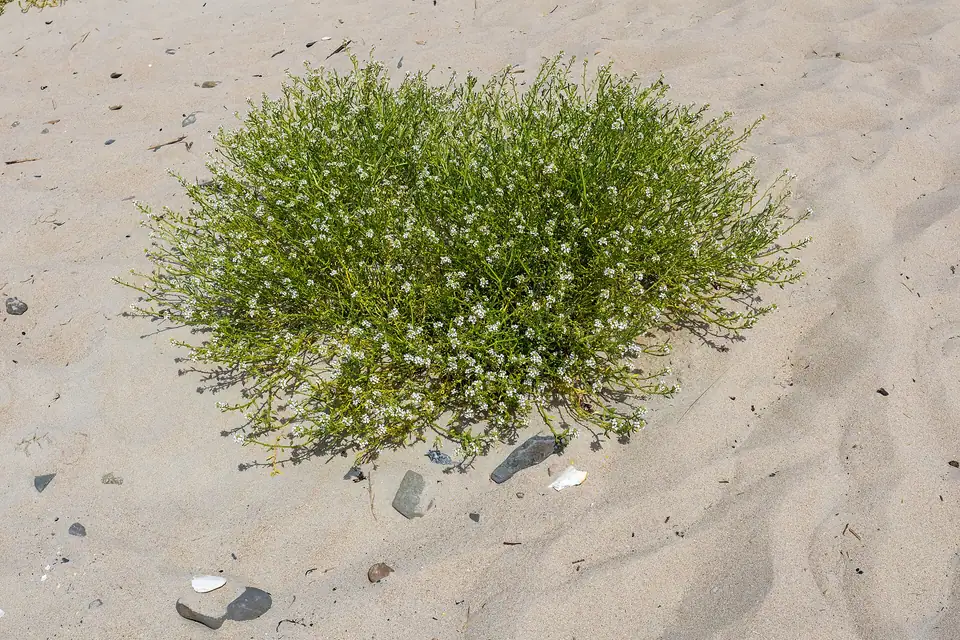
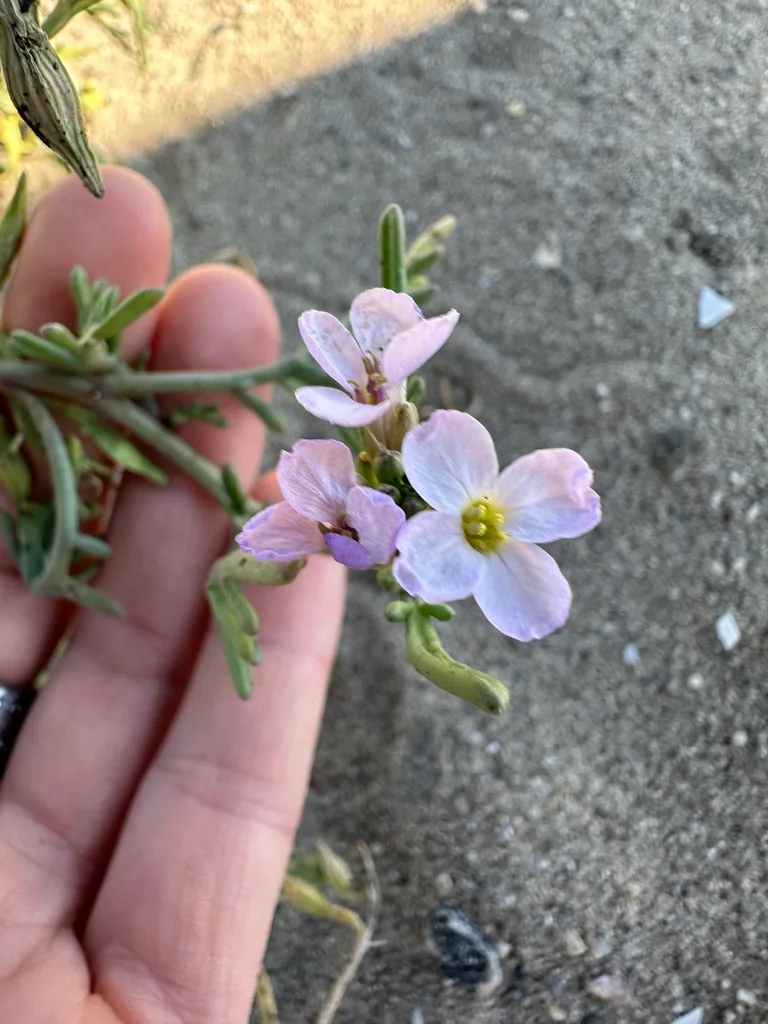

Cómo cultivar y cuidar Oruga de mar
Cakile maritima
Escrito por Emilio Marruso · última revisión
De un vistazo
La oruga de mar es una planta que adora el sol: dale sol pleno y un suelo ligero y bien drenado, y siembra directamente en su sitio a finales de primavera o a principios de otoño. Una vez asentada, se resiembra sola. Sus hojas, tallos, botones florales y vainas tiernas se comen crudos, con un sabor picante y mucha vitamina C.
- Sol
Sol pleno
- Suelo
Suelo ligero y bien drenado
Qué dicen las fuentes (2)
Notas sobre el riego: Necesita suelo ligero y bien drenado
Prefers a light well-drained soil and a sunny position
— Cakile maritima - Useful Temperate Plants [3] Cakile maritima thrives in areas that receive plenty of sunlight and well-draining soil.
— Cakile maritima (European Searocket) - World of Succulents [6] - Cosecha
Hojas, tallos, botones florales y vainas tiernas se comen crudos: ricos en vitamina C, pero amargos
- Multiplicación
Se multiplica por semilla y se resiembra sola
Qué dicen las fuentes (3)
Propagación: Semilla; se resiembra
Seed - sow late spring or early autumn in situ. Germination is usually rapid.
— Cakile maritima - Useful Temperate Plants [3] Plants are easily grown in a garden situation and can self-sow if the ground is disturbed by hoeing etc
— Cakile maritima - Useful Temperate Plants [3] European sea rocket reproduces by seed, which is distributed by ship ballasts, sand transport, tidal movement, and human activity.
— Cakile maritima Profile – California Invasive Plant Council [1] - Siembra
Siembra directamente en su sitio, a finales de primavera o a principios de otoño
Qué dicen las fuentes (1)
Siembra: Finales de primavera o principios de otoño, in situ
Seed - sow late spring or early autumn in situ. Germination is usually rapid.
— Cakile maritima - Useful Temperate Plants [3]
Resumen
Cakile maritima es una anual suculenta de costas arenosas y pedregosas, tolerante a la salpicadura de sal y a inundaciones ocasionales de agua de mar. [1][6] Se cultiva fácilmente en un jardín en una posición soleada sobre suelo ligero y bien drenado y puede autosembrarse. [3][6] La semilla se siembra in situ a finales de primavera o principios de otoño y germina rápidamente. [3]
Citado en inglés, como en la fuente.
Esta ficha está incompleta: las fuentes consultadas aún no cubren todos los campos.
Aún no cubierto por nuestras fuentes: Rusticidad, zona más fría, Rusticidad, zona más cálida
Cuidados
Riego
Necesita suelo ligero y bien drenado
Luz
Clima y frío
Rusticidad, zona más fría
No figura en las fuentes consultadas.
Rusticidad, zona más cálida
No figura en las fuentes consultadas.
Propagación
Semilla; se resiembra
Qué dicen las fuentes (3)
Seed - sow late spring or early autumn in situ. Germination is usually rapid.Plants are easily grown in a garden situation and can self-sow if the ground is disturbed by hoeing etcEuropean sea rocket reproduces by seed, which is distributed by ship ballasts, sand transport, tidal movement, and human activity.Cultivo
La planta
Familia
Brassicaceae (Cruciferae)
Qué dicen las fuentes (1)
Family: CRUCIFERAE (BRASSICACEAE) Genus: Cakile Catalan common name: Rave de mar. Ravenissa de mar.Remedios
Cada remedio indica qué dicen las fuentes oficiales; los remedios tradicionales sin fuente oficial aparecen marcados. Los perjudiciales están para que sepas evitarlos.
Cómo eliminarla
mala hierba
eliminación manual antes de que se formen las vainas No verificado
Remedio tradicional, no verificado por una fuente oficial.
Cómo: Retira las plantas a mano al menos cada 8-10 semanas; una vez que se han formado las vainas, las semillas a menudo maduran incluso en plantas arrancadas.
Calendario
Siembra
Finales de primavera o principios de otoño, in situ
Qué dicen las fuentes (1)
Seed - sow late spring or early autumn in situ. Germination is usually rapid.Meses tal como los dan las fuentes, en su mayoría de Estados Unidos (hemisferio norte). En el hemisferio sur se desplazan unos seis meses.
Comestibilidad
Según la fuente, citada textualmente. No comas una planta basándote solo en esta página: los errores de identificación pueden ser peligrosos.
Leaves, stems, flower buds and immature seedpods - raw or cooked. They are rich in vitamin C but have a very bitter taste
[3]Leaves, stems, flower buds and immature seed pods raw. They can be cooked but cooking makes them very bitter. However, they are rich in Vitamin C.
[7]Root - dried and ground into a powder, then mixed with cereal flours and used to make bread
[3]Despite its pungent and sometimes bitter taste, Cakile maritima can be eaten raw or cooked.
[6]
Plantas similares
- Abraham Trachystemon orientalis
- Bananero de Etiopía Ensete ventricosum
- Acacia longifolia Acacia longifolia
- Agapanto Agapanthus praecox
- Iris africano Dietes bicolor
- African lovegrass Eragrostis curvula
- Tulipero africano Spathodea campanulata
- Agretti Soda inermis
Fuentes
Cada valor anterior se cita de estos documentos. Los enlaces llevan al editor original.
- Cakile maritima Profile – California Invasive Plant Council · cal-ipc.org, consultado
- Cakile maritima, Sea Rocket: identification, distribution, habitat · first-nature.com, consultado
- Cakile maritima - Useful Temperate Plants · temperate.theferns.info, consultado
- · cretanflora.com, consultado
- Frontiers | Salinity tolerance in the halophyte species Cakile maritima from the Apulia region, southern Italy · frontiersin.org, consultado
- Cakile maritima (European Searocket) - World of Succulents · worldofsucculents.com, consultado
- April 16, 2017 - Eat The Weeds and other things, too · eattheweeds.com, consultado
- Cakile maritima Scop. - Herbari Virtual del Mediterrani Occidental · herbarivirtual.uib.cat, consultado
Escrito por Emilio Marruso · última revisión